Table of Contents >> Show >> Hide
- Before You Touch a Single Hair: Make a Brow Plan (Not a Brow Panic)
- The Best Ways to Shape Eyebrows Without Plucking
- Method 1: Trim Your Brows (The “Less Hair, Same Brow” Approach)
- Method 2: Threading (Precision Shaping Without Wax or Tweezers)
- Method 3: Waxing (Fast and CleanBut Not for Everyone)
- Method 4: Sugaring (Wax’s Gentler Cousin)
- Method 5: Brow Razor / Dermaplaning-Style Shaping (No Root Removal, Big Visual Impact)
- Method 6: Depilatory Creams (Use With Extreme Caution Near Brows)
- Method 7: Brow Lamination (Shape the Hair You Have)
- Method 8: Tinting or Tinted Products (Add Definition Without Removing Hair)
- Method 9: Makeup Shaping (The “Illusion” Method That Actually Works)
- Method 10: Laser Hair Removal or Electrolysis (Long-Term Options)
- How to Choose the Best Non-Plucking Method for Your Brows
- Aftercare Tips (So Your Skin Doesn’t Throw a Tantrum)
- Common Brow Problems (And Fixes That Don’t Involve Tweezers)
- Real-World Experiences: What People Commonly Notice (About )
- Conclusion
Your eyebrows are basically the punctuation marks on your face. Too thin and you look permanently surprised. Too wild and you look like you just discovered caffeine.
The good news: you can absolutely shape your eyebrows without plucking (aka “tweezer therapy”) and still get clean, balanced brows that fit your face.
This guide walks you through the best non-plucking eyebrow shaping methodsat-home and professionalplus how to pick the right one for your skin type, pain tolerance,
and how much time you’re willing to spend staring into a mirror like it’s a competitive sport.
Before You Touch a Single Hair: Make a Brow Plan (Not a Brow Panic)
Most eyebrow “accidents” happen for one reason: you start removing hair before you decide what shape you’re aiming for. The fix is simplemap the brows first, then
shape them with methods that don’t involve tweezing.
Brow Mapping (Quick Version You Can Do at Home)
Brow mapping is a technique that uses facial proportions to help create symmetry. Professionals often use the “golden ratio” concept to find the most flattering
placement for the start, arch, and tail of your brows.
- Start: Hold a makeup brush or pencil vertically from the side of your nostril up toward your brow. Where it hits is your ideal brow start.
- Arch: Angle the brush from your nostril through the outer edge of your iris (looking straight ahead). That’s a common arch zone.
- Tail: Angle the brush from your nostril to the outer corner of your eye. That’s a common end point for the tail.
Then, lightly outline your intended shape using a brow pencil. Think of it as drawing a fence before you do yard work. No fence = chaos.
The Best Ways to Shape Eyebrows Without Plucking
There are two big categories of non-plucking brow shaping:
(1) remove hair without tweezers and (2) shape the brow by trimming, styling, and adding definition.
Many people use a mix of both.
Method 1: Trim Your Brows (The “Less Hair, Same Brow” Approach)
Trimming is the most underrated brow move. Instead of removing hair from the root, you shorten long hairs that stick out, making brows look neater and more intentional.
It’s especially great if your brows are full but “fluffy in random directions.”
How to trim brows at home (safely):
- Brush brows upward with a spoolie so you can see which hairs extend past your natural top line.
- Trim only the long tips that poke above the brow outline. Go one hair at a time. No straight-across “lawn mowing.”
- Brush brows downward and snip only any very long strays (again: tiny trims).
- Step back from the mirror every 30 seconds. Up close, everything looks like an emergency.
- Finish with brow gel to keep hairs in place.
Best for: thick brows, long brow hairs, anyone who wants “clean” without changing the overall brow fullness.
Watch out for: over-trimming (it can create gaps that look like you lost a fight with a paper shredder).
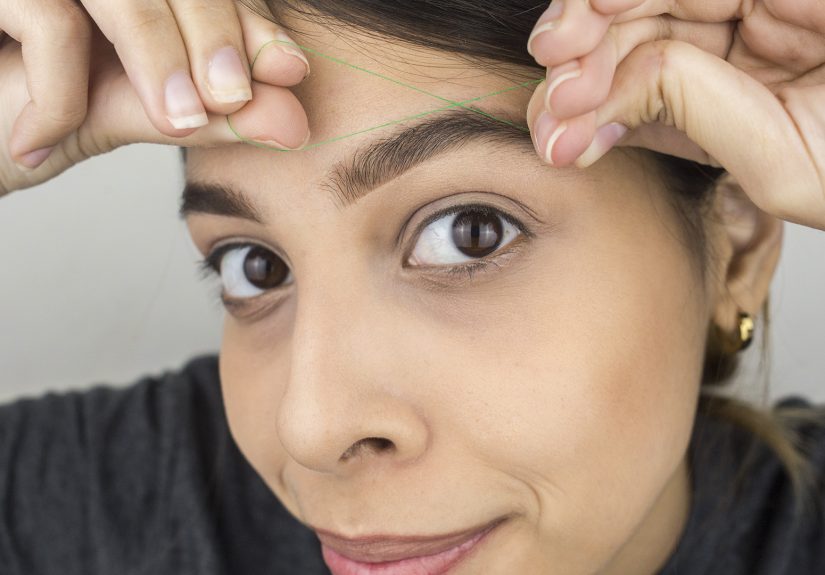
Method 2: Threading (Precision Shaping Without Wax or Tweezers)
Threading uses a twisted thread to remove rows of hair from the root. It’s known for crisp lines and great controlespecially if you want to clean up under the arch
or refine the tail without removing too much.
Why people love it:
- No wax, no sticky residue.
- Often fast (many appointments are 5–20 minutes).
- Can be very precise for defining shape.
Best for: people who want defined shaping, those who don’t want wax, and anyone who likes a clean outline.
Watch out for: if your skin barrier is irritated (acne flares, eczema/rosacea irritation), threading friction may bother youask a pro first.
Method 3: Waxing (Fast and CleanBut Not for Everyone)
Brow waxing removes hair from the root and can also grab fine “peach fuzz” around the brow, which is why some pros consider it especially precise for creating a soft,
clean shape.
What waxing is great at:
- Quick cleanup of stray hairs and fuzz around the brow perimeter.
- Sharp definition with smooth-looking skin.
What to be careful about:
-
Skincare actives: If you use retinoids or exfoliating acids, the skin may be more prone to irritation or even lifting. Many experts recommend pausing
irritating actives for a few days around waxing (and following your pro’s instructions). - Skin tone considerations: Some dermatologists warn waxing can trigger temporary discoloration (lightening/darkening) in melanin-rich skin.
- Technique matters: Brows are small. This is not the place for “my cousin has a waxing kit.”
Best for: people who want fast shaping and don’t have very sensitive/reactive skin.
Watch out for: active irritation, recent sunburn, and strong skincare ingredients around the area.
Method 4: Sugaring (Wax’s Gentler Cousin)
Sugaring uses a sugar-based paste to remove hair. Some people find it less irritating than traditional wax because it can be applied at a lower temperature and may
adhere more to hair than skin (depending on technique). It can still remove hair from the root and can still irritate very sensitive skinso it’s not “risk-free,”
just often “less dramatic.”
Best for: people who want root removal but prefer an alternative to wax.
Watch out for: irritation if your skin is already stressed (think: over-exfoliated, windburned, or inflamed).
Method 5: Brow Razor / Dermaplaning-Style Shaping (No Root Removal, Big Visual Impact)
A small facial razor (often called an eyebrow razor) can clean up stray hairs around your brow shape. This doesn’t remove hair from the root; it cuts at the surface.
That means results are shorter-lived than waxing/threadingbut it can be a lifesaver for quick shaping and fuzz cleanup.
How to do it without turning it into a horror story:
- Use a clean blade and sanitize tools to reduce infection risk.
- Go slow with short strokes, and keep the skin gently taut.
- Avoid active acne or eczema flares in the arearazors can aggravate irritated skin.
- Don’t chase perfection: stop when it looks good in normal lighting, not microscope lighting.
Best for: quick touch-ups, shaping the edges, removing fine fuzz around brows.
Watch out for: nicks, irritation, and using it over inflamed skin.
Method 6: Depilatory Creams (Use With Extreme Caution Near Brows)
Some depilatory creams dissolve hair at the surface. That sounds convenient until you remember you’re working near your eyes. If you go this route, only use products
specifically labeled for facial use, follow instructions exactly, and do a patch test. Also: keep it far from the lash line and avoid getting it into the eye area.
Best for: some people who tolerate facial depilatories well and are careful with placement.
Watch out for: irritation, chemical burns, and accidental contact with the eye area.
Method 7: Brow Lamination (Shape the Hair You Have)
Brow lamination is a semi-permanent styling treatment that sets brow hairs in a more uniform directionoften upward and slightly outwardso brows look fuller and more
“brushed.” It’s like telling your brow hairs, “We’re doing teamwork now.”
What to expect:
- Typically involves a chemical solution, processing time, then setting hairs in the desired shape.
- Results often last several weeks, depending on hair growth and aftercare.
- Aftercare commonly includes keeping brows dry for at least 24 hours (sometimes up to 48) and avoiding oils that can break down the result.
Best for: unruly brow hairs, gaps caused by hair direction (not hair absence), “fluffy brow” fans.
Watch out for: irritation if you’re sensitive to chemicals, and overprocessing if done too often or incorrectly.
Method 8: Tinting or Tinted Products (Add Definition Without Removing Hair)
Tinting can make brows look fuller by darkening lighter hairs. But here’s the serious part: the U.S. FDA has warned that permanent eyebrow/eyelash tints and dyes can
cause serious eye injuries. Regulations and safety depend on the specific color additives and use restrictions, and expert organizations caution that these services
carry real risk.
If you want the look without the risk, consider tinted brow gels, tinted waxes, or brow mascaras. They can mimic tinting, wash off easily, and don’t
involve leaving dye chemicals near the eye area.
Best for: lighter brows, sparse-looking brows (because of light hair), low-effort daily definition.
Watch out for: DIY dye hacks near the eyes. Seriouslydon’t.
Method 9: Makeup Shaping (The “Illusion” Method That Actually Works)
Makeup is the fastest way to “shape” brows without removing hair at all. And it’s reversible, which is an underrated feature in life.
A simple, flattering makeup routine:
- Brush brows up and out with a spoolie.
- Fill sparse areas using hair-like strokes (avoid drawing a single solid block unless you’re going for “cartoon villain chic”).
- Define the lower edge with a tiny amount of concealer for a crisp line under the arch.
- Set with gel or wax to keep shape in place.
Best for: anyone who wants a customizable shape, people growing brows out, and commitment-phobes (respect).
Watch out for: overly harsh edges if you go too heavy-handed with concealer.
Method 10: Laser Hair Removal or Electrolysis (Long-Term Options)
If you’re dealing with significant unwanted hair growth around the brow area and want fewer maintenance sessions, ask a qualified professional about longer-term
options like laser hair removal or electrolysis. These require multiple sessions and proper assessment (especially for skin tone/hair color matching), but they can
reduce regrowth over time.
Best for: long-term reduction goals and people who want fewer touch-ups.
Watch out for: cost, required sessions, and choosing a reputable professional with experience treating the face.
How to Choose the Best Non-Plucking Method for Your Brows
Here’s a simple way to decideno spreadsheet required (unless you’re into that, in which case: respect).
If you have sensitive or reactive skin
- Start with trimming + makeup shaping.
- Consider threading with a skilled professional if your skin barrier is calm.
- Be cautious with waxing and depilatories, especially if you use strong skincare actives.
If you want the longest-lasting clean-up
- Waxing or threading usually lasts longer than shaving/razor methods because hair is removed from the root.
- Lamination won’t remove hair, but it can keep brows looking styled for weeks.
If you want “I woke up like this” brows
- Lamination + tinted brow gel is a popular combo for fluffy, fuller-looking brows.
- Trim first to avoid the “my eyebrows are wearing sweaters” effect.
Aftercare Tips (So Your Skin Doesn’t Throw a Tantrum)
Shaping methods can irritate the skin around brows because the area is delicate. A little aftercare goes a long way.
- Skip harsh skincare around the brow area for a bit after waxing/threading/lamination (especially acids and retinoids).
- Keep it clean and avoid rubbing.
- Calm redness with gentle, fragrance-free moisturizer; some pros suggest soothing ingredients like aloe.
- Don’t pile on makeup immediately if your skin is irritatedgive it a short break.
Common Brow Problems (And Fixes That Don’t Involve Tweezers)
“My brows are uneven.”
Congratulationsyou are a human with a face. Most brows are sisters, not twins. Use brow mapping, then correct visually with pencil and gel. If you remove
hair to “even them out,” you often end up chasing symmetry until there’s nothing left to chase.
“I trimmed too much and now there’s a gap.”
Step away from the scissors. Fill the gap lightly with a pencil using hair-like strokes, set with gel, and let the hair grow back. Meanwhile, consider lamination or
a strong-hold gel to style surrounding hairs across the area.
“Threading/waxing made me red.”
Some redness is common. If irritation is intense or lingers, consult a clinicianespecially if you’re prone to dermatitis, rosacea, or allergic reactions. Next time,
talk to your provider about skin sensitivity and aftercare, and avoid stacking multiple “irritating” things in one day (like exfoliating + waxing + sun exposure).
Real-World Experiences: What People Commonly Notice (About )
When people switch to shaping eyebrows without plucking, the biggest surprise is how much control they still have. Many expect “no tweezers” to mean “no precision,”
but in practice, trimming, threading, and styling often create a cleaner look with fewer long-term regrets.
One common experience is the “I didn’t realize my brows were long” moment. People with fuller brows often start with trimming and immediately feel
like their face looks more polishedwithout changing their natural thickness. The trick they learn quickly: trimming is about reducing visual mess, not
carving out a new brow. Once the brows look tidy, many discover they don’t need to remove much hair at alljust a little makeup definition and a reliable gel.
Another frequent story comes from those who tried tweezing for years and got stuck in the cycle of “fix one hair, lose five.” When they stop
plucking and switch to threading or waxing with a clear brow map, they often notice their shape looks more consistent from appointment to appointment. The reason is
simple: mapped shaping creates boundaries, and professional methods remove hair more evenly across an area rather than one impulsive hair at a time. People who like
a crisp outline often report threading feels especially “controlled,” while waxing feels faster and smootherbut also more dependent on skin tolerance and aftercare.
For sensitive-skin folks, the most common experience is learning that the calendar matters. Someone will try waxing the same week they’re using
strong exfoliants or retinoids, get irritated, and then assume waxing is “always bad.” When they adjust timingpausing actives around the service and focusing on
gentle moisturizer afterwardthe results are often dramatically better. And if waxing still irritates, they usually shift to trimming plus makeup shaping, because it
gives the look without provoking the skin.
People who try brow razors often report a different kind of satisfaction: the instant cleanup. It’s fast, it’s cheap, and it’s easy to do before an
event. The learning curve is mainly about pressure and patiencegoing slowly and resisting the urge to “perfect” the line. Those who treat it like a light detail
tool (not a sculpting chainsaw) usually love it as a maintenance method between professional shaping sessions.
And then there’s the brow lamination crowdthe people who say, “I didn’t know my brows could behave.” When lamination works well, people commonly
notice their brows look fuller because the hairs are directed upward and outward, creating a feathered effect. Many also report needing less makeup day-to-day.
The tradeoff they learn: it’s a chemical process, so aftercare and timing (especially around exfoliants) becomes part of the deal.
The overall pattern is consistent: when you shape without plucking, you tend to rely more on planning (mapping), styling (gel,
lamination), and subtle removal (threading/waxing/razor) instead of impulsive hair-by-hair decisions. And your browsplus your future selfusually
appreciate the calmer approach.
Conclusion
Shaping your eyebrows without plucking isn’t a compromiseit’s a strategy. Start with brow mapping so you know what you’re aiming for. Then choose a method that fits
your skin and lifestyle: trimming for tidy fullness, threading for precision, waxing for quick definition, razors for fast touch-ups, lamination for styling, and
makeup to customize everything without commitment.
If you want one simple “starter combo,” try this: map → trim → lightly fill → set with gel. It’s low-risk, high-reward, and requires zero tweezers
(which can stay in the drawer plotting their comeback tour).