Table of Contents >> Show >> Hide
- Why Properly Spooling a Spinning Reel Matters
- What You Need Before You Start
- How to Spool a Spinning Reel: 12 Steps
- Step 1: Match the Line to Your Reel and Fishing Style
- Step 2: Attach the Reel to the Rod
- Step 3: Run the Line Through the First Rod Guide
- Step 4: Open the Bail
- Step 5: Tie the Line to the Spool
- Step 6: Add Backing for Braided Line
- Step 7: Position the Supply Spool Correctly
- Step 8: Apply Light, Steady Tension
- Step 9: Reel Slowly and Watch the Line Lay
- Step 10: Stop Before the Spool Is Too Full
- Step 11: Cut the Line and Secure It
- Step 12: Test the Reel Before Fishing
- Common Mistakes When Spooling a Spinning Reel
- Best Line Types for Spinning Reels
- How Often Should You Respool a Spinning Reel?
- Extra Field Experience: What Actually Helps on the Water
- Conclusion
Spooling a spinning reel looks simple until your fresh line leaps off the spool like it has just seen a ghost. One minute you are preparing for a calm day of fishing; the next, you are untangling a bird’s nest that somehow appeared on a reel that does not even have a bird. The good news is that learning how to spool a spinning reel is not difficult. The better news is that doing it correctly can improve casting distance, reduce line twist, prevent frustrating loops, and make your reel feel much smoother on the water.
A spinning reel is one of the most beginner-friendly fishing tools, but it is also surprisingly picky about how line goes onto the spool. Too loose, and the line digs into itself. Too full, and it jumps off in coils. Too twisted, and your lure flies one direction while your patience swims the other. This guide breaks the process into 12 clear steps, with practical examples for monofilament, fluorocarbon, and braided fishing line.
Why Properly Spooling a Spinning Reel Matters
The fishing line is your direct connection to the fish. You can own a premium rod, a silky reel, and a tackle box that looks like a tiny hardware store, but if your line is loaded poorly, everything suffers. Poor spooling causes short casts, wind knots, line loops, uneven retrieve, weak hooksets, and random tangles that seem personally motivated.
Proper spooling helps the line lay evenly on the reel, keeps tension consistent, and reduces twist before you ever make the first cast. That matters whether you are fishing for bass in a pond, trout in a stream, crappie around brush piles, or redfish along the coast. A clean spool is not glamorous, but neither is changing line on the bank while your friend catches fish and pretends not to smile.
What You Need Before You Start
Before spooling your spinning reel, gather the basics. You will need a spinning rod and reel, a fresh spool of fishing line, scissors or line cutters, a clean cloth, and optional tape. If you are using braided line, you may also need monofilament backing or a braid-ready spool. A small bowl of water can help with some line types, though it is not required for every setup.
Check your reel’s line capacity markings, usually printed on the spool. These markings tell you how much line the reel holds at specific pound-test ratings. For example, a reel might list 6-pound line at 200 yards, 8-pound line at 160 yards, and 10-pound line at 120 yards. You do not need to be perfect, but you should choose a line size that matches your reel, rod, and fishing style.
How to Spool a Spinning Reel: 12 Steps
Step 1: Match the Line to Your Reel and Fishing Style
Start by choosing the right fishing line. Monofilament is affordable, forgiving, and great for beginners. Fluorocarbon is less visible underwater and useful for clear water or finicky fish, though it tends to have more memory. Braided line is thin, strong, sensitive, and excellent for long casts, but it can slip on a bare spool if not anchored properly.
For a general freshwater spinning reel, 6- to 10-pound monofilament is common for panfish, trout, and bass. For braid, many anglers use 10- to 20-pound test on medium spinning gear, often paired with a fluorocarbon or monofilament leader. The key is not to choose line based only on strength. Diameter matters because a line that is too thick may spring off the spool and reduce casting performance.
Step 2: Attach the Reel to the Rod
You can spool a reel by itself, but attaching it to the rod makes the process easier and more realistic. Place the reel foot into the reel seat and tighten it securely. The reel should sit under the rod, with the spool facing forward and the handle turning smoothly.
Mounting the reel first helps you guide the line through the rod and onto the spool at a natural angle. It also gives you better control over tension. Think of the rod as your assistant. It does not talk, complain, or ask why you bought more tackle, which makes it an ideal assistant.
Step 3: Run the Line Through the First Rod Guide
Take the tag end of your new fishing line and run it through the first guide closest to the reel. This is the large guide near the lower part of the rod. Some anglers run the line through every guide before spooling, but starting with the first guide is usually enough for loading the reel.
This step keeps the line centered and helps it feed evenly onto the spool. It also prevents the line from wandering around the room like an unsupervised shoelace. Make sure the line is not wrapped around the rod blank or tangled around the guide frame.
Step 4: Open the Bail
Open the bail before tying the line to the spool. This is one of the most important steps, and it is also one of the easiest to forget. If you tie the line on while the bail is closed, the reel will not pick up line properly when you start cranking. That mistake usually leads to a dramatic pause, followed by cutting the knot and muttering at your equipment.
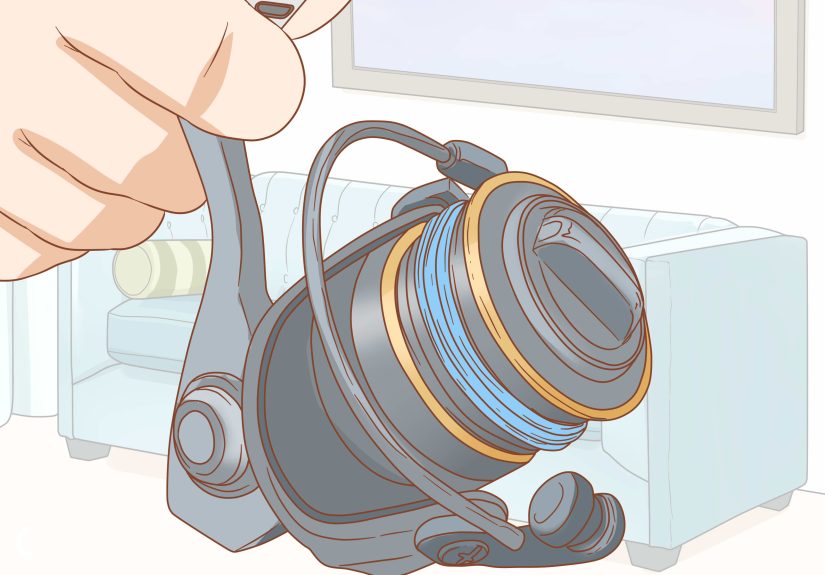
The bail is the wire arm that flips open for casting and closes to retrieve line. Opening it gives the line a clear path to wrap onto the spool once the bail is closed again.
Step 5: Tie the Line to the Spool
Wrap the line around the spool arbor and secure it with an arbor knot. An arbor knot is popular because it cinches neatly around the spool and is easy to tie. Trim the tag end close, but do not cut the main line. If the knot looks bulky, retie it. A messy knot can create a bump under the first wraps of line.
For monofilament or fluorocarbon, the knot usually grips the spool well. For braided line, use monofilament backing or a small piece of tape unless the reel spool is designed to hold braid directly. Braid is slick, and if it slips around the spool, your drag may seem broken even though the reel is fine.
Step 6: Add Backing for Braided Line
If you are spooling braid, add a short base layer of monofilament first. Tie the mono to the spool, reel on enough to cover the arbor, then connect the mono to the braid with a double uni knot, Albright knot, or another strong line-to-line connection. This backing gives the braid something to bite into and saves money because you do not need to fill the entire spool with expensive braid.
For many freshwater spinning setups, a modest amount of backing is enough. The exact amount depends on reel size, spool depth, and how much braid you want on top. The goal is simple: prevent slipping, fill space efficiently, and leave enough main line for casting and fighting fish.
Step 7: Position the Supply Spool Correctly
Lay the filler spool flat on the floor or table so the line comes off in coils. The line should come off the supply spool in the same general direction that the reel is taking it on. After reeling a few turns, stop and check for twist by letting a little slack line hang between the supply spool and rod guide. If it twists into loops, flip the supply spool over and try again.
This step is the difference between a peaceful first cast and a line explosion that looks like spaghetti with ambition. Spinning reels naturally add and remove twist as line moves on and off the spool, so starting with the right orientation helps reduce trouble from the beginning.
Step 8: Apply Light, Steady Tension
Pinch the line gently between your fingers or through a soft cloth above the reel. Keep enough tension that the line packs firmly onto the spool, but not so much that it burns your fingers or stretches the line. A damp cloth can help protect your hand and keep pressure even.
Loose line is a major cause of future problems. When line goes on too loosely, later wraps can dig into the lower wraps under pressure. This is especially common with braid. Steady tension creates a firm, even foundation and makes your reel perform more predictably.
Step 9: Reel Slowly and Watch the Line Lay
Close the bail by hand, then begin reeling at a moderate pace. Do not crank like you are trying to start an old lawn mower. Slow, steady turns allow the line to stack evenly across the spool. Watch the spool as it moves up and down. The line should build in smooth layers without bunching heavily at the top or bottom.
If the line piles unevenly, stop and check whether the line is entering the roller correctly. Sometimes a line loop can miss the roller and ride on the bail arm. Fix it immediately before continuing. A few seconds of attention here can save a full afternoon of aggravation later.
Step 10: Stop Before the Spool Is Too Full
Fill the spool until the line sits about 1/8 inch below the spool lip. This is a common target for spinning reels because it balances casting distance with control. Underfilling the spool can reduce casting distance because the line has to climb over a taller spool edge. Overfilling can cause loops to jump off during casts.
When in doubt, leave a little extra space. You can always add line later, but removing a tangled mess on the water is not nearly as satisfying. A properly filled spool should look full but not swollen, like a suitcase packed by someone who understands zippers.
Step 11: Cut the Line and Secure It
Once the spool is filled, cut the line from the supply spool, leaving enough tag end to thread through the remaining rod guides. If you are not fishing immediately, clip the line into the spool’s line keeper or secure it with a small piece of tape. Do not leave loose line hanging around the reel because it can catch on handles, hooks, pets, furniture, and somehow your sleeve.
If you plan to fish right away, thread the line through the rest of the rod guides, tie on your lure, hook, or leader, and check that everything flows smoothly from spool to tip.
Step 12: Test the Reel Before Fishing
Pull line gently from the reel with the bail closed to test the drag. It should release smoothly under pressure. Then open and close the bail by hand a few times. Make sure the line falls naturally onto the roller before you reel. If you see loops, twist, or loose wraps, fix them before casting.
A few practice casts in the yard or at the water’s edge can reveal problems early. If line jumps off the spool, remove a small amount. If it twists badly, let the line out behind a moving boat with no lure attached, or walk it out across grass and reel it back under tension. The goal is a clean, controlled spool that behaves like fishing line instead of holiday ribbon.
Common Mistakes When Spooling a Spinning Reel
Forgetting to Open the Bail
This is the classic beginner mistake. Always open the bail before tying line to the spool. If you forget, the line will be trapped under the bail and will not retrieve correctly.
Overfilling the Spool
Too much line may seem like a bonus, but spinning reels do not reward greed. Overfilled spools throw loops, knots, and tangles. Leave a small gap below the spool lip.
Using Braid Without Backing
Braid can spin around a smooth spool arbor. If your reel is not braid-ready, use mono backing or tape. Otherwise, you may think a fish is stripping drag when the entire line stack is simply rotating on the spool.
Reeling Without Tension
Line that goes on loosely often causes problems later. Keep steady pressure on the line while spooling, especially with braid and fluorocarbon.
Ignoring Line Twist
If the line twists while you spool, stop and flip the filler spool. Do not keep going and hope the twist becomes a better person. It will not.
Best Line Types for Spinning Reels
Monofilament is often the easiest choice for beginners because it is inexpensive, flexible, and forgiving. It works well for general freshwater fishing and is easy to knot. Fluorocarbon is useful when fish are line-shy or water is clear, but it can be springy on spinning reels if the diameter is too heavy. Braided line offers excellent sensitivity and strength, especially for long casts or fishing around vegetation, but it usually performs best with backing and a leader.
For many anglers, braid with a fluorocarbon leader is a strong all-around setup. The braid gives casting distance and sensitivity, while the leader adds abrasion resistance and low visibility. For casual fishing, however, monofilament remains a simple and reliable choice. There is no shame in using mono. Fish do not check your receipt.
How Often Should You Respool a Spinning Reel?
How often you replace line depends on how frequently you fish, where you fish, and what line you use. Monofilament and fluorocarbon can weaken from sunlight, abrasion, heat, and repeated stretching. If the line looks cloudy, rough, curly, or damaged, replace it. If you fish often, fresh line at the start of the season is a smart habit.
Braid lasts longer than mono in many situations, but it can still fray, fade, or weaken near the working end. Many anglers trim off worn sections and retie leaders as needed. If the line feels fuzzy or breaks too easily, it is time for a change.
Extra Field Experience: What Actually Helps on the Water
After spooling many spinning reels, one lesson becomes painfully clear: most line problems start before the lure ever hits the water. A clean spool at home makes fishing feel easy. A rushed spool job makes every cast feel like a small legal dispute. The best habit is to slow down during setup. Ten careful minutes in the garage can save an hour of untangling beside the lake.
One practical trick is to stop every 20 or 30 handle turns and check the line. Let a little slack hang between the rod guide and filler spool. If it coils tightly, flip the filler spool and continue. This tiny pause feels unnecessary until you skip it and spend the next trip cutting out loops. Fishing line has a long memory, especially fluorocarbon, and it remembers your mistakes with impressive dedication.
Another experience-based tip is to avoid filling the spool to the absolute edge. Many anglers overfill because a full spool looks professional. Unfortunately, the reel does not care how confident it looks on Instagram. If line springs off in loose coils, remove a few yards. A slightly underfilled spool that behaves well is far better than a maxed-out spool that throws tantrums on every cast.
When using braid, backing is worth the effort. A spinning reel filled directly with slick braid may seem fine at first, but under pressure, the entire braid stack can slip. The handle turns, the drag clicks, and nothing useful happens. A small base of mono solves the problem and makes the reel feel more secure. It also lets you use less braid, which is helpful because premium braid can cost enough to make your wallet blink.
Closing the bail by hand is another habit that pays off. After each cast, flip the bail manually, tug the line lightly into the roller, and then start reeling. This reduces loose loops and helps prevent twist. It feels slow for about five casts; after that, it becomes automatic. Many mystery tangles begin when anglers crank the handle to snap the bail shut while slack line is floating around the spool.
Finally, pay attention to how the line feels during the first fishing trip after respooling. If it comes off smoothly, casts well, and lays evenly after retrieves, you did the job correctly. If it jumps, loops, or twists, do not blame the lake, the moon phase, or your sandwich. Remove some line, check the orientation, add tension, and correct the issue early. A spinning reel is simple, but it rewards careful setup. Treat the spool well, and it will quietly do its job while you focus on the fun part: convincing fish to make poor decisions.
Conclusion
Learning how to spool a spinning reel is one of those basic fishing skills that makes everything else easier. The process is simple: choose the right line, attach the reel, open the bail, tie the line securely, use backing for braid, manage spool direction, apply tension, and stop before overfilling. Each step helps prevent the common problems that turn a good fishing trip into a knot-removal workshop.
Whether you are preparing for bass season, setting up a beginner rod, or replacing old line before a weekend trip, a properly spooled spinning reel gives you smoother casts, better control, and more confidence. And confidence matters, because fish can sense weakness. Probably. Maybe not. But your fishing buddies definitely can.