Table of Contents >> Show >> Hide
- How One Alphabet Project Turned Frustration Into Momentum
- Why Drawing Letters Works So Well When You Feel Creatively Stuck
- The Surprisingly Deep Power of Hand Lettering
- What Artists and Designers Can Learn From an Alphabet Challenge
- The Mental Reset Hidden Inside Creative Play
- Why This Story Resonates With So Many Creatives
- What the Experience of Drawing Letters Can Feel Like, Day After Day
- Final Thoughts
Creative struggles rarely arrive with dramatic music. Most of the time, they show up quietly. You sit down to make something brilliant, your coffee is trying its best, your pencils are lined up like loyal employees, and your brain responds with the emotional energy of an unplugged toaster. That kind of creative block is exactly why projects built around simple rules can feel so surprisingly powerful.
That is what makes the story behind this alphabet art project so compelling. Instead of waiting around for inspiration to descend from the heavens wearing a beret, the artist built a challenge around letters. One letter at a time. One visual idea at a time. One playful constraint at a time. What began as a small experiment turned into a full A-to-Z series, and in the process, it became something bigger than a design exercise. It became a practical way to get unstuck.
The appeal of this project is not just that the finished letters look beautiful. It is that the method behind them is refreshingly realistic. When your creative spark starts flickering like a haunted porch light, you do not always need a life-changing epiphany. Sometimes you need a structure. A prompt. A boundary. A reason to make one small thing instead of panicking about making a masterpiece.
How One Alphabet Project Turned Frustration Into Momentum
The original idea was wonderfully straightforward. Designer Pavel Nekoranec explained that working on the same kinds of projects for months at a time had become frustrating and boring. To shake off that stale feeling, he began using Instagram as a training ground for creativity and imagination. Rather than treating personal work like another client brief, he gave himself room to experiment with quick artworks that had no heavy restrictions and no formal requirements.
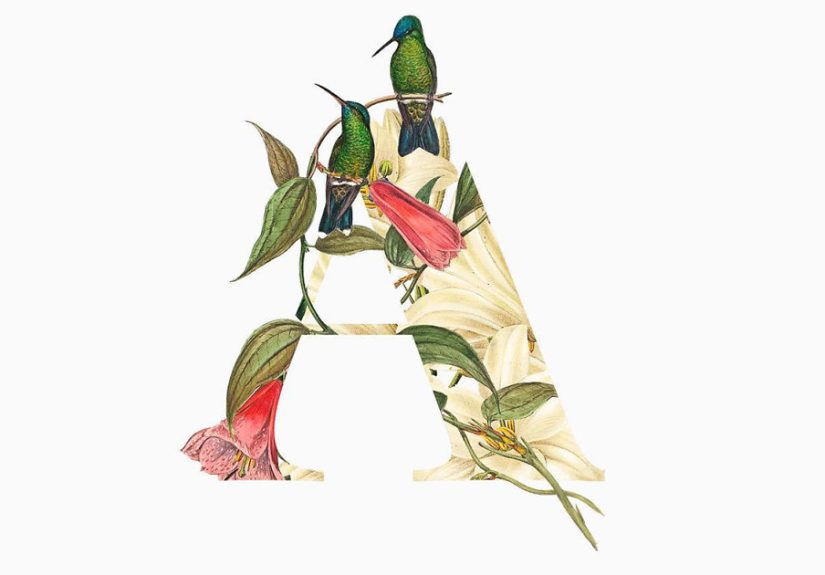
That tiny shift changed everything. What started with a decorative letter “R,” blended with vintage rose illustrations, gradually expanded into a complete alphabet. Over time, the project developed its own rhythm. Instead of trying to make one giant statement in a single sitting, he built a body of work letter by letter, theme by theme, post by post. The result was a series that felt cohesive without feeling stiff.
And that is the first lesson here: momentum matters more than intensity. A lot of artists get stuck because they think the next thing they make has to be important, original, polished, and portfolio-ready before the pencil even touches the paper. That is a fantastic recipe for overthinking and an equally fantastic way to avoid making anything at all.
By contrast, drawing alphabet letters offers an almost sneaky solution. Each letter is a small, manageable problem. What shape does it suggest? What textures fit it? What objects can merge with it? What mood can it carry? Suddenly, creativity stops feeling like a giant empty field and starts feeling like a series of stepping stones. You are not inventing the universe from scratch. You are solving one delightful little puzzle at a time.
Why Drawing Letters Works So Well When You Feel Creatively Stuck
At first glance, letters may seem too basic to rescue anyone from a serious creative slump. But that simplicity is exactly the point. Letters give you a built-in framework. They are recognizable forms, but they still leave plenty of room for experimentation. You can turn an “A” into wings, a “B” into beetles, an “M” into fruit, or a “T” into a teapot. The alphabet gives you just enough guidance to begin, while still leaving enough freedom to play.
1. Constraints can actually unlock creativity
People love to talk about total freedom as if it is the natural habitat of great ideas. In reality, unlimited freedom can be wildly unhelpful. When everything is possible, nothing feels concrete. Your brain starts pacing in circles. Constraints, on the other hand, narrow the field. They direct attention. They give your imagination something to push against.
That is one reason alphabet-based art feels so effective. The form already exists. The challenge becomes interpretation. You are no longer asking, “What should I make with my life?” You are asking, “How can I make this letter interesting?” That question is smaller, clearer, and much less likely to send you into a spiral of doom-snacking and unnecessary self-criticism.
2. Letters are visual objects, not just language tools
Typography is often described as the art of arranging type so it is readable and visually appealing, but letters have always had a second life as shapes, symbols, and expressive forms. They are not only carriers of language. They are images. Curves, angles, rhythm, weight, spacing, contrastletters come with built-in design drama.
That is why illustrated alphabets remain so memorable. They sit at the intersection of reading and seeing. A decorated letter can communicate mood before anyone processes the word itself. A sharp, thorny letter feels different from a floral one. A nautical “N” carries a different emotional weather report than an anatomical “G.” Once you start treating letters like living forms instead of keyboard leftovers, they become wonderfully rich creative material.
3. Small projects are less emotionally expensive
One hidden problem with creative block is emotional overhead. Starting a huge project can feel risky. What if it fails? What if it is bad? What if it proves your inner critic right and you must now move to a cabin and only communicate through sighs?
Small exercises lower the stakes. A single illustrated letter can be finished, revised, or abandoned without turning into a personal crisis. That reduced pressure helps many artists reconnect with the fun of making. And once fun returns, confidence often follows close behind.
The Surprisingly Deep Power of Hand Lettering
Hand lettering is not the same thing as picking a font and calling it a day. It is slower, more personal, and much more revealing. When you draw a letter by hand, you make countless tiny decisions: how thick a stroke should be, where a flourish should land, how much tension or softness a shape should carry. The letter becomes a record of attention.
That matters because creative recovery is often less about producing a dazzling final image and more about rebuilding trust in your own decision-making. Hand lettering forces you to make choices. Then it asks you to stand by them, refine them, and improve them through practice. In other words, it trains the exact muscles that creative block tends to weaken.
It also creates a rare mix of discipline and play. The structure of the letter keeps you focused, while the decorative possibilities keep things fresh. That balance can be deeply satisfying. You are not wandering aimlessly, but you are not trapped either. You are engaged.
What Artists and Designers Can Learn From an Alphabet Challenge
The beauty of a project like this is that it offers practical takeaways for anyone dealing with creative fatigue, whether you are an illustrator, designer, student, marketer, hobbyist, or someone who bought fancy sketchbooks and then treated them like museum artifacts.
Start with repetition, not reinvention
Creative people often assume repetition is the enemy. Actually, repetition can be a lifesaver. Repeating a format allows your ideas to evolve without forcing you to rebuild the entire process each time. With an alphabet challenge, the concept stays stable while the execution changes. That consistency reduces friction and makes it easier to show up regularly.
Give yourself a system
A system can be as simple as this: one letter, one theme, one mood, one post every week. Systems are useful because they reduce the number of decisions you have to make before you begin. And fewer pre-game decisions mean fewer chances to stall out while pretending you are “still thinking.”
Let curiosity lead the aesthetics
One of the strongest parts of illustrated alphabet work is how easily it invites thematic variety. Nature, vintage objects, anatomy, animals, holidays, architecture, machinery, folkloreevery letter can open a new mini-world. That kind of variety keeps the process from becoming monotonous. It also helps artists discover their own visual interests more clearly. Sometimes style is not found in one dramatic breakthrough; it is revealed through repeated choices over time.
Focus on process over perfection
Design and health experts alike often return to the same idea: the process matters. Making art can reduce stress, improve mood, and support self-expression even when the final piece is imperfect. That is incredibly liberating. It means your sketch does not have to be gallery-ready to be worthwhile. It just has to be made.
The Mental Reset Hidden Inside Creative Play
There is also a wellness angle here that should not be ignored. Creative practice is not a magic cure for burnout, anxiety, or every bad Tuesday in human history. But research and clinical experience have repeatedly suggested that making art can support relaxation, coping, attention, emotional processing, and a sense of control. Even hobbies more broadly are associated with better mood and greater life satisfaction.
That does not mean every doodle becomes therapy. It means that creative activity can be good for your nervous system and good for your sense of self, especially when it is approached with curiosity instead of punishment. Alphabet drawing fits neatly into that kind of healthy practice because it is structured, expressive, and easy to personalize.
When you draw a letter, you are doing more than decorating an initial. You are slowing down. You are observing form. You are making choices. You are seeing one thing become another. That transformation is deeply satisfying. It reminds you that imagination still works, even on days when it feels like your brain has replaced inspiration with elevator music.
Why This Story Resonates With So Many Creatives
The reason this alphabet project catches people’s attention is not only that the artwork is beautiful. It is that the idea feels accessible. You do not need a giant studio, expensive equipment, or a dramatic artist backstory involving mysterious train stations and candlelight. You need letters. Time. Patience. A willingness to experiment. That is refreshingly democratic.
It also speaks to a truth many creatives know but sometimes forget: progress is often disguised as play. The work that heals your creative slump may not look like heroic labor. It may look like a side project. A sketchbook game. A visual prompt. A weirdly intense relationship with the letter “Q.” But if it gets you making again, it counts.
That is what makes alphabet art such a smart response to creative struggles. It is structured without being rigid, expressive without being chaotic, and challenging without becoming overwhelming. Better yet, it turns the act of beginning into something repeatable. And for anyone who has ever been paralyzed by the pressure to create something amazing, repeatable beginnings are pure gold.
What the Experience of Drawing Letters Can Feel Like, Day After Day
There is a very particular emotional arc that happens when you start drawing alphabet letters as a personal creative practice. In the beginning, it feels almost laughably simple. You tell yourself that today you are only drawing one letter, which sounds harmless enough. Surely your brain can handle one innocent little “A” without turning it into an identity crisis. And that is exactly why the exercise works. It sneaks past the part of your mind that wants to overcomplicate everything.
The first few letters often feel tentative. You test ideas. You erase a lot. You stare at ordinary shapes and try to convince them to become interesting. Sometimes the result is lovely. Sometimes it looks like a decorative accident that got lost on its way to a greeting card. But even on the awkward days, something useful happens: you show up. That matters more than most people realize.
As the letters accumulate, the experience changes. You begin noticing shapes everywhere. A bicycle wheel starts looking like part of an “O.” Flower stems suggest a “Y.” A stack of books whispers “E” from across the room like an overly eager design intern. Your visual awareness sharpens because the project trains you to search for possibilities in ordinary things. That heightened observation is one of the quiet joys of the whole process.
Then there is the satisfaction of rhythm. Once you have made a few letters, the project develops momentum. You are no longer wondering whether you are capable of doing it. You are wondering what comes next. That is a major emotional shift. Creative block often makes artists feel stalled, doubtful, and strangely disconnected from their own instincts. A repeating letter challenge rebuilds that connection by giving you regular proof that ideas can still happen.
There is also a deeply personal side to it. Letters may be universal, but how you draw them is not. Some people make them elegant and botanical. Others make them bold, weird, funny, gothic, nostalgic, or gloriously over-decorated. Over time, your alphabet becomes less about the letters themselves and more about the decisions you keep returning to. That is when the project starts revealing your style back to you.
Perhaps the most meaningful experience, though, is the way this kind of practice changes your relationship with imperfection. When you commit to drawing many letters instead of obsessing over one flawless piece, you naturally loosen up. You stop demanding brilliance on command. You begin to understand that creativity is not a lightning strike; it is a conversation. Some letters speak clearly. Others mumble. A few are divas. But each one teaches you something.
By the time you reach the later letters, you often realize the project has done more than fill a sketchbook or social feed. It has made creating feel normal again. Less precious. Less scary. More alive. And that may be the biggest win of all. The alphabet did not solve every artistic problem in the universe, but it gave you a way back into the work. Sometimes that is all a struggling creative needs: not a grand rescue, but a manageable path forward, one letter at a time.
Final Thoughts
“I Started Drawing Alphabet Letters To Overcome My Creative Struggles” is more than a catchy title. It is a reminder that creativity does not always return through force. Sometimes it returns through form. Through ritual. Through constraints that make the blank page feel less intimidating. Through small projects that invite experimentation instead of judgment.
If you are feeling stuck, an alphabet challenge may sound modest, but modest tools can do serious work. Draw one letter. Give it a theme. Let it be weird. Let it be elegant. Let it fail a little. Then draw the next one. Somewhere between the first awkward sketch and the final letter, you may find that your imagination did not disappear after all. It was simply waiting for a better invitation.