Table of Contents >> Show >> Hide
- What Are Boxelder Bugs, Exactly?
- So, Is Dish Soap Really a Repellent?
- How Dish Soap Works on Boxelder Bugs
- Why Experts Don’t Treat Dish Soap Like a Miracle Cure
- What Experts Recommend Instead of Relying on Soap Alone
- What About Insecticides?
- If You Still Want to Try Dish Soap, Here’s the Smart Way to Think About It
- Common Mistakes Homeowners Make
- Experience and Lessons From Real-World Boxelder Bug Battles
- Final Verdict
If you have ever looked at a sunny wall in fall and thought, “Why does my house suddenly look like it’s hosting a tiny red-and-black convention?” congratulations: you have probably met boxelder bugs. They gather by the dozens, sometimes by the hundreds, on warm exterior walls, around windows, and near entry points. They are not dangerous in the horror-movie sense, but they are incredibly talented at being annoying.
That is why one popular DIY fix keeps making the rounds: dish soap. Mix it with water, spray the bugs, and problem solved, right? Not exactly. Experts say dish soap can play a role in boxelder bug control, but calling it a secret repellent gives it a little too much credit. A better description would be this: dish soap is sometimes useful as a contact treatment or temporary deterrent, but it is not the star of the show. Prevention is.
So let’s break down what boxelder bugs are, why they pile onto your siding like they pay rent, whether dish soap really works, and what experts recommend if you want fewer bugs and less chaos.
What Are Boxelder Bugs, Exactly?
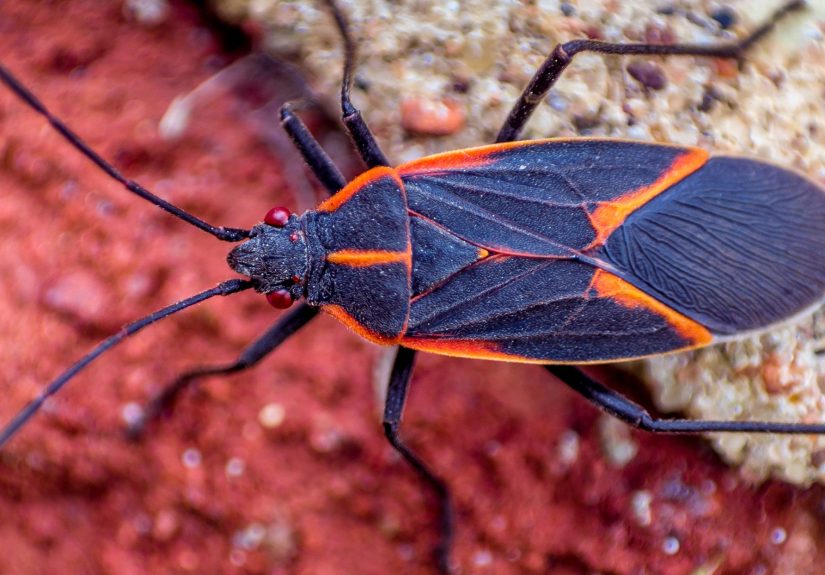
Boxelder bugs are true bugs that feed mainly on boxelder trees, especially female seed-bearing trees, though they can also show up around ash and maple. Adults are about a half-inch long and black or dark brown with red or orange-red lines along the body. The nymphs, or immature bugs, are smaller and much redder, which makes them look like someone designed them for visibility rather than subtlety.
In the landscape, they are usually more nuisance than menace. Their feeding rarely causes serious damage to healthy trees. The real trouble begins when temperatures cool and adults start looking for a sheltered place to spend the winter. Homes, garages, sheds, wall voids, attics, soffits, and sunny exterior walls become prime real estate.
That is why many homeowners first notice them in late summer and fall. The bugs gather on south- and west-facing walls, warm themselves in the sun, and slip through cracks and gaps when they get the chance. Later, during winter warm spells or early spring, they may emerge indoors around windows, light fixtures, or baseboards. They do not reproduce inside the house, but they can stain surfaces with droppings and release an unpleasant odor if crushed. In other words, they are rude houseguests, but not permanent roommates.
So, Is Dish Soap Really a Repellent?
The honest answer: not in the long-lasting, keep-them-away-for-weeks sense.
When people say dish soap “repels” boxelder bugs, they are usually describing one of three things:
- A soap-and-water spray that kills bugs on direct contact
- A soapy solution that deters congregating bugs for a short time
- A cleanup method that helps wash bugs off siding, patios, or tree trunks
That means dish soap is not a force field. It does not create a reliable residual barrier once it dries, and it does not solve the underlying reason the bugs are showing up in the first place. If your siding is sunny, your entry points are unsealed, and nearby host trees are producing steady waves of boxelder bugs, a soap spray alone is like trying to stop rush-hour traffic with one traffic cone and a motivational speech.
Experts generally agree on this point: soap works best when it hits the bugs directly. It may help knock down exposed clusters outdoors, especially nymphs or bugs massed on exterior walls, but it is not the same thing as long-term prevention.
How Dish Soap Works on Boxelder Bugs
Soap-based sprays work by contact. They can disrupt the protective outer layer of susceptible insects and interfere with moisture balance, which can lead to dehydration or death. Some extension experts also explain that soap reduces water’s surface tension, helping the spray spread over the insect’s body more effectively.
Here is the part that matters most for homeowners: soap has to touch the bug. Not the nearby brick. Not the general zip code. The bug itself.
That is why a dish soap spray can seem dramatic at first. You spray a cluster on the siding, the bugs drop, and you feel like you have unlocked ancient pest wisdom. But the next day, more bugs appear from a nearby tree or from a gap near the trim, and suddenly the “secret trick” looks more like a temporary skirmish than total victory.
Soap sprays also tend to be more effective on smaller, softer-bodied insects. Some extension guidance notes that boxelder bug nymphs are more susceptible than many larger-bodied insects, while adults can be less reliably controlled unless they are sprayed directly and thoroughly.
Where Dish Soap Can Help
- On outdoor clusters sitting on siding, tree trunks, fences, or patio surfaces
- On younger bugs during the nymph stage
- As part of a wash-off strategy when combined with water pressure or sweeping
- In a soapy water bucket or trap for hand-collected bugs
Where Dish Soap Falls Short
- As a long-term repellent after the spray dries
- As a whole-house prevention strategy
- When bugs are already hidden inside walls, attics, or voids
- When the main problem is unsealed entry points and repeated migration
Why Experts Don’t Treat Dish Soap Like a Miracle Cure
There are a few reasons extension specialists tend to be practical, not gushy, about homemade soap sprays.
1. It Has No Meaningful Residual Effect
Once the spray dries, its usefulness drops fast. New bugs arriving later are not likely to be affected unless you spray again. That is why repeated applications are often needed when populations are active.
2. Direct Contact Matters
Soap works best when it coats the insect. That makes it helpful for visible clusters and much less useful for hidden bugs tucked behind siding, in soffits, under flashing, or inside wall voids.
3. Dish Soap Can Injure Plants
This is the part that DIY lists sometimes skip. Not all soaps are equally plant-safe. Extension sources warn that some dish soaps and detergents can burn foliage or injure sensitive plants, especially in hot weather or at stronger concentrations. Commercial insecticidal soaps are typically formulated to be safer and more predictable for use on plants.
4. It Doesn’t Replace Exclusion
If your home has gaps around windows, doors, utility lines, vents, fascia boards, or siding transitions, the bugs will keep coming. Soap can reduce visible numbers, but sealing those entry points is what changes the game.
What Experts Recommend Instead of Relying on Soap Alone
If you want real control, think integrated pest management rather than one magic bottle under the kitchen sink.
Seal the House Before the Bugs Move In
This is the gold standard. Repair torn screens, install door sweeps, replace worn weatherstripping, and seal cracks around windows, doors, vents, utility entries, roof lines, and fascia boards. Fine-mesh screening and appropriate caulks or sealants can significantly cut the number of bugs that get inside.
Timing matters here. Sealing before fall migration is far more effective than playing defense after the bugs are already nesting in walls.
Use Mechanical Removal
Once bugs are indoors, vacuuming is one of the most recommended solutions. It is simple, fast, and avoids the mess of smashing them. Sweeping works too, but vacuuming tends to win for convenience and sanity.
Outdoors, a strong stream of water can knock congregating bugs off exterior surfaces. For some homeowners, that plus a broom and dustpan is enough to keep the population from looking like a tiny protest rally on the siding.
Reduce Attractive Hiding Places
Remove piles of leaves, rocks, boards, and debris near the foundation. These sheltered spots can make the area around your home even more inviting.
Address Host Trees Thoughtfully
Female boxelder trees produce seeds that help support larger bug populations. In some cases, removing female trees can reduce nearby activity. But experts also note that this is not always practical, desirable, or enough by itself. Bugs can fly in from neighboring properties, and many homeowners value those trees for shade.
What About Insecticides?
Experts generally reserve insecticides for targeted exterior use, not as an automatic first step. Insecticides may help when applied to outdoor congregation areas or likely entry points before bugs get inside, but they are often less useful once the insects are already in wall voids or living spaces.
Indoor spraying is usually not the best answer for a simple nuisance problem, especially because boxelder bugs do not breed inside and often die off after emerging. Total-release foggers, sometimes called bug bombs, are commonly discouraged for this situation because they do little to reach hidden bugs and add unnecessary pesticide exposure.
That is why many experts steer homeowners back to the boring-but-effective trio: exclusion, sanitation, and mechanical removal. Glamorous? No. Effective? Annoyingly yes.
If You Still Want to Try Dish Soap, Here’s the Smart Way to Think About It
Dish soap is best used as a spot treatment, not a complete strategy.
- Use it on visible outdoor clusters rather than hidden indoor infestations.
- Expect direct-contact results, not lasting repellency.
- Be careful around plants, especially during hot weather.
- Consider commercial insecticidal soap if you are treating vegetation and want a product designed for that purpose.
- Pair soap use with sealing, screening, cleanup, and vacuuming.
In short, dish soap can be part of the toolbox. It is just not the whole garage.
Common Mistakes Homeowners Make
Calling Every Soap Spray a “Repellent”
If the bugs must be sprayed directly for the method to work, you are dealing with contact control, not a lasting barrier.
Ignoring Entry Points
Homeowners sometimes focus on killing visible bugs while leaving gaps around windows and vents untouched. That is like mopping the floor while the pipe is still leaking.
Using Too Strong a Mixture
More soap is not automatically more effective. Stronger mixes may increase the risk of plant damage and still fail to provide residual control.
Crushing Bugs Indoors
Aside from the smell, crushed bugs can stain walls, curtains, and other surfaces. Vacuum first. Regret less.
Waiting Until Winter to Seal Everything
By the time bugs are emerging around your windows in January, the main invasion already happened in fall.
Experience and Lessons From Real-World Boxelder Bug Battles
One reason the dish soap question keeps popping up is that homeowners often have very similar experiences with boxelder bugs. The pattern is so common it practically deserves its own seasonal script.
First comes confusion. Someone notices dozens of red-and-black bugs clustered on a warm exterior wall and assumes they are suddenly breeding on the house. Then comes alarm when a few show up inside near sunny windows in winter or early spring. Then, almost inevitably, comes the internet search: “Will dish soap get rid of boxelder bugs?”
For many people, the first soap spray feels promising. The bugs drop quickly, the wall looks cleaner, and the DIY approach feels satisfyingly low-tech. It is cheap, easy, and already sitting beside the kitchen sink. That immediate result is exactly why the method gets repeated so often. In the moment, it works well enough to earn a fan club.
But the second phase is where expectations tend to change. Homeowners often realize that while soap can knock down the bugs they see, it does not stop fresh arrivals from showing up the next sunny afternoon. If the house has gaps around windows, siding, soffits, or vents, the bugs keep cycling in. That is when people start to see the difference between “I killed these bugs” and “I solved the problem.” Those are not the same sentence.
Another common experience involves indoor sightings after the weather changes. People seal up a few obvious cracks, assume the season is over, and then discover bugs emerging from hidden spaces months later. That can make it seem like the infestation is growing inside the house, when in reality many of those bugs entered earlier and are simply becoming active as temperatures warm. It feels dramatic. It is mostly delayed scheduling by the bugs themselves.
Homeowners also learn quickly that location matters. Bugs tend to gather more heavily on sunny south- and west-facing walls, near dark trim, around garage doors, and along window frames that warm up in afternoon sun. Once people notice those patterns, their control methods become more targeted. Instead of spraying everything in sight, they focus on congregation points, seal likely entry areas, and reduce nearby debris where bugs can shelter.
There is also the plant lesson. Some people spray soap mixtures near shrubs, flowers, or garden plants and then discover spotting or leaf burn, especially during heat. That experience often turns casual DIY confidence into a more careful approach. Many end up reserving dish soap for hard surfaces and using commercial insecticidal soap only where plant-safe labeling makes sense.
The biggest takeaway from homeowner experience is refreshingly simple: the best results usually come from combining methods. Soap can be helpful for quick outdoor knockdown. A vacuum is excellent for indoor cleanup. Sealing cracks is what reduces future invasions. Remove the hiding places, tighten the house, and the problem often becomes manageable instead of maddening.
So yes, dish soap can earn a place in the conversation. It just should not get all the credit. In the real world, the “secret” is less about one clever spray and more about using the right mix of prevention, timing, and realistic expectations.
Final Verdict
Is dish soap the secret to repelling boxelder bugs? Not really. It is better described as a handy, low-cost contact control and occasional short-term deterrent for bugs you can actually see. It may help knock down outdoor clusters, especially when boxelder bugs are massed on sunny walls, but it does not provide reliable long-term repellency and it does not fix the entry points that allow bugs into your home.
If you want the expert-backed approach, focus first on sealing cracks, repairing screens, reducing hiding places, and vacuuming indoor stragglers. Use dish soap as a supporting actor, not the lead. Helpful? Yes. Magical? No. The bugs, unfortunately, did not read the headline.