Table of Contents >> Show >> Hide
- What Julia Fox Actually Said
- Why The Internet Split So Fast
- The Bigger Story: Celebrity Transparency Is Having A Moment
- Why Her Regret Felt So Different From Typical Plastic Surgery Headlines
- Aging, Autonomy, And The Julia Fox Paradox
- Experiences Related To This Debate: Why So Many People Saw Themselves In It
- Final Thoughts
Julia Fox has never exactly been famous for quietly entering a room, whispering a safe opinion, and leaving with everyone politely nodding. She is, at minimum, a one-woman cultural weather event. So when she opened up about regretting her past cosmetic procedures, the internet did what it does best: it grabbed snacks, chose sides, and turned one celebrity confession into a full-blown debate about beauty, feminism, fame, aging, and the exhausting economics of being looked at.
The comment that lit the fuse was not a dramatic reveal about a botched procedure or a Hollywood horror story worthy of ominous violin music. It was something more emotionally complicated. Fox explained that what she regretted most was the reason behind the work: she had once believed she needed to be attractive to men in order to survive. That framing hit a nerve because it pulled the conversation away from scalpels and fillers and dropped it squarely into the messy middle of gender expectations, self-worth, and the performance of desirability.
And just like that, the internet split into familiar camps. One side saw Fox’s honesty as a brutally sharp critique of the beauty system that teaches women to optimize themselves until they look less like people and more like polished marketing decks. The other side thought the explanation was too neat, too contradictory, or too conveniently packaged for a celebrity whose public image has often thrived on spectacle. The result was a cultural pile-on that was not really about Julia Fox alone. It was about what we ask women to do with their bodies, what we praise them for admitting later, and why everyone suddenly becomes a philosopher the moment a celebrity mentions filler.
What Julia Fox Actually Said
Fox’s remarks landed because they were candid, not because they were coy. She has been open over time about procedures and treatments including Botox, fillers, liposuction, rhinoplasty, and veneers. But this latest round of coverage focused on the emotional logic behind those choices. In essence, Fox was not saying she regretted changing her face and body simply because the results looked bad. She was saying she regretted the mindset that made those changes feel necessary in the first place.
That distinction matters. Cosmetic procedures are often discussed in shallow binaries: empowering or tragic, liberating or fake, self-care or self-erasure. Fox’s comments blew up precisely because they refused to sit still in one category. She sounded self-aware without pretending to be fully above the pressures that shaped her. She admired people who had not altered themselves, suggested she wished she could return to that version of herself, and at the same time admitted that aging still scares her. In celebrity language, that is practically a graduate seminar.
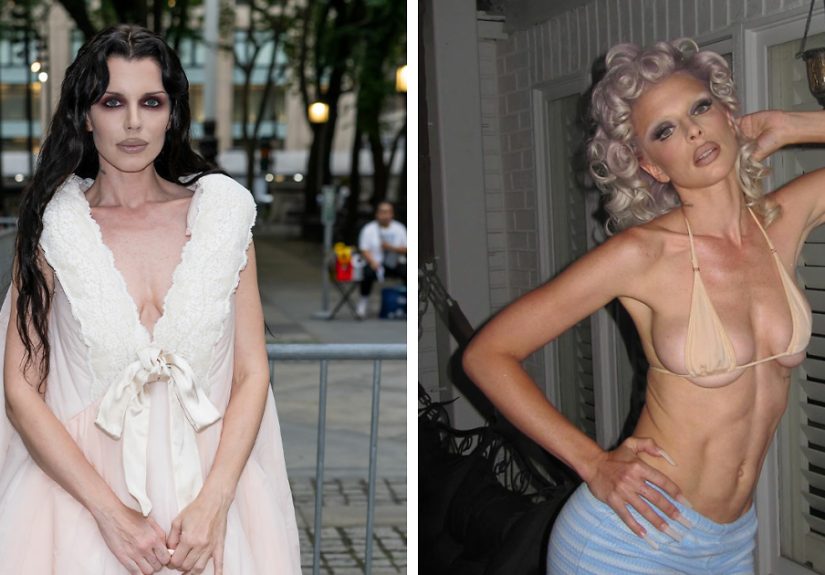
She also did not frame herself as a saint of natural beauty. Fox has previously supported more openness from celebrities about what they have had done, arguing that honesty matters because young women compare themselves to highly managed public images. That point gave her remarks an extra layer. She was not just revisiting her own choices. She was also criticizing the larger illusion machine that sells beauty as effortless when it is usually expensive, strategic, and heavily assisted by everything from injectables to wigs to lighting that deserves its own award nomination.
Why The Internet Split So Fast
The phrase that drove the whole discourse was the idea that she had shaped herself for the male gaze. For many readers, that felt painfully recognizable. Fox’s regret did not sound like vanity gone wrong. It sounded like a survival strategy, one learned in a culture where women are rewarded for being desirable long before they are rewarded for being comfortable. Supporters saw that as the real headline. They heard a woman describing how social pressure can become internal law, how attractiveness can feel less like a preference and more like rent.
But critics were not entirely hard to understand either. Some thought Fox’s explanation over-centered men in a conversation that is also about personal agency, queer identity, class mobility, celebrity branding, and the complicated fact that women do not always change themselves for one audience alone. Others argued that cosmetic procedures are not inherently symptoms of oppression, and that plenty of people pursue them for reasons that feel personal, practical, or even joyful. In that reading, Fox’s regret was valid, but her reason was not universal.
Then there was the contradiction crowd, which is basically the internet’s favorite crowd. These are the commenters who looked at Fox’s boldly theatrical fashion persona and asked, more or less, how someone can reject the male gaze while still performing such a highly visual, provocative public identity. That argument misses some nuance, but it explains why the story spread so fast. Fox occupies a strange cultural lane: she is both in on the performance and willing to mock it, both image-savvy and openly suspicious of image worship. People love that until it forces them to think too hard.
Team “She’s Saying The Quiet Part Out Loud”
The people defending Fox were not just defending one celebrity. They were defending the idea that beauty pressure is social before it becomes personal. Her comments resonated with anyone who has ever realized that a “choice” can still be heavily choreographed by expectation. The modern beauty economy is full of decisions that look individual on the surface but are shaped by a thousand tiny cultural nudges: look younger, look hotter, look effortless, look expensive, but please do not look like you tried too hard. It is a scam with excellent packaging.
From that angle, Fox’s regret sounded less like an attack on cosmetic work and more like an attack on the conditions that make cosmetic work feel mandatory. That is why so many people treated her comments as bigger than celebrity gossip. She gave language to a familiar emotional math: if beauty opens doors, keeps attention, improves treatment, or even creates safety, then altering yourself can feel rational. The tragedy is not always the procedure. Sometimes it is the system that made the procedure feel like common sense.
Team “It’s More Complicated Than That”
At the same time, the backlash revealed another truth: people do not like when public conversations flatten complicated choices into one explanation. Some readers felt Fox’s regret narrative risked sounding like a universal theory when, in reality, motivations for plastic surgery vary wildly. Some people seek procedures after pregnancy, after illness, after weight loss, after years of insecurity, or simply because they want to. Some hate the stigma more than the surgery. Some feel more like themselves afterward, not less.
There was also skepticism about timing. Celebrity confessions often arrive after fame has already paid dividends, which makes audiences suspicious. A few commenters basically argued that once someone has benefited from beauty culture, their critique of that same culture can sound a little like trying to cash both checks. That reaction may be cynical, but it is not entirely irrational. Celebrity honesty is still performance. It can be sincere and strategic at the same time. Welcome to 2026, where authenticity is real, monetized, and filtered through a ring light.
The Bigger Story: Celebrity Transparency Is Having A Moment
Part of the reason Fox’s comments landed so loudly is that they arrived during a broader phase of celebrity transparency around cosmetic work. More stars have been naming procedures, admitting enhancements, and in some cases sharing details that would have once been guarded like nuclear codes. Fox has publicly supported that trend, arguing that a little honesty can puncture impossible standards. She is hardly alone in seeing secrecy as part of the problem.
That shift is important, but it is not a magic fix. Transparency can reduce the gaslighting effect of celebrity beauty, yet it can also normalize an even more competitive culture of optimization. When everyone admits they have had work done, the pressure does not necessarily disappear. It can simply become more detailed. Suddenly the standard is not just “look amazing.” It is “look amazing, be honest about the surgeon, and still somehow act chill about it.” Very relaxing. Not stressful at all.
Fox’s comments captured that tension perfectly. She praised honesty while also describing the emotional cost of having bought into the system herself. In other words, transparency is useful, but it does not erase the deeper issue. People are still living inside a culture that treats aging like a technical problem and attractiveness like social currency. Fox was interesting not because she solved that contradiction, but because she said it out loud while still very much living inside it.
Why Her Regret Felt So Different From Typical Plastic Surgery Headlines
Most celebrity plastic surgery stories are built like a before-and-after slideshow wearing a trench coat and pretending to be journalism. Fox’s story traveled differently because the emotional center was regret about motive, not result. That made the conversation more philosophical and, frankly, more combustible. It is easy for the internet to discuss whether a nose job looks good. It gets much harder when the subject becomes why women learn to believe that being desirable is a form of safety.
Fox’s phrasing also connected beauty to survival, which made some readers deeply sympathetic and others deeply uncomfortable. Sympathy came from recognizing how often women are trained to understand desirability as protection, leverage, or access. Discomfort came from hearing that truth expressed so bluntly. It is one thing to discuss beauty standards in abstract terms. It is another to hear someone say the pressure felt like a condition of living.
That is where the article cycle turned into a culture war. Some people heard Fox and thought, finally, someone is naming the emotional violence beneath beauty maintenance. Others heard her and thought, hold on, are we seriously reducing every cosmetic decision to patriarchy with lip gloss? The answer, of course, is no. But in internet discourse, nobody gets points for saying, “This is layered and deserves careful thought.” That sentence has never once gone viral.
Aging, Autonomy, And The Julia Fox Paradox
Another reason the story stuck is that Fox did not present herself as fully healed, fully certain, or fully done with the issue. She has spoken admiringly about aging naturally, yet she has also admitted that getting older unsettles her. That contradiction made her comments feel less like a polished manifesto and more like an honest snapshot of a person trying to unlearn something while still feeling its effects.
That may be the most relatable part of the whole story. Public conversations about body image tend to reward clean arcs: insecurity, awakening, empowerment, end scene. Real life is sloppier. People can critique a system while still being tempted by it. They can reject beauty expectations and still feel sad when their face changes. They can know better and still want the old validation. Fox’s comments resonated because they reflected that discomfort instead of hiding it under a motivational quote and a beige aesthetic.
In that sense, the “controversial reason” for her regret is only controversial because it reveals how much beauty culture depends on contradiction. Women are told they are free to choose, then judged whether they choose surgery or skip it. They are told to age naturally, then rewarded for appearing untouched by time. They are encouraged to be authentic, but only if authenticity photographs well. Fox did not invent that paradox. She just walked straight into it wearing very dramatic eyeliner.
Experiences Related To This Debate: Why So Many People Saw Themselves In It
One reason Fox’s comments traveled far beyond celebrity news is that they echoed ordinary experiences many people never describe out loud. Not everyone gets cosmetic procedures, of course, but plenty of people understand the feeling of making appearance choices under pressure and only later asking, “Wait, was that really for me?” That question can show up in surprisingly everyday ways.
For some, it starts young. A teenager gets praised every time she looks more polished and ignored every time she looks comfortable. By the time she is older, effort stops feeling optional. The beauty ritual becomes so routine that it no longer feels like a response to social pressure. It just feels normal. Then one day she skips the routine and realizes how differently she is treated, and suddenly the whole system becomes visible. That moment can be small, but it hits hard.
For others, the experience is less about men specifically and more about being read correctly by the world. Looking “put together” can affect work, dating, social confidence, and even how seriously someone is taken. Plenty of people learn that appearance can function like armor. The haircut, the makeup, the gym body, the carefully curated face on social media, the procedure nobody talks about at brunch but everybody notices in photos: all of it can start to feel less like vanity and more like management. Emotional management. Professional management. Survival management.
There is also a very common post-change experience that rarely gets discussed well: the unsettling realization that a beauty upgrade does not automatically deliver inner peace. A person may get exactly the look they wanted and still discover that insecurity is annoyingly portable. It travels. It changes outfits. It learns new vocabulary. That does not mean the decision was foolish. It just means the emotional promise attached to beauty is often bigger than beauty can actually fulfill.
And then there is the strange grief of looking back. Some people do not regret the procedure itself; they regret the fear that led them there. They regret how hard they were on themselves. They regret old photos they once hated and now find beautiful. They regret confusing approval with safety. That emotional re-reading of the past can be surprisingly intense. It is not just, “I wish I had done something different.” It is, “I wish I had known I was already enough before I started negotiating with my own reflection.”
That is why Fox’s remarks hit such a wide audience. They tapped into a familiar, often private conflict between autonomy and conditioning. People want to feel that their choices are theirs. At the same time, most of us know our preferences do not grow in a vacuum. They are shaped by trends, praise, algorithms, lovers, rivals, jobs, fear, aspiration, and the ancient human desire to be welcomed by the room. Fox’s comments did not settle that tension. They simply made it visible.
Seen that way, the internet’s divided response makes perfect sense. Some heard liberation. Some heard oversimplification. Some heard hypocrisy. Some heard a truth they had been trying not to name. But the reason the conversation stayed alive is simple: beneath the celebrity gloss, it was really about a question almost everyone understands. When we change ourselves to be loved, admired, protected, or chosen, where does self-expression end and survival strategy begin?
Final Thoughts
Julia Fox did not break the internet by regretting plastic surgery. Celebrities do that every few business days. What made this story stick was her reason. She attached regret to the pressure of male approval, to the beauty economy, and to the old instinct to treat desirability like a life raft. That explanation made some people feel seen, some people feel skeptical, and a whole lot of people feel compelled to comment as if they were being graded on participation.
In the end, the divide says as much about us as it does about her. Fox’s confession became a mirror for every unresolved argument we still have about beauty and power. Can cosmetic work be empowering and still shaped by social pressure? Yes. Can celebrity transparency help while also fueling new standards? Also yes. Can someone reject the gaze and still understand exactly how to work a camera? Absolutely. Human beings contain multitudes, and celebrities contain multitudes with publicists.
The smartest takeaway is not that Julia Fox is right about everything or wrong about everything. It is that her comments exposed a tension many people live with quietly: the desire to own your image while also admitting that the world helped write the script. That is not hypocrisy. That is modern life with a better wardrobe.