Table of Contents >> Show >> Hide
- How We Ranked the Jurassic World Trilogy
- #1 – Jurassic World (2015): The Reboot That Actually Worked
- #2 – Jurassic World: Fallen Kingdom (2018): Gorgeous, Bonkers, and Divisive
- #3 – Jurassic World Dominion (2022): Big Ideas, Too Many Locusts
- How Fan Rankings Differ From Critical Rankings
- Where Does Jurassic World Rebirth Fit In?
- Final Verdict: Did the Jurassic World Trilogy Do the Franchise Justice?
- Experiences and Fandom Stories Around the Jurassic World Trilogy
The Jurassic World trilogy had one job: bring dinosaurs roaring back to the big screen for a new generation
while cashing in on our nostalgia for Jurassic Park. Financially, mission very much accomplished. Creatively…
that depends on who you ask. The three films Jurassic World (2015), Jurassic World: Fallen Kingdom (2018),
and Jurassic World Dominion (2022) earned billions worldwide and sold oceans of popcorn, but critics and fans
have been hilariously divided about which entries actually deserve a rewatch.
Review aggregators show a clear pattern: the first Jurassic World lands solidly in “pretty good blockbuster” territory,
while Fallen Kingdom slides into mixed reviews and Dominion becomes the lowest-rated film in the entire Jurassic franchise,
with a critics score around 29% on Rotten Tomatoes and a middling Metacritic rating in the 30s.
And yet, audiences kept showing up, with Dominion still stomping past the $1 billion worldwide mark.
So where does each movie land in a fair, modern ranking? Let’s break down the trilogy with a mix of critic data, box office performance,
fan reactions, and good old “which movie do you actually want to put on during a rainy Sunday?” vibes.
How We Ranked the Jurassic World Trilogy
Before we start arguing about dinosaurs, here’s the rough criteria behind this ranking:
- Critical reception: Rotten Tomatoes and Metacritic scores help show how the films landed with reviewers.
- Audience response: CinemaScore grades and audience scores often tell a very different story from critics
especially for Dominion. - Box office strength: How much did each film earn relative to its budget and expectations?
- Story and characters: Does the movie care about humans as much as CGI teeth, or are we just waiting for the next chomp?
- Dinosaur spectacle: Set pieces, creature design, animatronics, and that “wow” factor matter a lot in a dinosaur movie.
- Rewatch value: If you’d happily replay it while folding laundry, that counts as a win.
#1 – Jurassic World (2015): The Reboot That Actually Worked
Jurassic World had every reason to fail. It was the fourth film in a franchise that had already stumbled,
it leaned hard on nostalgia, and it introduced a genetically engineered mega-dinosaur that sounded like a toy line pitch.
Instead, it became a full-on phenomenon, earning about $1.67 billion worldwide and briefly ranking among the
highest-grossing films of all time.
What Jurassic World Gets Right
First, it delivers the fantasy the original teased: a functioning dinosaur theme park, complete with corporate sponsors,
bored teenage guests, and overconfident executives. It feels like the logical “of course humans would do this” sequel
to John Hammond’s doomed dream.
Critics gave it a solidly fresh rating in the low 70s on Rotten Tomatoes, and audiences graded it an “A” via CinemaScore,
signaling that, while not a masterpiece like the 1993 original, it’s a genuinely entertaining blockbuster.
The movie nails a few key things:
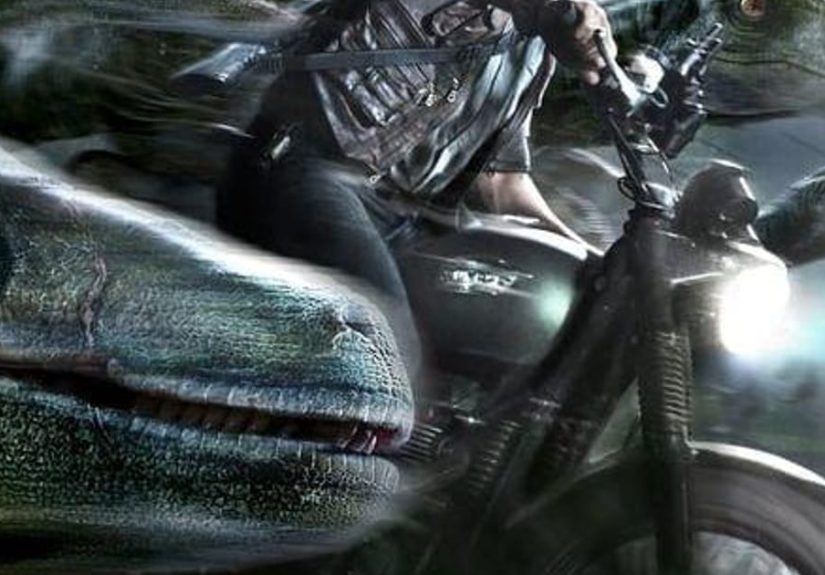
- Dinosaur set pieces: The Indominus rex breakout, the raptor motorcycle chase, and the Mosasaurus feeding show all stick in your brain.
- Clear stakes: Park goes wrong, people run, raptors switch sides, T. rex gets the hero moment. Simple, effective.
- Modern spin: Commentary on consumerism, branding, and “bigger, louder, scarier” entertainment feels baked into the premise.
Chris Pratt’s Owen and Bryce Dallas Howard’s Claire may not be the deepest characters ever written, but they’re charismatic enough
to carry the action, and the film moves briskly without collapsing under too many subplots.
Where It Stumbles
The movie isn’t flawless. Some critics pointed to thin characterization and overreliance on CGI compared to the more grounded feel
of Jurassic Park.
There are also a few infamous moments yes, including Claire sprinting in heels that became memes overnight.
Still, of the Jurassic World trilogy, this is the film that most people agree “works” as a movie. It has a clear arc, memorable action,
and enough wonder mixed with horror to remind you why dinosaurs on the big screen are fun in the first place.
#2 – Jurassic World: Fallen Kingdom (2018): Gorgeous, Bonkers, and Divisive
Jurassic World: Fallen Kingdom is where the trilogy leans into its weird side. Directed by J.A. Bayona,
the film is almost split in half: a disaster movie about an exploding island, and then a gothic monster movie in a haunted mansion
filled with dinosaurs and morally questionable rich people.
Critics landed in the “mixed” zone, with Rotten Tomatoes scores in the high 40s and a Metascore just above 50.
At the same time, box office numbers were massive, with an opening weekend above $150 million domestically and a huge worldwide haul,
proving audiences were still all-in on dino chaos.
The Highlights: Big Feelings and Beautiful Chaos
Even people who aren’t fans of the story admit Fallen Kingdom looks fantastic.
- The opening underwater sequence and the nighttime Indominus bone retrieval are moody, horror-tinged set pieces.
- The volcanic eruption and stampede especially the shot of the brachiosaurus silhouetted against the lava hit surprisingly emotional notes.
- Bayona’s horror background shines in the mansion scenes, turning the Indoraptor into something like a slasher villain stalking its prey across rooftops and hallways.
Some fans and reviewers praise the film for taking risks, leaning into tragic imagery and pushing the series toward a more “dinosaurs loose in the world”
premise that sets up Dominion.
The Problems: Plot Gymnastics and Cartoon Villains
On the flip side, Fallen Kingdom is where the scripts start feeling like they’re held together with dinosaur duct tape.
The human villains are cartoonishly evil, the cloning subplot comes out of nowhere for many viewers, and the auction sequence
with billionaires casually bidding on living weapons plays like a live-action comic book, not a grounded sci-fi thriller.
For some fans, that over-the-top energy is part of the charm. For others, it’s a sign the series is drifting away from the carefully
built tension and awe that made the original films special. Either way, Fallen Kingdom is rarely anyone’s favorite, but it’s almost
never the most boring entry which is important once we get to #3.
#3 – Jurassic World Dominion (2022): Big Ideas, Too Many Locusts
Jurassic World Dominion was marketed as the “epic conclusion” to the entire saga, uniting the original
Jurassic Park trio (Sam Neill, Laura Dern, Jeff Goldblum) with the newer Jurassic World characters.
On paper, that’s a dream crossover. In practice, it’s a crowded movie with so many subplots that the dinosaurs sometimes feel like a side quest.
Critics were notably unimpressed. The film sits at the bottom of the franchise with a critics score around 29% on Rotten Tomatoes and
a Metacritic score hovering in the 30s.
Review roundups repeatedly called it overstuffed, convoluted, and oddly fixated on genetically engineered locusts instead of, you know, dinosaurs.
And yet, audiences gave it a much warmer reception, with an “A−” CinemaScore and audience scores more in the 70s on Rotten Tomatoes,
suggesting that while critics were done with the franchise, many moviegoers were happy just to see familiar faces and big creatures on screen.
The movie still made about $1 billion worldwide, continuing the trilogy’s streak of massive box office success.
What Works in Dominion
- The legacy cast: Any scene with Ellie Sattler, Alan Grant, and Ian Malcolm together taps right into ’90s nostalgia.
- New dinosaurs and locations: The Malta sequence, with black-market dinosaur chases, feels like a wild spin on the franchise.
- The extended edition: A longer cut released later adds character beats and a more atmospheric prologue that some critics felt improved the film’s pacing and tone.
Why It Still Ranks Last
The main issue is focus. Rather than truly digging into “a world where humans and dinosaurs coexist,” Dominion spends a surprising
amount of time on an evil agri-tech corporation and the aforementioned plague of giant locusts. That might work in a different sci-fi movie,
but here it feels like a genre mash-up that never quite gels.
With so many characters and plotlines, emotional arcs get lost. The film tries to be an action thriller, a corporate conspiracy story,
a send-off for legacy characters, and a meditation on playing God with genetics all while juggling giant reptiles. It’s ambitious,
but the result is more exhausting than exhilarating.
Still, “worst of the trilogy” doesn’t mean “unwatchable.” For many fans, Dominion is comfort food: messy, but full of familiar faces,
incredible VFX, and just enough dino mayhem to justify a rewatch, especially with the extended cut.
How Fan Rankings Differ From Critical Rankings
If you scroll through fan lists and social media polls, you’ll see nearly every possible ranking order but a few patterns pop up:
- Critics usually rank Jurassic World highest, followed by Fallen Kingdom, with Dominion at the bottom.
- Some fans flip #2 and #3, calling Dominion more fun thanks to the legacy cast and globe-trotting action, even if they admit the script is chaotic.
- Others defend Fallen Kingdom as the boldest entry, praising the moody horror visuals and emotional beats, while criticizing Dominion as the most “corporate” feeling film.
The biggest gap between critics and audiences is clearly Dominion.
Low critic scores contrast with relatively high audience approval, showing that while reviewers were ready to move on,
regular moviegoers were still happy to watch dinosaurs trash expensive sets one more time.
Where Does Jurassic World Rebirth Fit In?
Technically, Jurassic World Rebirth (2025) launches a new chapter rather than belonging to the original Jurassic World trilogy,
but it’s already shaping how people talk about the series. With a fresh cast including Scarlett Johansson and Mahershala Ali
and a new storyline about a mission to harvest dinosaur DNA for medical research, the movie aims to reset the franchise after
the critical backlash to Dominion.
Early box office reports show a strong global opening above $300 million, albeit slightly below the first Jurassic World and its sequels,
but with a significantly lower production budget that makes it financially attractive.
Reviews so far are mixed-to-positive, with critics in the “rotten but not disastrous” zone and audiences once again more forgiving.
For ranking purposes, Rebirth sits outside the trilogy, but it clearly responds to fan feedback: more grounded stakes, a tighter cast,
and a tone closer to adventurous sci-fi than conspiracy thriller. If it continues that course, future rankings of the entire Jurassic saga
might treat the Jurassic World trilogy as a flashy but uneven middle era between two stronger phases.
Final Verdict: Did the Jurassic World Trilogy Do the Franchise Justice?
So where do we land overall? In this ranking:
- #1 – Jurassic World (2015): The most consistent, rewatchable, and satisfying entry.
- #2 – Jurassic World: Fallen Kingdom (2018): Visually rich and thematically bold, but structurally messy.
- #3 – Jurassic World Dominion (2022): Big and loud with fun moments, but weighed down by too many subplots and not enough focus.
As a trilogy, Jurassic World is a classic modern blockbuster story: huge financial success, lively fan debates, and wildly uneven quality.
These films may never match the elegance and tension of the 1993 original, but they keep the core fantasy alive:
what if we really brought dinosaurs back, and what if shocking twist that turned out to be a terrible idea?
If you’re planning a marathon, this ranking offers a good viewing order. Start strong with Jurassic World, get weird and emotional with
Fallen Kingdom, and then finish with Dominion for closure, legacy character hugs, and one last round of “how many times are we going
to ignore chaos theory?”
Experiences and Fandom Stories Around the Jurassic World Trilogy
Rankings are fun, but what really keeps the Jurassic World trilogy alive is how people talk about it and argue about it
years after release. If you’ve ever walked out of a theater and immediately started debating which dinosaur would win in a hypothetical cage match,
you already know how this franchise works on a social level.
For a lot of viewers, Jurassic World is tied to very specific memories: seeing the Mosasaurus splash the crowd in a packed opening-weekend show,
listening to kids gasp when the park first opens on screen, or feeling the rumble of the Indominus rex roar through theater seats.
Even people who roll their eyes at the movie’s corporate satire often admit that, in the moment, the spectacle just works.
It’s the kind of film you show to younger family members as their “first big dinosaur movie” a gateway into the larger franchise.
Fallen Kingdom tends to split groups in a more dramatic way. Some viewers come out saying,
“That was so over-the-top, I loved it,” while others are still trying to process how a franchise that started as a cautionary tale
about cloning ended up as a gothic horror set in a dinosaur-infested mansion. If you watch this one with friends,
you’ll almost always get at least one person defending the emotional brachiosaurus moment and another person
wondering why we’re selling raptors to arms dealers like they’re luxury cars.
Dominion generates its own unique flavor of discourse. For casual audiences, it’s a fun night out:
familiar faces, huge action scenes, and a sense of finality. For more devoted fans and critics, it’s easy to spend
an entire post-movie dinner picking apart the story, asking why a film supposedly about dinosaurs coexisting with humans
spends so much of its runtime on crop-destroying locusts and corporate espionage. The funny thing is that many of those same people
will still rewatch it later, especially once the extended edition hit home release. Part of the charm of the franchise is that
even its messiest entries are oddly comforting.
Online, the trilogy has become a permanent fixture in ranking lists, fan edits, and “fix-it” pitches.
You’ll find Reddit threads proposing alternate versions of Dominion that focus more on global dino encounters,
YouTube video essays defending Fallen Kingdom as secretly brilliant, and social media polls where
Jurassic World often clings to the top spot but is constantly challenged by more adventurous fans who prefer the riskier sequels.
Every new ranking sparks more replies, more quote-tweets, and more “actually, hear me out…” essays.
Then there’s the impact of Jurassic World Rebirth, which has energized the fandom again.
Some viewers use it as proof that the franchise still has life, arguing that it feels closer to the original film’s mix of wonder and danger.
Others treat it as a soft reset, revising their rankings to separate the “World trilogy era” from whatever this new chapter becomes.
The result is that discussions about the original trilogy are no longer static they’re constantly recontextualized by whatever the newest entry does.
Ultimately, the most accurate way to describe the Jurassic World trilogy experience is this:
it’s a roller coaster you can’t fully justify but keep lining up for anyway. You might complain about plot holes,
character choices, or excessive CGI, but when the lights dim and that familiar theme music swells,
it’s hard not to lean back, grab your popcorn, and think, “Okay, fine, one more ride.”