Table of Contents >> Show >> Hide
- Why Measuring Tools Get Messy So Fast
- Step 1: Do a 5-Minute “Keep / Donate / Recycle” Check
- Step 2: Pick Your “Home Base” (Where You’ll Actually Use Them)
- Method A: The Gold StandardA Dedicated Drawer Section
- Method B: Cabinet Door Hanging (The Space-Saver That Feels Like Magic)
- Method C: Peg Rails and Pegboards (For People Who Like Visual Order)
- Method D: Store the Scoop Where the Ingredient Lives
- Method E: The Countertop Caddy (Only If You’ll Use It)
- Small Kitchen Fixes That Make a Big Difference
- Maintenance: How to Keep the System From Collapsing on a Tuesday
- Quick Troubleshooting
- Real-Life Kitchen Experiences: 5 Scenarios You’ll Recognize
- Conclusion: Your Measuring Tools Deserve Better Than Drawer Chaos
Measuring cups and spoons are tiny, innocent-looking tools with a secret hobby: disappearing exactly when you need the
1/3 cup the most. (It’s always the 1/3 cup. The 1/4 cup is the kitchen’s golden childalways accounted for,
smugly visible, probably filing taxes on time.)
The good news: organizing measuring cups and spoons doesn’t require a full kitchen remodel, a label maker that costs
more than your rent, or the emotional strength to Marie Kondo every utensil you’ve ever loved. It just takes a
little strategyputting these tools where you actually use them, storing them so they’re easy to grab
and put back, and choosing a system that survives real life (aka “someone else unloaded the dishwasher”).
Why Measuring Tools Get Messy So Fast
Measuring tools live at the intersection of high frequency and low respect. They’re used often (especially if you bake),
they’re small enough to migrate, and they’re commonly stored in “the utensil drawer,” which is basically the kitchen’s
version of a group chat: loud, chaotic, and full of random attachments.
A great organization setup solves three problems at once:
- Visibility: You can see the whole set quickly (no digging).
- Access: You can grab one size without detonating the rest.
- Returnability: Putting them back is easy enough that you’ll actually do it.
Step 1: Do a 5-Minute “Keep / Donate / Recycle” Check
Before you buy organizers, look at what you’re organizing. A quick sort now prevents you from building a fancy
storage system for tools you don’t even like using.
What to keep
- One solid set of dry measuring cups (1/4, 1/3, 1/2, 1 cupplus any extras you actually use).
- One solid set of measuring spoons (at least 1/4 tsp to 1 Tbsp).
- A liquid measuring cup (or two) that you can read easily at eye level.
- Any specialty measures you truly use (e.g., 2 Tbsp, 1/8 tsp, or metric equivalents).
What to let go
- Duplicates that create clutter and confusion (“Why do we have three 1/2 teaspoons?”).
- Sets with worn-off markings (that’s not a measuring spoon; that’s a mystery spoon).
- Odd sizes you never reach for (unless you routinely make recipes that call for them).
If you love baking, consider keeping two sets of measuring spoonsone for dry spices/flour and one for
sticky things like honey. Not required, but it can reduce mid-recipe washing drama.
Step 2: Pick Your “Home Base” (Where You’ll Actually Use Them)
The best storage location is the one that matches your habits. If you bake often, your measuring tools should live
near flour, sugar, and mixing bowls. If you cook more than you bake, keep them near prep tools and spices.
Two common “zones” that work
- Baking zone: Near pantry staples (flour, sugar) and mixing tools.
- Prep zone: Near utensils, cutting boards, oils, and seasonings.
If your kitchen is small, don’t worry“zone” can mean one drawer. Even one well-organized drawer can feel like
you upgraded your whole kitchen.
Method A: The Gold StandardA Dedicated Drawer Section
If you have drawer space, this is usually the easiest system to maintain. The goal is to create a “slot” or
“parking spot” for the measuring set so it doesn’t mingle with whisks and tongs like it’s trying to start a band.
1) Use a tray or modular bins
Look for a shallow tray, expandable organizer, or modular bins that fit your drawer dimensions. The best trays create
separate compartments so measuring spoons don’t get buried under bigger utensils.
2) Add drawer dividers to prevent “tool drift”
Dividers are great if your drawer is wide or deep. Create a small lane for measuring spoons and a larger lane for
cups. Bonus points if your organizer is adjustable so it can grow with your utensil collection (or shrink with your
decluttering ambitions).
3) Keep sets together (but not trapped together)
Rings are convenient for storage, annoying for grabbing one piece. Consider a set with an easy-open ring, or store
them nested but not permanently locked together. If you prefer everything to “click” into place, magnetic measuring
spoons and cups can stack neatly and stay aligned.
Drawer setup example (quick and realistic)
- Left compartment: Measuring spoons (nested, easy-open ring, or magnetic stack).
- Middle compartment: Dry measuring cups (nested, largest in back).
- Right compartment: Small baking extras (mini whisk, small spatula, or bag clips).
The “secret sauce” is making the measuring tools the easiest thing to reach. If you bury them behind the garlic press,
you’ll keep losing the 1/3 cupand then you’ll start “eyeballing” flour like you’re auditioning for a cooking show.
Method B: Cabinet Door Hanging (The Space-Saver That Feels Like Magic)
No drawer space? Cabinet doors are underused real estate. Hanging measuring cups and spoons inside a cabinet door
keeps them visible, accessible, and off the counter.
What you need
- Small hooks (cup hooks, removable adhesive hooks, or slim utility hooks)
- Optional: bumpers/door buffers to reduce clanking
- Optional: labels or a simple outline system so each tool has a “home”
How to avoid the #1 cabinet-door mistake
Clearance matters. If the measuring cups hit a shelf when the door closes, you’ll either rage-quit the system or
slam the door until something gives (and it will be your patience).
Make it extra foolproof
- Arrange by size: smallest spoons on top, larger cups below.
- Assign one hook per tool: no doubling up unless you enjoy tangled metal.
- Add “return cues”: labels, silhouettes, or a simple chart taped inside the door.
This method is also renter-friendly if you use removable hooks. Just make sure your cabinet door surface is clean and
dry before applying anything adhesive.
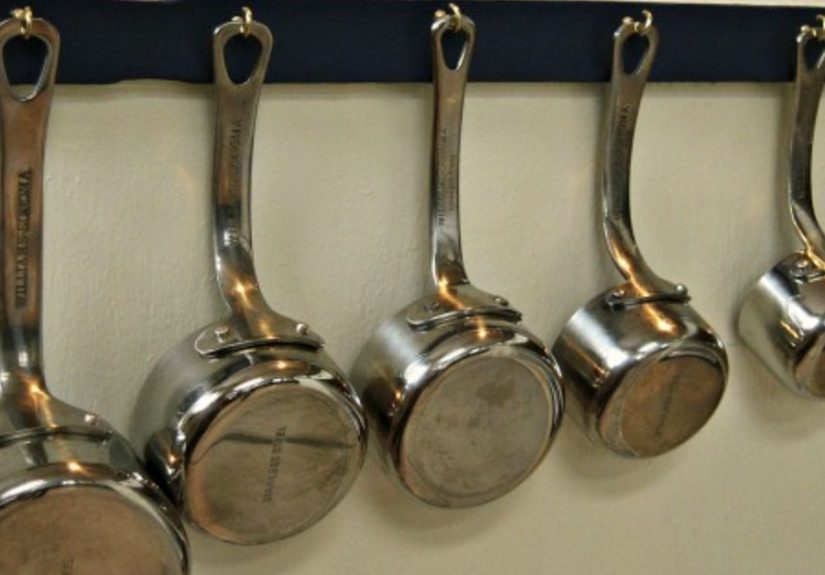
Method C: Peg Rails and Pegboards (For People Who Like Visual Order)
If you want your kitchen to feel like a calm, functional workspace, peg systems are a great option. A peg rail under
cabinets or a pegboard on a wall can hold measuring tools on hooks, keeping them in plain sight.
When peg systems work best
- You bake often and want tools visible at a glance.
- You have limited drawer/cabinet space.
- You like the “everything has a hook” aesthetic (no judgmentit’s satisfying).
If you’re worried about visual clutter, keep it minimal: just the measuring tools and maybe one or two lightweight
prep utensils. It’s organization, not a kitchen-themed museum exhibit.
Method D: Store the Scoop Where the Ingredient Lives
Here’s a surprisingly effective trick: keep a measuring scoop or cup inside the container that holds the ingredient
you measure most. Wide-mouth canisters for flour, rice, oats, or sugar can comfortably fit a scoop so you’re not
searching drawers mid-recipe.
Why this works
- Fewer steps: ingredient + scoop in one place
- Less clutter: fewer tools in drawers
- Faster cooking: less rummaging, more doing
If you do this, keep at least one “clean” set of measuring cups/spoons available for other ingredients. Otherwise
your cinnamon might start tasting suspiciously like onion powder. (It happens.)
Method E: The Countertop Caddy (Only If You’ll Use It)
Yes, countertop storage can workif you’re truly using the tools daily. A small crock, canister, or divided caddy
can hold measuring spoons and frequently used cups upright. This is especially helpful in tiny kitchens with
limited drawer space.
Countertop rules (to avoid clutter)
- One container only.
- Only daily-use items.
- Place it near where you prep, not where it becomes “decor.”
Small Kitchen Fixes That Make a Big Difference
1) Use vertical space in deep drawers
Deep drawers can become black holes. Use small bins inside the drawer so measuring tools stay contained, or add
a compact organizer that stacks items at an angle for visibility.
2) Create a “mini drawer” inside a drawer
If your main utensil drawer is chaos, add a small tray within it specifically for measuring tools. Think of it as
giving your measuring spoons their own studio apartment inside your drawer’s crowded city.
3) Add a conversion chart where you measure
If you often convert tablespoons to cups (or switch between metric and U.S. measures), add a small conversion chart
inside the cabinet door or next to the drawer. It’s organization plus sanity.
Maintenance: How to Keep the System From Collapsing on a Tuesday
The best organization system is the one you can maintain when you’re tired, hungry, and someone just asked
“What’s for dinner?” like you didn’t already cook yesterday.
Try these low-effort habits
- The 10-second reset: after cooking, put measuring tools back in their dedicated spot.
- One-in, one-out: if you buy a new set, donate the old one (unless you truly need both).
- Monthly glance test: open the drawer/cabinetif it looks messy, fix it immediately (takes 60 seconds).
Quick Troubleshooting
“My measuring spoons keep separating and getting lost.”
Use an easy-open ring, a small dedicated compartment, or a magnetic set that stacks neatly. The key is containment:
one home, one footprint.
“Cabinet door storage clanks like a tiny wind chime.”
Add small bumpers, space hooks farther apart, or hang fewer items per door. You want “pleasantly organized,” not
“haunted pantry.”
“My drawer organizer slides around.”
Choose a tray with a non-slip base, add grippy liner underneath, or use small adhesive dots to keep dividers stable.
Real-Life Kitchen Experiences: 5 Scenarios You’ll Recognize
Organization advice is cute in theory. Real life is a different genremore like a sitcom where the 1/3 cup is the
villain and the utensil drawer is the chaotic best friend. Here are a few experience-based situations that pop up in
everyday kitchens, plus what actually helps.
1) The “Vanishing 1/3 Cup” Mystery
You’re baking. The recipe says 1/3 cup. You confidently open the drawer and find: 1/4 cup, 1/2 cup, 1 cup, and a
bottle opener you’ve never used. The 1/3 cup has apparently joined a traveling circus.
This almost always happens when cups are stored loosely and nested inconsistently. The fix is boring but powerful:
give measuring cups one dedicated compartment (or hang them). When every piece has a visible home, missing tools
stick out immediatelyno detective work required.
2) The Dishwasher Shuffle
Someone helps by unloading the dishwasherbeautiful! Then they “put things away” by placing measuring spoons in the
nearest drawer like they’re throwing confetti. A week later, your teaspoon is in the spatula bin and your tablespoon
is living with the chopsticks.
If more than one person touches the kitchen, your system needs visual cues. A small tray labeled “MEASURING”
or a clearly defined compartment makes it obvious where things go. Hanging storage inside a cabinet door is also
self-explanatory: hook = home. The easier it is to understand, the more your system survives “help.”
3) The “Sticky Ingredient” Aftermath
Measuring honey, maple syrup, peanut butteranything stickyturns tools into glue traps. People avoid washing them
immediately, so they get set down “for a second,” and then they disappear into the counter ecosystem.
A practical solution is to store measuring tools near a quick rinse station (close to the sink), or keep one extra
spoon set if you do a lot of sticky measuring. Even without a second set, a simple habit helps: after measuring
sticky ingredients, drop the tool into a designated “wash zone” (a small bowl near the sink). That prevents the
sticky spoon from being “temporarily placed” into oblivion.
4) The Pantry-to-Drawer Marathon
If your flour and sugar live in the pantry but your measuring tools live across the kitchen, you end up doing laps
like a very snack-motivated athlete. You grab flour, walk to the drawer, grab a cup, walk back, spill flour, repeat.
This is where “zone storage” shines. Keep measuring cups in the baking zoneeither a nearby drawer, a cabinet door
next to your pantry items, or even a scoop inside your flour canister. Fewer steps means you’ll cook more smoothly,
and the tools are less likely to get dumped “wherever” out of frustration.
5) The Holiday Cooking Pileup
During big cooking days, measuring tools get used repeatedly and fast. If they don’t have a simple return spot, they
end up in a sink pile, on the counter, or buried under mixing bowls. Then someone needs a teaspoon and suddenly
everyone is yelling “WHO HAS THE TEASPOON?” like it’s a missing person.
The holiday-proof solution is a “home base” that’s both visible and quick: a dedicated tray in a drawer or a hook
setup inside a cabinet door. You can even create a temporary holiday rule: measuring tools get rinsed and returned
immediately after use. It sounds strict, but it prevents the end-of-day disaster when the sink looks like a metal
sculpture exhibit.
Conclusion: Your Measuring Tools Deserve Better Than Drawer Chaos
Organizing measuring cups and spoons is a small change that pays off constantlyfaster cooking, less frustration,
fewer “where is it?!” moments, and a kitchen that feels easier to use. Whether you choose a dedicated drawer section,
cabinet door hooks, a peg system, or ingredient-based storage, the best setup is the one that matches your habits and
makes it painless to put tools back.
Pick one method, set it up in under an hour, and enjoy the oddly satisfying experience of finding the 1/3 cup on the
first try. It’s not just organizationit’s peace. (Or at least fewer kitchen mysteries.)