Table of Contents >> Show >> Hide
- The Viral Hook Is Loud, But the Real Story Is About Judgment
- Are Tattoos Still a Workplace Problem?
- Why the Internet Reacts So Strongly to Tattooed Mothers
- Trying for Baby Number 8 Adds a Whole New Layer
- The Bigger Question: Is She Unemployable, or Is Society Still Selectively Tolerant?
- What Readers Keep Missing
- Related Experiences: What Life Can Feel Like When Your Appearance Enters the Room Before You Do
- Final Thoughts
There are headlines that politely tap you on the shoulder, and then there are headlines that walk into the room wearing neon boots and demand eye contact. This one absolutely moonwalks into the second category. A mother of seven, reportedly covered in around 800 tattoos, says her ink has made her “unemployable” while she is also talking openly about trying for baby number eight. It sounds like the internet assembled a story using a tabloid generator, three espresso shots, and a comment section with Wi-Fi. But behind the spectacle is a surprisingly revealing conversation about body art, social judgment, hiring bias, motherhood, and the very modern habit of treating another person’s life like a public group project.
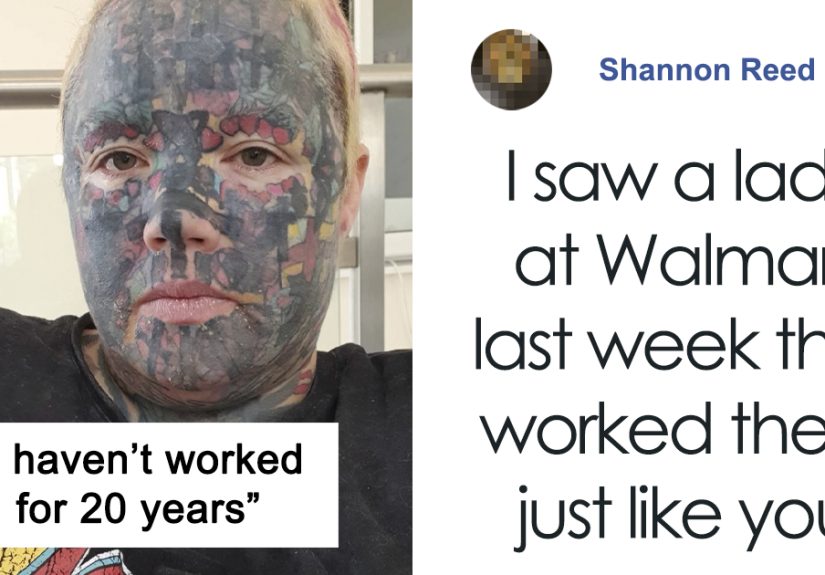
The woman at the center of the story is Melissa Sloan, a Welsh mother whose heavily tattooed face and body have made her instantly recognizable across viral news cycles. Coverage about Sloan tends to arrive in two modes: stunned fascination and moral panic. One side sees a walking rebellion against beauty standards and workplace conformity. The other sees a cautionary tale with eyebrows permanently raised. Both reactions miss the more interesting point. Her story is not just about tattoos. It is about what happens when appearance becomes the first thing people use to decide whether you are competent, credible, fit to parent, or fit to be seen in public at all.
The Viral Hook Is Loud, But the Real Story Is About Judgment
Sloan’s claim is blunt: she says her tattoos have made it almost impossible for her to get hired. That is the kind of quote that travels well online because it confirms several things people already want to believe. Traditionalists can point and say, “See? That’s what happens.” Defenders of body art can fire right back and say, “That’s prejudice, not professionalism.” And the rest of the internet, never one to turn down a free opinion, can gather around like unpaid HR consultants.
What makes the story stick is the scale. Not one tattoo. Not a tasteful ankle constellation. Not even a sleeve that peeks out during a Zoom call. We are talking about hundreds of tattoos, including extensive facial ink. That matters because public acceptance of tattoos has grown dramatically, but facial tattoos still sit in a different cultural category for many employers. A rose on a forearm says one thing in the public imagination. A face covered in layered ink says another. Fair or not, that distinction still shapes hiring decisions.
And that is where the story becomes more than clickbait. Sloan is not simply saying people dislike her style. She is saying appearance has become a wall between her and economic participation. That is a heavier claim than “people stare at me in line for coffee.” It raises a harder question: in an era when tattoos are common, when exactly does body art become accepted self-expression, and when does it still trigger old-school bias dressed up as “company image”?
Are Tattoos Still a Workplace Problem?
The answer is yes, no, and “it depends who is doing the hiring”
In the United States, tattoos are far more mainstream than they used to be. Plenty of employers no longer care about visible ink unless it is offensive, explicit, or directly at odds with a customer-facing dress code. That shift is real. The stigma is weaker than it was twenty years ago, and younger generations in particular tend to view tattoos as ordinary rather than alarming. In many offices, restaurants, creative industries, warehouses, and tech environments, tattoos barely register anymore.
But here is the catch: “more accepted” does not mean “universally accepted.” Employers still maintain broad control over appearance policies, especially when they believe a certain look affects brand image, customer comfort, or workplace standards. That means tattoo acceptance often depends on industry, geography, role, and how visible the tattoos are. A software engineer can often get away with more than a bank teller. A back-of-house worker may face less scrutiny than someone greeting customers at the front desk. And face tattoos, whether we like it or not, still trigger stronger reactions than body art hidden under sleeves.
So when Sloan says her tattoos make her unemployable, the claim sounds exaggerated until you consider the specifics. Her look is not merely tattooed. It is extreme by mainstream hiring standards. That does not mean she lacks value or work ethic. It means she is colliding with an old truth that has not fully died: workplaces may celebrate individuality right up until individuality frightens a manager, a customer, or a committee that loves the phrase “professional appearance.”
That is why this story resonates. It sits at the exact point where society’s growing comfort with tattoos runs headfirst into the limits of that comfort. People say they support self-expression. Then a case like this shows up and everyone starts acting like they have been appointed deputy director of presentability.
Why the Internet Reacts So Strongly to Tattooed Mothers
If this were only a story about a heavily tattooed adult struggling to find work, the reaction would already be intense. Add motherhood, and the internet becomes absolutely feral. For reasons that are equal parts cultural, sexist, and deeply nosy, mothers are expected to perform acceptability more carefully than everyone else. Society will tolerate eccentric men as rebels, geniuses, or “characters.” Mothers, meanwhile, are often judged by whether they seem safe, stable, polished, and digestible to strangers.
That double standard explains why Sloan’s family life is repeatedly dragged into the coverage. Once the phrase “mom of seven” enters the headline, the story stops being only about employment and starts inviting public scrutiny of her body, her choices, her finances, her parenting, and her future plans. It becomes less “Can employers legally reject visible tattoos?” and more “Should this woman live the life she is living in the first place?” That is a very different, and much messier, conversation.
Public reaction also reveals how motherhood is still tied to appearance in ways people pretend it is not. There remains a stubborn expectation that “good moms” should look approachable, practical, and reassuring in a catalog-adjacent way. Heavy tattoos, especially on the face, disrupt that script. They force people to confront the fact that caregiving does not actually come with one official costume. The result is that many viewers are not responding to evidence of bad parenting. They are responding to aesthetic discomfort and then translating that discomfort into moral language.
Trying for Baby Number 8 Adds a Whole New Layer
This is where the story shifts from provocative to combustible
The baby-number-eight angle makes the headline explode because it combines appearance politics with reproductive judgment, which is basically internet kerosene. Once Sloan reportedly said she was trying for another baby, the public conversation stopped being just about employment discrimination and turned into a referendum on family size, maternal age, personal responsibility, and whether strangers on the internet believe they should get veto power over someone else’s uterus.
Now, to be fair, age is part of the discussion whether anyone likes it or not. Pregnancy later in life can involve additional medical considerations, and clinicians typically emphasize pre-pregnancy counseling, timing, and spacing for good reason. That is not sensationalism; that is normal health guidance. But there is a difference between acknowledging that pregnancy at 46 deserves thoughtful medical care and turning that fact into a public morality play. Too much coverage does the latter.
What often gets lost is that family planning is personal, complicated, and not always legible from the outside. People pretend these decisions happen inside a simple spreadsheet, where every variable can be ranked by strangers with smartphones. Real life does not work like that. Families are emotional ecosystems. People want more children for reasons that are practical, sentimental, impulsive, relational, or deeply private. None of that erases legitimate concerns about money, support, or health. It just means the conversation deserves more nuance than “Well, I wouldn’t do that,” which is the internet’s favorite form of analysis.
In Sloan’s case, the pregnancy angle does something else too: it sharpens the contrast between personal autonomy and public judgment. She is saying, in effect, “Yes, my appearance has hurt my job prospects. Yes, my life is unconventional. And yes, I still intend to make choices for my body and family.” That level of refusal to perform respectability is exactly what fascinates and infuriates people.
The Bigger Question: Is She Unemployable, or Is Society Still Selectively Tolerant?
“Unemployable” is a brutal word because it sounds final. It suggests a person has moved beyond quirky, beyond unconventional, and into a category where society simply shrugs and locks the door. The word also hides responsibility. If someone is “unemployable,” it sounds like the problem lives entirely inside the person, not in the systems evaluating them.
But Sloan’s story suggests something more uncomfortable. She may not be unemployable in the absolute sense. She may be shut out by a culture that claims to value authenticity while still enforcing narrow visual rules about who gets to represent normalcy. Tattoos are more accepted now, sure. Yet that acceptance is often conditional. Have tattoos, but not too many. Be expressive, but not too expressive. Be different, but in a way that still photographs well for the company website.
That is why this headline matters beyond its shock value. It reveals that “be yourself” remains one of modern culture’s most misleading slogans. The fine print is always there. Be yourself, but market-friendly. Be yourself, but not in a way that scares customers, confuses hiring managers, or makes relatives clutch decorative throw pillows. In that sense, Sloan has become the exaggerated test case for a contradiction most people live with in smaller ways every day.
And no, this does not mean every employer must pretend appearance never matters. Businesses have dress codes. Customer-facing roles come with image expectations. That reality exists. But it is also fair to ask whether some of those standards are genuinely about job performance or just recycled discomfort with people who do not look familiar enough.
What Readers Keep Missing
The laziest possible reading of this story is that it proves tattoos ruin your life. That take is too neat to be useful. The smarter reading is that extreme body modification can still create very real social and professional barriers, even in a culture that likes to congratulate itself for being open-minded. Both things can be true at once. Tattoos are mainstream. Bias is also mainstream. Welcome to modernity.
Another missed point is that viral stories often flatten people into symbols. Sloan becomes either a fearless icon of self-expression or a cautionary billboard for bad choices. But human beings are rarely so tidy. A person can make polarizing choices, face consequences, invite criticism, and still deserve to be treated like a person rather than a spectacle. That sounds obvious, but the internet regularly treats obvious things like advanced philosophy.
Ultimately, the reason this story gets attention is because it pushes on several social pressure points at once: appearance, employability, class, motherhood, age, and reproductive choice. That combination makes people feel entitled to judge. It also makes the story unusually revealing. It shows how quickly public conversation stops being about policy or compassion and turns into performance. Everyone wants to be the cleverest person in the comment section. Very few want to ask what fairness would actually look like.
Related Experiences: What Life Can Feel Like When Your Appearance Enters the Room Before You Do
Stories like this also land because a lot of people, tattooed or not, recognize the emotional pattern. Maybe they do not have 800 tattoos. Maybe they have bright hair, facial piercings, visible scars, a disability, a larger body, a very strong accent, or simply a face that does not fit someone else’s definition of “professional.” The specifics change, but the experience is familiar: you walk into a room and can feel people deciding what you are before you have said a word.
That experience can be strangely exhausting in ordinary, everyday ways. It is not always open cruelty. Sometimes it is the delayed handshake. The double take during an interview. The cashier who becomes extra formal. The parent at school pickup who smiles at everyone except you. The way a perfectly neutral question somehow sounds like a test because you know the other person is measuring whether you are “normal enough.” None of this leaves dramatic evidence, which is exactly why it accumulates so effectively. A thousand small reactions can wear on a person more than one giant insult.
For heavily tattooed people, especially those with facial tattoos, public space can become a constant social negotiation. A trip to the grocery store is no longer just a trip to buy cereal and regret spending eight dollars on blueberries. It can become a parade of staring, whispering, giggling, photographing, avoiding, or overcompensating. Some strangers act fascinated, some hostile, some weirdly cheerful in the way people get when they are trying very hard to prove they are not judging while absolutely judging. Even kindness can feel loaded when it arrives with curiosity attached.
Employment adds another layer because interviews are already performances under fluorescent lighting. Most people are trying to package themselves as calm, capable, and easy to onboard. When your appearance is likely to dominate the room, it can feel like your resume gets demoted to supporting actor. You answer questions about reliability, teamwork, and communication while silently wondering whether the real decision was made in the first seven seconds. That is not paranoia in every case. Sometimes it is just pattern recognition.
Parenting under that kind of scrutiny can be tougher still. A tattooed parent may not only be judged as a worker or stranger, but as a symbol in front of their own children. People project fears onto them. They assume chaos, irresponsibility, danger, or instability from appearance alone. Meanwhile, the actual work of parenting remains the same unglamorous marathon it is for everyone else: making meals, finding lost shoes, answering impossible questions, staying patient when patience has packed a bag and left the house. The visual difference gets treated like the whole story, even when daily caregiving looks far more ordinary than the headlines suggest.
That is why this topic hits harder than it first appears to. Beneath the spectacle is a common human frustration: wanting to be seen as more than your most visible trait. Most people know that feeling in some form. The packaging may differ, but the ache is familiar. You want a fair read. You want one conversation before the verdict. You want the chance to be complicated. That is not a radical request. It is the baseline dignity people keep having to ask for anyway.
Final Thoughts
“Mom-Of-7 Says Her 800 Tattoos Makes Her ‘Unemployable’ Amidst Trying For Baby Number 8” is the kind of title that practically begs for snap judgments. But the better response is to slow down and look at what the story is actually exposing. Yes, extreme body art can still limit opportunities. Yes, employers still make visual calculations, especially in public-facing roles. Yes, later-life pregnancy raises practical and medical questions that deserve real guidance. But none of that justifies reducing a person to a headline-shaped caricature.
Melissa Sloan’s story sits at the intersection of self-expression and social penalty. That is why it keeps traveling. It is messy, provocative, and weirdly clarifying. It reminds us that acceptance in modern culture often has invisible boundaries, and the people who cross them become lightning rods for everybody else’s anxieties. In that sense, the tattoos are not the whole story. They are just the most visible part of a bigger argument about who gets treated as fully human when they do not look the way society expected.