Table of Contents >> Show >> Hide
- Why oral ibuprofen works… and why it can cause trouble
- So what’s “new” about an ibuprofen patch?
- How a patch could lower risk: local delivery with lower blood levels
- But can ibuprofen actually penetrate skin well enough?
- How it compares with pain patches people already use in the U.S.
- Who an ibuprofen patch could help most
- What needs to happen next: evidence, approval, and real-world usability
- FAQ: Quick answers people actually search for
- Conclusion + real-world experiences (the part you’ll actually remember)
Imagine getting ibuprofen’s pain relief without sending your stomach on a roller coaster ride. That’s the big promise behind a “new” ibuprofen patch: deliver the drug through your skin at a controlled rate, keep blood levels lower, and (in theory) reduce the classic pill-related hazards like stomach bleeding and cardiovascular risk. If you’ve ever taken an ibuprofen with coffee and called it “breakfast,” this is the part where your body clears its throat.
In this article, we’ll unpack what’s actually new, how transdermal drug delivery works, why oral ibuprofen can be risky (especially with frequent use), what early research suggests, and what it would take for an ibuprofen patch to become a realistic optionespecially in the United States, where topical ibuprofen is a regulatory gray zone.
Why oral ibuprofen works… and why it can cause trouble
Ibuprofen is a nonsteroidal anti-inflammatory drug (NSAID). It reduces pain and inflammation mainly by blocking enzymes involved in making prostaglandinschemical messengers that help drive swelling and pain, but also protect the stomach lining, support kidney blood flow, and help regulate clotting and blood vessel tone.
The “benefit” part: fast, systemic relief
When you swallow ibuprofen, it travels through your digestive system into your bloodstream and circulates throughout your body. That’s why it can help with everything from a sprained ankle to a headache to menstrual cramps. It’s not pickyit goes where the blood goes.
The “risk” part: your whole body is invited to the party
That full-body reach is also why oral NSAIDs have well-known safety concerns. Regulators and clinicians routinely emphasize that NSAIDs can increase the risk of heart attack and strokeand that risk may occur early in treatment and rise with higher doses or longer use. Meanwhile, NSAIDs can also cause serious gastrointestinal (GI) problems including ulcers and bleeding that can occur without warning.
And then there’s the kidney angle: because prostaglandins help maintain blood flow to the kidneys, blocking them can be a bigger deal if you’re dehydrated, older, or already dealing with kidney or heart disease. Add in certain meds (like diuretics or blood thinners), and the “simple pain pill” starts needing a warning label with its own warning label.
So what’s “new” about an ibuprofen patch?
Here’s the twist: getting ibuprofen through skin is not easy. The outer layer of your skin (the stratum corneum) is basically a bouncer with a strict dress code. It’s excellent at keeping water in and random chemicals out. Many drugs either don’t pass through well, don’t pass through consistently, or require help (special formulations, enhancers, or device tricks).
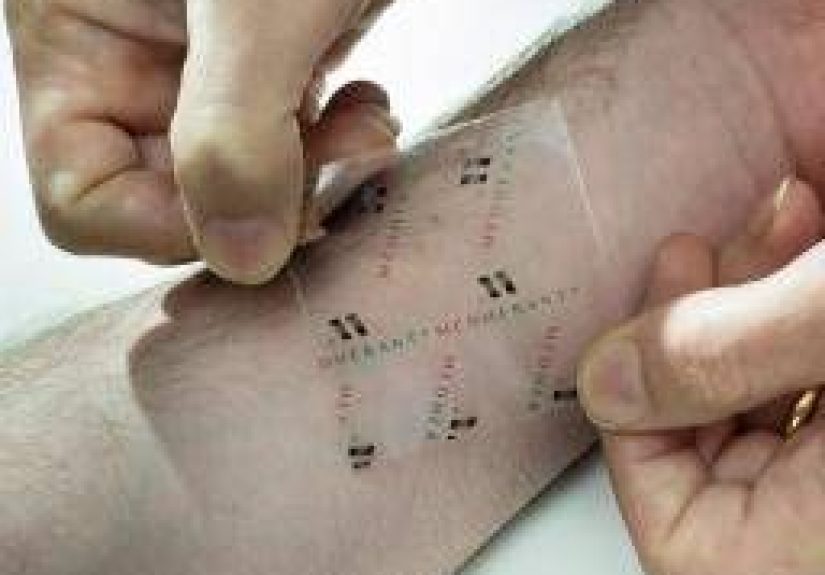
The “new ibuprofen patch” concept that drew headlines centers on advanced drug-in-adhesive patch technologywhere the adhesive layer itself doubles as a reservoir holding a large amount of drug. Some research prototypes emphasize:
- High drug loading (much more ibuprofen embedded than many traditional patches can handle)
- Consistent dosing over many hours (instead of a messy “rub it on and hope” approach)
- Comfort and adhesion (sticks well, removes cleanly, doesn’t leave you looking like you lost a fight with packing tape)
- Solvent-free manufacturing in certain formulations (a practical manufacturing win and sometimes a stability win)
In plain English: the patch isn’t just a “sticky bandage.” It’s a controlled drug-delivery system designed to meter ibuprofen through skin over time.
How a patch could lower risk: local delivery with lower blood levels
If you’ve ever wondered why topical diclofenac (a different NSAID) is widely used for joint pain, it’s because topical delivery can concentrate effects locally while keeping systemic exposure lower than oral dosing for many patients. Lower blood levels generally mean fewer whole-body side effectsthough “lower risk” is not the same as “no risk.”
Early clinical testing of an ibuprofen patch approach has focused on two basic questions:
- Does it irritate skin? (Because nobody wants pain relief that arrives with bonus itching.)
- Does it keep blood levels lower than a pill? (That’s the key safety hypothesis.)
In the most straightforward interpretation: a well-designed ibuprofen patch aims to deliver enough drug to the painful area to matter, while avoiding the high peaks in bloodstream concentration that can come with oral dosing. Think “steady drizzle” instead of “fire hose.”
But can ibuprofen actually penetrate skin well enough?
Ibuprofen is small enough to be a candidate, but skin is still a tough barrier. Researchers have explored multiple strategies to improve transdermal delivery, including:
- Novel pressure-sensitive adhesives that hold more ibuprofen and release it steadily
- Formulation tricks (like salts, solvents, or microemulsions) that improve permeability
- Physical enhancement methods in some experimental systems (for example, magnetophoresis in limited studies)
The practical challenge is always the same: deliver a reproducible dose through skin, across different body types, different temperatures, and real-world behavior (sweat, movement, clothing friction, and the universal human instinct to “mess with the thing stuck on my arm”).
How it compares with pain patches people already use in the U.S.
Walk into an American pharmacy and you’ll find plenty of “pain patches.” Most fall into a few buckets:
1) Counterirritant patches (menthol/camphor/capsaicin/methyl salicylate)
These create hot/cold sensations or local irritation that can distract from pain. They can help, but they’re not delivering ibuprofen or another NSAID at therapeutic levels. They’re more “sensory remix” than “anti-inflammatory strategy.” The FDA has also warned about rare but serious burns when certain topical pain relievers are misusedespecially with heat or tight bandaging.
2) Lidocaine patches (numbing)
These reduce pain signals by numbing the area. Different mechanism, different use caseoften helpful for localized nerve pain or superficial pain, but not anti-inflammatory in the way NSAIDs are.
3) Topical NSAIDs (mostly diclofenac in the U.S.)
Here’s the key point for U.S. readers: the only topical NSAID product commonly available in the United States is diclofenac (as gels/liquids and certain patch systems). Professional guidelines often recommend topical NSAIDs for knee and hand osteoarthritissometimes even before oral NSAIDsbecause topical therapy can offer meaningful pain relief with fewer systemic effects for many people.
So where does topical ibuprofen fit? Historically, U.S. regulators have said there were no approved topical ibuprofen drug applications. That means “ibuprofen patch” products you see marketed online may not be FDA-approved drug productssometimes they’re simply counterirritants dressed up in confident packaging.
Who an ibuprofen patch could help most
If a true, clinically proven ibuprofen patch becomes available (with regulatory approval and real-world data), the “sweet spot” would likely look like this:
- Localized musculoskeletal pain: sprains, strains, overuse injuries
- Arthritis flares in a specific joint: knee, hand, elbowplaces a patch can actually sit comfortably
- People who need NSAID benefits but worry about oral side effects: especially those with a history of GI issues or who need to minimize systemic exposure
- People who struggle with pill schedules: a patch can simplify dosing and reduce the “Did I already take one?” anxiety spiral
Who should still be cautious
Even if blood levels are lower, the active ingredient is still an NSAID. People with a history of GI bleeding, cardiovascular disease, kidney disease, or those taking blood thinners should treat any NSAID therapyoral or topicalwith extra caution and professional guidance. Lower systemic absorption does not equal zero systemic absorption.
What needs to happen next: evidence, approval, and real-world usability
For an ibuprofen patch to become a mainstream option in the U.S., it would typically need:
- Robust clinical trials showing it actually reduces pain meaningfully compared with placebo and/or standard care
- Safety data not only for skin irritation but for systemic effects over repeated use
- Manufacturing consistency (the patch must deliver predictable dosing batch after batch)
- Clear labeling for safe use: no heat sources, no occlusive dressings unless directed, apply only to intact skin, rotate sites
- Regulatory clearance as a drug product, not just a “cosmetic” or vague wellness item
Transdermal delivery sounds simplestick it on, forget itbut real-life transdermal products come with real-life rules. Heat can increase absorption. Damaged skin can change absorption. People cut patches (don’t). People put patches where clothing rubs (also not ideal). A safe ibuprofen patch has to survive contact with humans, which is science’s hardest test.
FAQ: Quick answers people actually search for
Is an ibuprofen patch safer than taking ibuprofen pills?
Potentially, if it delivers lower systemic exposure while still providing local pain relief. But “safer” depends on dose, duration, your health conditions, and whether the product is clinically tested and properly approved.
Can an ibuprofen patch replace oral ibuprofen for fever or headaches?
Probably not as a direct substitute. Patches aimed at local delivery are designed for localized pain and inflammation. Fever and many headaches are systemic problems, and transdermal local delivery may not provide the same whole-body effect.
Are “ibuprofen patches” sold online legit?
Be careful: marketing language can be misleading. In the U.S., topical ibuprofen has historically not been FDA-approved as an OTC drug product. If a product doesn’t clearly identify an FDA-approved active drug ingredient and intended drug use, it may not be what it implies.
Conclusion + real-world experiences (the part you’ll actually remember)
An ibuprofen patch that reliably delivers drug through skinat a controlled rate, with lower blood levelscould be a genuinely useful tool for localized pain relief. It’s a smart idea with a simple user experience: stick, wear, remove, repeat. The science is not magic, but it is clever: build a patch that holds a lot of ibuprofen, keeps good contact with skin, and releases the drug steadily instead of dumping it all at once.
But the headline promise needs a reality check: lower risk is not risk-free, and “patch” doesn’t automatically mean “approved.” In the U.S., consumers should distinguish between true drug-delivery patches (with regulatory oversight) and over-the-counter sensation patches that help by warming, cooling, or numbing.
Experience notes: what using a patch-style NSAID might feel like (and why people want it)
Here’s what often drives interest in an ibuprofen patchbased on common patient and consumer patterns around NSAID use (not personal medical advice, and not a substitute for a clinician who knows your history).
1) The “my stomach is tired” era. Many people start with oral ibuprofen because it works fast. Then life happens: more aches, more workouts, more sitting at desks shaped like medieval punishment devices. Some notice heartburn, nausea, or “mystery stomach drama” after frequent NSAID use. Even if it’s mild, it changes behavior: people begin spacing doses, avoiding NSAIDs unless pain is severe, or switching to topical options for localized pain.
2) The “I don’t want to take another pill” mood. Plenty of adults already take daily medications. When knee pain flares or a shoulder strain acts up, the thought of adding more pills can feel like stacking apps you’ll never open. A patch feels psychologically lighterone step, done. That convenience can improve adherence, which matters in pain management because inconsistent dosing often leads to the worst of both worlds: too little relief and still some side effects.
3) The “target the problem, not my entire circulatory system” logic. If your pain is in one elbow, swallowing a pill that circulates everywhere can feel like using a leaf blower to move a single grain of sand. People like the idea of local therapyespecially for joints and muscles near the skin surface. That’s why topical diclofenac is popular for osteoarthritis in accessible joints, and why a true ibuprofen patch (if developed and approved) attracts attention.
4) The real-life patch routine (a.k.a. “patch etiquette”). If you’ve used bandages or athletic tape, you already know the basics: clean, dry skin; avoid lotions; place it where it won’t fold or rub; and don’t put it on irritated skin. People often learn quickly that the best patch spot is not always the most painful spotit’s the spot that can hold a patch flat without constant friction from clothing.
5) The “oops, I used heat” problem. A surprisingly common habit: putting a heating pad on top of “something topical.” With true drug-delivery patches, heat can increase absorption and change dosing. People who are used to menthol patches may assume “more heat = more relief,” but drug patches often play by stricter rules. This is where clear labeling and patient education make or break safe real-world use.
6) Skin feedback is immediateand sometimes dramatic. Even well-designed patches can cause redness in sensitive users. People tend to describe patch irritation in a few ways: “mild rectangle blush,” “itchy square of regret,” or “why do I have a sticker-shaped rash?” (The humor is coping; the lesson is real: rotate sites, watch your skin, and stop if irritation escalates.)
7) Expectations need calibration. People coming from oral ibuprofen sometimes expect a patch to feel like a “switch flipping.” But local delivery may be steadier and subtlerless dramatic peak relief, more sustained background improvement. For a weekend warrior with a mild sprain, that can be perfect. For a migraine, probably not.
8) The best-case scenario is boringin the best way. The dream outcome is that the patch becomes the kind of health tool you barely think about: it reduces pain enough to walk, sleep, or do physical therapy, without the “pill math” and without wrecking your stomach. If a future ibuprofen patch can deliver that reliablyand prove it in trialsit could earn a real place in pain care.
Bottom line: the concept is promising, the chemistry is improving, and the clinical bar is (appropriately) high. Until a true ibuprofen patch is approved and widely available in the U.S., the safest move is to treat online “ibuprofen patch” claims with skepticism and rely on therapies with clear evidence, transparent labeling, and regulatory oversight.