Table of Contents >> Show >> Hide
- Why No-Knead Skillet Focaccia Works So Well
- Ingredients for No-Knead Skillet Focaccia
- How to Make No-Knead Skillet Focaccia
- Recipe Card: No-Knead Skillet Focaccia
- Best Toppings for Skillet Focaccia
- Common Mistakes and How to Avoid Them
- How to Serve No-Knead Skillet Focaccia
- How to Store and Reheat Focaccia
- Flavor Variations to Try
- Experience Notes: What Making No-Knead Skillet Focaccia Teaches You
- Final Thoughts
Note: This article is written as original web-ready content and synthesizes established home-baking guidance from reputable U.S. cooking and food-safety resources, including professional recipe developers, baking educators, and food-safety authorities.
If homemade bread has ever made you nervous, no-knead skillet focaccia is the friendly carb-shaped handshake you’ve been waiting for. It does not ask for a stand mixer, a dough hook, a bread-baking certificate, or the arm strength of someone who churns butter recreationally. Instead, this recipe leans on time, hydration, olive oil, and a trusty skillet to create a golden, bubbly, crisp-edged focaccia that looks bakery-worthy but behaves like a weeknight hero.
This No-Knead Skillet Focaccia Recipe is designed for home cooks who want big flavor without babysitting dough for half a day. The dough is stirred together in minutes, left to rise, stretched gently into an oiled skillet, dimpled with your fingertips, and baked until the top is bronzed and the edges are audibly crisp. Yes, audibly. Good focaccia should crunch a little when you cut into it, like it knows it did something right.
The beauty of skillet focaccia is its balance: soft and airy in the center, crisp on the bottom, fragrant with olive oil, and endlessly adaptable. Serve it beside soup, slice it for sandwiches, tear it into rustic pieces for dipping, or eat a corner straight from the pan while pretending you are “checking for doneness.” We respect the science.
Why No-Knead Skillet Focaccia Works So Well
Traditional bread dough often depends on kneading to develop gluten, the stretchy protein network that traps gas and gives bread structure. In a no-knead focaccia recipe, time does much of that work for you. A wet dough rests long enough for flour to hydrate fully and for gluten bonds to form naturally. The result is a dough that becomes elastic, airy, and flavorful without manual kneading.
Focaccia is especially forgiving because it is supposed to be rustic. It does not need a tight boule shape, a dramatic oven spring, or a perfect slash across the top. Its signature dimples, uneven bubbles, and olive oil-slicked surface are part of the charm. In other words, if your focaccia looks a little wild, congratulations: it has personality.
The Skillet Advantage
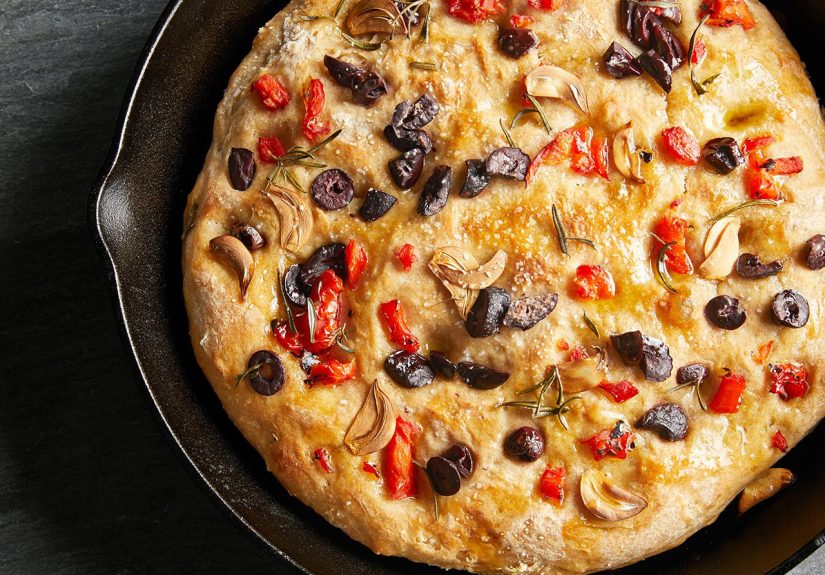
A cast iron skillet or heavy oven-safe skillet gives focaccia a serious texture upgrade. The metal holds heat beautifully, helping the bottom crust turn crisp and golden while the inside stays soft. A skillet also creates thick, well-defined edges that become the prize pieces. You know the ones: deeply browned, slightly chewy, and usually stolen first.
Using a skillet also makes the recipe feel manageable. Instead of spreading dough across a large sheet pan, you work with a compact round loaf that is easy to shape, bake, and serve. It lands on the table looking dramatic in a cozy, “I casually made bread” kind of way.
Ingredients for No-Knead Skillet Focaccia
This recipe uses pantry staples, which is excellent news for anyone who enjoys bread but does not enjoy grocery-store scavenger hunts.
Main Dough Ingredients
- 3 cups all-purpose flour or bread flour: All-purpose flour creates a tender crumb, while bread flour gives slightly more chew. Both work beautifully.
- 1 1/4 teaspoons fine sea salt: Salt strengthens flavor and keeps the dough from tasting flat.
- 1 teaspoon instant yeast: Instant yeast is easy to mix directly into dry ingredients. Active dry yeast can also work if dissolved first in warm water.
- 1 1/4 cups lukewarm water: Hydration creates the open, bubbly texture focaccia is famous for.
- 3 tablespoons extra-virgin olive oil, divided: Olive oil enriches the dough, crisps the crust, and perfumes the bread.
- 1 teaspoon honey or sugar: Optional, but helpful for encouraging yeast activity and gentle browning.
Classic Toppings
- 1 tablespoon extra-virgin olive oil: For drizzling before baking.
- 1 teaspoon flaky sea salt: Adds crunch and a bright salty finish.
- 1 tablespoon fresh rosemary: The classic herb for focaccia, earthy and aromatic.
- Optional garlic: Thinly sliced or roasted garlic adds savory depth.
Use olive oil you actually like, because focaccia is not shy about showing it off. This is not the place for the dusty bottle that has been living behind the vinegar since 2021.
How to Make No-Knead Skillet Focaccia
Step 1: Mix the Dough
In a large mixing bowl, combine the flour, salt, and instant yeast. Stir them together so the yeast and salt are evenly distributed. Add the lukewarm water, 1 tablespoon of olive oil, and honey or sugar if using. Mix with a wooden spoon or sturdy spatula until no dry flour remains.
The dough will look sticky, shaggy, and frankly not very impressive. That is completely normal. Do not add extra flour just because the dough seems wet. Focaccia dough is meant to be highly hydrated, and that moisture is what gives it a light, open crumb.
Step 2: Let Time Do the Kneading
Cover the bowl with plastic wrap, a reusable cover, or a damp kitchen towel. Let it rise at room temperature for 2 to 3 hours, or until doubled and bubbly. For deeper flavor, place the covered dough in the refrigerator overnight for 8 to 18 hours. The cold rise develops a more complex taste and makes the dough easier to handle.
If refrigerating, allow the dough to sit at room temperature for about 30 to 45 minutes before shaping. Cold dough is stubborn dough, and nobody needs that drama before dinner.
Step 3: Oil the Skillet Generously
Add 1 1/2 tablespoons of olive oil to a 10-inch cast iron skillet or oven-safe skillet. Swirl it around so the bottom and sides are well coated. This oil does more than prevent sticking; it fries the underside of the focaccia as it bakes, creating that irresistible crisp crust.
Transfer the dough into the skillet. Because the dough is sticky, lightly oil your hands before handling it. Gently fold the edges of the dough toward the center once or twice, then flip it so the smoother side faces up. Let it rest in the skillet for 20 minutes.
Step 4: Stretch and Rest
After the dough relaxes, gently stretch it toward the edges of the skillet. If it resists, stop and let it rest for another 10 minutes. Dough is a lot like people: it performs better when not aggressively rushed.
Once the dough fills most of the skillet, cover it again and let it rise for 45 to 60 minutes, until puffy and bubbly. This second rise is important because it gives the focaccia its pillowy interior.
Step 5: Dimple the Dough
Preheat the oven to 425°F. Drizzle the remaining olive oil over the dough. Oil your fingertips, then press them deeply into the dough to create dimples. Push down firmly enough to reach near the bottom of the pan, but do not tear the dough.
Those dimples are not just decorative. They catch olive oil, hold toppings, and help create focaccia’s signature craggy texture. Sprinkle the top with flaky salt, rosemary, and any optional toppings.
Step 6: Bake Until Golden
Bake the focaccia for 22 to 28 minutes, or until the top is golden brown and the edges are crisp. The bottom should be deeply golden, not pale and shy. If your oven runs cool, give it a few extra minutes.
Let the focaccia cool in the skillet for 5 minutes, then carefully transfer it to a wire rack. This keeps the bottom crust from steaming and softening. Slice with a serrated knife or tear it apart by hand if you enjoy rustic bread theater.
Recipe Card: No-Knead Skillet Focaccia
Prep Time, Rise Time, and Yield
- Prep time: 15 minutes
- Rise time: 3 to 4 hours, or overnight for best flavor
- Bake time: 22 to 28 minutes
- Total time: About 4 hours, or overnight
- Yield: 1 round 10-inch focaccia, about 8 servings
Ingredients
- 3 cups all-purpose flour or bread flour
- 1 1/4 teaspoons fine sea salt
- 1 teaspoon instant yeast
- 1 teaspoon honey or sugar, optional
- 1 1/4 cups lukewarm water
- 3 tablespoons extra-virgin olive oil, divided
- 1 tablespoon fresh rosemary, chopped
- 1 teaspoon flaky sea salt
- Optional: sliced garlic, olives, cherry tomatoes, caramelized onions, grated Parmesan, or red pepper flakes
Instructions
- Combine flour, salt, and instant yeast in a large bowl.
- Add water, honey or sugar if using, and 1 tablespoon olive oil. Stir until a sticky dough forms.
- Cover and let rise at room temperature for 2 to 3 hours, or refrigerate overnight for deeper flavor.
- Oil a 10-inch cast iron skillet with 1 1/2 tablespoons olive oil.
- Transfer dough to the skillet with oiled hands. Let rest for 20 minutes.
- Gently stretch dough toward the edges. Cover and rise for 45 to 60 minutes.
- Preheat oven to 425°F.
- Drizzle remaining oil over dough. Dimple deeply with oiled fingertips.
- Add rosemary, flaky salt, and desired toppings.
- Bake for 22 to 28 minutes, until golden brown and crisp around the edges.
- Cool for 5 minutes in the skillet, then move to a wire rack before slicing.
Best Toppings for Skillet Focaccia
Classic rosemary and sea salt focaccia is hard to beat, but this recipe welcomes creativity. Think of the dough as a fluffy edible canvas, minus the pressure of being artistic.
Simple Savory Toppings
For a traditional flavor, stick with rosemary, flaky salt, and olive oil. Add thinly sliced garlic if you want something bolder. Garlic can brown quickly, so slice it thin and tuck some pieces gently into the dough rather than leaving all of them exposed on top.
Mediterranean-Style Focaccia
Top the dough with halved cherry tomatoes, olives, oregano, and a little crumbled feta after baking. Tomatoes add sweetness and acidity, while olives bring a briny punch. Use a light hand with wet toppings so the bread stays airy rather than soggy.
Cheesy Focaccia
A sprinkle of Parmesan before baking adds savory depth and helps the top brown beautifully. For a richer version, add small pieces of mozzarella during the last 8 minutes of baking. This gives you melty cheese without weighing down the dough from the start.
Spicy Focaccia
Add red pepper flakes, cracked black pepper, and a drizzle of chili oil after baking. This version is especially good with tomato soup, grilled vegetables, or a sandwich stacked with roasted turkey and provolone.
Common Mistakes and How to Avoid Them
Adding Too Much Flour
The most common focaccia mistake is panicking over sticky dough. Wet dough is not a problem; it is the plan. Adding too much flour makes the bread dense and dry. Instead, use oiled hands and a flexible spatula to handle the dough.
Skipping the Second Rise
The second rise in the skillet helps the dough become fluffy and bubbly. If you rush this step, the focaccia may bake up flatter and tighter. Give the dough time to puff, especially if your kitchen is cool.
Using Too Little Olive Oil
Focaccia is not diet bread wearing a disguise. Olive oil is essential for flavor, texture, and crust. A well-oiled skillet gives you crisp edges and prevents sticking. If the dough looks glossy before baking, you are doing it right.
Overloading the Toppings
It is tempting to turn focaccia into a fully loaded pizza, but heavy toppings can compress the dough. Choose two or three toppings at most. Let the bread remain the star, not a mattress for every ingredient in the fridge.
How to Serve No-Knead Skillet Focaccia
Fresh skillet focaccia is excellent on its own, but it also plays nicely with other dishes. Serve it warm with extra olive oil and balsamic vinegar for dipping. Pair it with tomato soup, minestrone, roasted chicken, pasta, or a big salad. It also makes outstanding sandwich bread once cooled.
For brunch, slice focaccia into wedges and serve with soft scrambled eggs, smoked salmon, or whipped ricotta. For dinner, use it as the bread basket centerpiece. People will ask where you bought it. You may choose honesty, or you may simply smile mysteriously and pass the butter.
How to Store and Reheat Focaccia
Plain focaccia can be stored tightly wrapped at room temperature for up to 2 days. If your focaccia has perishable toppings like cheese, cooked meat, or certain dairy-based additions, refrigerate leftovers promptly. For longer storage, freeze slices in an airtight bag for up to 2 months.
To reheat, place focaccia in a 350°F oven for 8 to 10 minutes. This brings back the crisp edges better than a microwave, which tends to make bread chewy in a sad, office-breakroom way. A toaster oven also works well for individual slices.
Flavor Variations to Try
Roasted Garlic and Rosemary
Mash roasted garlic with olive oil and spread it gently over the dough before dimpling. Add rosemary and flaky salt. This version tastes like something served at a restaurant where the menus do not have prices.
Tomato Basil Skillet Focaccia
Add halved cherry tomatoes before baking, then finish with fresh basil after the bread comes out of the oven. The tomatoes wrinkle and sweeten while the basil keeps everything fresh.
Everything Bagel Focaccia
Sprinkle the top with everything bagel seasoning before baking. Serve with whipped cream cheese or use it for breakfast sandwiches. It is not traditional, but it is extremely persuasive.
Caramelized Onion Focaccia
Scatter a small amount of caramelized onion over the dough before baking. The sweetness pairs beautifully with rosemary, black pepper, and Parmesan.
Experience Notes: What Making No-Knead Skillet Focaccia Teaches You
The first thing you learn from making no-knead skillet focaccia is that bread dough is more forgiving than its reputation suggests. Many people approach yeast bread as if one wrong move will summon the baking police. In reality, focaccia is relaxed. It tolerates imperfect shaping, uneven dimples, and the occasional overenthusiastic drizzle of olive oil. In fact, it often rewards those things.
One of the best experiences with this recipe is watching the dough change over time. When first mixed, it looks rough and sticky, almost too messy to become anything elegant. After a rise, it turns bubbly and alive. That transformation builds confidence. You realize that bread is not magic, exactly, but it does have a flair for drama.
The skillet also changes the experience. Baking focaccia in cast iron feels sturdy and satisfying. The pan goes into the oven heavy and serious, then comes out holding a round loaf with bronzed edges and a glossy top. There is a moment when you loosen the bread from the skillet and hear the crust scrape lightly against the pan. That sound is a tiny standing ovation.
Another practical lesson is patience. No-knead bread does not demand much labor, but it does ask for time. The dough needs rest to develop flavor and texture. This makes the recipe ideal for slow weekends, casual dinners, or days when you want homemade bread without rearranging your life around it. Mix the dough in the morning, bake in the afternoon, and take full credit at dinner.
It is also a recipe that encourages experimentation. Once you understand the basic dough, you can adjust the toppings based on the season or the meal. In summer, cherry tomatoes and basil make the bread bright and juicy. In fall, caramelized onions and thyme feel cozy. In winter, roasted garlic and Parmesan are hard to resist. In spring, asparagus tips or fresh herbs can make the loaf feel fresh and green.
Serving homemade focaccia also creates a certain kind of table energy. People gather around it. They tear pieces from the edges. Someone always asks for “just a small piece” and then returns for three more small pieces, which is legally one piece if nobody counts. Bread has a way of making a meal feel generous, even when the rest of dinner is simple.
The most useful experience, though, is learning to trust the dough. Sticky does not mean failed. Bubbles mean progress. Olive oil is not an accessory; it is part of the architecture. The dimples do not need to be perfect. And the finished loaf does not need to look identical every time. Some batches will be taller, some crispier, some more dramatic on top. That variation is part of homemade baking.
If you are new to bread, this no-knead skillet focaccia recipe is an excellent starting point because it gives a high reward for low stress. If you already bake often, it is the kind of reliable recipe you will return to when you want something impressive but easy. Either way, the experience is the same: a warm kitchen, the smell of olive oil and rosemary, and a loaf of bread that disappears faster than expected.
Final Thoughts
No-knead skillet focaccia is proof that homemade bread does not have to be complicated to be memorable. With flour, yeast, water, salt, olive oil, and a little patience, you can create a crisp-edged, tender-centered bread that fits almost any meal. The skillet gives it structure and crunch, the no-knead method keeps it beginner-friendly, and the toppings let you customize it endlessly.
Whether you serve it with soup, turn it into sandwiches, or eat it warm from the pan while standing at the counter, this focaccia delivers comfort with very little fuss. It is rustic, flexible, and deeply satisfyingthe kind of recipe that makes you wonder why you ever bought bland bread in a plastic bag. Your skillet is ready. Your olive oil is waiting. Let the dimpling begin.