Table of Contents >> Show >> Hide
- What Happened to Rebecca Cheptegei
- Who Rebecca Cheptegei Was: More Than a “Headline Athlete”
- Why This Story Hit So Hard
- A Pattern in Kenya’s Running Hotspots
- The “Success Penalty”: When Achievement Triggers Control
- What Sports Bodies and Communities Have Been Pushed to Do
- Warning Signs People Miss (Until It’s Too Late)
- What Helps: A Safety Net That Doesn’t Wait for Proof
- What Readers Can Do (Even If You’re Not in Elite Sports)
- Conclusion: What We Owe Athletes Like Cheptegei
Some headlines feel like they belong in a different universethe kind where sports are pure, medals sparkle, and the worst thing that happens is a false start.
Then reality kicks down the door.
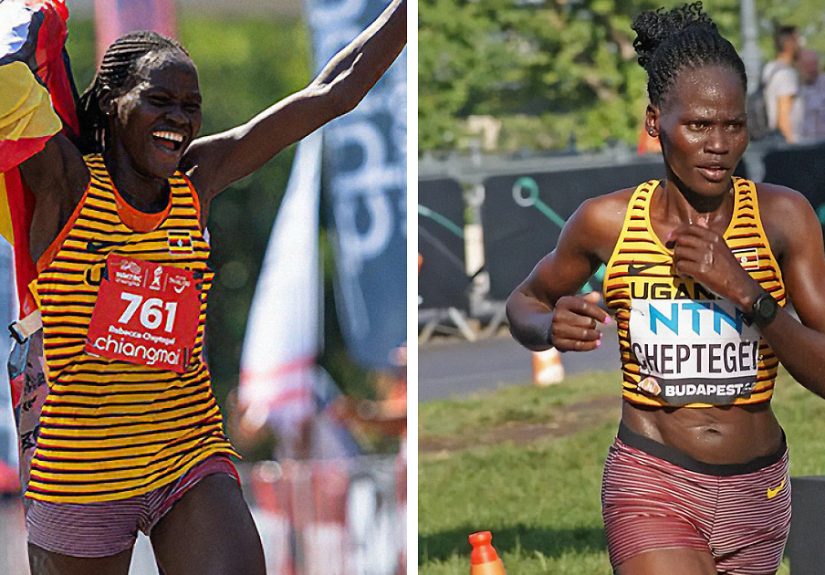
In early September 2024, Ugandan Olympic marathon runner Rebecca Cheptegei died in Kenya after an alleged attack by her partner that left her with severe burn injuries.
The loss wasn’t only a tragedy for track and field; it became a painful, public reminder of how gender-based violence can reach into every corner of lifeeven the world’s most disciplined, driven, “I can run 26.2 miles” communities.
This article breaks down what’s known about the case, why it resonated globally, and what athletes, organizations, and everyday readers can learn about prevention, support, and safety.
(No sensationalism, no graphic detailsjust the facts, the context, and the hard lessons.)
What Happened to Rebecca Cheptegei
Cheptegei, 33, had recently competed in the women’s marathon at the Paris 2024 Olympic Games. Within weeks, she was hospitalized in western Kenya after an incident authorities described as an alleged domestic violence attack involving an accelerant and fire.
She later died at a hospital in Eldoret, Kenya, several days after the attack.
Kenyan authorities investigated the circumstances surrounding her death, while leaders in sport and government condemned the violence and called for accountability.
Reporting at the time also pointed to a possible dispute involving property as a contributing factor, though the broader issueintimate partner violencewas the unmistakable center of the story.
Not long after, multiple reports stated that the man accused in the case also died from injuries sustained during the incident. The legal process and accountability many advocates hoped to see in court never fully unfolded, adding a grim second layer to an already devastating event.
Who Rebecca Cheptegei Was: More Than a “Headline Athlete”
If you only know Cheptegei through the tragedy, you’re missing the part she actually trained for: being known for her work.
Cheptegei was a long-distance runner who represented Uganda internationally across multiple seasons. She made her Olympic marathon debut in Paris in August 2024, finishing 44than outcome that might sound like a number until you remember the Olympics don’t hand out participation ribbons for “showed up and tried.”
You qualify, you endure, and you race the best in the world.
She also had notable results beyond the Games, including a major championship win in mountain and trail running and strong marathon performances that put her among Uganda’s top distance athletes.
Reports also noted she served in Uganda’s defense forces, a detail that underscores how multifaceted elite athletes often arecompetitors, providers, public figures, and, too often, targets.
She was also a mother. And while public coverage can’t (and shouldn’t) reduce her life to family roles, it matters because domestic violence doesn’t just hurt one person; it ripples outward through children, relatives, teammates, and entire communities.
Why This Story Hit So Hard
Sports audiences are trained to look for villains and heroes, clean story arcs, and neat endings. This story had none of that.
It was brutal precisely because it was ordinary in the way violence against women so often is: close to home, allegedly committed by someone known to the victim, and surrounded by familiar warning signs that many people recognize only in hindsight.
There’s also the Olympics factor. “Olympian” is a title that sounds like invincibility. But medals don’t stop coercion. Training volume doesn’t block threats.
And being strong in one arena doesn’t guarantee safety in another.
The shock, then, wasn’t only that a runner died. It was that a runner who had just stood on the biggest stage in sport could still be vulnerable in the most personal space of all: her own life.
A Pattern in Kenya’s Running Hotspots
Cheptegei’s death also reignited attention on a troubling pattern: multiple elite female runners have been killed in Kenya in recent years, including the high-profile case of Kenyan Olympian Agnes Tirop and the killing of another athlete in the same broader region.
Kenya’s Rift Valley areaplaces like Eldoret and the training hubs nearbyis famous in distance running. It’s where athletes go for altitude, community, and opportunity.
But the same conditions that help athletes succeed can also increase vulnerability:
- Isolation: training camps can be far from extended family support systems.
- Economic pressure: athletes may become primary earners early in life.
- Power imbalances: partners, managers, or “helpers” sometimes control finances or movement.
- Normalization: in any community, when people whisper “it happens,” it can become easier for warning signs to be dismissed.
None of this excuses violence. It explains why prevention has to be more than posters and hashtags.
It has to be structural.
The “Success Penalty”: When Achievement Triggers Control
One of the most disturbing themes in reporting around athlete killings in Kenya is the idea that successespecially a woman’s financial independencecan attract controlling behavior.
The athlete becomes the income stream, the public face, the one with contracts and prize money. That can tempt exploitative partners who view the relationship less like love and more like leverage.
In Cheptegei’s case, early reporting suggested conflict related to property. While every relationship is complex, disputes about money, land, and control frequently appear in domestic violence situations because they’re rarely about the object itself.
They’re about power.
If you’ve ever heard someone say, “He wasn’t jealous of herhe was jealous of her freedom,” that’s not just a quote for social media.
It’s a pattern advocates see repeatedly: as soon as a woman gains independence, an abusive partner may escalate.
What Sports Bodies and Communities Have Been Pushed to Do
In the wake of multiple high-profile cases, pressure has increased on sports organizations to move from condolences to concrete safeguards.
That includes national federations, event organizers, and international governing bodies.
After Cheptegei’s death, public statements of mourning and condemnation were widespread.
But advocates have been clear: words are the starting gun, not the finish line.
1) Safeguarding policies that actually function
“Safeguarding” can sound like corporate wallpaper unless it comes with tools athletes can use:
confidential reporting channels, case managers, emergency housing support, and legal guidancehandled by professionals trained in gender-based violence, not just sport administrators.
2) Athlete education that’s practical, not preachy
Athletes are trained to recognize physical pain signals. They deserve training to recognize relational danger signals toocoercive control, isolation, financial manipulation, monitoring, and threats.
This isn’t about blaming victims; it’s about giving people vocabulary for what they’re living through.
3) Community-led support
One of the most meaningful responses to earlier tragedies was the creation of advocacy groups such as Tirop’s Angels, founded in memory of Agnes Tirop.
The organization has worked to raise awareness and support survivors, proving that athletes can be more than competitorsthey can be protectors of one another.
4) Public memorials that point forward
Paris officials announced plans to honor Cheptegei by naming a sports venue after her.
Symbolism doesn’t replace safety, but it can help keep attention on the issue long after the news cycle moves on.
Warning Signs People Miss (Until It’s Too Late)
Domestic violence isn’t always obvious. It can start quietly, wearing a disguise: “I’m just protective,” “I worry about you,” “I don’t trust your friends.”
The problem is that controlling behavior often escalatesespecially around major life events like a big win, a payout, or buying property.
Warning signs that advocates consistently emphasize include:
- Isolation: discouraging contact with friends, teammates, or family.
- Monitoring: tracking phone location, demanding passwords, checking messages.
- Financial control: restricting access to money, forcing “management” of earnings.
- Threats and intimidation: including threats tied to reputation or children.
- Escalation after milestones: new contracts, trips, property purchases, public attention.
Here’s the part that sounds simple but matters: if someone’s “love” requires fear, it isn’t love. It’s control with better marketing.
What Helps: A Safety Net That Doesn’t Wait for Proof
Many survivors say the hardest part isn’t leavingit’s being believed before there’s a crisis.
People want certainty. But safety work often has to happen under uncertainty.
For athletes (and really anyone), the most protective environments tend to include:
- Trusted points of contact (a coach, team manager, friend, or family member) who takes concerns seriously.
- Private, confidential reporting options that don’t route through the same people who control selection or sponsorship decisions.
- Financial literacy support so athletes can keep earnings and contracts in their own control.
- Clear boundaries around “handlers”who has access to housing, transport, and medical information.
- Community accountability that treats abuse as unacceptable, not “personal drama.”
None of this guarantees safety. But it improves odds. And when the stakes are a human life, “improving odds” is not a small thing.
What Readers Can Do (Even If You’re Not in Elite Sports)
It’s easy to read a story like this and feel helpless. But helplessness is not the same as uselessness.
- Believe people early. If someone hints they’re scared, don’t wait for a broken bone or a police report to treat it seriously.
- Be specific with support. “Let me know if you need anything” is kind, but “Can I pick you up after practice?” is actionable.
- Push for policies. If you’re part of a school team, club, or community program, ask what safeguarding looks like in practice.
- Support survivor-led initiatives. Groups like Tirop’s Angels show how athlete communities can build safer spaces.
- Learn the language. Terms like coercive control and financial abuse help people name what they’re experiencing.
And if you or someone you know is in immediate danger, contact local emergency services. In the U.S., the National Domestic Violence Hotline can be reached at 1-800-799-7233 (or text “START” to 88788).
Conclusion: What We Owe Athletes Like Cheptegei
Rebecca Cheptegei’s death should never have happened. But once it did, the question became what the world would do with the truth it exposed.
We owe her more than a moment of silence. We owe her systems that take threats seriously, communities that don’t normalize control, and sports structures that protect athletes as whole human beingsnot just as performance machines with bib numbers.
Running teaches endurance. This is where endurance must show up off the course: sustained attention, sustained funding, sustained policy work, sustained cultural change.
Because the finish line we should all be chasing is simpleathletes getting to live.
Experiences From the Real World (Why Prevention Has to Feel “Human”)
When people talk about domestic violence, they often imagine one dramatic moment. Survivors and advocates describe something different: a slow tightening.
At first it can look like affectionconstant check-ins, intense attention, “I just miss you.” Then it turns into rules: who you can talk to, where you can go, what you can wear, how you spend money, whether you’re “allowed” to travel for competition.
The shift is so gradual that many people don’t realize they’re being controlled until their world has shrunk to the size of someone else’s mood.
In sports communities, teammates sometimes notice the signs before the athlete can name them. A runner who used to laugh at breakfast goes quiet. Someone stops showing up to team dinners.
A partner insists on being present for every conversationespecially conversations about contracts, coaching, or travel. And sometimes the most telling “symptom” is not bruises; it’s fear.
Fear of answering a phone. Fear of being late. Fear of being seen talking to the wrong person.
Coaches and managers who’ve worked in athlete safeguarding describe a tricky reality: they’re trained to spot injury risk, not relationship risk.
But once safeguarding becomes part of the culture, small practices can make a difference. For example, teams that normalize private check-ins (not just performance reviews) create a moment where an athlete can speak without a partner hovering nearby.
Teams that treat financial education as standardlike strength training or nutritionreduce the chance that an athlete’s earnings become someone else’s weapon.
Survivors also talk about the power of one person who doesn’t flinch. Not a hero with perfect wordsjust someone steady.
Someone who says, “I’m here. I believe you. You don’t have to convince me.” That steadiness matters because abuse often comes with shame, and shame feeds silence.
The most helpful supporters ask practical, nonjudgmental questions: “Do you feel safe going home?” “Is there a time you’d like me to check in?” “Who else do you trust?”
The goal isn’t to interrogate; it’s to open a door.
Finally, there’s the experience many communities share after a public tragedy: grief mixed with frustration. People ask, “Why didn’t anyone stop this?”
The honest answer is that prevention isn’t a single interventionit’s a chain of protections. When that chain is missing links (responsive police systems, accessible survivor services, strong safeguarding policies, community accountability), danger can escalate unchecked.
Cheptegei’s story is a painful reminder that awareness alone isn’t enough. But awareness can be the spark that demands better systemssystems that protect athletes and non-athletes alike, long before a headline has to.