Table of Contents >> Show >> Hide
- What Exactly Is an Overdyed Rug Sling Chair?
- Why Designers Love This Look
- The Design Ingredients That Make It Work
- How to Style Overdyed Rug Sling Chairs at Home
- Where Overdyed Rug Sling Chairs Work Best
- How to Buy One Without Making a Regrettable Decision
- Care Tips: Keep the Chair Gorgeous, Not Tragic
- Common Styling Mistakes to Avoid
- Why This Trend Has Real Staying Power
- Real-Life Experience: Living With Overdyed Rug Sling Chairs
- Conclusion
Some furniture whispers. Some furniture clears its throat and asks for a stronger spotlight. Overdyed rug sling chairs absolutely do the second one. They combine the saturated, time-softened beauty of an overdyed rug with the relaxed, open silhouette of a sling chair, creating a piece that feels part art object, part reading nook hero, and part conversation starter your guests will pretend not to envy.
If you have ever looked at a room and thought, “This is nice, but it could use one dramatic, slightly eccentric, very photogenic thing,” this might be that thing. Overdyed rug sling chairs bring together two design ideas that work beautifully on their own. Overdyed rugs are beloved for their rich color, worn-in pattern, and vintage soul. Sling chairs are famous for their low profile, airy structure, and casual lounge appeal. Put them together and you get a chair with texture, history, color, and attitude without the heaviness of a traditional upholstered armchair.
That balance is the magic. The chair feels bold, but not bulky. Nostalgic, but not dusty. Collected, but not chaotic. In other words, it is the rare design move that looks expensive, personal, and a little adventurous all at once.
What Exactly Is an Overdyed Rug Sling Chair?
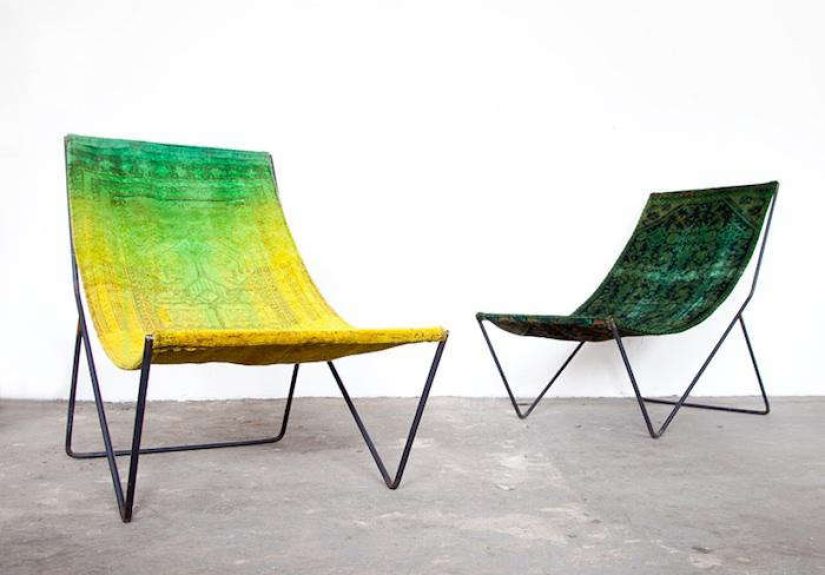
An overdyed rug sling chair is typically a sling-style seat that uses overdyed textile material as part of its upholstery or seat sling. In some versions, vintage rugs are cut, hemmed, and stitched into a suspended seat panel. In others, the chair borrows the look of overdyed rugs through patterned upholstery that mimics faded medallions, distressed florals, or washed jewel tones. Either way, the visual signature is unmistakable: color saturation on top, old pattern peeking through beneath, and a shape that feels open and sculptural rather than overstuffed.
The overdyed effect matters because it creates depth. A regular solid-color chair can be handsome, but an overdyed rug chair has layers. You get hints of the original motif under the newer dye, which makes the surface feel lived in and visually complex. It is the difference between a plain black T-shirt and a beautifully worn vintage band tee. One is fine. The other has a backstory.
The sling part matters too. Traditional sling chairs, especially safari-style and low lounge silhouettes, rely on a suspended seat and back stretched across a frame. That construction keeps the piece visually light. So even when the textile is richly patterned, the chair does not feel heavy or crowded. It reads as graphic and interesting instead of loud and oversized.
Why Designers Love This Look
Designers have long treated rugs as room anchors. The rug is often the piece that sets the color story, defines the seating area, and helps everything else make sense. When you take the language of the rug and bring it up onto a chair, something clever happens: the room starts to feel curated instead of merely furnished.
That is why overdyed rug sling chairs work so well in eclectic, modern, bohemian, vintage-inspired, and even minimalist interiors. The frame keeps the shape simple. The textile provides the drama. The result is a strong focal point that does not need much decorative backup singing.
They are especially effective in rooms that need texture more than more furniture. Think of a living room with a plain sofa, white walls, and decent bones, but no spark. Add an overdyed rug sling chair in deep indigo, faded rust, emerald, oxblood, or washed plum, and suddenly the room has a pulse. The chair introduces pattern, but because overdyed rugs tend to have softened motifs, the pattern usually reads as atmospheric instead of hyper-busy.
This style also appeals to people who want character without matching sets. Matching furniture can look polished, but it can also veer into “showroom living room, please do not sit.” An overdyed rug sling chair breaks that predictability in the best way. It adds a collected, one-of-a-kind feeling that makes the room feel more human.
The Design Ingredients That Make It Work
1. Saturated color with a faded pattern
Overdyed textiles are all about tension: bold color meets timeworn motif. That layered look is what gives the chair its charm. The best versions are not flat or one-note. They have visible medallions, floral traces, geometric fragments, or antique-style patterning under a wash of color.
2. A lightweight frame
Wood, metal, or mixed-material frames keep the chair from feeling too dense. A slim profile lets the textile stay center stage. This is especially useful in small living rooms, bedrooms, home libraries, and corners that cannot handle another chunky barrel chair.
3. A lounge-friendly shape
Sling chairs tend to lean casual. They invite reading, scrolling, coffee sipping, and those dramatically thoughtful stares out the window that make you look like the star of an indie film. Because the seat is often lower and more relaxed, the chair feels approachable even when the textile is visually rich.
4. Visible craftsmanship
The best overdyed rug sling chairs feel intentional, not gimmicky. Clean stitching, tailored edges, a sturdy frame, and high-quality materials make the difference between “designer statement” and “craft fair impulse purchase that regrets itself by October.”
How to Style Overdyed Rug Sling Chairs at Home
The easiest way to style one of these chairs is to let it be the most interesting thing in the room for a minute. That does not mean the rest of the space has to be boring. It just means the chair should not have to compete with six other visual divas.
Pair it with quieter upholstery
If your sling chair has a saturated, overdyed textile, pair it with a sofa in a calmer fabric such as cream, oatmeal, camel, charcoal, or muted olive. This gives the chair breathing room and keeps the room from tipping into pattern overload. A quiet sofa is not a compromise. It is a very polite backup dancer.
Repeat one color elsewhere
Pull one subtle shade from the chair into a pillow, throw, art print, lamp base, or ceramic vase. You do not need to match it perfectly. In fact, please do not. The goal is to echo the color so the chair feels woven into the room instead of dropped there by a particularly stylish tornado.
Use the rug wisely
If you are also using an area rug under the seating zone, let it support the chair rather than fight it. A solid rug, a lightly textured wool rug, a natural fiber base, or a faded vintage-style rug can all work well. In smaller rooms, placing the front legs of your seating on the rug creates cohesion. In larger rooms, a bigger rug that anchors the whole seating area feels more luxurious and intentional.
Mind your layout
Two sling chairs across from a sofa can create an intimate conversation area. One sling chair angled beside a fireplace or bookcase can create a reading corner that feels like it belongs in a magazine spread. In compact rooms, a round coffee table helps circulation and keeps the layout from feeling boxy.
Choose your frame finish carefully
Wood frames warm up the textile and make the chair feel collected and organic. Black metal frames sharpen the look and push it toward modern or industrial. Wrought iron gives it a slightly artistic, handmade vibe. The same textile can read rustic, refined, or edgy depending on the frame.
Where Overdyed Rug Sling Chairs Work Best
Living rooms: This is their natural habitat. They bring texture and personality without crowding the floor plan.
Reading corners: A low sling chair, a side table, and a lamp can turn a neglected corner into the seat everyone mysteriously wants even if they do not read.
Bedrooms: One chair at the foot of the bed or in a sunny corner adds boutique-hotel energy.
Entryways and transitional spaces: If the chair is compact enough, it can give an entry or landing a memorable focal point.
Covered porches or sunrooms: This can work if the space is protected and the chair materials are appropriate. But these chairs are usually better suited to interiors or sheltered environments than full-exposure outdoor setups.
How to Buy One Without Making a Regrettable Decision
Before buying an overdyed rug sling chair, think beyond the first five seconds of attraction. Yes, it should be beautiful. But it should also survive real life.
Check the textile content
Wool-rich textiles often offer beautiful depth and a more luxe hand, while synthetic blends may lower cost but can age differently. Some vintage-inspired printed versions are more affordable, but they may not have the same texture or longevity as a chair upholstered with genuine woven material.
Read the care guidance
Textiles and leather components should have clear care guidance from the maker. That matters more than people think. The best-looking chair in the world becomes less charming when you are panic-googling whether one coffee drip has ruined your personality centerpiece.
Look at seat height and seat depth
Many sling chairs sit lower than standard accent chairs. That can be cozy and chic, but make sure it matches how you actually live. A chair that looks perfect but feels like a controlled fall every time your uncle tries to get out of it may not be the universal seating solution you hoped for.
Pay attention to sunlight
Vintage and richly dyed textiles can fade with strong direct sun. If your favorite corner gets blasted every afternoon, add a shade, rotate the chair occasionally, or choose a more protected placement.
Care Tips: Keep the Chair Gorgeous, Not Tragic
Because overdyed rug sling chairs combine decorative textiles with functional seating, care should be gentle and consistent. The goal is preservation, not aggressive scrubbing fueled by optimism.
Vacuum lightly and regularly
Dust and grit wear fibers down over time. Use light suction or an upholstery attachment, especially if the chair uses vintage or delicate woven material. High-traffic rugs benefit from regular vacuuming, and textile seating does too.
Blot spills, never rub
If something spills, blot immediately with a clean white cloth. Rubbing pushes the stain deeper and can rough up the fibers. Fast, gentle action beats dramatic panic every time.
Test cleaners first
Do not assume a cleaner that works on one upholstery fabric will be safe for an overdyed textile. Always spot-test in an inconspicuous area first. If the chair includes leather straps or sling arms, follow material-specific guidance there too.
Rotate and rest
If the chair lives in a sunlit or heavily used spot, rotate it when possible and vary how it is used. Consistent wear in one area can age a beautiful textile faster than you would like.
Choose gentler products
When you do need a cleaning product, look for options with clear care compatibility and avoid anything overly harsh or strongly scented in small indoor spaces. Good ventilation also matters, especially when using spot treatments or upholstery cleaners.
Bring in a professional when needed
For chairs made with genuine vintage rugs or delicate textile panels, professional cleaning is often the smarter move. This is one of those moments where “I watched a tutorial once” should maybe not be your whole strategy.
Common Styling Mistakes to Avoid
Going too matchy: If your room already has a dominant patterned rug, patterned drapes, printed pillows, and loud art, an overdyed rug sling chair may need calmer company.
Buying too small a rug for the room: If your seating arrangement floats awkwardly around a tiny rug, even a great chair will look disconnected.
Ignoring scale: A dramatic chair needs enough visual space around it. Cramming it beside oversized furniture can make it disappear.
Treating it like outdoor gear: Unless the piece is specifically designed for that use, vintage-style textile chairs do not love weather, soaking moisture, or relentless sun.
Forgetting comfort: A chair can be sculptural and still need to function as a chair. Beauty is wonderful. So is being able to sit for more than eleven minutes.
Why This Trend Has Real Staying Power
Overdyed rug sling chairs are not just another passing social-media design crush. They tap into bigger shifts in how people want their homes to feel. We want rooms that look layered, not mass-produced. We want pieces with texture, soul, and craftsmanship. We want furniture that says something, but not in a way that screams across the room like a reality-show contestant.
These chairs answer that demand beautifully. They merge heritage-inspired textile character with modern, open-frame seating. They feel collected. They feel artistic. They feel like the kind of thing you might keep through three apartments, one house, and at least two identity reinventions.
Most importantly, they make a room feel finished in a personal way. Not showroom finished. Not algorithm finished. Human finished.
Real-Life Experience: Living With Overdyed Rug Sling Chairs
The funniest thing about owning an overdyed rug sling chair is that it becomes everyone’s favorite seat almost immediately, including people who swear they “do not really care about décor.” They care now. They care the second they walk in, point at the chair, and say, “Okay, where did that come from?” That reaction is part of the experience. These chairs do not just fill a corner. They create a little event.
In daily life, they are surprisingly versatile. In the morning, the chair can be the place where you drink coffee and scroll through headlines while pretending the day is under control. In the afternoon, it becomes a drop zone for a throw blanket and a half-finished book. At night, it suddenly looks dramatic and moody under lamplight, like it has spent the whole day preparing for a close-up. A lot of chairs sit quietly in a room. This one changes personality depending on the light, the season, and what is happening around it.
There is also something deeply satisfying about the texture. A good overdyed textile does not read flat or overly polished. It has variation. Up close, you notice the faded pattern under the color wash, the little shifts in tone, the subtle irregularity that makes it feel special. That texture is why the chair keeps working even when the room changes. Swap a coffee table, repaint a wall, bring in a new lamp, and the chair still feels relevant because it already has complexity built into it.
Practically speaking, living with one teaches you a few things fast. First, placement matters. The chair looks best when it has a little breathing room, even if that room is only a few extra inches on either side. Second, lighting matters more than you expect. Natural light pulls out the overdyed depth beautifully, but too much direct sun can make you protective in a hurry. Third, people will absolutely throw clothes on it if you let them, so it helps to decide early whether it is a sacred design object or an extremely stylish laundry assistant.
Comfort can also be a pleasant surprise. A well-made sling chair has give in the right places, so it cradles the body rather than forcing a stiff upright posture. That relaxed feel is part of the appeal. The chair looks curated, but it does not feel precious. You can actually use it. And that may be the best part of all. An overdyed rug sling chair brings story, color, and personality into a room, but it also earns its keep. It is there for reading, lounging, talking, thinking, and occasionally staring at your to-do list while doing none of it. Honestly, that is excellent furniture behavior.
Conclusion
Overdyed rug sling chairs sit at the sweet spot between artful and livable. They borrow the depth, faded romance, and color intensity that make overdyed rugs so appealing, then pair that character with a sling chair’s breezy silhouette and lounge-ready comfort. The result is a piece that can anchor a room, wake up a tired corner, and add collected personality without dragging in visual heaviness.
If you want furniture with more soul than a standard accent chair and more flexibility than a giant upholstered throne, this style deserves a serious look. Choose quality materials, give the piece enough room to shine, care for the textile gently, and let it bring a little boldness into the space. Your room will thank you. Your guests will ask about it. And your boring corner will finally stop being boring.