Table of Contents >> Show >> Hide
- What Is Peel-and-Stick Trim?
- Why People Love Peel-and-Stick Trim
- When Peel-and-Stick Trim Is a Great Idea (and When It Isn’t)
- Planning: The Secret Sauce to Making It Look Expensive
- Tools and Materials You’ll Want on Hand
- How to Install Peel-and-Stick Trim (Step by Step)
- Step 1: Prep the Wall Like You Mean It
- Step 2: Measure, Mark, and Dry-Fit Your Design
- Step 3: Cut Pieces Cleanly (Corners Are Where Pride Lives)
- Step 4: Apply the Trim Slowly, With Control
- Step 5: Handle Seams and Corners Like a Finishing Carpenter (Minus the Nail Gun)
- Step 6: Caulk the Edges for the Built-In Look
- Step 7: Paint (If You Want It to Look “Real”)
- Design Ideas: Where Peel-and-Stick Trim Shines
- Common Mistakes (So You Don’t Have to Make Them)
- Maintenance and Repairs
- How to Remove Peel-and-Stick Trim Without Destroying Your Wall
- FAQ
- Conclusion: A Shortcut That Can Look Surprisingly Custom
- Real-World Peel-and-Stick Trim Experiences (The 500-Word Reality Check)
Want the “custom millwork” look without the “custom millwork” price tag, sawdust cloud, or learning what a coping saw is at 11:47 p.m. on a Tuesday?
Enter peel-and-stick trim: the DIY shortcut that lets you add dimension, “architectural detail,” and a suspicious amount of elegance
with nothing more intimidating than a tape measure and a little patience.
In this guide, we’ll break down what peel-and-stick trim actually is, where it works (and where it absolutely does not), and how to install it so it looks
like you hired a prominus the part where you pay a pro.
What Is Peel-and-Stick Trim?
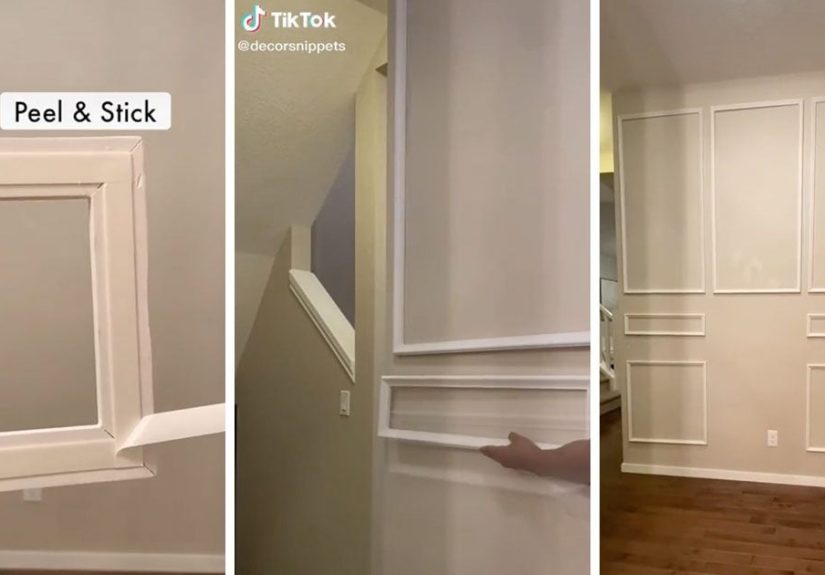
Peel-and-stick trim (also called peel and stick molding, self-adhesive trim, or adhesive-backed moulding) is decorative trim
that comes with a factory-applied adhesive on the back. You peel off the liner, press it onto a surface, andideallyadmire your new “built-in” look.
It’s commonly used to mimic traditional wall moulding, picture-frame trim, baseboard-style edges, and even lightweight crown-like accents.
What It’s Made Of
Unlike traditional wood trim, most peel-and-stick options are made from lightweight materials such as vinyl, PVC, plastic, or foam. Many are flexible,
which helps them follow slightly uneven walls and makes cutting easier (sometimes with scissors or a utility knife, depending on the product).
Some styles are paintable so you can match the wall color or create contrast like classic wainscoting.
How the Adhesive Works (and Why That Matters)
Most products use a pressure-sensitive adhesive (PSA). Translation: it bonds best when the surface is clean, dry, and smoothand when you press it down
firmly. Adhesives like this generally strengthen with good contact (“wet-out”) and consistent pressure, which is why the “press firmly” part is not optional.
It’s the difference between “wow!” and “why is my trim slowly sliding off the wall like a sad sticker?”
Why People Love Peel-and-Stick Trim
- Fast upgrade: Big visual impact in a weekend (sometimes in an afternoon, if you don’t spiral into layout perfectionism).
- Low tool commitment: No nail gun, no compressor, no “I guess I own a miter saw now” lifestyle change.
- Budget-friendly: You’re paying for materialsnot carpentry labor and not a truck full of trim tools.
- Renter appeal: Some options can be removed later, though “renter-friendly” depends heavily on wall paint and how long it stays up.
- Design flexibility: Great for temporary trends, accent walls, or testing a look before investing in real millwork.
When Peel-and-Stick Trim Is a Great Idea (and When It Isn’t)
Best Places to Use It
Peel-and-stick trim performs best on smooth, sealed, clean surfaces. Think: painted drywall (fully cured), primed surfaces, smooth doors, cabinets,
mirrors, and certain tile or laminate areas. It’s especially handy for:
- Picture-frame wall molding in dining rooms, hallways, bedrooms
- Faux wainscoting or panel-style grids on a feature wall
- Quick baseboard “refresh” for low-traffic areas (or staged photos, if we’re being honest)
- Accent frames around mirrors, headboards, entry nooks, or built-ins
- Rental upgrades where you want dimension without permanent construction
Places to Avoid (Save Yourself the Drama)
Peel-and-stick trim is not magicjust sticky. Avoid these situations unless the manufacturer explicitly says it’s suitable:
- Heavily textured walls (orange peel, knockdown, rough plaster): less contact = weaker bond.
- High humidity zones (steamy showers, constantly damp areas): adhesives can fail faster.
- Dusty, greasy, or frequently handled areas (right behind the stove, greasy backsplash zones).
- Fresh paint that hasn’t cured: the adhesive may not bond well, and removal can pull paint.
- “Super washable” or low-VOC paints that can make self-adhesive products harder to stick to.
Planning: The Secret Sauce to Making It Look Expensive
Here’s the thing: peel-and-stick trim can look surprisingly high-endif your layout is crisp. Most “this looks cheap” moments come from uneven spacing,
crooked lines, or corners that drift like they’re trying to escape.
Layout Tips That Actually Work
- Use a level (or laser level): Do not trust ceilings, floors, or your own optimism. If you align to a crooked ceiling, your whole wall will look “off.”
- Map with painter’s tape first: It’s like a fitting room for your wallcommit only after you like the look.
- Keep spacing consistent: Symmetry reads “custom,” while random spacing reads “I ran out of trim and started improvising.”
- Stand back and check: What looks centered up close can look slightly haunted from across the room.
Tools and Materials You’ll Want on Hand
- Tape measure
- Level or laser level
- Pencil (and/or painter’s tape for layout)
- Microfiber cloth
- Glass cleaner or rubbing alcohol (for degreasing and lint removal)
- Utility knife with fresh blades (or scissors, depending on trim material)
- Miter box / miter shears (helpful for crisp corners)
- Small hand roller (optional but very useful for stronger adhesion)
- Paintable acrylic caulk (for finishing edges)
- Paint + brush/mini roller (if painting)
How to Install Peel-and-Stick Trim (Step by Step)
Step 1: Prep the Wall Like You Mean It
Clean matters. Dust, oils, and lint block adhesion. Wipe down the installation area and let it dry completely.
If the wall is newly painted, wait until it’s curedmany DIY guides recommend giving paint a few days before sticking anything to it.
Step 2: Measure, Mark, and Dry-Fit Your Design
Measure your wall and mark placement lines lightly with pencil. For picture-frame molding patterns, you can outline the “frames” with painter’s tape first.
This helps you visualize spacing and catch mistakes before the adhesive touches the wall (because once it touches, it really wants to stay touched).
Step 3: Cut Pieces Cleanly (Corners Are Where Pride Lives)
For square frames and rectangles, you’ll usually cut 45° miters at the corners. Foam trims often cut cleanly with a sharp utility knife and a straight edge.
PVC/plastic trims may cut better with miter shears or a small miter box and fine-tooth saw. Use fresh bladesdull blades tear foam and create ragged edges.
Step 4: Apply the Trim Slowly, With Control
- Peel back a small section of the liner first (don’t yank it all off at once unless you enjoy wrestling sticky noodles).
- Align the first edge carefully to your marks, then gradually press the rest into place.
- Press firmly along the entire length. A roller helps apply consistent pressure for a stronger bond.
- Avoid touching the adhesive as you gocontamination can weaken stickiness.
Step 5: Handle Seams and Corners Like a Finishing Carpenter (Minus the Nail Gun)
For seams, aim for tight butt joints. If you’re trying to make seams nearly invisible, a common pro move is a “double-cut”:
overlap two pieces slightly, cut through both at once with a straight edge, then remove the waste. The pieces match perfectly.
Step 6: Caulk the Edges for the Built-In Look
This is where the magic happens. A thin bead of paintable acrylic caulk along the edges hides minor gaps and makes trim look like it belongs there.
Smooth the caulk (a damp finger works; a caulk tool works better; a paper towel works if you’ve already committed to chaos).
Let it dry fully before painting.
Step 7: Paint (If You Want It to Look “Real”)
Many peel-and-stick trims are paintable. Painting the trim the same color as the wall creates a subtle, architectural texture.
Painting it in contrast gives you classic paneling drama. Use light coats, and don’t flood edges with paintheavy paint can build up and highlight seams.
Design Ideas: Where Peel-and-Stick Trim Shines
1) Picture-Frame Molding Feature Wall
The easiest “wow” project: create rectangles (or squares) in a grid on a dining room or hallway wall. Keep spacing consistent, caulk edges, paint, and suddenly
your wall has “bones.” Fancy bones.
2) Faux Wainscoting (Renter-Friendly-ish)
Apply trim in panels on the lower third of a wall, then paint everything one color. It reads like wainscoting without the carpentry.
Just remember: removal results depend on the paint underneath and how long it’s been up.
3) Quick Cabinet and Built-In Refresh
Flat cabinet doors can look more custom with thin trim frames. Use lighter trim profiles so door function isn’t affected, and ensure surfaces are degreased first.
4) Mirror and Entryway Accents
A simple trim frame around a mirror or entry nook adds a finished look with minimal measuring. If you’re nervous, start herelow risk, high reward.
Common Mistakes (So You Don’t Have to Make Them)
- Skipping prep: Dust and grease are the enemies of self-adhesive trim.
- Rushing alignment: Crooked trim is extremely noticeableespecially in repeating grids.
- Trusting ceilings/floors: Use a level; houses are full of lies.
- Not pressing firmly: Adhesives bond better with good pressure and contact.
- Assuming “removable” means “no risk”: Paint can still lift on removal depending on wall finish and age.
Maintenance and Repairs
If an edge starts lifting, don’t panic. Warm it gently with a hair dryer (low heat), press it back down, and use a roller if you have one.
For stubborn spots, a tiny dab of compatible adhesive behind the lifting area can helpjust keep it neat so it doesn’t ooze out.
How to Remove Peel-and-Stick Trim Without Destroying Your Wall
- Warm it up: Use a hair dryer on low to soften adhesive.
- Peel slowly: Pull at a low angle, not straight out from the wall.
- Go patient-mode: Slow removal reduces the chance of pulling paint.
- Clean residue gently: Use a mild adhesive remover appropriate for painted walls (test in a hidden spot first).
FAQ
Can you paint peel-and-stick trim?
Often, yesespecially PVC or paintable foam products. For best results, apply thin coats and consider primer if the surface is glossy.
Always check product labeling for paint compatibility.
Does peel-and-stick trim last?
It can, but longevity depends on surface prep, humidity, wall texture, and how firmly it was applied. For long-term durability in high-traffic areas,
traditional nailed-and-caulked trim still wins. Peel-and-stick is best seen as a fast, flexible design solution.
Is it really renter-friendly?
Sometimes. Some users remove it cleanly, while others experience paint liftespecially on newer paint, weak paint adhesion, or certain washable/low-VOC finishes.
If you rent, do a small test patch in an inconspicuous area first.
Conclusion: A Shortcut That Can Look Surprisingly Custom
Peel-and-stick trim is the DIY equivalent of putting on a blazer over a T-shirt: it instantly elevates the whole vibe with minimal effort.
If you prep properly, measure carefully, and finish with caulk and paint, you can create wall molding, faux paneling, and trim accents that look far more expensive
than they are.
Treat it like a real trim project (because visually, it is), and it will reward you. Treat it like a sticker… and it may behave like one.
Real-World Peel-and-Stick Trim Experiences (The 500-Word Reality Check)
Most people’s experience with peel-and-stick trim falls into one of three categories: “I am a design genius,” “I learned a lot,” and “Why is my wall judging me.”
The difference usually isn’t talentit’s prep and patience.
A common first-time story goes like this: the trim arrives, you hold it up to the wall, and immediately start planning your new life as a person who casually says
things like “the millwork really anchors the space.” Then you skip cleaning because the wall “looks clean,” and you apply the first piece. It sticks… sort of.
Two days later, a corner lifts just enough to catch your eye every single time you walk past it. (It’s amazing how a 1/8-inch gap can feel like a personal attack.)
The better experiences almost always start with someone over-prepping: wiping the wall down, letting it dry, marking lines, and test-fitting the layout with painter’s tape.
They measure, step back, adjust, then measure again. It feels slow, but the payoff is huge. Once the pieces go up straight, the whole wall reads as intentional.
Even budget foam trim can look “custom” after caulk and paint because the eye reads shadow lines, not price tags.
Corners are where reality shows up. Many DIYers find that inside corners aren’t perfectly 90 degrees (because houses are charming, and by “charming” we mean “slightly
crooked”). Flexible trim helps, but it can also exaggerate a wavy wall if you force it to follow every bump. The most successful installs use a level or laser line as
the boss, not the ceiling, and accept that a little caulk is part of the process. Some people even warm trim slightly to help it relax into place, especially on long runs.
Removal experiences vary wildly. If the trim goes onto well-cured paint and comes off within a reasonable timeframe, many users report minimal damage.
But if the paint underneath wasn’t bonded wellor if the trim sat through seasonal humidity swingspeeling can pull paint like a bandage. The folks who have the smoothest
removals tend to warm the trim gently, peel slowly at a low angle, and never try to “rip and pray.”
The most relatable takeaway: peel-and-stick trim is less like a sticker and more like a tiny home-improvement contract. If you do your side of the deal
(clean surface, straight layout, firm pressure, neat finishing), it holds up its end beautifully. And if it doesn’t? Congratulationsyou’ve just gained the essential DIY
skill of fixing one small corner like a pro and pretending that was the plan all along.