Table of Contents >> Show >> Hide
- Why This Caramelized Onion and Garlic Chicken Works
- Ingredients for Caramelized Onion and Garlic Chicken
- How to Make Caramelized Onion and Garlic Chicken
- Best Sides for Caramelized Onion and Garlic Chicken
- Tips for the Best Caramelized Onion Chicken Recipe
- Common Mistakes to Avoid
- Variations to Try
- How to Store and Reheat Leftovers
- Final Thoughts
- Kitchen Experiences and Notes from Real-Life Cooking
- SEO Tags
Some dinners are polite. They show up, do their job, and leave almost no emotional footprint. This is not one of those dinners. Caramelized Onion and Garlic Chicken is the kind of meal that makes your kitchen smell like you suddenly became the sort of person who owns matching linen napkins and casually says things like, “Oh, this? I just threw it together.” In reality, what you did was let onions take their sweet time, gave garlic the spotlight it deserves, and turned a humble pack of chicken into a skillet full of glory.
If you are looking for a cozy chicken dinner with serious weeknight charm, this recipe checks every box. It is savory, rich, deeply aromatic, and surprisingly simple once you know the small tricks that make a big difference. The onions do most of the dramatic work. The garlic adds backbone. The chicken turns tender and juicy. And the pan sauce? Let’s just say bread may mysteriously disappear in its presence.
This caramelized onion and garlic chicken recipe is built for real life. It works for a Tuesday night when your energy is running on fumes, but it is also good enough to serve to company without apologizing for anything. That is a rare and beautiful category of food.
Why This Caramelized Onion and Garlic Chicken Works
The magic starts with the onions. When cooked slowly over moderate to low heat, onions lose their sharpness and become mellow, sweet, and richly savory. That transformation gives this dish its signature flavor. Garlic joins later, adding fragrance and depth without turning bitter. The chicken sears first, creating those golden-brown bits on the pan that later melt into the sauce like tiny flavor jackpots.
Another reason this recipe works so well is balance. Rich onions can feel heavy on their own, so a splash of broth and a touch of acid from balsamic vinegar or lemon help keep the sauce lively. Fresh thyme or parsley brightens the finish. The result is a chicken dinner that tastes layered and comforting, not flat or greasy.
It is also flexible. You can use boneless chicken thighs for extra tenderness, or chicken breasts if you prefer a leaner cut. Serve it over mashed potatoes, buttered noodles, rice, polenta, or thick slices of toasted bread. There are no bad choices here, only delicious ones.
Ingredients for Caramelized Onion and Garlic Chicken
Main Ingredients
- 2 pounds boneless, skinless chicken thighs or chicken breasts
- 2 large yellow onions, thinly sliced
- 6 garlic cloves, minced
- 2 tablespoons olive oil
- 2 tablespoons unsalted butter
- 1 cup low-sodium chicken broth
- 1 tablespoon balsamic vinegar or fresh lemon juice
- 1 teaspoon fresh thyme leaves, plus more for garnish
- 1 teaspoon kosher salt, plus more to taste
- 1/2 teaspoon black pepper
- 1 tablespoon all-purpose flour, optional, for a slightly thicker sauce
- 2 tablespoons chopped fresh parsley for serving
Optional Flavor Boosters
- 1/4 teaspoon red pepper flakes for heat
- 1/3 cup dry white wine for deeper pan sauce flavor
- A small spoonful of Dijon mustard for extra savory sharpness
- 1/2 cup shredded Gruyere or mozzarella if you want a French onion-style finish
Ingredient tip: Thinly sliced yellow or sweet onions are the best choice for this recipe because they break down evenly and turn soft, jammy, and beautifully golden. Red onions can work, but they tend to bring a slightly different sweetness and color.
How to Make Caramelized Onion and Garlic Chicken
Step 1: Season and Sear the Chicken
Pat the chicken dry with paper towels. Season both sides with salt and black pepper. Heat 1 tablespoon olive oil in a large skillet over medium-high heat. Add the chicken and sear for about 4 to 5 minutes per side, depending on thickness, until golden brown. The chicken does not need to be fully cooked yet. Transfer it to a plate and set aside.
This first sear matters. It builds flavor and leaves browned bits in the skillet, which is cook-speak for “the good stuff.” Those bits will later dissolve into the onion-garlic sauce and make it taste like you tried harder than you actually did.
Step 2: Start the Onions
Reduce the heat to medium and add the remaining olive oil and butter to the same skillet. Add the sliced onions with a pinch of salt. Stir to coat, then cook for 20 to 30 minutes, stirring often, until the onions soften, turn deep golden brown, and shrink into a glossy tangle.
Do not rush this part. Caramelizing onions is not a task for your impatient alter ego. If the pan gets too hot, the onions will scorch before they sweeten. If they look dry, add a splash of broth or water and keep going. You are after a soft, rich, jammy texture, not onion confetti.
Step 3: Add the Garlic
Once the onions are fully caramelized, stir in the garlic and thyme. Cook for 30 to 60 seconds, just until fragrant. Garlic cooks much faster than onions, so adding it at the end protects it from burning and turning bitter.
Step 4: Build the Sauce
If you want a slightly thicker sauce, sprinkle the flour over the onions and stir for 1 minute. Add the wine, if using, and scrape up any browned bits from the bottom of the skillet. Pour in the chicken broth and balsamic vinegar. Stir well and let the mixture simmer for 2 to 3 minutes until lightly reduced.
The sauce should smell rich and savory with a little brightness. If it tastes too sweet, add a small squeeze of lemon. If it tastes too sharp, let it simmer another minute. Cooking is chemistry, but the fun kind where you get dinner at the end.
Step 5: Finish the Chicken
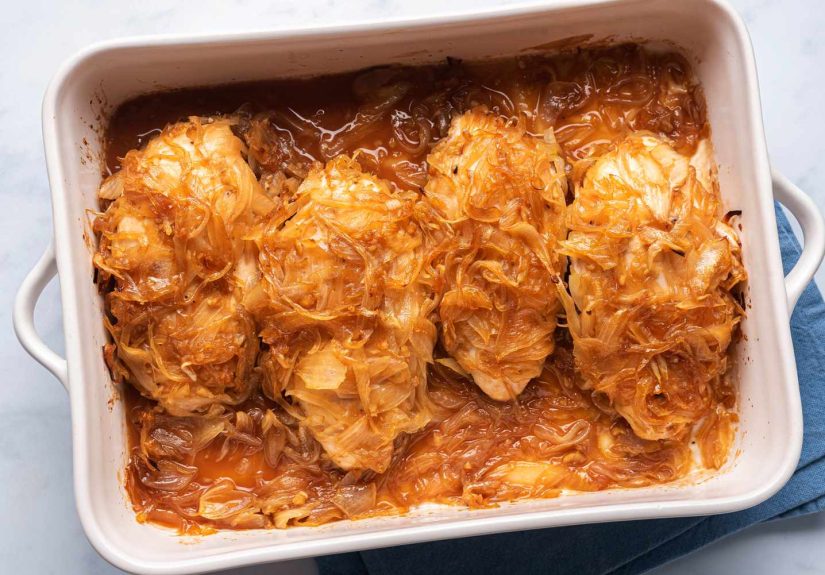
Return the chicken and any collected juices to the skillet. Spoon some of the onions over the top. Lower the heat to medium-low, cover, and cook for 6 to 10 minutes, or until the chicken is cooked through and reaches 165°F in the thickest part.
If you want a cheesy French onion chicken situation, sprinkle shredded Gruyere or mozzarella over the chicken during the last few minutes and cover until melted. Suddenly, weeknight dinner has a very fancy accent.
Step 6: Garnish and Serve
Finish with parsley and extra thyme. Serve hot with all that glorious onion-garlic sauce spooned over the top.
Best Sides for Caramelized Onion and Garlic Chicken
This recipe is adaptable, but some side dishes are especially good at soaking up the sauce and showing off the chicken.
- Mashed potatoes: Creamy, classic, and possibly the most luxurious choice.
- Buttered egg noodles: Perfect if you want comfort food without extra effort.
- Steamed rice: A simple base that lets the caramelized onions shine.
- Polenta: Soft, buttery polenta makes the dish feel restaurant-worthy.
- Crusty bread: For people who understand that sauce should never be left behind.
- Roasted green beans or broccoli: A fresh vegetable side helps balance the richness.
Tips for the Best Caramelized Onion Chicken Recipe
Slice the Onions Thinly and Evenly
Thin onions cook faster and more evenly. Thick slices can still work, but they take longer to soften and may not melt into the sauce the same way.
Use the Right Pan
A large stainless steel or cast-iron skillet is ideal. Crowding the onions in a small pan can make them steam instead of caramelize. If the pan looks packed like a rush-hour subway car, size up.
Do Not Add Garlic Too Early
Garlic is not built for a 30-minute onion journey. Add it near the end so it becomes fragrant and sweet rather than bitter and regretful.
Choose Thighs for More Forgiveness
Boneless chicken thighs stay juicy and are harder to overcook. Chicken breasts work too, but they need a little more attention. If using breasts, consider pounding them to an even thickness for faster, more even cooking.
Adjust the Sauce to Taste
If you like sweeter onion notes, leave the balsamic light. If you prefer more contrast, add a touch more acidity. Fresh herbs, black pepper, or a small amount of mustard can also sharpen the flavor profile.
Common Mistakes to Avoid
Cooking the onions too fast: Dark brown is good. Burned is not a personality trait you want in this dish.
Skipping the sear: Browning the chicken first adds depth and keeps the finished dish from tasting one-note.
Using high-sodium broth without tasting: Since the onions reduce and the sauce concentrates, too much salt can sneak up on you.
Overcooking chicken breasts: Pull them as soon as they hit 165°F. Dry chicken is a crime against good sauce.
Variations to Try
French Onion Garlic Chicken
Add Gruyere and a splash of white wine, then broil briefly until bubbly. It gives the dish that cozy bistro feeling without requiring a reservation or pants with a zipper.
Creamy Caramelized Onion Chicken
Stir in a few tablespoons of heavy cream or sour cream at the end for a richer, silkier sauce.
Balsamic Onion Chicken
Double the balsamic for a more sweet-savory finish. This version is especially good with roasted vegetables or herbed rice.
Garlic Herb Chicken with Onions
Add rosemary, sage, or oregano along with the thyme for a more herb-forward skillet chicken dinner.
How to Store and Reheat Leftovers
Store leftovers in an airtight container in the refrigerator for up to 4 days. Reheat gently in a skillet over medium-low heat with a splash of broth or water to loosen the sauce. The microwave works too, but the stovetop keeps the onions silky instead of sleepy.
You can also freeze the cooked chicken and onion sauce for up to 2 months. Thaw overnight in the refrigerator before reheating. This makes it a great make-ahead meal for busy weeks.
Final Thoughts
If you have ever wanted a chicken recipe that tastes cozy, impressive, and deeply satisfying without requiring a culinary degree, this Recipe for Caramelized Onion and Garlic Chicken deserves a permanent place in your rotation. It turns everyday ingredients into something that feels thoughtful and rich. The onions bring sweetness, the garlic brings character, and the chicken ties it all together in one skillet like the dependable dinner hero it is.
Most importantly, this recipe rewards patience in exactly the way good home cooking should. Give the onions time. Let the garlic bloom. Taste the sauce before serving. Then sit down with your bowl, plate, or shameless hunk of bread and enjoy the kind of dinner that makes silence fall over the table for all the right reasons.
Kitchen Experiences and Notes from Real-Life Cooking
The first time I made a version of caramelized onion and garlic chicken, I thought I understood onions. I did not. I knew they could make me cry and that they showed up in nearly everything savory, but I had not yet experienced what happens when you give them enough time and stop bullying them with high heat. That first skillet taught me patience in the most delicious way possible. For twenty-something minutes, the onions seemed to do almost nothing. Then, suddenly, they turned glossy, soft, and sweet, and the whole kitchen smelled like dinner had leveled up.
What makes this recipe memorable is how it changes the mood of a meal. Plain chicken can sometimes feel like a responsible decision, the kind of dinner you make because you are trying to be practical. But when chicken is cooked with slowly caramelized onions and fragrant garlic, it stops feeling practical and starts feeling comforting. It becomes the meal people wander into the kitchen for, asking, “What are you making?” before pretending they were not already hoping for a sample.
I have made this dish on rushed weeknights, on rainy Sundays, and once for guests when I was absolutely not emotionally prepared to make anything complicated. Every time, it delivered. The beauty of this recipe is that it feels generous. It fills the pan, the house smells incredible, and the sauce stretches beautifully over rice, potatoes, or noodles. Even when the chicken is the main attraction, the onions often steal the show. Nobody complains.
Another thing I have learned from making caramelized onion chicken is that people tend to underestimate simple ingredients. There is no trendy powder here, no rare imported ingredient, no step involving a blowtorch or a sous vide machine humming ominously in the corner. It is onion, garlic, chicken, broth, herbs, and time. That is the whole trick. The flavor comes from technique, which is great news for home cooks because technique is cheaper than fancy groceries.
I also think this recipe teaches confidence. Once you learn how caramelized onions should look, smell, and taste, a lot of other recipes suddenly feel easier. You understand how to build flavor slowly. You learn not to fear brown bits on the pan. You realize garlic is happier with a shorter cooking time. These are small things, but they change how you cook. A skillet of onion and garlic chicken can quietly make you better in the kitchen, which is a pretty nice side effect for dinner.
And then there is the serving moment, my personal favorite. You spoon the onions over the chicken, scatter fresh herbs on top, and for one brief shining second, dinner looks suspiciously elegant. Then someone tears off a piece of bread, swipes the sauce early, and the illusion of restraint collapses. As it should. This is not a dish meant for tiny, dainty bites. It is warm, savory, full-bodied food. It invites extra sauce, second helpings, and the kind of satisfied silence that tells you the recipe is worth keeping.
If you are the type of cook who likes recipes with room to breathe, this one is especially rewarding. You can add mushrooms, a splash of wine, a little cheese, more herbs, or a sharper finish of lemon. You can make it with thighs for maximum juiciness or breasts for a leaner plate. You can spoon it over polenta one night and tuck it next to roasted vegetables the next. The recipe is reliable, but not rigid. It knows how to adapt.
That is probably why caramelized onion and garlic chicken feels like more than just another chicken dinner. It is a recipe that meets you where you are. Tired? It still works. Hosting? It still works. Need leftovers? It still works. Want something that tastes like you cooked all afternoon even though you absolutely did not? Oh, it really works.