Table of Contents >> Show >> Hide
- Why This Showroom Feels Different from the Minute You Walk In
- The Setting: A Historic Berkeley Victorian with a Creative Afterlife
- A Room-by-Room Tour of Erica Tanov’s Atelier/Showroom in Berkeley
- What “Relaxed Luxury” Actually Means in Erica Tanov’s World
- Nature Is Not a Theme Here. It Is the Foundation.
- Why Berkeley Is the Right Home for This Atelier/Showroom
- More Than a Store: A Space for Art, Events, and Creative Community
- What Homeowners and Design Lovers Can Learn from This Space
- Extended Impressions: What the Experience of Visiting Actually Feels Like
- Final Thoughts
Some spaces try very hard to impress you. They shout with polished marble, overstyled shelves, and enough brass to blind a small village. Erica Tanov’s atelier/showroom in Berkeley does the opposite. It whispers. And somehow, that whisper carries farther.
Set inside a historic Victorian in West Berkeley, the Erica Tanov atelier feels less like a conventional showroom and more like a lived-in design manifesto. It is part retail space, part creative laboratory, part gathering place, and part proof that luxury does not have to be loud to feel unforgettable. If you have ever wondered what relaxed luxury looks like when it leaves the mood board and becomes a real environment, this is it.
Tanov’s world has always been built on tension in the best sense: refinement balanced by softness, craftsmanship softened by ease, beauty grounded by utility. Her work spans clothing, interiors, art, and objects for the home, yet the threads connecting them are remarkably consistent. Natural materials. Soulful layering. A touch of imperfection. A refusal to confuse expensive with meaningful. Her Berkeley atelier/showroom gathers all of those ideas under one roof and lets visitors walk through them room by room.
Why This Showroom Feels Different from the Minute You Walk In
To understand the atelier, it helps to understand Erica Tanov herself. She launched her label in 1990 after studying at Parsons and building an early reputation for clothing made with fine fabrics, subtle details, and vintage-lingerie influences. Over time, her vision expanded far beyond apparel into wallpaper, bedding, furniture, tile, antiques, and interior consulting. That evolution matters, because the Berkeley showroom does not read like a side project. It feels like the fullest expression of a career spent refining what beauty can feel like in everyday life.
The phrase “relaxed luxury” gets tossed around so often that it risks sounding like marketing oatmeal: warm, beige, and not especially memorable. Here, however, it has real meaning. Tanov’s version is rooted in tactility and atmosphere. It is luxury that looks touched, used, loved, and breathable. It is the difference between a pristine room no one wants to sit in and a deeply beautiful room that practically begs you to curl up with a linen throw, a book, and zero intention of leaving anytime soon.
That is why the atelier works. It does not simply display products. It stages a way of living.
The Setting: A Historic Berkeley Victorian with a Creative Afterlife
The atelier/showroom is housed in an 1878 Italianate Victorian on Fifth Street in Berkeley, just near the city’s well-loved Fourth Street shopping district. That location is not a throwaway detail. Berkeley, especially West Berkeley, has long had a personality all its own: independent, cultivated, slightly eccentric, and uninterested in slick sameness. In other words, it is exactly the kind of place where a layered, artful, quietly luxurious showroom makes sense.
The building itself does a lot of the storytelling. A historic house naturally brings texture, proportion, and memory to the experience. You are not entering a blank white retail box designed to make products look expensive under aggressive lighting. You are stepping into architecture with creaks, corners, rhythm, and history. That instantly shifts the emotional register. It tells visitors that design is not only about objects. It is about context, mood, and how a space receives the body.
In Tanov’s hands, the Victorian shell becomes a kind of soft theater for the home. Its age adds gravity, while the styling keeps everything from slipping into museum mode. The result is not “preserved history” or “trend-driven makeover.” It is something better: a building with an old soul and a fresh pulse.
A Room-by-Room Tour of Erica Tanov’s Atelier/Showroom in Berkeley
The Parlor: Where the Brand’s Point of View Becomes Instantly Clear
The parlor introduces the atelier’s vocabulary almost immediately. Seating is elegant but approachable. Upholstery feels tactile rather than fussy. Vintage pieces mingle with contemporary ones without anyone elbowing for attention. That mix is crucial. Tanov has long favored interiors that feel collected instead of decorated, and the showroom makes that principle feel tangible. You see how antiques can ground a room, how a patterned textile can animate a neutral palette, and how restraint can still be warm.
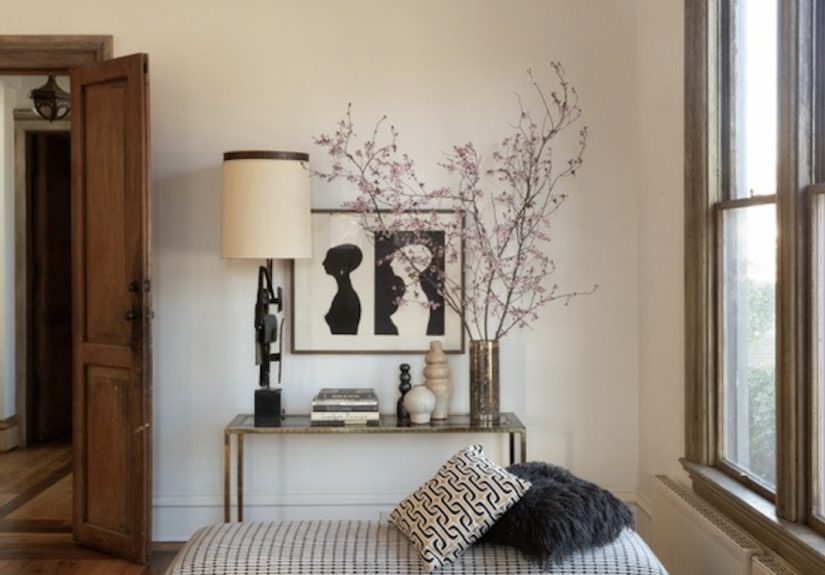
This is also where her notion of understated glamour shows up most clearly. Nothing screams for applause, yet everything feels chosen. A bench inspired by early modernist design, a soft throw, a quietly graphic wallpaper, a sculptural lamp, an object with a little age on it: together, they create a room with depth rather than flash. The lesson is simple but powerful. Luxury is not one hero piece strutting in the center of the room. It is the mood created when every element knows its role.
The Kitchen and Dining Area: Proof That Utility Can Still Be Beautiful
Move into the kitchen and dining spaces, and the atelier begins making an even stronger argument: the rooms people actually use the most deserve poetry too. This is not a decorative afterthought. Surfaces matter here. Tile matters. Table linens matter. The way light lands on a wall matters. Even the transition from one room to the next feels considered, as though the home is being composed like music rather than assembled like furniture inventory.
Tanov’s collaborations and home goods lines make special sense in these spaces because they show how design can be both practical and transportive. A kitchen can still function like a kitchen while feeling soulful. A breakfast nook can still be a breakfast nook while looking as though someone with excellent taste and zero interest in showing off has been editing it for years. The joke, of course, is that making something feel that effortless usually takes a frightening amount of effort.
The Upstairs Rooms: Bedrooms, Quiet Corners, and the Art of Softness
Upstairs, the mood turns more intimate. Bedroom installations reveal how deeply Tanov understands softness as a design tool. Bedding is layered, but not in an overstuffed, catalog-styled way. Patterns are mixed, but with enough restraint that the eye never feels trapped. The effect is storied rather than busy. You can imagine sleeping there, yes, but you can also imagine thinking more clearly there, reading more slowly there, maybe even becoming the kind of person who finally folds linen properly.
This part of the showroom also highlights one of Tanov’s enduring strengths: her ability to use textiles as architecture’s emotional counterpart. Walls, beds, windows, and seating are not treated as separate decorating tasks. They are woven together through material, motif, and tone. It is a designer’s way of saying, “Your room should not feel assembled from departments. It should feel composed from intuition.”
What “Relaxed Luxury” Actually Means in Erica Tanov’s World
If the phrase sounds abstract, the atelier translates it into something concrete. Relaxed luxury here means natural materials that improve with time. It means beauty with softness around the edges. It means a room can be layered without becoming cluttered, and refined without becoming stiff. It means a touch of opulence is welcome, but only if it knows how to behave.
Tanov has often emphasized well-being, nature, and the emotional quality of a room, and that sensibility runs through the Berkeley space. Her interiors are not interested in perfection for perfection’s sake. In fact, some of their appeal comes from the opposite. There is room for irregularity, handwork, patina, and surprise. A vintage settee near a contemporary textile. An artisanal tile in a practical setting. A wallpaper pattern that feels both old-world and fresh. All of it points to a design philosophy that values atmosphere over formula.
That is one reason the atelier resonates with designers and non-designers alike. You do not need a degree in interiors to feel what it is doing. You simply walk in and register that the rooms feel calm, sensual, thoughtful, and alive. Your shoulders drop about half an inch. Congratulations: the design is working.
Nature Is Not a Theme Here. It Is the Foundation.
One of the most compelling aspects of Erica Tanov’s work is how consistently nature informs it. Not in a “let’s put a fern on everything and call it organic” way, but in a deeper, more compositional sense. Her book Design by Nature helped articulate this philosophy clearly: colors, materials, forms, and layers drawn from the natural world can create interiors that feel both grounded and poetic.
In the Berkeley atelier, that idea shows up everywhere. You sense it in the softened palettes, the tactile fabrics, the hand-finished surfaces, the mix of flora-inspired pattern and earthy restraint. You see it in the way light, shadow, wood, linen, tile, and antique objects are allowed to participate in the room rather than being bullied into visual perfection. The mood is organic, but not rustic; elegant, but never brittle.
This is one of Tanov’s great achievements as a designer. She understands that nature-inspired interiors do not need to become predictable. They can still be urban, sophisticated, artistic, and grown-up. The atelier offers a master class in how to bring the outside world in without turning your home into a woodland-themed costume party.
Why Berkeley Is the Right Home for This Atelier/Showroom
The Berkeley location feels almost inevitable. Fourth Street and its surrounding blocks have long drawn shoppers who care about craftsmanship, independent retail, and beautifully made things. The neighborhood offers fashion, home décor, food, and culture in a walkable setting that feels more personal than transactional. Tanov’s atelier fits that ecosystem perfectly while also elevating it.
But there is something even more fitting about Berkeley specifically. The city has always had an appetite for beauty with brains. It tends to appreciate spaces that are artistic without being pretentious, sensual without being superficial, and worldly without feeling detached from daily life. Tanov’s showroom meets that temperament beautifully. It is refined, yes, but also deeply human. It invites curiosity rather than intimidation.
And because the atelier sits in a residential-feeling historic building rather than a flashy flagship shell, it reinforces Berkeley’s talent for making culture feel neighborly. You are not merely shopping. You are entering a conversation about how to live.
More Than a Store: A Space for Art, Events, and Creative Community
Another reason this atelier matters is that it is not limited to commerce. It functions as an exhibition and event space as well, supporting artists and hosting gatherings that extend the life of the rooms beyond product display. In that sense, the showroom becomes a cultural setting, not just a retail one.
That choice says a lot about Tanov’s priorities. Her world is not built solely around selling objects, even beautiful ones. It is built around creating environments where art, conversation, hospitality, and design can overlap. The atelier’s programming gives the space movement and relevance. It becomes a place where inspiration is not staged once and frozen. It is refreshed through community, events, and collaboration.
For visitors, that makes the experience richer. The space feels inhabited by ideas, not just inventory. There is a subtle but meaningful difference, and you can sense it almost immediately.
What Homeowners and Design Lovers Can Learn from This Space
You do not need an 1878 Victorian or a showroom budget to borrow lessons from Erica Tanov’s atelier. In fact, some of the most useful takeaways are refreshingly practical.
1. Start with texture before color drama.
Linen, wood, worn metal, old upholstery, matte tile, and tactile bedding create emotional richness long before bold color ever enters the chat.
2. Mix time periods, not just products.
Rooms feel more convincing when vintage and contemporary pieces coexist. The contrast creates depth and keeps a space from feeling either too precious or too new.
3. Let imperfection do some of the decorating.
A little patina, irregularity, or softness often makes a room more inviting than anything crisp and overly controlled.
4. Think in moods, not categories.
Instead of asking whether you need a new chair, rug, or wallpaper, ask what emotional atmosphere the room is missing. Calm? Warmth? History? Ease? The answers lead to better choices.
5. Make beauty livable.
The atelier’s greatest trick is that it feels aspirational and usable at the same time. That balance is worth chasing in any home.
Extended Impressions: What the Experience of Visiting Actually Feels Like
There is also something important to say about the experience of a place like this, because a showroom tour is never just about objects. It is about tempo. Atmosphere. The strange and wonderful moment when a room changes the speed of your thoughts.
Visiting Erica Tanov’s Berkeley atelier likely begins outside with the building itself, where the Victorian façade quietly prepares you for a slower encounter. You already sense that this will not be the kind of shopping trip where you race through aisles under fluorescent lights while mentally comparing throw pillows to your inbox. The house asks for a little more attention than that. It says, politely but firmly, “Please come in with your eyes open.”
Inside, the experience unfolds less like retail and more like discovery. One room draws you toward a fabric, another toward a lamp, another toward a wallpaper detail you almost missed because the whole room was so harmonious. That is part of the pleasure. The showroom does not reveal itself in a single dramatic gesture. It accumulates. You notice the grain of a table, the drape of a textile, the way a chair feels softened by what surrounds it. The beauty here is layered enough that your eye keeps finding new reasons to stay engaged.
There is a distinctly emotional quality to that process. People often talk about beautiful interiors as if they are purely visual achievements, but the best ones affect the body first. They relax you. They invite you to exhale. Tanov’s atelier seems designed around that principle. You move through it and begin to remember that elegance can be intimate, that luxury can be quiet, and that “special” does not have to mean untouchable.
That emotional effect becomes even stronger because the showroom is set up like a home. You are not looking at isolated products on anonymous platforms; you are seeing how they behave in relation to one another. A quilt changes the mood of a bed. A vintage object gives a modern arrangement a little history. A patterned textile can energize a room without taking it hostage. For visitors, this is incredibly useful because it turns inspiration into something legible. You can imagine adapting the ideas, not merely admiring them from a distance.
There is also an understated sense of hospitality in the entire concept. The atelier feels like a place built by someone who understands that rooms are not only visual compositions; they are social instruments. They host conversations. They shape rituals. They influence how people gather, eat, rest, and pay attention. That may be why the event and exhibition aspect feels so natural here. The space seems made for exchange. One can easily picture an intimate dinner, an artist talk, a design conversation, or a slow Saturday visit that turns into a longer stay because the rooms keep offering one more detail worth noticing.
In that sense, the experience of visiting Erica Tanov’s atelier/showroom in Berkeley is not simply about taste. It is about permission. Permission to create a home that feels collected rather than finished. Permission to favor materials that age well instead of trends that age badly. Permission to mix refinement with emotion, and beauty with use. And perhaps best of all, permission to believe that a space can be luxurious without ever losing its humanity.
If many showrooms are designed to persuade, this one feels designed to awaken. You leave with ideas, yes, but also with a slightly recalibrated eye. Suddenly the room you live in seems full of possibility. Suddenly texture matters more. Light matters more. The old stool in the corner may deserve another chance. The too-perfect arrangement on your coffee table might need loosening up. This is what a memorable design space does: it does not just impress you while you are there. It changes the way you see when you return home.
Final Thoughts
Erica Tanov’s atelier/showroom in Berkeley is a compelling example of how retail, interiors, art, and atmosphere can merge into something richer than any one category. It is a place where a historic building, a mature design language, and a deeply felt philosophy of relaxed luxury come together with unusual grace.
More than that, it reminds us that the most memorable spaces are not always the most extravagant. Often, they are the ones that feel deeply considered, beautifully layered, and fully alive. Tanov’s atelier does exactly that. It makes a case for homes and showrooms that are sensual but grounded, artistic but usable, elegant but never uptight. Which, frankly, is a pretty fabulous combination.