Table of Contents >> Show >> Hide
- Why Retro Gadgets Still Hit So Hard
- The 45 RPM Single: Small Record, Huge Ego
- Walkman Energy: When Music Moved Into Your Head
- The Boombox: Portable Audio With Delusions of Grandeur
- Pagers, Beeps, and Other Tiny Anxiety Machines
- Game Boy: Pocket-Sized Rule Over Boredom
- Disposable Cameras: Low Stakes, High Charm
- What Retro Gadgets Got Right That Modern Tech Often Forgets
- Thinking of Starting a Retro Gadget Collection?
- What the Retro Gadget Experience Actually Felt Like
- Final Spin
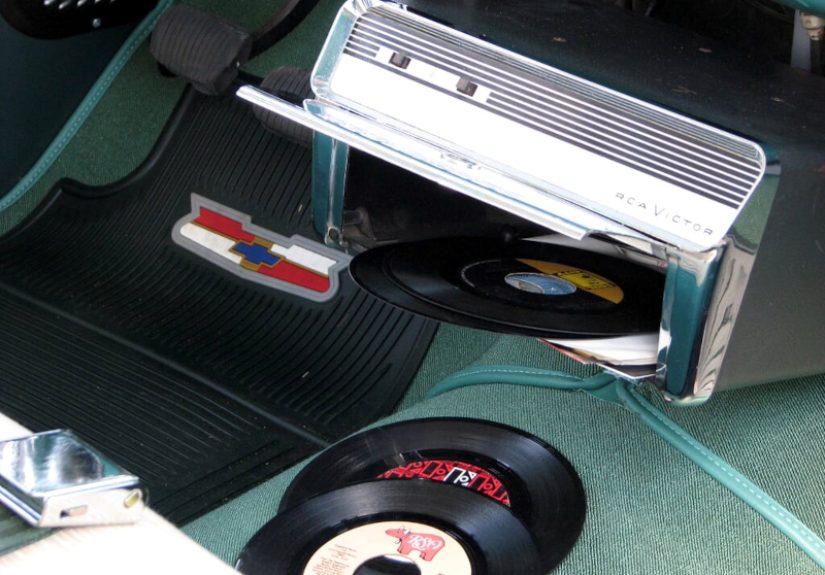
Let’s clear this up before anybody writes a ticket: in this house, “45” means 45 RPM. It means a seven-inch single, a fat center hole, a tiny plastic adapter that always looked like it belonged in a toy spaceship, and two songs that somehow felt more important than an entire playlist. That little record did not just play music. It taught generations how to wait for a favorite song, flip a disc with purpose, and judge a person’s taste by what was stacked next to the turntable.
And that is the real magic of retro gadgets. They were never just machines. They were habits with wires. They were rituals in plastic. They made you press, click, rewind, eject, and commit. A Walkman made a sidewalk feel cinematic. A boombox turned a curb into a stage. A pager could make you feel strangely important and mildly panicked at the same time. A disposable camera made bad lighting look emotional on purpose. A Game Boy turned the back seat of a car into a private kingdom.
Today, when almost every tool has been flattened into one glowing rectangle, old gadgets feel weirdly alive again. They are tactile. They are specific. They are gloriously limited. And that limitation is exactly why people still love them. Retro gadgets remind us that convenience is not the only thing humans value. Sometimes we want texture, drama, inconvenience, and a button that goes ka-chunk.
Why Retro Gadgets Still Hit So Hard
Modern technology is astonishing. Your phone can stream music, navigate traffic, edit photos, translate menus, and tell you the weather in three cities you do not even live in. Very efficient. Very impressive. Also a little boring in the soul.
Retro gadgets, by contrast, had jobs. Singular jobs. A record player played records. A pager paged. A disposable camera captured a finite number of moments and then forced you to live with your choices. Even their flaws became personality traits. Batteries died at the worst time. Tape decks ate cassettes like hungry office shredders. Radio antennas had the emotional fragility of uncooked spaghetti. But the devices had character because they asked something from you.
That exchange matters. When a gadget requires a little effort, the experience feels earned. You do not just hear music from a 45; you choose a side, line up the spindle, drop the needle, and stay present for the whole short ride. You do not casually take 200 disposable-camera photos of lunch from twelve angles and delete 197. You frame one shot, trust your instincts, and accept whatever chaos comes back from the lab. That is not inefficiency. That is participation.
The 45 RPM Single: Small Record, Huge Ego
If retro gadgets had a mayor, the 45 RPM single would at least demand to be on the ballot. The format was compact, durable, and built for pop. Unlike the heavier old 78s, the seven-inch 45 was lightweight, quick, and ideal for the hit-song economy. One song on the A-side, one on the B-side, and a whole lot of teenage emotion packed into a small circle of vinyl.
The brilliance of the 45 was not just its size. It was its attitude. Long-playing albums were for settling in. The 45 was for impact. It was the espresso shot of recorded music. You could buy the song everyone was talking about without committing to a full album. You could hear it on jukeboxes, carry a stack of singles, swap them with friends, and build a taste profile one bold little purchase at a time.
The format also changed how people thought about music ownership. A 45 was affordable enough to feel reachable and important enough to feel personal. It was the physical version of saying, “No, no, this is my song.” That mattered in the rise of youth culture, radio countdowns, and pop fandom. The single was no longer a side dish to the album. In many cases, it was the main event.
And let us respect the visual drama. The labels were bright. The sleeves could be plain, flashy, or slightly mysterious. The center adapter looked like a tiny industrial sculpture. Even the act of flipping a 45 felt cooler than it had any right to be. If an album was a relationship, a 45 was a weekend fling with excellent hair.
What is especially funny is that the format still refuses to die politely. In the streaming era, vinyl has come roaring back, and collectible singles still have a place in record-store culture. That says something important: people do not only want access to music. They want an experience around music. The 45 delivers that in miniature form, like a museum piece that still knows how to party.
Walkman Energy: When Music Moved Into Your Head
Before the Walkman, portable listening existed, but not in the sleek, intimate, world-editing way people now associate with personal audio. The Walkman made music mobile and private at the same time. That sounds normal now because we all walk around soundtracked by earbuds, but in its moment it was a cultural plot twist.
Suddenly, the commute was not dead time. A jog was not just exercise. A gloomy afternoon could be transformed by one cassette and a good pair of foam-padded headphones. The Walkman did not simply shrink stereo sound. It rewired everyday life by letting people curate mood on demand. Main-character energy did not begin with social media. It began when someone pressed play and stared out a bus window like they were in a heartbreak montage.
The design helped too. The buttons had authority. The cassette door snapped shut with purpose. You carried your music, but you also carried evidence of taste. Was it New Wave? Hip-hop? A homemade mixtape labeled in slanted handwriting? The device told a story before anybody even pressed play.
And yes, there was discipline involved. You had to flip the tape. You had to fast-forward and guess where the good part was. You had to pray the batteries had one more album left in them. But those little frictions made listening active, not passive. A Walkman did not background your life. It scored it.
The Boombox: Portable Audio With Delusions of Grandeur
If the Walkman put music in your head, the boombox put it in the neighborhood. This was not personal audio. This was public declaration. The boombox was a statement piece with speakers. It said, “I have arrived, and so has my bass.”
Part machine, part furniture, part upper-body workout, the boombox represented a different kind of freedom. It let people bring radio, mixtapes, and recorded identity into parks, sidewalks, rehearsals, parties, and street corners. That portability mattered deeply in urban culture, especially in the rise of hip-hop, where sound systems, breakbeats, and public performance were social as much as technical experiences.
The boombox’s cultural importance is bigger than nostalgia for shoulder-strain chic. It symbolized access. Not everybody had fancy home stereo equipment, but a boombox could turn any available patch of concrete into a listening room. It made music communal. It invited spectators. It created memories big enough to annoy at least one adult in the immediate area, which is often how you know youth culture is working.
There was also something wonderfully extra about it. Today’s portable speakers are efficient little pucks that whisper, “I am practical.” A boombox yelled, “I have chrome trim, twin cassette decks, and absolutely no interest in subtlety.” We miss that confidence.
Pagers, Beeps, and Other Tiny Anxiety Machines
Then there was the pager, the gadget that made everyone feel either important, in trouble, or both. A beep on your belt was a message without context, which meant the human imagination had to do the rest. Was it work? Family? A friend with a code you pretended to understand instantly? The pager thrived on suspense.
Its appeal was simple: it was small, direct, and surprisingly powerful for such a modest object. In the 1990s especially, pagers became shorthand for mobility, urgency, and busyness. They were communication stripped down to a nudge. No doomscrolling. No 47 unread group messages about brunch logistics. Just a beep, a number, and a mission.
Even now, pagers have an afterlife in popular memory because they represent a strange middle chapter in communication history. They came after the landline age but before the smartphone swallowed every function in sight. They feel quaint now, but they also reveal something modern devices often hide: not every message deserves infinite commentary. Sometimes communication can just tap you on the shoulder and move along.
Game Boy: Pocket-Sized Rule Over Boredom
If the pager created suspense, the Game Boy cured boredom with military efficiency. Waiting room? Covered. Long car ride? Solved. Family gathering where grown-ups discussed mortgages for three straight hours? Bless this gray brick forever.
The Game Boy was not the flashiest handheld on the market, and that was part of its genius. It was sturdy. It was reliable. It did not chew through batteries as fast as some prettier rivals. Most importantly, it delivered games people actually wanted to play. That combination matters more than spec-sheet bragging, and it is why the system became a cultural juggernaut instead of a neat footnote.
There is a lesson there for gadget history. The best retro devices often won not because they were the most futuristic-looking, but because they fit into real life. The Game Boy could survive backpacks, sticky fingers, bad lighting, and questionable handling by younger siblings. It was built for use, not worship. You could love it without treating it like fragile royalty.
Its accessories made it even better in retrospect. The camera attachment was weird, delightful, and a little ridiculous. Naturally, that makes it more beloved now. Retro gadget culture adores the moment when technology gets ambitious in a slightly awkward way. A camera for your handheld game console? Completely unnecessary. Therefore, perfect.
Disposable Cameras: Low Stakes, High Charm
The disposable camera deserves more respect than it usually gets. It democratized photography in a way that felt casual, cheap, and gloriously unsnobbish. You did not need to know aperture settings. You did not need to baby a pricey camera. You just pointed, clicked, and hoped your thumb was not blocking history.
That changed behavior. People took cameras to beaches, weddings, road trips, campgrounds, birthday parties, and any situation where the phrase “I don’t want to bring the good camera” had previously ended the conversation. Disposable cameras expanded who got to document everyday life, and that is a bigger deal than the flimsy plastic body might suggest.
The aesthetic helped seal the memory. Disposable-camera photos were often imperfect in the most flattering way. They glowed, blurred, overexposed, and made ordinary scenes look like recovered evidence of a good time. In a digital age obsessed with correction, that softness feels almost rebellious.
People still chase that look because it contains something smartphones rarely produce by accident: surprise. You did not know exactly what you had until later. Anticipation was built into the medium. The camera was not only capturing a moment; it was delaying gratification. Modern technology usually tries to remove delay. Retro gadgets understood that delay can be part of pleasure.
What Retro Gadgets Got Right That Modern Tech Often Forgets
1. They were physical on purpose.
Buttons, dials, cassettes, sleeves, cartridges, spindles, shutters, battery doors. Retro gadgets gave your hands something meaningful to do. Physical interaction was not decorative. It was the experience itself.
2. Their limitations created focus.
A 45 plays two songs. A disposable camera gives you a fixed number of shots. A Game Boy does one thing at a time very well. Constraints reduce noise. That is not a bug. That is peace.
3. They had visible identity.
Today’s devices often look like variations on a glossy rectangle. Retro gadgets had shapes, colors, handles, windows, labels, and strange design choices that made them instantly recognizable from across a room. You could sketch a boombox from memory. Good luck doing that with your average wireless speaker.
4. They made ownership feel personal.
Your record stack, your mixtape, your pager clip, your Game Boy cartridge case, your envelope of disposable-camera prints: these things accumulated like clues to a life. Cloud libraries are convenient, but they rarely sit on a shelf and dare a guest to ask questions.
Thinking of Starting a Retro Gadget Collection?
Start with what you actually love, not what the internet says is collectible this week. If music is your thing, buy a small turntable setup and a few 45s you genuinely want to play. If you miss tactile photography, grab a disposable camera and accept that not every frame will be a masterpiece. If handheld gaming is your weakness, a Game Boy still offers a surprisingly pure kind of fun.
Check the practical stuff too. Belts dry out, battery compartments corrode, cassette motors get moody, and old plastic can crack if treated like a hockey puck. Retro collecting is more fun when you remember that vintage charm occasionally arrives with maintenance needs and the personality of a grumpy cat.
Most of all, use the gadgets. Do not trap them in permanent decorative exile. A 45 wants to spin. A boombox wants to boom. A disposable camera wants to embarrass someone with flash at exactly the wrong moment. These objects make the most sense when they are part of life instead of just evidence that life used to be cooler.
What the Retro Gadget Experience Actually Felt Like
For people who lived through these devices, the memories are not just about ownership. They are about atmosphere. The experience of retro gadgets was a thousand tiny scenes stitched together.
It was kneeling on the floor in front of a record player, squinting at labels in dim bedroom light, trying to decide whether the A-side or the secretly superior B-side deserved another spin. It was the mild panic of realizing your favorite 45 had a fingerprint on it the size of a small continent. It was learning that a simple plastic adapter could vanish from a room with the efficiency of a magician’s rabbit.
It was walking outside with a Walkman and discovering that weather somehow sounded different with headphones on. A cold afternoon felt more dramatic. A summer bus ride felt more cinematic. The song did not change, but the world around it suddenly edited itself into scenes. Even waiting became content.
It was hearing a boombox in the distance before you saw it, like thunder with better taste. It was a machine announcing that a block, a park, or a front stoop had briefly become somebody’s territory. The boombox did not believe in subtlety. It believed in presence. People gathered around it the way people still gather around energy.
It was clipping on a pager and feeling absurdly grown-up for no good reason. One beep and your posture changed. You were now a person with business, mystery, and probably a phone number to call back from a pay phone that smelled faintly like metal and bad decisions. A pager made ordinary errands feel like spy work carried out between snack purchases.
It was opening a new pack of batteries for a Game Boy like a pit crew preparing a race car. You knew exactly how precious those hours were. The screen was not backlit, so you tilted it toward a lamp, a car window, or a patch of cooperative daylight like a pilgrim seeking truth. Then the game started, and suddenly none of the surrounding adult conversation mattered anymore.
It was buying a disposable camera for a road trip, a school event, a beach day, or a wedding reception and promising yourself to be selective, then using half the exposures on nonsense because joy is not famous for restraint. It was waiting for the prints and discovering that the best photo was not the posed one. It was the weird laugh, the accidental blur, the half-cropped friend, the moment you would never have tried to perfect in real time.
That is what people miss when they talk about retro gadgets. Not just the objects, but the pace. The slight delay. The need to choose. The fact that every device asked you to pay attention in a different way. You did not float through the experience. You operated it. You participated in it. You made peace with its quirks.
And maybe that is why the nostalgia is not going anywhere. Retro gadgets remind us that technology used to leave more fingerprints on daily life, literally and emotionally. It clicked louder, weighed more, took longer, failed more often, and somehow made the memory stick harder. So no, officer, we were not doing 45. We were listening to 45. Which, honestly, is a much better way to spend the evening.
Final Spin
Retro gadgets endure because they delivered more than function. They delivered texture, ritual, and a sense that technology could be personal without becoming invisible. The 45 RPM single made music ownership thrillingly specific. The Walkman made private listening portable. The boombox made listening social. The pager turned communication into suspense. The Game Boy defeated boredom with stubborn brilliance. The disposable camera made imperfection worth keeping.
That is why these devices still charm collectors, younger nostalgia-hunters, and anybody tired of living inside one all-purpose screen. They remind us that sometimes the best technology is not the fastest or smartest. Sometimes it is the one that makes you feel something before it is even turned on.