Table of Contents >> Show >> Hide
- What Makes the Rowlett Esprit Different?
- Design and Build Quality: Where This Toaster Earns Its Price
- Toasting Performance: Simple, Manual, and Surprisingly Appealing
- How It Compares With Today’s Best 4-Slice Toasters
- Who Should Buy the Rowlett Esprit Wide 4-Slot Bread Toaster?
- Final Verdict
- Real-World Ownership Experience: What Living With the Rowlett Esprit Feels Like
- SEO Tags
Some toasters are built to disappear into the background. The Rowlett Esprit Wide 4-Slot Bread Toaster is not one of them. This is the kind of machine that walks onto your countertop like it owns the lease. It has the polished, retro-industrial look of a classic British appliance, the sturdy feel of something made for serious daily use, and the sort of old-school confidence that says, “Touchscreens are cute, but I was busy making toast before they were born.”
If you are shopping for a four-slice toaster today, you are probably comparing it against sleek digital models from brands that dominate U.S. shopping guides. Those machines usually win points for even browning, wide slots, bagel settings, defrost buttons, and easy crumb cleanup. The Rowlett Esprit takes a different route. Instead of chasing the “more presets, more lights, more beeps” trend, it leans into manual control, repairability, durable metal construction, and a design that feels closer to light commercial equipment than bargain-bin breakfast gear.
So is the Rowlett Esprit Wide 4-Slot Bread Toaster actually worth your attention? In many kitchens, yes. But it is also a niche product, and that is exactly why it is interesting. This is not the toaster for everyone. It is the toaster for people who want character, build quality, and a machine that feels engineered rather than merely assembled. In other words, it is for people who think toast deserves a little ceremony.
What Makes the Rowlett Esprit Different?
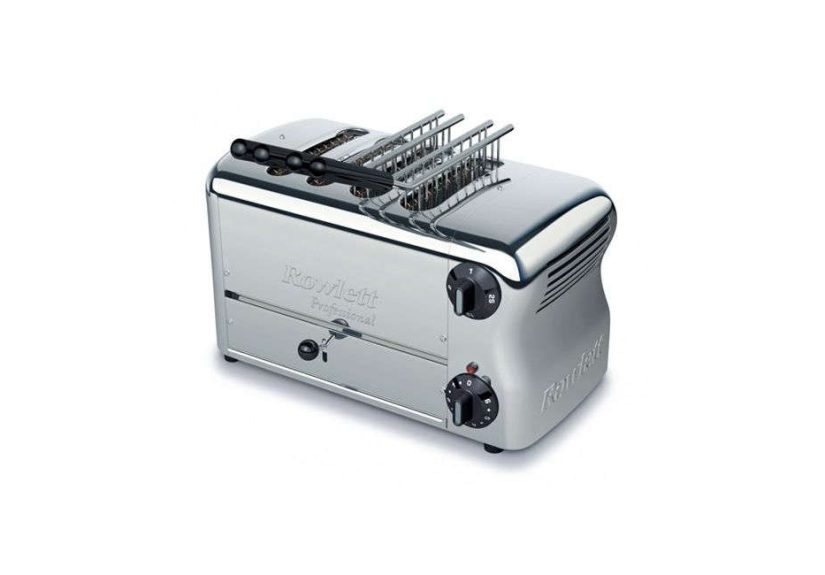
At first glance, the Rowlett Esprit looks like a handsome throwback. Chrome panels, rounded edges, lever controls, and a serious, almost café-style stance give it a personality many modern four-slice toasters lack. Most mass-market models try to look invisible. The Esprit looks like it expects compliments. Fair enough. It usually gets them.
What really sets it apart, though, is not just the retro styling. It is the philosophy behind the product. The Esprit is designed more like a long-term appliance than a disposable countertop gadget. That means a variable timer instead of a confusing touchscreen menu, a lever-action bread lift so you can check progress without drama, a removable crumb tray for easier cleaning, and a slot selector that allows you to power only the slots you need. That last detail is one of the most practical features on the machine. If you are only toasting one or two slices, the toaster does not need to perform a full Broadway production for four.
The other big talking point is serviceability. Many modern toasters are cheap enough to replace and annoying enough to make you want to. The Rowlett Esprit goes the other direction. It is built around the idea that parts can be replaced and the toaster can keep working for years instead of becoming a sad metal brick after one bad heating element. In a world full of sealed appliances and short attention spans, that feels refreshingly stubborn.
Design and Build Quality: Where This Toaster Earns Its Price
Let’s be honest: people do not buy a Rowlett Esprit because it is the cheapest way to brown bread. They buy it because it looks premium, feels premium, and behaves like it plans to stick around. The construction has a heavier, more confident presence than the average four-slice toaster sold in big-box stores. There is less plastic energy here and more “this could survive a busy breakfast service” energy.
That matters because build quality is one of the most overlooked parts of toaster shopping. U.S. review outlets regularly focus on toasting performance, ease of cleaning, controls, and slot design, and for good reason. But long-term satisfaction often comes down to whether the machine feels flimsy after six months. The Rowlett Esprit’s metal-forward construction gives it a sturdier, more substantial identity than many fashionable but featherweight competitors.
The styling also lands in a sweet spot. It is retro without being cartoonish. It is polished without looking fragile. It feels like something that belongs in a stylish breakfast nook, a hospitality setup, or a kitchen where the owner says phrases like “countertop cohesion” and actually means them. It has visual charm, but not the kind that turns your kitchen into a theme park.
Is It Actually “Wide”?
Here is where a little honesty makes the review better. The title “wide 4-slot bread toaster” sounds like a promise to every bagel lover, artisan loaf enthusiast, and sourdough maximalist in the room. In practice, the Rowlett Esprit reads more like a bread-focused, four-slot toaster with a broad chassis and a generous, functional layout than a modern extra-wide-slot bagel specialist.
That is not a flaw. It is just a reminder to shop with your bread habits in mind. If your daily routine is standard slices, toasties, tea cakes, and general breakfast duty, the Esprit makes sense. If your life revolves around very chunky bakery cuts or oversized bagels, you should check slot dimensions carefully before assuming this is your carb soulmate.
Toasting Performance: Simple, Manual, and Surprisingly Appealing
The Rowlett Esprit does not try to wow you with a “smart” interface. It tries to make good toast consistently and let you stay in charge. That sounds basic, but basic is underrated when it is done well.
The variable timer is the heart of the experience. Instead of picking a vaguely mystical browning number and hoping the machine interprets your emotional needs correctly, you work with time more directly. That gives the toaster a slightly more hands-on feel than many American consumer models, but it also makes the machine feel more intentional. You learn how your bread behaves. You figure out your preferred range. You stop negotiating with a gadget and start using a tool.
The lever-action bread lift helps here, too. Being able to check progress without canceling the whole cycle is genuinely useful. It is one of those features that seems ordinary until you use a toaster without it and realize you are either playing toast roulette or yanking hot bread with the reflexes of a raccoon in a snack drawer.
The slot selector is another practical win. Four-slot toasters are great when you need volume, but many of them feel wasteful when you only want one or two slices. The Esprit’s ability to energize only the slots in use gives it a more efficient, purpose-driven feel. This is especially appealing in households where breakfast traffic varies wildly from “just me and my coffee” to “why are there suddenly four hungry people in the kitchen?”
Performance-wise, the Esprit’s appeal is less about flashy specialization and more about control, repeatability, and calm. It does not act like a tiny robot chef. It acts like a well-made toaster. Sometimes that is exactly what you want.
How It Compares With Today’s Best 4-Slice Toasters
Modern U.S. shopping-editor favorites usually win for a few predictable reasons: very even browning, genuinely wide slots, bagel and defrost functions, easy crumb-tray access, and controls that are intuitive at 7:03 a.m. before coffee has had its moment. Brands like Cuisinart, Breville, Zwilling, Oster, and KitchenAid show up again and again because they balance speed, convenience, and user-friendly features.
The Rowlett Esprit does not try to beat those products at their own game. Instead, it offers a different value proposition. It feels more durable. It looks more distinctive. It is more repair-minded. It has a manual, mechanical personality that some buyers will adore and others will find gloriously old-fashioned in the same way vinyl records are old-fashioned: less convenient, maybe, but more satisfying.
That means the Esprit is strongest when you want a premium four-slot bread toaster with character and longevity, not when you want the broadest possible list of automated features. If your dream toaster includes digital countdowns, one-touch frozen modes, and extra-roomy bagel slots, there are more obvious options. If your dream toaster includes chrome, heft, repairable parts, and a design that feels like it should come with its own jazz soundtrack, Rowlett suddenly looks very compelling.
Who Should Buy the Rowlett Esprit Wide 4-Slot Bread Toaster?
This toaster makes the most sense for people who care deeply about build quality and appreciate a more tactile, mechanical kitchen experience. It is a strong fit for design-conscious homes, breakfast-heavy households, boutique hospitality spaces, office kitchens, and buyers who are tired of treating appliances like temporary roommates.
It is also a smart pick for anyone drawn to repairable equipment. The included replacement elements and the general serviceable design give the Esprit a long-game appeal that many mainstream toasters simply do not have. That matters if you hate waste, hate replacing appliances, or hate both, which is the emotionally correct position.
On the flip side, this is probably not the best toaster for buyers who want the most American-style convenience features for the money. It is also not a casual purchase for U.S. shoppers, because voltage matters here. Many listed Esprit 4-slot models are sold as 220–240V units, which means you need to verify compatibility before imagining this beauty parked next to your coffee maker.
Final Verdict
The Rowlett Esprit Wide 4-Slot Bread Toaster is best understood as a premium, repair-friendly, retro-styled four-slot toaster that prioritizes craftsmanship and manual control over trendy features. It is charming, practical, and unusually thoughtful in a category where plenty of products are designed to be replaced before you have even memorized the settings.
No, it is not the universal best 4-slice toaster for every shopper. It is not the cheapest. It is not the most techy. It is not the obvious pick for people who want giant bagel slots and a dozen specialized buttons. But it is a memorable, good-looking, well-conceived toaster that brings real personality to the counter and real usefulness to everyday breakfast.
If that sounds like your kind of appliance, the Rowlett Esprit starts to look less like a splurge and more like an investment in better mornings. Toast may be humble, but the machine making it does not have to be.
Real-World Ownership Experience: What Living With the Rowlett Esprit Feels Like
The most interesting thing about the Rowlett Esprit Wide 4-Slot Bread Toaster is how quickly it changes the rhythm of your kitchen. This is not a toaster that fades into the background after day three. It becomes part of the routine in a very specific way. You notice the weight when you move it. You notice the finish when the morning light hits it. You notice the controls because they feel deliberate rather than decorative. And yes, you will absolutely notice when a guest asks, “Wait, what toaster is that?”
In day-to-day use, the Esprit feels more like operating a small piece of equipment than tapping a disposable appliance. That sounds dramatic for a toaster, but it is true. The timer knob, lift lever, and slot selector make the process feel hands-on without becoming fussy. Once you get used to the machine, breakfast moves smoothly. A couple slices for a quick weekday? Easy. More pieces for a family breakfast? Also easy. The four-slot format gives you capacity, while the selector keeps the toaster from feeling excessive when you are only making one serving.
There is also a small but real pleasure in using something that was clearly designed to be maintained instead of tossed. The removable crumb tray helps keep cleanup from becoming a crumb-based archaeological dig. The replaceable components add a kind of confidence that many modern appliances lack. You do not feel like you are borrowing time from a sealed box with a countdown clock hidden inside. You feel like you own a machine that was meant to keep going.
Aesthetic experience matters, too, and people like to pretend it does not. But kitchens are lived-in spaces, not sterile testing labs. The Rowlett Esprit has enough visual personality to make the counter feel more polished, especially in homes that lean traditional, vintage-inspired, or café-friendly. It pairs well with stainless cookware, ceramic canisters, wooden cutting boards, and the sort of mug collection that says, “I take breakfast personally.”
That said, the ownership experience is best when expectations are realistic. This is not the toaster you buy because you want every possible preset. It is the toaster you buy because you want quality, charm, and control. If you are the sort of person who wants a machine to decide everything for you, the Esprit may feel a little too analog. If you like understanding your tools and developing a feel for them, it becomes more satisfying over time.
There is also the practical question of fit. It works best in kitchens where the appliance can have a permanent, visible home rather than being shoved into a crowded cabinet between uses. This toaster deserves breathing room, both for safety and for style. It is not shy, and frankly, it should not be. It looks too good to hide.
In the end, living with the Rowlett Esprit feels a bit like owning a beautifully made analog watch in a smartwatch world. It may not do everything. It may not try to. But what it does, it does with confidence, style, and a sense of permanence that is getting harder to find. That makes the experience feel less like using a random toaster and more like choosing a piece of kitchen equipment you can actually enjoy for years.