Table of Contents >> Show >> Hide
- What Is BornHack?
- The Pandemic Problem: Hacker Camps Are Social by Design
- The BornHack 2020 Strategy: Smaller, Outdoor, Flexible
- What Made BornHack 2020 Work?
- Lessons for Running a Hacker Camp During a Crisis
- Why BornHack 2020 Still Matters
- Practical Takeaways for Future Hacker Camp Organizers
- Added Experience Section: What BornHack 2020 Teaches About Human-Centered Event Planning
- Conclusion
In 2020, most conferences discovered the same grim truth: a “global community event” becomes much less global when everyone is watching a pixelated livestream from the laundry room. Hacker camps, in particular, were hit hard. These gatherings depend on tents, shared tools, late-night conversations, improvised workshops, solder fumes, terrible jokes, and the sacred ritual of asking, “Does anyone have a USB-C cable?”
BornHack 2020 did something unusually bold. Instead of disappearing entirely into the online-event fog, the Danish hacker camp went ahead in a smaller, carefully controlled form. Held from August 11 to August 18, 2020, on the island of Funen in Denmark, BornHack’s fifth edition became a case study in how an outdoor technology festival could survive a pandemic without pretending the pandemic did not exist.
This was not business as usual with a bottle of hand sanitizer slapped on the registration desk. BornHack 2020 worked because the organizers understood the assignment: reduce scale, communicate constantly, keep the event outdoors, respect public-health rules, and preserve the community spirit that makes hacker camps worth attending in the first place.
What Is BornHack?
BornHack is a seven-day outdoor tent camp for hackers, makers, security researchers, programmers, open-source fans, privacy advocates, hardware tinkerers, and curious people who enjoy technology with a side order of campfire smoke. Think conference, festival, workshop village, and nerdy summer camp rolled into one.
The name comes from Bornholm, where the event began, although by 2020 BornHack was being held on Funen. The camp typically includes talks, workshops, villages, food areas, a bar, power infrastructure, networking, social events, and a program that blends technical depth with informal community energy.
Unlike a polished corporate tech summit where everyone speaks in brand-approved nouns, a hacker camp thrives on experimentation. People arrive with half-built hardware, half-baked ideas, and fully committed enthusiasm. That culture made BornHack worth saving in 2020but it also made the safety challenge more complicated.
The Pandemic Problem: Hacker Camps Are Social by Design
A hacker camp is not just a schedule. It is a living network of people. Attendees borrow tools, share meals, sit in circles, crowd around blinking prototypes, attend talks, play games, and form tiny temporary civilizations around power strips and folding tables.
In normal times, that closeness is the magic. In a pandemic, it becomes the risk.
BornHack 2020 faced the same questions every serious event organizer faced that year: How many people can safely attend? Can the program continue? What happens if restrictions change days before the gates open? How do you keep the event fun without turning it into a joyless obstacle course of rules?
The answer was not one single decision. It was a stack of practical choices, each one reducing risk while keeping the camp recognizable.
The BornHack 2020 Strategy: Smaller, Outdoor, Flexible
1. Attendance Was Capped at 150 People
The most important safety decision was scale. BornHack 2020 limited attendance to 150 participants. That smaller number mattered because distancing, hygiene, food planning, campsite layout, and emergency response all become more manageable when the crowd is not trying to recreate a small airport terminal with tents.
For a hacker camp, 150 people is intimate. It changes the mood. You lose some of the wild variety of a larger event, but you gain space, flexibility, and a stronger chance that everyone understands the shared responsibility.
In pandemic event planning, capacity is not just a ticketing issue. It is a safety system. Fewer attendees mean fewer queues, less pressure on bathrooms and showers, more room in talks, and a better chance of noticing problems before they become disasters.
2. The Event Stayed Outdoors
BornHack’s outdoor nature gave it an advantage many indoor conferences did not have. Open-air settings make distancing easier and reduce the risks associated with crowded, poorly ventilated rooms. That does not make outdoor events automatically safeviruses do not look at a tree and politely leavebut it gives organizers more room to build safer patterns.
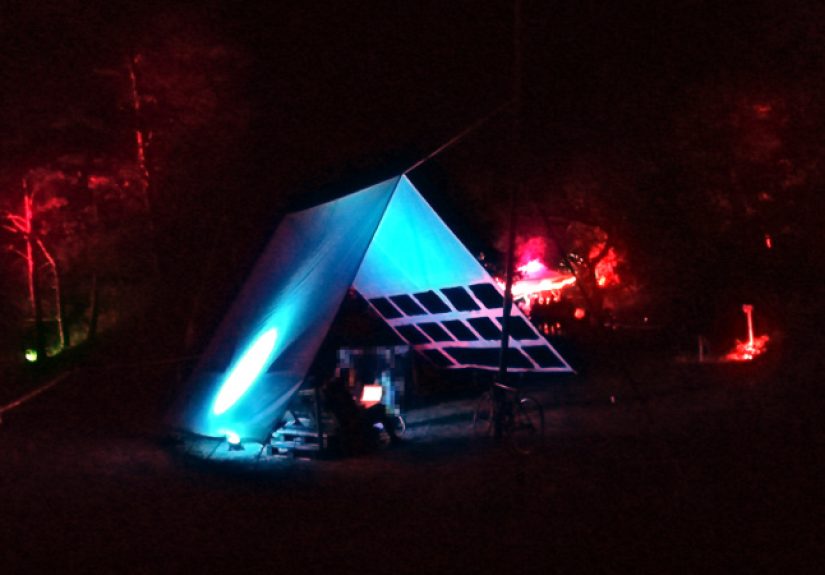
Outdoor camps can spread out tents, separate food areas, place talks in larger open structures, and avoid the packed hallway effect that defines so many indoor conferences. BornHack 2020 benefited from this layout because the event’s normal format already supported open-air gathering.
3. Organizers Kept Essential Facilities
A pandemic camp still needs real infrastructure. BornHack 2020 kept the essentials: an info desk, food area, speakers tent, bar, hot showers, toilets, and public-use power. That may sound basic, but basic is what prevents chaos.
Good event infrastructure reduces unnecessary crowding. Clear information reduces confused wandering. Reliable sanitation facilities support hygiene. Proper power distribution prevents attendees from creating cable spaghetti monsters in places where people need to walk. And yes, showers matter. A week-long camp without showers is not a hacker camp; it is a slow-motion social experiment.
4. Health Rules Were Communicated Clearly
BornHack’s public updates reminded participants to socialize at a distance, wash hands, wear masks when needed, and stay home if they had flu-like symptoms. The tone was direct but community-friendly. That matters. People are more likely to follow rules when those rules feel like a shared project rather than a scolding from a clipboard.
The organizers also stayed in contact with Danish authorities as rules changed. When new restrictions appeared close to the event, BornHack did not pretend everything was fine. It clarified the situation, explained the participant limit, and kept attendees updated.
That kind of communication is one of the biggest lessons from BornHack 2020: uncertainty is less damaging when people know what you know, what you do not know yet, and when they can expect an update.
What Made BornHack 2020 Work?
A Community That Already Understood Cooperation
Hacker communities are unusually good at self-organizing. They understand volunteer teams, shared infrastructure, documentation, and “please do not break the thing everyone needs.” BornHack could lean on that culture.
At a normal event, rules may feel like top-down restrictions. At a hacker camp, rules can be framed as part of keeping the system running. The camp itself becomes the project. Everyone is a participant, tester, maintainer, and occasional bug reporter.
A Program That Accepted the Mood of the Year
BornHack 2020 still had talks, workshops, recreational events, meetups, games, and community activities. But the event also seemed to understand that attendees were arriving after months of stress, lockdowns, canceled plans, and social isolation.
That changed the atmosphere. Reports from the camp described a quieter, more relaxed energy. People still joined activities like token games, CTF-style fun, and Hacker Jeopardy, but many also simply enjoyed being outside with other humans again. In 2020, sitting in a hammock under trees with a cold drink was not laziness. It was emotional firmware recovery.
A Practical Balance Between Safety and Joy
The most successful pandemic events did not try to recreate 2019. They built a new version of the experience that respected the moment. BornHack 2020 did that by reducing numbers, keeping the event outdoors, and accepting that the camp would feel different.
This is where some organizers get stuck. They treat safety as the enemy of atmosphere. BornHack showed that safety planning can protect atmosphere. If people trust the event, they relax. If they know the organizers have thought through the hard parts, they can focus on learning, talking, making, and occasionally discovering that their project only works when nobody is watching.
Lessons for Running a Hacker Camp During a Crisis
Lesson 1: Start With the Non-Negotiables
Before choosing speakers, selling merch, or designing badges, define what cannot be compromised. In a pandemic, that includes legal compliance, capacity, sanitation, communication, refund policies, and the ability to cancel or change course if conditions deteriorate.
BornHack’s updates showed that the organizers were prepared to re-evaluate if restrictions changed. That flexibility is crucial. A crisis plan that cannot change is not a plan; it is decorative stationery.
Lesson 2: Design for Distance Without Killing Interaction
Physical distancing does not mean social disconnection. It means designing the camp so people can interact without being forced into tight clusters. Wide seating areas, outdoor talks, spaced queues, visible signage, and clear facility maps all help.
For hacker camps, villages can also be designed with more breathing room. Workshops can use smaller groups. Informal meetups can happen outside. The goal is not to stop people from connecting; it is to remove the bottlenecks where risk piles up.
Lesson 3: Make Health Guidance Easy to Follow
People follow rules more consistently when the environment supports them. Handwashing areas should be easy to find. Masks should be available when needed. Food and drink areas should not create dense lines. Announcements should be short, clear, and repeated through multiple channels.
BornHack’s reminders were simple: distance, wash hands, mask when needed, stay home if sick. That clarity matters. Nobody wants to read a 47-page policy document while standing in a field with a backpack and a tent pole.
Lesson 4: Preserve the Culture
A hacker camp without culture is just a rural meeting with worse Wi-Fi. BornHack 2020 kept the pieces that made the event feel like BornHack: talks, villages, games, social spaces, and the informal rhythm of camp life.
This is the difference between surviving and succeeding. A successful crisis-era event does not merely avoid disaster. It gives attendees a reason to be glad they came.
Why BornHack 2020 Still Matters
BornHack 2020 matters because it offers a rare example of a real-world hacker camp that adapted instead of vanishing. It did not solve every problem facing live events. It did not prove that all gatherings were safe in all conditions. What it proved was more specific and more useful: with the right venue, small scale, public-health awareness, flexible planning, and community buy-in, an in-person hacker camp could still happen responsibly.
The lesson is not “go ahead no matter what.” The lesson is “design for reality.” BornHack’s reality in August 2020 included legal limits, changing restrictions, distancing expectations, and attendees hungry for community after months apart. The organizers built around those constraints instead of wishing them away.
For future hacker camps, maker festivals, cybersecurity meetups, and outdoor technology events, BornHack 2020 remains a valuable blueprint. It shows that the heart of an event is not the size of the crowd. It is the quality of the community, the care behind the planning, and the willingness to adapt when the world throws a very unpleasant exception error.
Practical Takeaways for Future Hacker Camp Organizers
- Cap attendance early: Smaller events are easier to manage, safer to space out, and simpler to communicate with.
- Choose outdoor-first layouts: Open-air venues offer more flexibility for talks, workshops, food, and informal gatherings.
- Coordinate with authorities: Regulations can change quickly, so organizers need direct lines of communication and backup plans.
- Keep facilities reliable: Toilets, showers, food, power, and information desks are safety infrastructure, not luxuries.
- Use simple health messaging: Clear reminders beat complicated policy language.
- Protect the event’s personality: Safety measures should support the community experience, not erase it.
- Offer flexible refunds: People should not feel pressured to attend when sick or uncertain.
Added Experience Section: What BornHack 2020 Teaches About Human-Centered Event Planning
One of the most interesting experiences related to BornHack 2020 is not just that the camp happened. It is that the camp revealed what people actually missed during the pandemic. Yes, hackers missed talks, workshops, CTFs, badges, radios, network diagrams, soldering irons, and the joy of discovering that someone brought a wildly unnecessary but deeply impressive piece of hardware. But more than that, people missed casual presence.
They missed walking past a tent and hearing someone explain a strange project. They missed asking a question after a talk and continuing the conversation outside. They missed eating near people who understood why a broken build can ruin your entire personality for an afternoon. Online events could deliver slides, chat rooms, and video calls, but they struggled to recreate accidental community.
BornHack 2020 worked because it did not overcomplicate that insight. It gave people a safer, smaller, outdoor place to be together. That sounds simple, but simple was exactly what many attendees needed. After months of uncertainty, a week of structured normality had real value.
From an event-planning perspective, the biggest experience-based lesson is that comfort and safety are connected. If attendees are confused, they cluster. If signs are unclear, they ask the same questions repeatedly. If the food area is poorly organized, a harmless lunch becomes a traffic jam. If the rules feel inconsistent, people start making their own interpretations, and that is how chaos gets a committee.
A successful pandemic-era camp needs to reduce friction before it appears. The info desk should be prepared for common questions. The website should answer logistical concerns before people travel. Refund policies should encourage responsible decisions. Health reminders should be visible without making the event feel like an airport security line. Volunteers should know the plan well enough to explain it calmly.
BornHack also shows the value of honest expectations. Attendees did not arrive expecting the full roaring festival energy of a normal year. They came to a smaller camp shaped by unusual circumstances. That expectation management likely helped people appreciate what was possible instead of complaining about what was missing.
There is also a deeper lesson for hacker culture. The best hacker communities are not only about clever technical solutions. They are about stewardship. Someone maintains the network. Someone writes documentation. Someone runs the bar. Someone checks the power. Someone updates the schedule. Someone reminds everyone to wash their hands and stay home if they are sick. The glamorous parts of a camp depend on invisible labor.
BornHack 2020 made that invisible labor easier to see. Running a camp in a pandemic required trust, humility, and operational discipline. It required organizers to say, “This is what we can do safely,” rather than chasing the biggest possible version of the event. That restraint is not boring. It is leadership.
For future organizers, the BornHack 2020 experience suggests a powerful rule: do not measure success only by attendance numbers. Measure it by whether people felt informed, respected, safe, and connected. Measure it by whether volunteers could manage the workload. Measure it by whether the event preserved its identity under pressure.
In that sense, BornHack 2020 was more than a pandemic workaround. It was a reminder that the best hacker camps are resilient systems. They can scale down, route around problems, adapt to constraints, and still deliver the thing people came for: a week of shared curiosity, technical play, and community in the real world.
Conclusion
Running a successful hacker camp in a pandemic required more than enthusiasm. BornHack 2020 succeeded because it treated safety, logistics, and community as parts of the same system. By limiting attendance, keeping the camp outdoors, maintaining essential facilities, communicating clearly, and preserving the culture of hands-on learning, BornHack created a rare in-person technology gathering during a year when most events were canceled or moved online.
The result was not a normal hacker camp, and that was the point. BornHack 2020 was smaller, quieter, and more careful. But it was still alive. It gave attendees a chance to reconnect, learn, relax, and remember that technology communities are built by peoplenot just platforms, livestreams, or chat windows.
For anyone planning a hacker camp, maker festival, cybersecurity meetup, or outdoor tech event, BornHack 2020 remains a practical example of crisis-era event design done with care. The takeaway is simple: respect the risk, protect the people, keep the culture, and always make sure the toilets, power, and coffee situation are under control. Civilization depends on these things more than we like to admit.