Table of Contents >> Show >> Hide
- A Showroom That Speaks the Aerosoles Language
- Why TriBeCa Is the Perfect Backdrop
- The Industrial-Chic Formula: Raw Bones, Soft Landing
- Inside the Showroom: Display as Storytelling
- High-Low Design That Actually Works
- A Creative Studio Hidden in Plain Sight
- The Neutral Palette Lets the Shoes Do the Talking
- Comfort Technology as Design Inspiration
- What Interior Designers Can Learn from This Space
- Why This Showroom Visit Matters for Retail Branding
- Experience Notes: Visiting an Industrial-Chic Showroom Like This
- Conclusion
There are showrooms that quietly display products, and then there are showrooms that behave like a brand manifesto with excellent lighting. Aerosoles’ industrial-chic loft space in TriBeCa belongs firmly in the second camp. It is not merely a place to line up shoes on shelves and hope buyers notice the good ones. It is a carefully considered design center, creative workspace, and appointment-based showroom where the brand’s message comes through before anyone even slips on a sandal, loafer, or heel.
The best part? The space understands the same truth Aerosoles has built its name on: style and comfort should not be mortal enemies. In footwear, that means shoes that look polished without making your feet write an angry resignation letter by lunch. In interiors, it means a room that feels refined but still workable, elegant but not uptight, historic but not trapped in a museum mood. This TriBeCa showroom brings those ideas together with exposed brick, original beams, dark painted ceilings, warm vintage accents, custom display shelving, and just enough glamour to remind visitors that comfort can absolutely wear a velvet blazer.
A Showroom That Speaks the Aerosoles Language
Aerosoles has long positioned itself around the intersection of fashion and function. Since 1987, the brand has focused on footwear designed for motion, comfort, and everyday style. That history matters when looking at the showroom because the interiors do not feel random. They are not chasing a trend for the sake of a trendy photo. Instead, the design mirrors the product philosophy: practical bones, softened edges, thoughtful engineering, and enough visual polish to make everything feel intentional.
The TriBeCa loft serves multiple roles. It is part showroom, part design center, and part creative studio. Buyers can view collections by appointment, while the brand’s team can use the space to work, sketch, edit, discuss materials, and develop product stories. In other words, this is not a sterile corporate box with fluorescent lighting and a lonely coffee machine humming in the corner. It is a live creative environment, the kind of place where a shoe display can sit near a desk, a sketching surface, and a vintage lamp without anyone needing to call a committee meeting.
Why TriBeCa Is the Perfect Backdrop
TriBeCa is one of New York City’s great neighborhoods for loft romance. Its history of warehouses, manufacturing buildings, store-and-loft structures, brick facades, cast-iron details, and generous windows gives designers a head start. You do not have to fake character in a TriBeCa loft; the room usually arrives with a backstory, a few scars, and the kind of architectural confidence new construction spends millions trying to imitate.
That historic character works beautifully for Aerosoles. A footwear showroom could easily become too glossy, too retail, or too precious. The TriBeCa setting keeps it grounded. Original nuts, bolts, beams, brick walls, and large wood-framed windows give the space texture and authenticity. The result is an industrial-chic interior that feels stylish without becoming cold. It has the relaxed sophistication of someone who owns good shoes, walks everywhere, and knows exactly where to get a proper espresso.
The Industrial-Chic Formula: Raw Bones, Soft Landing
Industrial-chic design can go wrong quickly. Too much raw metal and exposed brick, and suddenly a showroom feels like a very expensive garage. Too many soft furnishings, and the industrial edge disappears under a cloud of decorative pillows. Aerosoles’ loft finds a more balanced rhythm.
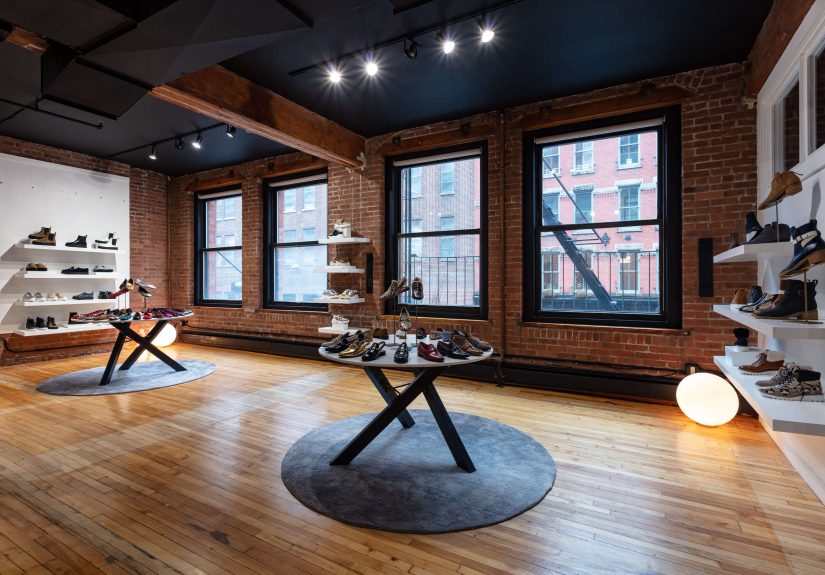
The ceiling is painted in a deep, dark tone that draws attention to the height of the room and frames the existing architectural details. Against that moodier overhead plane, the brick walls and big windows stand out with more drama. The dark ceiling also creates a subtle gallery effect, helping the displayed shoes become the brighter, more tactile stars of the room.
Then come the softeners: a curvilinear velvet sofa, vintage pieces, warm rugs, brass accents, and sculptural display elements. These choices prevent the room from feeling like a raw shell. They also echo the Aerosoles product promise. The structure may be strong, but the experience should be comfortable.
Inside the Showroom: Display as Storytelling
One of the most important lessons from the Aerosoles showroom is that product display should never feel like product storage. Shoes are small objects, and in a large loft they can easily get lost. The solution here is custom shelving, carefully scaled risers, and a neutral interior palette that lets shape, texture, color, and material take focus.
The rough-hewn brick walls create a tactile background for the shoe collections. Custom shelves bring order and rhythm, while brass risers lift select pairs so they appear more like design objects than inventory. This matters because footwear is both functional and emotional. A shoe has to fit, support, and move, but it also has to whisper, “Yes, you are the kind of person who has plans after work.”
The showroom’s display strategy supports that feeling. Instead of overwhelming visitors with endless rows, the space encourages a slower look. The eye can move from the brick to the shelf, from the brass riser to the silhouette of a shoe, from the product to the room around it. This layered experience is what separates a memorable showroom visit from a basic sales appointment.
High-Low Design That Actually Works
“High-low” is one of those design phrases that gets thrown around often, usually right before someone pairs a bargain stool with a chandelier and hopes for applause. In this showroom, the idea feels more mature. Luxe details sit beside practical materials. Vintage elements mix with custom work. Industrial features remain visible instead of being polished into anonymity.
The gold mirrors sourced from the Waldorf-Astoria add old New York glamour, while the gray rug from ABC Carpet & Home brings softness and scale. The vintage coffee table and desk add personality. The velvet sofa introduces a curved silhouette that contrasts with the straight lines of shelves, beams, and windows. None of these choices scream for attention; they build atmosphere.
This high-low approach is especially appropriate for Aerosoles because the brand itself plays in a similar space. Its footwear is not about choosing between practical shoes and fashionable shoes. It is about narrowing the gap. The showroom does the same thing with interiors: industrial but welcoming, refined but useful, historic but modern, fashionable but not fussy.
A Creative Studio Hidden in Plain Sight
One of the smartest aspects of the loft is that the behind-the-scenes creative process is not hidden away. The showroom includes office areas, creative studios, and workspaces that remain visually connected to the product displays. That openness gives visitors a sense of how ideas move from sketch to sample to finished collection.
Oversized painter’s canvases are used as flexible partitions, closing off desk areas when needed while also doubling as sketching surfaces. It is a clever detail because it solves a practical problem without introducing a heavy wall or corporate divider. It also reinforces the creative identity of the space. Even the partition says, “Something is being made here.”
For brands, this is a powerful lesson. Customers and buyers increasingly care about process. They want to understand not just what a company sells, but how it thinks. By allowing the design studio energy to remain part of the showroom experience, Aerosoles makes the space feel active and authentic.
The Neutral Palette Lets the Shoes Do the Talking
A showroom should know when to be quiet. Aerosoles’ TriBeCa loft uses a restrained palette so the shoes can provide the color, shine, texture, and seasonal personality. Neutral walls, dark ceilings, wood, brick, metal, and muted furnishings keep the room visually steady. That restraint is important because footwear collections change. A showroom must support spring sandals, fall boots, office-ready loafers, sleek heels, and wide-width styles without needing a redesign every time a new color trend arrives.
The neutral environment also gives buyers a clearer view of product details. Stitching, finish, hardware, heel shape, sole construction, and material choices are easier to read when the room is not competing for attention. The design is attractive, yes, but it is not vain. It understands its job.
Comfort Technology as Design Inspiration
Aerosoles’ comfort story gives the showroom more depth. The brand highlights features such as cushioned footbeds, flexible soles, breathable materials, Aero-Fly insoles, Ortholite foam, Diamond Flex soles, heel-rest comfort technology, and Stitch ’N Turn construction. These details are about movement, support, flexibility, and ease.
The showroom translates those values into spatial design. The open layout supports movement. The flexible partitions support adaptation. The seating area supports longer conversations. The display shelving supports clear product review. The historic loft shell supports a sense of durability. Even the mix of hard and soft materials feels connected to the brand’s footwear identity: structured enough to perform, comfortable enough to enjoy.
What Interior Designers Can Learn from This Space
1. Preserve the Best Original Details
The Aerosoles loft proves that the smartest renovation move is sometimes restraint. Original beams, brick, bolts, and windows create instant atmosphere. Removing them would have flattened the personality of the space. Keeping them allows the showroom to feel rooted in TriBeCa rather than dropped into it.
2. Use Dark Paint Strategically
A dark ceiling can feel risky, but in a lofty industrial space it can be the exact right move. It defines the room, frames windows, and adds sophistication. The trick is balance: pair the dark overhead element with natural light, textured walls, and lighter furnishings so the room feels dramatic, not gloomy.
3. Let Product Displays Breathe
Good merchandising is not about cramming in as much inventory as possible. It is about giving products room to be understood. Custom shelves and risers help guide the eye, while neutral backdrops make each shoe easier to appreciate.
4. Blend Work and Welcome
The most compelling brand spaces show life behind the curtain. By combining showroom, studio, and workspace, Aerosoles creates a more transparent and memorable visit. Visitors do not just see shoes; they sense the creative activity behind them.
5. Add Glamour Without Losing Ease
The Waldorf-Astoria mirrors, brass accents, velvet sofa, and vintage lighting bring polish, but they do not overpower the industrial setting. This is the secret to successful industrial-chic design: let elegance visit, but do not let it redecorate the whole apartment without asking.
Why This Showroom Visit Matters for Retail Branding
In an era when much of shopping happens online, physical brand spaces must work harder. A showroom has to offer something a product grid cannot: atmosphere, touch, scale, conversation, memory, and emotion. Aerosoles’ TriBeCa loft does that by turning brand values into a physical experience.
The space communicates comfort without becoming casual. It communicates fashion without becoming intimidating. It communicates heritage without becoming dusty. It tells buyers that Aerosoles understands both the woman wearing the shoes and the retail environment where those shoes must compete.
This is especially important for a brand associated with comfort. Comfort brands can sometimes be unfairly pushed into a corner labeled “practical but not exciting.” The TriBeCa showroom pushes back against that idea. It says comfort can be beautiful. Practicality can have brass risers. Sensible shoes can sit under historic beams and still look ready for a downtown dinner reservation.
Experience Notes: Visiting an Industrial-Chic Showroom Like This
Imagine stepping into the Aerosoles TriBeCa showroom on a bright morning, the kind of New York morning when the sidewalks are already busy, coffee cups are traveling at commuter speed, and everyone appears to be late for something important. Then the elevator opens, and the city noise drops behind you. The loft does not announce itself with a loud retail gesture. It lets the room unfold slowly.
The first impression is texture. Brick has that wonderful way of making a space feel older, wiser, and less interested in your inbox. The beams and exposed structural details give the room a sense of honesty. You can tell this was not designed from a blank white box. It was edited from something that already had a voice. That voice says: work happened here, materials mattered here, and now a new kind of making is taking place.
Then you notice the contrast. The shoes are arranged with care, not fussiness. Some pairs sit directly on shelves; others are lifted on brass risers as if they are receiving a tiny standing ovation. The neutral palette allows the product to take the lead, while the decorative elements give the room warmth. A velvet sofa softens the industrial shell. A vintage lamp suggests someone nearby might be sketching a heel shape or debating the exact personality of a loafer. The mirrors add a glint of old New York, as if the room has dressed up just enough for company.
What makes the experience memorable is the feeling that the showroom has not separated commerce from creativity. The workspace is not hidden as if design happens in a secret bunker under Manhattan. Instead, desks, canvases, shelves, samples, and seating areas coexist. That openness changes the visit. You are not just looking at finished shoes; you are standing inside the brand’s thought process. It becomes easier to imagine how a collection is refined: the discussion about comfort, the adjustment of a sole, the decision to make a practical silhouette feel more elegant, the small design moves that most customers never see but absolutely feel.
For a buyer, the space would make reviewing a collection feel calmer and more focused. For a design lover, it offers a checklist of useful ideas: preserve original architecture, soften raw materials, use vintage pieces with restraint, create flexible zones, and let product displays breathe. For a regular visitor who simply appreciates beautiful rooms, it delivers that rare satisfaction of a space where nothing feels overexplained. The room is confident enough to be quiet.
The most surprising takeaway is how closely the showroom experience matches the promise of the shoes. Aerosoles is not trying to make comfort look orthopedic or style look punishing. The loft does the same thing architecturally. It is sturdy but welcoming, polished but relaxed, practical but charming. You can picture people working there for hours without feeling trapped in a showroom set. You can also picture buyers remembering the space long after the appointment ends, which is exactly what a good showroom should accomplish.
And perhaps that is the real success of Aerosoles’ industrial-chic loft in TriBeCa. It does not just display footwear. It gives the brand a home with a point of view. It proves that comfort, when designed thoughtfully, is not a compromise. It is a strategy. It is a mood. It is a velvet sofa in a brick loft, a flexible shoe on a brass riser, and a room that understands you can look good without suffering dramatically for the privilege.
Conclusion
Aerosoles’ industrial-chic loft space in TriBeCa is a strong example of brand storytelling through interior design. The showroom respects its historic setting while presenting a modern, flexible, and elegant environment for footwear collections, creative work, and buyer appointments. Exposed brick, original beams, dark ceilings, custom shelving, vintage accents, brass details, and soft furnishings all work together to express the brand’s larger message: fashion and function are better when they move together.
For anyone studying showroom design, retail branding, industrial interiors, or the art of making comfort look stylish, this space offers a useful blueprint. Preserve what is authentic. Add polish with restraint. Keep the product visible. Let the creative process show. Above all, design for real people doing real work in real rooms. Aerosoles’ TriBeCa loft does exactly that, and it looks very good doing it.