Table of Contents >> Show >> Hide
- Why Third Graders Ask Big Questions Like They’re Ordering Off a Menu
- Are These Letters “Real”? Here’s the Truth Without Ruining the Magic
- What This Writing Prompt Teaches (Besides “Adults Overcomplicate Everything”)
- How to Use “Letters to God” in a Classroom Without Making It Weird
- Beautifully Innocent Letters: Example Questions Kids Ask
- How Teachers Turn These Letters Into Strong Writing (Not Just Cute Moments)
- Handling the Big Feelings That Sometimes Show Up
- Conclusion: What These Letters Really Give Us
- Experiences Teachers Share After Trying This Prompt (Extended)
There are very few things on Earth more powerful than a third grader with a pencil, a big question, and absolutely zero fear of being “cringe.”
Give an eight- or nine-year-old permission to write a letter to God and you’ll get the kind of honesty adults spend thousands of dollars trying to rediscover in therapy.
The results are often hilarious, tender, and unexpectedly thoughtfullike tiny philosophers who still believe the world can be fixed with a snack and a sincere apology.
But behind the laughs is something deeper: a writing exercise that helps kids practice audience, voice, curiosity, and emotional expressionwithout needing to be perfect.
Whether you’ve seen these letters in a classroom, a beloved collection, or floating around the internet, one thing stays the same:
children ask the questions we’re all thinking… they just ask them out loud, in Sharpie, and with questionable spelling.
Why Third Graders Ask Big Questions Like They’re Ordering Off a Menu
Third grade is a sweet spot: kids are old enough to reason, but young enough to take ideas literally. They’re learning how the world works,
and they’re also learning that the world sometimes… does not work. Naturally, they’d like to speak to the manager.
The “Concrete Thinker” Era: Logic Meets Imagination
Around ages 7–11, many children move into a developmental stage where they can think more logically about concrete situations.
They can sort, classify, notice patterns, and argue their case like a tiny lawyer with a juice box.
Abstract ideas (infinity, suffering, the concept of time on a Monday) are still trickyso they often translate big mysteries into practical questions.
That’s why letters to God tend to sound like:
“So… why did you make mosquitoes?” instead of “Tell me about the metaphysics of evil.”
Fairness Is Their Love Language
Third graders are extremely invested in fairness. Equal cookies. Equal turns. Equal blame distribution when someone “accidentally”
knocks over the classroom plant. When kids write to God, their questions often orbit justice:
Why do bad things happen? Why do some people have more? Why can’t everyone just be nicer?
This is one reason the letters can feel so moving: they’re not trying to sound wise. They’re trying to make sense of life using the tools they have
observations, feelings, and a surprisingly sharp moral compass (that occasionally points toward “dessert first”).
Are These Letters “Real”? Here’s the Truth Without Ruining the Magic
Many viral “third grade letters to God” collections are inspired by (or directly drawn from) published compilations of children’s letters and classroom anecdotes.
Over time, the internet tends to remix context the way a kid remixes the rules of a board game: confidently and with no citations.
The good news: the spirit of the letters is absolutely real. Teachers have long used letter-writing prompts to help kids process ideas, practice voice,
and write for a meaningful audience. Sometimes the “audience” is a relative, a community helper, a historical figure, a future selfor yes, God.
What matters most is not whether every screenshot has a perfectly traceable origin.
What matters is what the exercise reveals: children are capable of sincere wonder and startling clarity when we give them space to write honestly.
What This Writing Prompt Teaches (Besides “Adults Overcomplicate Everything”)
1) Audience and Purpose: The Secret Sauce of Better Writing
When students write to a real person, they naturally think about tone, word choice, and what the reader might feel.
Writing to Godor to a “higher power,” “the universe,” or “someone who knows everything”creates a unique audience:
someone who can handle the biggest questions without interrupting to say, “Let’s circle back.”
That gives kids permission to be bold and specific. They don’t have to guess what the teacher wants.
They just have to say what they mean. That’s a rare kind of motivation in elementary writing.
2) Social-Emotional Learning: Feelings, But With Paragraph Breaks
Letter writing can quietly build SEL skills because it asks students to name feelings, reflect on experiences, and consider perspectives.
A “letter to God” often includes gratitude (“thanks for my dog”), worry (“help my mom feel better”), and empathy (“please help kids who are scared”).
In other words, kids practice emotional vocabulary and compassionate thinkingwithout calling it that.
Because if you tell a third grader, “Today we’re practicing emotional regulation,” they’ll look at you like you just assigned taxes.
3) Curiosity and Critical Thinking: Questions as a Skill
Good questions are learnable. This prompt helps children practice asking “why,” “how,” and “what if” in a structured way.
They’re learning to observe the world, notice contradictions, and articulate what doesn’t make sense yet.
Even when their questions are funny, they’re also doing real thinkingabout nature, relationships, fairness, and meaning.
How to Use “Letters to God” in a Classroom Without Making It Weird
Because yesdepending on your school, community, and family backgrounds, “Dear God” can be a sensitive opening line.
The goal is not to push a belief system. The goal is to create a reflective writing experience.
Make It Inclusive With Choice
A simple approach: offer multiple “invisible audiences” and let students choose:
- Write a letter to God.
- Write a letter to “the Universe.”
- Write a letter to your Future Self.
- Write a letter to someone you miss or admire.
- Write a letter to “Kindness” or “Hope” (yes, you can write to an ideakids love that once they try it).
Same skill. Same structure. Different comfort levels honored.
Set Privacy Rules Before the Pencil Hits Paper
Kids will write about personal things if they think it’s safe. So make it safe:
- Students can keep letters private or share only if they choose.
- No names or identifying details required (or encouraged).
- If letters are displayed, students pick an excerptor write a “public version.”
Keep the Teacher Role Neutral (Especially in Public Schools)
If you’re a teacher, your job is to teach writingformatting, clarity, voicenot to evaluate theology.
You can respond to the writing skills (“Great details,” “Strong question,” “Nice closing”) without responding as a spiritual authority.
A helpful framing is: “We’re writing letters to a chosen audience to practice voice and reflection.”
That keeps the activity anchored in literacy while respecting different beliefs.
Beautifully Innocent Letters: Example Questions Kids Ask
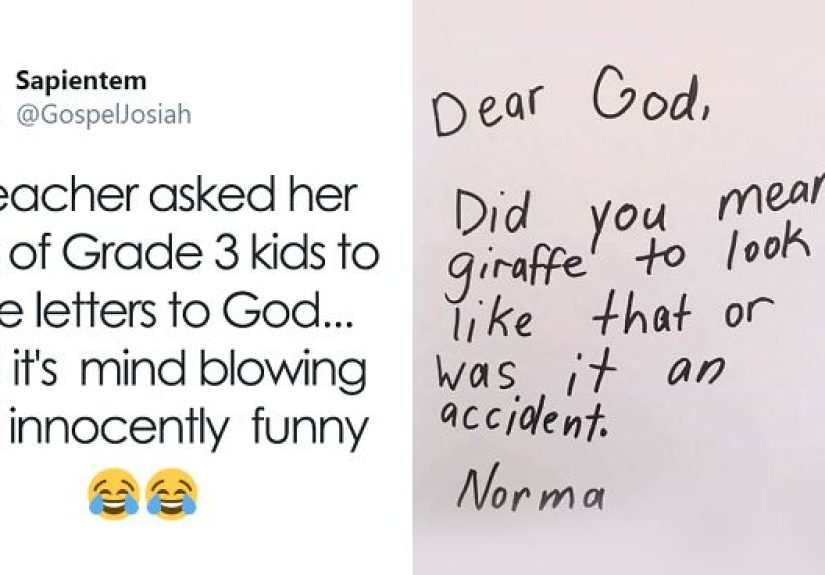
Below are original, fictional sample letters inspired by the kinds of themes teachers frequently see in reflective letter-writing.
They’re meant to show the tone and innocence of the exercise, not to quote any specific child.
Dear God,
Did you mean to make cats act like they own the whole house? Because mine does and I want to know if that is on purpose.
Love, M.
Dear God,
If you can do anything, can you please make my little brother stop touching my stuff? Thank you for listening even if you don’t answer.
From, A.
Dear God,
Why do people get sick? If you can’t stop it, can you at least make the medicine taste like strawberry for real and not “strawberry-ish”?
Sincerely, J.
Dear God,
If you already know everything, do you get bored? Because my dad says boredom is my fault and I think that is unfair.
Your friend, T.
Dear God,
Thank you for my grandma. Please help her knees. Also thank you for pizza, but why does it burn the top of my mouth every single time?
Love, K.
Dear God,
Why do some kids not have enough food? If there is enough food in stores, can you tell the grown-ups to share it better?
From, N.
Dear God,
I’m trying to be nicer but sometimes people are annoying. Can you give me more patience and also can you give them less annoying?
Respectfully, L.
Dear God,
If you made the world, can you explain why we have homework? I’m not saying it’s your fault but I’m also not not saying that.
Thanks, R.
Dear God,
Please help the dogs at the shelter find homes. If I could, I would adopt all of them but my mom said “absolutely not.” Can you talk to her?
Love, P.
Dear God,
Sometimes I worry at night. Can you help my brain be quieter? Also if you can, can you make dreams that are funny and not scary?
From, E.
The charm isn’t just in the humor. It’s in how kids instinctively combine wonder, complaint, gratitude, and kindness
like life, but shorter and with better handwriting (sometimes).
How Teachers Turn These Letters Into Strong Writing (Not Just Cute Moments)
Mini-Lessons That Fit Naturally
- Format: date, greeting, body, closing, signature.
- Sentence fluency: mix short and long sentences for voice.
- Specific details: “I’m worried” becomes “My stomach feels tight before tests.”
- Revision: choose one line to improve (not the whole letterthird graders are not robots).
Cross-Curricular Extensions
- Science: turn “Why are there thunderstorms?” into a research question and a second letter: “Here’s what I learned.”
- Civics: turn “Why is it unfair?” into community problem-solving and kindness projects.
- Art: illustrate an excerpt; create a “Wonder Wall” of anonymous questions.
- Community connection: switch audiencesletters to firefighters, nurses, librarians, or elders.
The prompt becomes a doorway: kids write first from the heart, then they learn how to refine that heart into clearer communication.
That’s real literacy growthand it’s a lot more motivating than “Write a five-sentence paragraph about summer.”
Handling the Big Feelings That Sometimes Show Up
Occasionally, a letter will be funny and then suddenly not funny at all.
A child might write about grief, fear, family stress, or persistent worry. That’s not a failure of the activityit’s evidence the child trusted the page.
Best practices include:
- Have a plan for private check-ins if a letter raises concerns.
- Use school support systems when appropriate (counselor, social worker, admin protocols).
- Never “perform” a child’s vulnerability in front of the class.
- Offer calming alternatives: “Write a letter to Calm,” “Write a letter to Brave,” or “Write a letter to Tomorrow.”
The page is a powerful place. It deserves careful handlinglike a classroom pet, but with more punctuation.
Conclusion: What These Letters Really Give Us
At first glance, “third graders writing letters to God” sounds like a cute internet moment.
But the deeper story is about voice: kids learning that their questions matter, that wonder is allowed, and that writing can hold both jokes and truth.
The letters are “beautifully innocent” because children haven’t learned to hide what they mean yet.
They ask for fairness. They notice suffering. They love their pets with their whole chest.
And they’ll absolutely call out the design choices of insects if given the opportunity.
In a world that trains people to sound polished, these letters remind us: sincerity is a superpowerand third graders have it in bulk.
Experiences Teachers Share After Trying This Prompt (Extended)
Teachers who use a “letter to God” (or “letter to the universe”) prompt often describe the same first reaction: surprise at how quickly students commit.
Some kids write one sentence, pause dramatically, and then fill a whole page like they’ve been waiting their entire lives for a non-graded space to be real.
The room gets quieternot because everyone suddenly mastered self-control, but because the audience feels “important.”
One common experience is discovering how differently students interpret the same invitation. A few children go straight to gratitude:
“Thank you for my family,” “Thank you for my dog,” “Thank you for recess,” which, honestly, is a strong theological argument for playground funding.
Others treat the letter as a customer service ticket:
“Please fix my brother,” “Please stop storms on soccer days,” “Please make vegetables taste normal.”
And then there are the philosophers, the ones who ask about infinity, fairness, and why grown-ups can’t just agree on things.
Teachers also notice a writing benefit that’s hard to get from standard prompts: voice shows up naturally.
Even reluctant writers often take more risks with humor, exaggeration, and detail because the letter feels like a real conversation.
A child who avoids descriptive writing in a book report might suddenly produce a vivid paragraph about how it feels when they worry at night,
or how angry they get when someone cuts in line. The emotion supplies the specificity. The specificity improves the writing.
Another frequent classroom moment: the prompt becomes a gentle bridge between SEL and academics without labeling it as SEL.
Students who struggle to name feelings out loud sometimes do it on paper first. Teachers describe using the letters to teach
simple revisionsadding one clarifying sentence, choosing a stronger verb, organizing ideaswhile still honoring the authenticity of the message.
It’s not “fixing” a child’s thought; it’s helping the child communicate it more clearly.
Many educators also learn quickly that sharing has to be optional and carefully structured. When students volunteer to read an excerpt,
classmates often respond with empathy“Me too,” “That happened to my grandma,” “I also get scared at night.”
That connection can be powerful, but it can also drift into oversharing if boundaries aren’t clear.
Teachers who report the best outcomes usually keep it simple: students choose one “public line” to share, or they share anonymously,
or they do a gallery walk with sticky-note compliments that focus on writing craft (“Great question,” “Strong ending,” “Clear details”).
Finally, teachers frequently say the prompt changes how they see their students. A kid who seems goofy all day might write a deeply caring letter
about someone who’s struggling. A “quiet” student might reveal a sharp sense of humor. A student who challenges every rule might show a strong
moral compass and a real desire for justice. In that way, the experience becomes bigger than a writing lesson.
It becomes a windowone that reminds adults what children already know: life is complicated, love is important,
and it’s okay to ask the biggest questions even when nobody has a neat answer.