Table of Contents >> Show >> Hide
- The Story That Keeps Circulating for a Reason
- Why Subscription Cancellation Became Such a Huge 2025 Issue
- Why the Teen “Won” Even Before the Company Gave In
- What This Means for Consumers in 2025
- Why Businesses Should Be Nervous About Stories Like This
- The Bigger 2025 Backdrop: Regulators Finally Caught Up to Consumer Rage
- Experiences Consumers Keep Reporting in Stories Just Like This
- Final Takeaway
There are few modern experiences more annoying than trying to cancel a subscription and discovering that the “cancel anytime” promise actually means “cancel anytime, as long as you enjoy menus, hold music, hidden fees, and a minor emotional breakdown.” It is the kind of customer-service obstacle course that makes otherwise calm people start narrating their lives like they are in a courtroom drama. And that is exactly why one old story about a teenager beating a stubborn subscription company still hits such a nerve today.
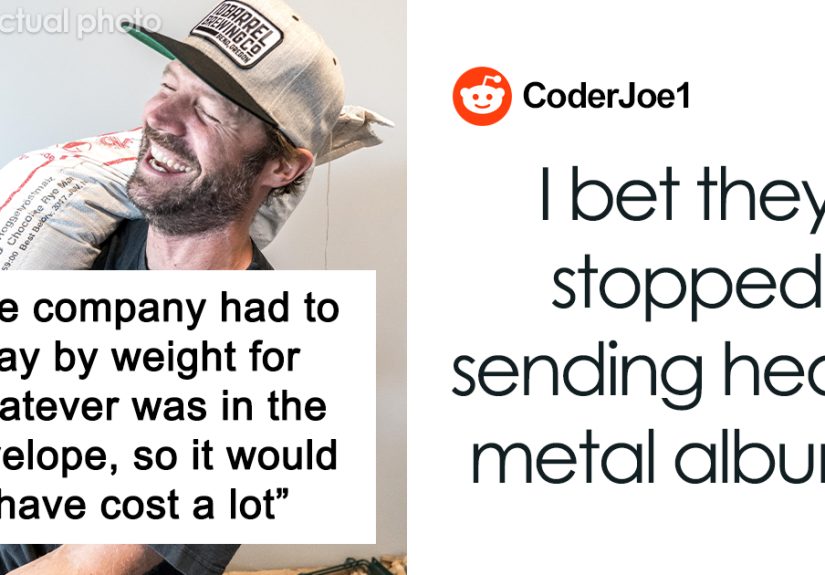
The story, which resurfaced online and spread widely again, centers on a teen who signed up for a music club years ago, then tried to cancel when the deal stopped feeling like a deal. Instead of simply letting the customer go, the company reportedly clung to the contract and insisted on a drawn-out process. The teen eventually found a way to turn the company’s own return system against it, forcing the business to realize that keeping the subscription alive was costing more than letting it die. In other words, the company learned a lesson many brands still refuse to learn: when you make cancellation painful, customers stop seeing you as a business and start seeing you as a villain in a low-budget thriller.
That tale is funny because it feels satisfying. But it also matters because it reveals a much bigger truth about subscription culture in 2025. Consumers are exhausted by sign-up flows that are easy, breezy, and one-click fast, followed by cancellation systems that act like they were designed by a committee of haunted escape-room enthusiasts. And regulators have noticed. The frustration behind this teen’s “win” is now part of a much broader fight over recurring charges, dark patterns, auto-renewals, and the fine art of making customers pay for things they no longer want.
The Story That Keeps Circulating for a Reason
The viral version of this story is simple enough to fit in a social post, but the reason it keeps being shared is deeper than the stunt itself. A teenager joined a record club, wanted out, and was told the subscription could not really be canceled in any normal, reasonable, human-friendly way. So the customer stopped playing defense. Instead of begging for mercy, the teen leaned into the company’s own rules until those rules became expensive for the company to maintain.
People love the story because it flips the usual power dynamic. Normally, businesses write the rules, bury the fees, and wear customers down until they give up. Here, the customer stayed inside the framework but changed the economics. Suddenly, the “profitable” subscription became a hassle. The company that once had all the leverage now had a problem it had created for itself.
That is the heart of the appeal. It is not really about revenge. It is about friction. Businesses often tolerate customer frustration for as long as that frustration is cheap. The moment the friction becomes expensive, embarrassing, or public, solutions appear almost magically. Funny how that works.
Why Subscription Cancellation Became Such a Huge 2025 Issue
By 2025, subscriptions are not just for magazines and music clubs. They are everywhere: streaming services, meal kits, beauty boxes, software plans, fitness platforms, online learning tools, gaming passes, cloud storage, shipping memberships, and that one app you downloaded at 11:43 p.m. because it promised to organize your life before breakfast. The subscription economy thrives on convenience, but its ugliest side thrives on inertia.
Many companies know that the easiest way to keep revenue flowing is not necessarily to keep delighting customers. Sometimes it is simply to make leaving annoying. That is where terms like negative option, auto-renewal, and dark patterns enter the chat. These are the tactics that nudge, confuse, pressure, or exhaust people into staying enrolled.
When “Easy Sign-Up” Meets “Good Luck Leaving”
The problem is not subscriptions themselves. Plenty are useful, transparent, and worth the money. The problem starts when the sign-up process takes ten seconds but cancellation requires a scavenger hunt through account settings, a phone call during limited business hours, a forced chat with a retention agent, or a mysterious warning that leaving now could trigger an early termination fee large enough to make you briefly wonder whether the service included a private jet.
That mismatch is exactly why the issue has attracted so much regulatory attention. In 2024, the Federal Trade Commission adopted its “click-to-cancel” rule, built around a very sensible idea: if signing up is easy, canceling should be easy too. Then, in 2025, a federal appeals court blocked that rule before it could fully reshape the market. So the legal picture is still messy. But the consumer complaint behind the rule is not messy at all. It is crystal clear. People are tired of being trapped.
The Rise of the Subscription Trap
The phrase subscription trap has become the perfect shorthand because it captures what consumers actually experience. You click for a free trial, forget the deadline, and get billed. You sign up for a monthly plan, then discover annual renewal language hiding in the fine print. You try to cancel, and suddenly you are being offered discounts, pauses, emotional guilt, and seventeen different buttons that all seem to say, “Are you absolutely sure you want to stop giving us money?”
That is not customer loyalty. That is customer fatigue wearing a fake mustache.
Why the Teen “Won” Even Before the Company Gave In
The most interesting part of the headline is not that the company lost money. It is that the teen recognized an essential truth about bad subscription systems: the business was counting on passivity. It expected the customer to accept the burden, keep paying, or quietly disappear. Instead, the customer became persistent, creative, and impossible to ignore.
That is what makes the story feel so modern even though the original anecdote comes from an older era of physical albums and mail-in returns. Today’s equivalent is not a stack of prepaid envelopes. It is screenshots, written complaints, charge disputes, cancellation confirmations, and public documentation. The tools changed. The logic did not. A company that ignores polite requests often moves much faster when the cost of ignoring them starts to rise.
There is also a second layer here that people often miss. Because the original story involved a teenager, the tale brushes up against a legal question too: minors and contracts are not always treated the same way adults are. In many states, contracts entered into by minors are generally voidable, though the details vary by jurisdiction and situation. That is not a magic wand for every subscription dispute, but it does underline the bigger point: companies that overreach with young consumers are stepping onto shaky ground.
What This Means for Consumers in 2025
Today, the smarter version of “outsmarting” a subscription company is not sabotage. It is documentation, timing, and pressure applied through legal channels. The teen in the viral story became memorable because the company ignored ordinary fairness. Modern consumers do best when they make unfair behavior expensive in lawful, traceable ways.
1. Cancel through the company first
Start with the official method, even if it feels like a maze built by caffeinated raccoons. Follow the stated process. Take screenshots. Save emails. Write down the date, time, and method. If you speak with support, note the representative’s name and what they said.
2. Revoke payment authorization when necessary
If the company keeps charging after cancellation attempts, consumers may have rights through their bank or card issuer. For bank withdrawals, federal guidance says people can revoke authorization and, when appropriate, place a stop payment order. For card charges, disputes and chargebacks can become the next step when a company will not stop billing after a cancellation attempt.
3. Keep proof like it is gold
Proof matters because companies often behave very differently when the customer can say, “Here is the timestamp, here is the confirmation email, and here is the screenshot of your cancellation page.” At that point the issue is no longer a fuzzy complaint. It becomes evidence.
4. Escalate outside the company
Regulators, state attorneys general, banks, credit card issuers, and consumer-protection channels exist for a reason. Consumers should not have to become amateur detectives just to stop a recurring payment for socks, software, or streaming television. But if a company insists on playing hardball, escalation is exactly what turns a private annoyance into a public problem.
Why Businesses Should Be Nervous About Stories Like This
For companies, the lesson is not merely “don’t upset customers.” That is too soft. The real lesson is “don’t build a business model that depends on customers being too tired to leave.” That strategy may look profitable for a while, but it creates three expensive risks.
First, regulatory risk. Federal and state enforcers have already signaled that hard-to-cancel subscriptions are a serious issue. Recent cases and complaints involving major brands have made clear that regulators are paying attention to hidden fees, deceptive sign-up flows, and obstructive cancellation systems.
Second, reputational risk. One frustrated customer used to complain to a neighbor. Now they complain to the internet. A bad cancellation experience is precisely the kind of story that spreads because it is relatable. People may never read a company’s quarterly earnings report, but they will absolutely read a post titled, “I tried to cancel and the company fought me like I was escaping a secret lab.”
Third, operational risk. Every deceptive retention tactic creates downstream costs: chargebacks, support time, complaint handling, refund disputes, bad reviews, and legal exposure. The company in the viral story lost because the math changed. That is still how these battles end. When retention becomes more expensive than respect, respect suddenly becomes available.
The Bigger 2025 Backdrop: Regulators Finally Caught Up to Consumer Rage
One reason this headline feels so timely is that the broader market has finally admitted what customers have been screaming into the void for years. Subscription cancellation is not a minor convenience issue. It is a consumer-protection issue.
The FTC’s proposed and later adopted click-to-cancel framework reflected a simple principle: companies should not be allowed to lure people in with easy enrollment and then bury them under cancellation friction. Even though that rule faced a legal setback in 2025, the pressure did not vanish. Enforcement actions and public complaints kept the spotlight on the same core behavior.
That matters because it changes how stories like this are read. A few years ago, the teen’s move might have sounded like a quirky one-off. In 2025, it sounds like a folk hero version of a national complaint. Consumers do not merely dislike these systems. They increasingly understand them as manipulative by design.
And once consumers start naming the trick, the trick loses some of its power.
Experiences Consumers Keep Reporting in Stories Just Like This
If the teen’s story feels familiar, that is because versions of it keep happening in different industries, with different logos, and with slightly different flavors of nonsense. Ask around and you will hear the same themes again and again.
One common experience starts with a “free” trial that feels harmless. A student signs up for a homework platform, productivity app, or streaming service during exam season, fully intending to cancel before the billing date. Then life happens. A deadline moves, a password gets buried, an email reminder goes to spam, and suddenly the free trial graduates into a paid plan with the confidence of a raccoon who has already broken into your trash can twice. The customer notices only after the charge lands, then discovers the refund policy has all the warmth of a parking ticket.
Another familiar story involves annual plans sold like monthly commitments. Consumers think they are choosing flexibility, only to discover that canceling early triggers a fee or leaves them on the hook for the balance. This is especially common in software, fitness, and membership programs, where the big, cheerful marketing language promises convenience while the real terms sit off to the side wearing camouflage.
Then there is the “contact support” experience, which deserves its own documentary series. A customer tries the website first. No luck. They open the chat box. The chat bot offers five unrelated articles, three apologies, and the emotional energy of an unplugged toaster. The customer calls the phone line. After a hold long enough to reconsider every life choice since middle school, they finally reach a human, who offers a discount, a pause, a downgrade, a free month, a survey, and perhaps a tiny monologue about “all the value you’ll be giving up,” but not the one thing requested: cancellation.
Some people report that the charge finally stops only after they dispute it with their bank or card issuer. Others say the issue ends when they file a complaint with a state agency, post publicly, or escalate the case with documentation. In many of these stories, what changes the outcome is not a sudden burst of kindness from the company. It is the moment the complaint becomes costly, visible, or official.
Parents and teens often face another layer of confusion. A young person signs up for a service, assumes it is easy to quit, and then gets tangled in language that reads like it was drafted by a sleep-deprived wizard. The parent steps in. Screenshots get taken. Emails get forwarded. Support tickets multiply. What looked like a small recurring charge turns into a whole household project. Nobody wants that. Nobody signs up for a language app, a gaming add-on, or a music plan hoping to spend Saturday afternoon building an evidence folder.
That is why the viral teen story lands so cleanly. People are not cheering because a company lost a little money. They are cheering because the usual script got reversed. The customer did not get worn down. The company did. And for anyone who has ever spent forty-five minutes trying to cancel something that took forty-five seconds to buy, that feels less like mischief and more like justice wearing sneakers.
Final Takeaway
The headline promises a satisfying little victory, and it delivers. But the real power of this story is not the prank-like twist. It is the reminder that companies should never rely on confusion, friction, or customer exhaustion as a business strategy. In 2025, people know the game better. Regulators know it better. Banks know it better. And customers are increasingly willing to document, dispute, escalate, and publicize cancellation nightmares instead of quietly absorbing them.
So yes, the teen won. But the bigger lesson is this: every company that makes cancellation unnecessarily hard is taking the same gamble. It is betting that customers will stay passive. When that bet fails, the company does not just lose money. It loses trust, reputation, and the luxury of pretending the problem was small.
And once a brand becomes famous for being harder to leave than a timeshare presentation at sea, good luck fixing that with a coupon.
Note: This article is based on real reporting and real consumer-protection trends, but it is written as an original feature for web publication rather than legal advice.