Table of Contents >> Show >> Hide
- Why These Deadly American Disasters Were Forgotten
- 1. The Galveston Hurricane of 1900
- 2. The Johnstown Flood of 1889
- 3. The Peshtigo Fire of 1871
- 4. The Sultana Explosion of 1865
- 5. The Iroquois Theatre Fire of 1903
- 6. The Monongah Mine Disaster of 1907
- 7. The Tri-State Tornado of 1925
- 8. The Hartford Circus Fire of 1944
- 9. The Cocoanut Grove Fire of 1942
- 10. The Texas City Disaster of 1947
- What These Forgotten Tragedies Still Teach Us
- The Human Experience of Forgotten Disaster
- Conclusion
- SEO Tags
American disaster history has a strange memory problem. Some tragedies become permanent fixtures in textbooks, documentaries, and dinner-table history debates. Others, even catastrophes that killed hundreds or thousands, somehow slip into the nation’s attic and gather dust next to old yearbooks, busted lamps, and stories that start with, “Wait, why haven’t I heard of that?”
This list looks at ten totally forgotten deadly American disasters that deserve far more attention. Some were natural disasters. Some were industrial nightmares. Some were fires, explosions, or transportation failures so avoidable they still make modern readers want to yell at the page. Together, they reveal an uncomfortable truth: the United States often remembers the dramatic headline, then forgets the people who paid for every lesson in blood, mud, smoke, and negligence.
If you want to understand forgotten American disasters, you have to look past the famous names and into the events that quietly changed building codes, emergency planning, worker protections, weather forecasting, and public safety. These aren’t just historical curiosities. They are the reason some modern exits swing outward, some factories are inspected more closely, and some storm warnings are taken far more seriously than they used to be.
Why These Deadly American Disasters Were Forgotten
Most forgotten tragedies disappear for familiar reasons. They happened in smaller towns. They struck working-class communities, immigrants, laborers, or children whose stories were not preserved with the same national force as elite or urban narratives. Some were overshadowed by bigger headlines happening at the same time. Others lacked the iconic photographs, film footage, or political symbolism that keeps a catastrophe alive in the national imagination.
In other words, history has a terrible publicist. It can turn one event into legend while leaving another, equally devastating, standing awkwardly in the corner wearing a name tag that says, “Hi, I permanently changed safety laws, and nobody remembers me.”
1. The Galveston Hurricane of 1900
The storm that rewrote Gulf Coast history
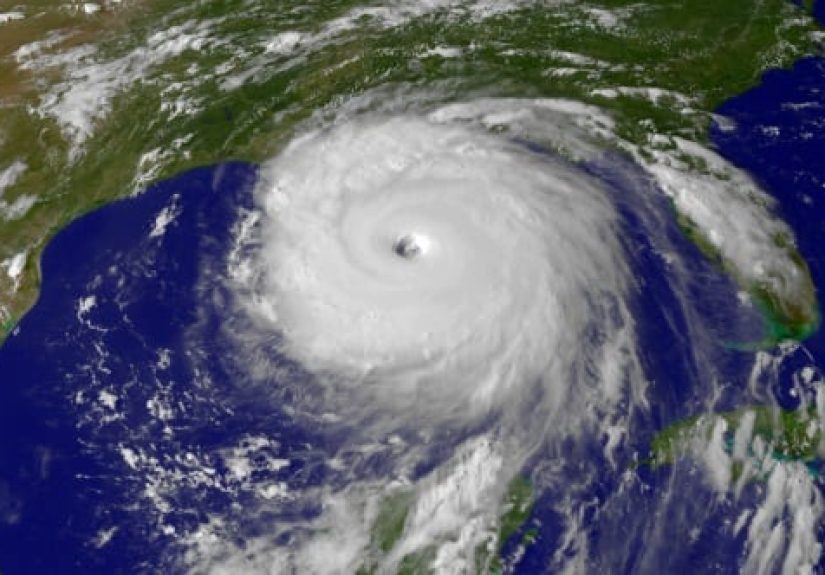
The Galveston hurricane remains one of the deadliest disasters in American history, yet many people only vaguely know the name. Before the storm, Galveston was a booming Texas port city with enormous commercial ambitions. Then, in September 1900, a massive hurricane and storm surge slammed into the island and tore those ambitions to pieces. Whole neighborhoods vanished, buildings collapsed, and the city’s future shifted almost overnight.
What makes Galveston especially haunting is that it was not just a weather event. It was a turning point. The destruction helped open the door for Houston’s rise as a commercial powerhouse while Galveston rebuilt with a seawall, raised grades, and a harder understanding of coastal risk. In the story of forgotten deadly American disasters, Galveston is the giant nobody should forget.
2. The Johnstown Flood of 1889
When private luxury upstream became public catastrophe downstream
The Johnstown Flood sounds like an old-timey weather problem until you look closer and realize it was also a spectacular failure of infrastructure, maintenance, and social responsibility. After days of heavy rain, the South Fork Dam failed and sent a wall of water roaring toward Johnstown, Pennsylvania. Families, homes, factories, and entire blocks were swept away in minutes.
This disaster sticks in memory once you grasp the basic setup: a weakened dam above a working town, a club of wealthy owners upstream, and a downstream community that paid the price. Johnstown is not just one of the deadliest floods in U.S. history. It is one of the clearest examples of how negligence can dress itself up as recreation until the water arrives.
3. The Peshtigo Fire of 1871
The deadliest fire in American history that lost the publicity war
If the phrase “Great Fire of 1871” makes you think of Chicago, that is exactly why Peshtigo belongs on this list. On the same night the Chicago fire began, a far deadlier inferno tore through northeastern Wisconsin. Peshtigo and nearby communities were consumed by a firestorm so intense it created conditions survivors struggled to describe. Entire landscapes were erased in a matter of hours.
Peshtigo became one of the most forgotten tragedies in U.S. disaster history because Chicago had the bigger media footprint and the more famous urban myth. But in terms of human loss, Peshtigo was the far more lethal event. It is a brutal reminder that national memory often follows fame, not fatality.
4. The Sultana Explosion of 1865
America’s worst maritime disaster, hidden in Civil War aftershock
The steamboat Sultana was carrying a dangerously overcrowded load of recently released Union prisoners of war and other passengers when its boilers exploded on the Mississippi River. Many of the men on board had already survived prisons, disease, and the Civil War itself. Then they died on the way home. It is one of the cruelest plot twists in American history, and history somehow still managed to misplace it.
Why? Timing. The disaster came just after the Civil War and shortly after Abraham Lincoln’s assassination, when national attention was already locked onto events that seemed even bigger. The result is astonishing: America’s deadliest maritime disaster became a footnote while lesser tragedies sailed straight into popular memory.
5. The Iroquois Theatre Fire of 1903
The “fireproof” theater that absolutely was not
The Iroquois Theatre in Chicago had been advertised as modern and safe, the kind of place where an afternoon show felt civilized, respectable, and secure. Then a fire broke out during a packed performance, and the building’s safety claims collapsed along with the illusion of preparedness. Exits were inadequate or confusing, panic spread fast, and hundreds died.
This disaster matters because it helped transform theater and public-building safety in the United States. Fire curtains, marked exits, outward-opening doors, and stricter codes did not become sacred rules by accident. The Iroquois Theatre fire taught those lessons with devastating clarity. Yet outside fire-safety circles and Chicago history buffs, it is surprisingly absent from mainstream American memory.
6. The Monongah Mine Disaster of 1907
The mining tragedy that exposed the cost of industrial America
In Monongah, West Virginia, an explosion in the Fairmont Coal Company’s mines killed hundreds of miners in what remains the worst mining disaster in American history. Many of the dead were immigrants. Many left behind wives, children, and communities that had built their lives around dangerous work that powered modern industry but rarely protected the people doing it.
Monongah is the kind of catastrophe that should sit at the center of any honest discussion about labor history in the United States. Instead, it often survives as a regional memory rather than a national one. That is a loss, because Monongah reveals how industrial progress was often purchased with human lives long before workplace safety became a serious public demand.
7. The Tri-State Tornado of 1925
The deadliest tornado in U.S. history
The Tri-State Tornado ripped across Missouri, Illinois, and Indiana with staggering force, leaving towns shattered and entire communities grieving. Even in a country familiar with violent weather, this storm stands apart for its death toll, its extraordinary path, and the speed with which it destroyed homes, schools, businesses, and daily life.
It should be one of the best-known weather disasters in American history. Instead, it tends to appear as a trivia answer, a weather-office anniversary post, or a fact buried in a documentary montage. That is odd, because the Tri-State Tornado was not a side note. It was a full-scale national disaster before modern warning systems, and it showed just how exposed rural America could be when severe weather outran communication.
8. The Hartford Circus Fire of 1944
A day at the circus that became Connecticut’s worst disaster
The circus is supposed to be the opposite of catastrophe. It is color, noise, children, popcorn, daring, and maybe one clown too many. In Hartford, however, an afternoon under the big top turned deadly when fire spread rapidly through the tent during a performance packed with families. Many victims were children, and the city carried the trauma for generations.
This is one of those American tragedies that sounds almost fictional because the setting feels so innocent. But that innocence is exactly why it lingers. The Hartford Circus Fire exposed the danger of flammable materials, weak emergency planning, and crowded entertainment spaces. It also demonstrated how quickly a place designed for joy can become a scene of terror when safety is treated like an afterthought.
9. The Cocoanut Grove Fire of 1942
Nightlife, blocked exits, and a catastrophe that changed fire safety
The Cocoanut Grove nightclub in Boston was fashionable, crowded, and catastrophically unsafe. When fire broke out, the combination of flammable décor, blocked or sealed exits, and panic created one of the deadliest nightclub fires in history. Hundreds died in a building that had effectively become a trap.
The legacy of Cocoanut Grove lives on in fire codes, occupancy rules, and emergency-exit requirements, but the event itself is less widely discussed than it should be. That is unfortunate, because the story is painfully modern. It is about crowding, confidence, shortcuts, and the false belief that if a venue looks glamorous enough, someone must have handled the boring safety details. History’s answer, repeatedly, is: not always.
10. The Texas City Disaster of 1947
The industrial explosion that became a warning for the chemical age
When a fire aboard a ship carrying ammonium nitrate in Texas City set off a catastrophic explosion, the blast triggered a chain of destruction that tore through the port and surrounding industrial landscape. Fires spread, additional explosions followed, buildings were wrecked, and the death toll climbed into the hundreds. For many Americans today, the event is barely known outside Texas.
That is remarkable, because the Texas City disaster was one of the defining industrial accidents in U.S. history. It arrived as America was deepening its relationship with petrochemicals, high-volume shipping, and industrial concentration. In effect, Texas City warned the modern nation about the scale of damage possible when hazardous materials, weak controls, and bad luck meet in the same place at the same moment.
What These Forgotten Tragedies Still Teach Us
When you line these disasters up together, patterns appear fast. Overcrowding. Locked or hidden exits. Flammable materials. Poor maintenance. Weak regulation. Hazardous cargo. Inadequate warning systems. The same basic mistakes keep changing outfits and returning to the stage. Sometimes the costume is a nightclub. Sometimes it is a mine, a theater, a ship, a dam, or a storm-battered city. But the plot is familiar.
That is why forgotten American disasters matter. They are not just sad history. They are operating manuals written in hindsight. They explain why safety codes exist, why emergency drills matter, why engineering shortcuts can be deadly, and why officials who say “everything is under control” deserve at least one skeptical eyebrow.
They also tell us something about American memory. The country tends to remember disasters that fit a dramatic national story and neglect those tied to labor, local communities, immigrant families, or regional pain. Memory, like media coverage, is uneven. But the deadliest American disasters do not become less important because the spotlight moved on.
The Human Experience of Forgotten Disaster
There is another way to understand these events beyond dates, death tolls, and safety reforms: through the lived experience that follows catastrophe long after the newspaper front page is gone. Forgotten disasters do not truly disappear in the places where they happened. They stay in local museums, church records, cemetery stones, oral histories, family stories, and the peculiar silence that hangs over rebuilt ground. A town may look ordinary again, but memory keeps odd hours.
Imagine walking through one of these communities today. You would not necessarily see ruin. You might see a street lined with parked cars, a school field, a river bend, a memorial plaque, or a downtown block with coffee shops and brick storefronts. That is what makes the experience of forgotten disaster so emotionally strange. The landscape says present tense. The history underneath it says otherwise. Every normal-looking place becomes a reminder that disaster rarely announces itself as “historic” while it is happening. It arrives as weather, noise, confusion, smoke, bad judgment, or one terrible break in the chain of ordinary life.
For survivors and descendants, the experience is often not dramatic in the movie sense. It is quieter and more stubborn than that. It lives in inherited caution. It shows up in the grandparent who never sat near a revolving door, the family that always watched the river after hard rain, the worker who distrusted management promises, or the parent who checked every exit before sitting down at a public event. These are not overreactions. They are memory translated into habit. America’s forgotten tragedies have shaped behavior in ways that history books rarely count.
There is also the experience of unequal remembrance. Some communities receive monuments, documentaries, school lessons, and national anniversaries. Others receive a local ceremony and the hope that someone still cares enough to show up. That imbalance changes how grief is carried. When a disaster is widely remembered, survivors are folded into a national story. When it is forgotten, they often become the last custodians of memory themselves. They preserve names, retell details, and defend the importance of what happened because they know that once the story vanishes, part of the loss happens all over again.
Reading about these disasters today can produce a different kind of experience too: recognition. The details may be old, but the themes are not. Unsafe buildings, underfunded infrastructure, industrial shortcuts, weak oversight, and delayed warnings are not relics from some quaintly reckless past. They still exist. That is why these forgotten deadly American disasters feel so modern. They do not just tell us what happened. They ask whether we have really learned enough to prevent the next version.
In that sense, remembering is not just respectful. It is practical. To remember these events is to restore the human scale of history. It is to look at a list of numbers and realize each one was a person who expected to go home. A child at a circus. A miner heading underground. A family in a floodplain. A theatergoer at a matinee. A soldier who had already survived war. Forgotten disaster history matters because forgetting is how warning signs become background noise. And background noise, as America has learned too many times, can turn deadly very fast.
Conclusion
The ten totally forgotten deadly American disasters on this list were not small tragedies. They were large-scale events that changed cities, laws, industries, and public expectations about safety. They deserve to be remembered not because history needs more horror, but because history needs more honesty. America was shaped not only by triumphs and innovations, but also by the moments when systems failed and ordinary people paid the cost.
If these disasters feel unfamiliar, that is exactly the point. Forgotten does not mean unimportant. It often means the opposite. The events most worth remembering are sometimes the ones that national memory shoved to the side while chasing louder stories. Bringing them back into view helps us understand the real price of progress, neglect, and survival in American history.