Table of Contents >> Show >> Hide
When you hear the name J.J. Abrams, you probably think of mystery boxes, lens flares, and that feeling of
yelling “ONE MORE EPISODE” at 2 a.m. His TV work has shaped modern genre storytelling, from emotional college
dramas to mind-bending sci-fi and twisty action thrillers. Over the years, fans have turned his series into
cult obsessions, Reddit rabbit holes, and endless rewatch marathons.
Abrams has created or co-created a surprisingly wide range of shows, including
Felicity, Alias, Lost, Fringe, and the newer series Duster, while also
helping launch hits like Person of Interest and Westworld as an executive producer.
Fan-voted rankings and critic lists tend to agree on one thing: whether it’s a campus romance or a parallel universe
thriller, Abrams knows how to get viewers hooked fast. Recent fan polls rank
Fringe, Person of Interest, and Lost at the very top of his TV legacy.
Why Fans Still Obsess Over J.J. Abrams TV Shows
Before we dive into the rankings, it helps to understand why J.J. Abrams TV shows inspire such intense loyalty.
A few patterns pop up across his best work:
- The “mystery box” factor: Abrams loves building stories around big questions. You rarely get all the answers up front, and that suspense pulls viewers from week to week.
- Character-first storytelling: Even in the wildest sci-fi settings, the shows focus on relationshipsfriends, partners, found families, and broken people trying to do better.
- Cinematic style: His pilots often feel like mini movies, with high production values and bold visual flair that helped define prestige TV in the 2000s and 2010s.
- High rewatch value: Hidden clues, dense mythology, and long-running arcs mean that fans keep returning, dissecting, and debating episodes years after the finales.
With that in mind, let’s rank the best J.J. Abrams TV shows, using a blend of fan voting, critical reception,
cultural impact, and how loudly viewers still talk about them online.
The Best J.J. Abrams TV Shows, Ranked By Fans
1. Fringe (2008–2013)
Fringe is the show that quietly climbed the ranks over time until fans started calling it Abrams’ true
TV masterpiece. Set around an FBI division investigating bizarre “fringe” phenomena, it blends monster-of-the-week
cases with a sprawling mythology involving parallel universes, time travel, and some extremely shady science.
In fan-driven rankings, Fringe consistently lands at or near #1, beating even higher-profile shows thanks
to its emotional storytelling and surprisingly tight endgame.
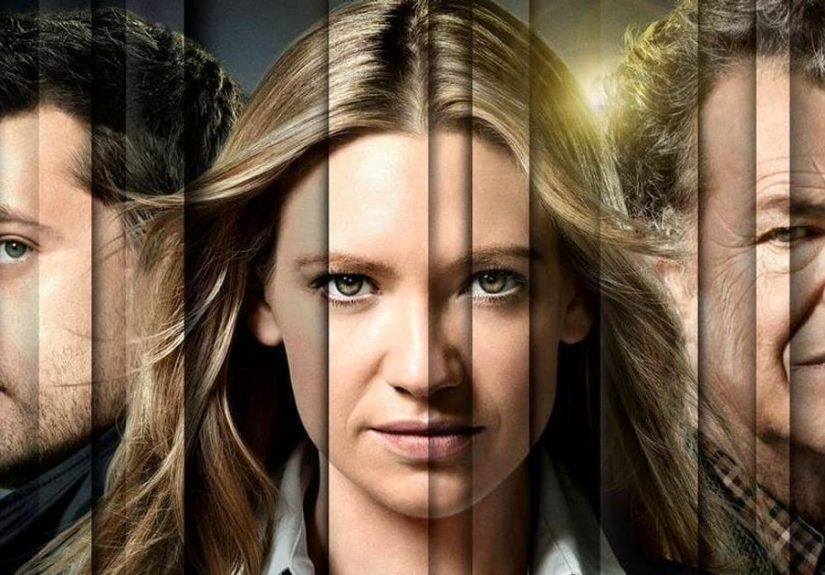
The core trioOlivia Dunham, Peter Bishop, and Walter Bishopanchors all the weirdness with a heartfelt, often
heartbreaking family drama.
What fans love most:
- The show starts as a sci-fi procedural, then gradually shifts into an epic multi-universe saga.
- John Noble’s performance as Walter is legendary: equal parts comic relief and emotional wrecking ball.
- The show sticks the landing with a final season that feels like a planned conclusion instead of a random cancellation.
If you want peak “Abrams energy” plus a satisfying payoff, Fringe is the top choice.
2. Lost (2004–2010)
Lost is the cultural earthquake of Abrams’ TV career. Co-created by Abrams, Damon Lindelof, and Jeffrey
Lieber, the series about plane crash survivors on a mysterious island became a weekly obsession in the mid-2000s.
It helped usher in the era of heavily serialized, theorized-to-death genre TV and picked up multiple Emmys along
the way.
Fans still argue about the ending, but that’s part of its power: people care enough to debate it more than a decade
later. The flashback (and later flash-forward and flash-sideways) structure gave each character depth and allowed
wild storytelling swings, from time travel to ancient myths.
Why fans keep it high on their lists:
- Unforgettable ensemble characters like Jack, Kate, Sawyer, Locke, and Hurley.
- Massive mystery arcs that turned forums and watercoolers into full-time theory labs.
- A pilot episode so cinematic that it’s still held up as one of the best TV pilots ever produced.
If you want the most influential J.J. Abrams show, Lost is non-negotiable viewing.
3. Person of Interest (2011–2016)
While Abrams didn’t create Person of Interest (that credit goes to Jonathan Nolan), he helped launch
it as executive producer, and fans often include it when ranking his TV legacy.
The show starts as a crime-of-the-week procedural about a billionaire and a former operative using an AI system
to stop violent crimes before they happen.
Over time, it evolves into one of TV’s smartest explorations of artificial intelligence, surveillance, and ethics.
Fan rankings regularly push it into the top tier thanks to its dense mythology and surprisingly emotional arcs.
Highlights for viewers:
- A nuanced take on AI that aged incredibly well in the era of real-world machine learning.
- Standout characters like Root and Shaw, who developed passionate fan followings.
- A late-series shift toward full-on sci-fi war between competing AIs that feels like a stealth cyberpunk epic.
If you like your sci-fi mixed with grounded crime drama, this is the Abrams-affiliated series to queue up.
4. Alias (2001–2006)
Alias is pure spy-thriller candy: double agents, wild disguises, evil organizations, and mythology that
veers into ancient artifacts and prophecy. It stars Jennifer Garner as CIA agent Sydney Bristow and solidified
Abrams’ knack for blending serialized mystery with weekly missions.
The show’s signature stylecliffhangers, wild plot twists, and intense emotional stakesforeshadowed what Abrams
would later do on Lost. Fans who grew up with the series still rank it as one of his most rewatchable efforts.
Recent interviews even have Jennifer Garner saying she’d gladly return for an Alias reboot if Abrams is involved,
proving that the show still has a strong nostalgic pull.
For viewers, Alias delivers:
- High-intensity action scenes that still hold up today.
- A messy, memorable father–daughter relationship at the show’s emotional core.
- A perfect blend of spy thriller and pulpy genre weirdness.
5. Felicity (1998–2002)
Before the monsters, mysteries, and parallel universes, there was Felicitya grounded college drama
about a young woman who moves to New York to follow a crush and finds herself instead. Abrams co-created the series
and has said it’s still the show he personally misses the most.
Fans rank Felicity highly not because of big plot twists but because of its emotional honesty. It captures
that awkward, formative stage of life where every choice feels huge and every relationship feels all-consuming.
What makes it stand out:
- Relatable, low-key storytelling anchored by Keri Russell’s understated performance.
- Early glimpses of Abrams’ interest in identity, destiny, and second chances.
- A surprising late-series turn into more speculative storytelling that hints at his future genre work.
6. Westworld (2016–2022)
Again, Abrams served as executive producer rather than creator, but Westworld is deeply in conversation
with his storytelling style: cryptic timelines, layered mysteries, and big philosophical questions. The show
reimagines the 1973 film as a sprawling sci-fi drama about AI consciousness, control, and rebellion.
Fan and critic rankings often place Westworld among Abrams’ best-associated projects, especially its first
season, which is widely praised for puzzle-box plotting and striking visuals.
It’s a must-watch if you enjoy:
- Shows that reward close attention and theory-building.
- Philosophical sci-fi about free will, memory, and identity.
- Big, cinematic world-building that feels like a blockbuster in series form.
7. Revolution (2012–2014)
Revolution imagines a world where all electricity suddenly stops workingand never comes back. The result
is a mix of post-apocalyptic adventure, family drama, and political power struggles. Abrams again produced, helping
sell the high-concept hook and cinematic scale.
While it didn’t reach the heights of Fringe or Lost, fans still look back fondly on its bold premise,
memorable villains, and richly designed world. It’s one of those shows that feels ripe for rediscovery in the age of
streaming.
8. Alcatraz (2012)
Alcatraz takes a classic Abrams-style hookprisoners from decades ago mysteriously reappearing in the present
and spins it into a procedural with a heavy mythology backbone. While it only lasted one season, it built a small but
passionate fanbase that appreciated its mix of crime-of-the-week and bigger puzzle.
For viewers who like shorter, unfinished-but-intriguing shows, Alcatraz offers a bite-sized dose of Abrams’
signature mystery playbook.
9. Undercovers (2010)
Undercovers is Abrams experimenting with something lighter: a married couple of retired spies pulled back
into the game. The focus is on charm, banter, and globe-trotting missions more than heavy mythology. Despite a fun
premise, it struggled to find a big audience and was canceled early.
Fans who did watch it often remember it as a breezy, comfort-watch version of the Abrams spy formulaless puzzle
box, more date-night popcorn.
10. Duster (2025)
Duster marks Abrams’ return to TV creation in the 2020s, developed for Max as a gritty crime drama set in
the 1970s American Southwest.
Early reactions from viewers highlight its grounded tone and period flavor, a clear contrast to his more overtly
sci-fi projects.
While Duster hasn’t yet amassed the massive fanbase of his classicsand its future has already been rocky
it shows Abrams is still interested in pushing into new tonal territory while keeping his focus on character-driven drama.
How to Start Watching J.J. Abrams TV Shows Today
With so many intertwined series, it can be hard to know where to start. Here’s a simple watch guide based on what
kind of viewer you are:
- New to Abrams and want his most polished sci-fi? Start with Fringe, then jump to Person of Interest.
- Want the big, cultural phenomenon? Watch Lost and embrace the rideeven the arguments about the finale are part of the experience.
- Prefer character-driven drama with light genre touches? Try Felicity or Alias.
- Craving philosophical sci-fi with heavy themes? Dive into Westworld.
- In the mood for something shorter and underrated? Sample Alcatraz or Undercovers for a quick hit of Abrams style.
No matter where you begin, expect strong pilots, big emotional swings, and at least one moment per series where you
say, “Okay, I did not see that coming.”
What It Feels Like to Binge J.J. Abrams Shows: Fan Experiences
Beyond rankings, numbers, and IMDb scores, J.J. Abrams’ TV shows live or die by how they make people feel. Talk to
longtime fans and you’ll hear the same themes over and over: these series became part of their routines, their
friendships, even their personal timelines.
For many people, Lost was their first “appointment TV” experience. They remember racing home on weeknights,
refreshing forums after each episode, and debating what the hatch meant or who the Others really were. Even if they’re
still mildly mad about the finale, they talk about those years with a weird kind of fondnesslike a chaotic relationship
that still changed them for the better.
Fringe fans often describe a different kind of journey. The show didn’t start as a massive mainstream hit;
it grew through word of mouth, streaming, and late-night binges. People recommend it to friends with caveats like
“Stick through season one, it gets amazing,” and then get texts a week later: “Okay, I’m obsessed.” Binging the show
today means watching the mythology click into place much faster than it did for original weekly viewers, which makes
the emotional arcs hit even harder.
Viewers of Person of Interest and Westworld often talk about how strangely relevant those shows feel
now. Ideas about AI, data, and surveillance that once seemed like sci-fi now sit uncomfortably close to real life.
Fans describe rewatching certain episodes and thinking, “This felt futuristic when it aired; now it feels like Tuesday.”
That sense of prophetic unease is part of the thrilland part of the reason people keep returning to these series.
On the softer side of the spectrum, Felicity and Alias function almost like time capsules. Fans who
watched them during their original runs now rewatch them as comfort TV. They remember when they were trying to figure
out college, careers, or relationships at the same time Felicity or Sydney were making life-altering choices on screen.
These shows become emotional mirrors; people measure their own growth against characters they once related to a little
too much.
Another shared experience among Abrams fans is the “group watch.” His shows are built for conversation: guessing
twists, predicting betrayals, arguing over who should end up with whom, and deciding whether a particular reveal
was brilliant or bonkers. Whether it’s in a college dorm, a family living room, or a Discord server, people love
watching these shows together specifically so they can react in real time.
And then there’s the emotional hangover. When you finish a big Abrams seriesespecially something dense like
Fringe, Lost, or Person of Interestyou often need a “cool-down show” afterward. Fans talk about
intentionally queuing up something light and silly because they’re not ready to jump into another heavy, serialized story.
That’s a pretty good sign that, love it or hate it, the show did exactly what it set out to do: make you care.
Ultimately, the best J.J. Abrams TV show isn’t just the one with the highest fan scoreit’s the one that hit you at
the right time in your life. Maybe you connected with the messy vulnerability of Felicity, the spy fantasy of
Alias, the metaphysical chaos of Lost, or the moral complexity of Person of Interest. The real
magic of his TV work is that there’s a series for almost every kind of viewer, and each one invites you to obsess,
theorize, and feel right along with the characters.
So if you’re about to start your first J.J. Abrams showor your fifthbrace yourself. You’re not just watching a series;
you’re signing up for an experience, complete with cliffhangers, big feelings, and at least one moment where you yell
at the screen, “J.J., HOW COULD YOU?”