Table of Contents >> Show >> Hide
- Meet the Olympic-Class Trio: Built for Comfort, Not Speed
- RMS Olympic: The Sister Who Refused to Become a Legend (Because She Was Busy)
- HMHS Britannic: The Sister Who Became a Hospital (and Then a Time Capsule)
- Why the Sisters’ Stories Matter: Safety, Human Habit, and the Myth Machine
- Quick FAQ for Titanic Nerds (and the Nerd-Curious)
- Conclusion: Two Sisters, Two Very Different Endings
- Experiences Related to the Titanic’s Sister Ships (Extra )
Mention the Titanic and most people immediately picture a grand staircase, a violin, and Hollywood-level drama. But the Titanic wasn’t an only child. She had two nearly identical sistersbuilt from the same big idea, at the same shipyard, for the same ultra-competitive North Atlantic route. And here’s the plot twist: the sisters’ real-life stories are arguably weirder than the legend.
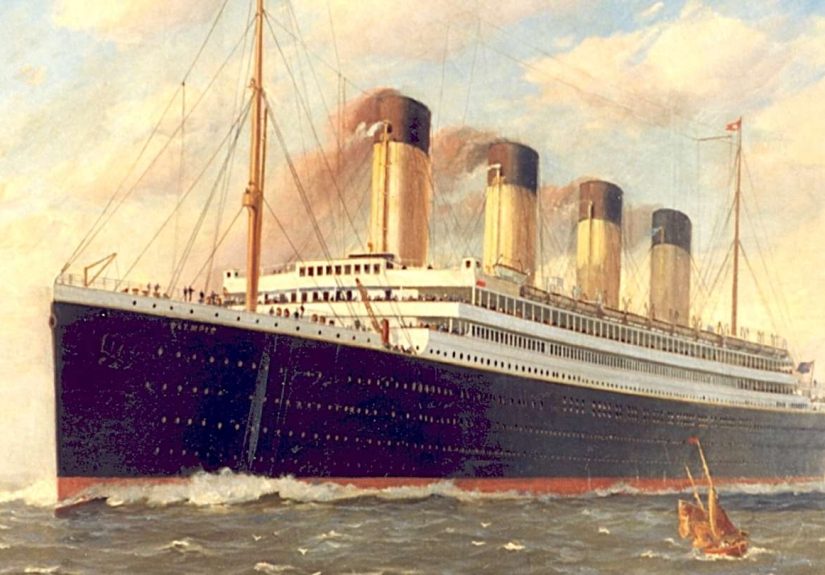
This is the tale of Titanic’s sister shipsRMS Olympic and HMHS Britannicand how one became a hardworking “Old Reliable” with a long résumé, while the other became a massive wartime hospital ship that sank fast… and then spent a century quietly turning into one of the world’s most remarkable shipwreck time capsules.
Meet the Olympic-Class Trio: Built for Comfort, Not Speed
The White Star Line wanted to win a transatlantic arms racejust not by doing the nautical equivalent of chugging energy drinks. The Olympic-class liners (Olympic, Titanic, and Britannic) were designed to be enormous, stable, and luxuriously comfortable. Think “floating Edwardian hotel,” with engines.
Quick family tree (no awkward Thanksgiving dinners)
- RMS Olympic (launched first): the “responsible older sibling” who actually stuck around.
- RMS Titanic: the famous middle child with the tragic headline.
- Britannic: the youngestbuilt in Titanic’s shadow and pulled into World War I before she could live her original life.
The Titanic’s sinking in 1912 didn’t just shock the worldit also forced serious rethinking of what “safety” meant on ships this size. That rethink changed both surviving sisters in very real, very steel-and-rivets ways.
RMS Olympic: The Sister Who Refused to Become a Legend (Because She Was Busy)
If Titanic is remembered for a single night, Olympic is remembered for decades of “Are you kidding me?” moments. Her career reads like maritime history wrote a sitcom and then forgot to add a laugh track.
A rocky start: when your “minor incident” involves another ship’s bow
Olympic’s early life wasn’t smooth sailing. On one of her early commercial voyages, she collided with the British warship HMS Hawke. Investigators ultimately blamed the accident on the hydrodynamic “suction” effect created by Olympic’s massive hull pulling the smaller vessel inbasically, Olympic was so big she weaponized physics by existing near you.
The post-Titanic makeover: safety upgrades with real teeth
After Titanic went down, Olympic didn’t just get a few extra lifejackets and a motivational speech. She underwent major safety improvements: more lifeboats, a lengthened double bottom, and raised watertight compartment bulkheads to better contain flooding. It was the kind of structural upgrade that says, “We learned the hard way and brought a welder.”
World War I: “Old Reliable” goes to work
When World War I erupted, Olympic kept operating for a time and even helped rescue survivors from a mine incident involving HMS Audacious. Soon, she was requisitioned as a troopshiphauling large numbers of soldiers across the Atlantic. She made multiple crossings ferrying Canadian and U.S. troops, earning the nickname “Old Reliable.”
And then came one of those moments that sounds like a tall tale until you realize historians keep repeating it because… it happened: Olympic encountered a German U-boat and rammed it, sinking the submarine. Not many passenger liners can put “submarine takedown” on their LinkedIn.
The foggy tragedy off Cape Cod
Olympic’s story isn’t all triumph and rivet-polished glory. In 1934, in heavy fog, she struck and sank the Nantucket lightship stationed near the shoals off Cape Cod, Massachusetts. Seven of the lightship’s 11 crewmen were killed. It’s a sober reminder that even a veteran liner could be undone by visibility, timing, and the unforgiving math of mass and momentum.
Olympic’s “afterlife”: scrapped, but not entirely gone
Olympic was retired in 1935 and sold for scrappingbut pieces of her lived on. Fittings and fixtures were bought up and installed in various places, including a famously preserved dining room that ended up as a real, physical space you can still sit inside today. In other words: Olympic didn’t so much “disappear” as “get redecorated into history.”
HMHS Britannic: The Sister Who Became a Hospital (and Then a Time Capsule)
Britannic’s story is what happens when you build a luxury liner and the world changes its mind about what it needs. Unlike her sisters, Britannic never really got to be a glamorous Atlantic celebrity. The war had other plans.
From “Gigantic” to Britannic: branding, but make it ominous
In the wake of Titanic’s disaster, White Star Line reportedly changed the new ship’s name from Gigantic to Britannic. (It’s hard to sell “Gigantic” after the world just watched “Unsinkable” fail a stress test.) Design changes followed tooaimed at better protection and, crucially, a push toward having enough lifeboats for everyone aboard.
A floating hospital: built for luxury, repurposed for survival
Britannic was requisitioned and refitted as a hospital ship, becoming the largest hospital ship in the world for her time in service. She operated on wartime routes moving medical staff and the woundedan entirely different mission than the champagne-and-promenade life she was created for.
November 21, 1916: the sinking that should’ve been worse (and still wasn’t “fine”)
Britannic struck a blast in the Aegean Sea on November 21, 1916, and sank in under an hour. About 30 people died, while more than a thousand were rescuedtragic, but dramatically fewer than Titanic. The improved evacuation systems and better preparedness mattered.
Yet Britannic’s sinking also shows how “better safety design” can be sabotaged by everyday human decisions. Contemporary investigation and later exploration have pointed to factors like watertight doors being open at the wrong moment, and lower portholes left open for ventilationconditions that could let water spread into areas that should have stayed dry. It’s the maritime equivalent of installing a state-of-the-art security system… and then leaving the back door propped open with a brick.
One especially grim detail: some deaths occurred when lifeboats encountered the still-turning propellersan awful intersection of urgency, machinery, and timing.
The wreck: discovered, explored, and suddenly very relevant again
Britannic didn’t become a famous wreck like Titanic (colder, deeper, harder to reach). But she became something else: an unusually intact, diver-accessible giant resting at roughly 400 feet downdeep enough to be serious business, shallow enough for highly specialized technical diving.
In 2025, news broke that divers recovered artifacts from Britannic’s wreck for the first timeitems like a ship’s bell, navigation lights, silver-plated trays, and even tiles associated with the ship’s luxurious bathing areas. The world got a fresh reminder that Britannic wasn’t just “Titanic’s other sister”she was her own historical universe.
Why the Sisters’ Stories Matter: Safety, Human Habit, and the Myth Machine
1) Engineering improveddramatically
Olympic’s post-1912 upgrades show how quickly the industry moved: more lifeboats, stronger compartment design, and practical changes meant to prevent a single breach from turning into a full-ship catastrophe. Britannic also reflected the “lessons learned” mindset, and on paper she was built to be safer than what came before.
2) Operations still matter as much as blueprints
Britannic’s loss is a case study in “systems thinking.” Safety features aren’t magic spells; they’re tools that require correct use. Doors open for convenience. Portholes opened for air. A ship in a war zone doesn’t always get ideal conditions. Design can buy timebut humans decide how that time gets used.
3) The Titanic/Olympic “switch” conspiracy is catchy… and flimsy
Because Olympic and Titanic were so similar, a conspiracy theory pops up periodically claiming the ships were swapped as an insurance scam. It’s a fun story if you like your history with a side of spy-movie energy, but serious researchers point to mismatched details, practical impossibilities, and physical evidence tied to Titanic’s actual wreck that undercut the idea. Olympic was real, Titanic was real, and unfortunately the ocean kept the receipts.
Quick FAQ for Titanic Nerds (and the Nerd-Curious)
Did Olympic ever sink?
No. Olympic had accidents and a long, complicated career, but she ultimately was retired and scrapped rather than lost at sea.
Was Britannic “unsinkable” like Titanic?
Britannic benefited from post-Titanic thinking and upgrades, but no ship is immune to mines, war zones, and compounding operational errors. “Safer” is real; “invincible” is marketing.
Why is Britannic’s wreck considered special?
Compared with Titanic, Britannic is often described as more intact and accessible (though still extremely deep for humans), creating rare opportunities for controlled archaeological work and documentation.
Conclusion: Two Sisters, Two Very Different Endings
Titanic became a symbol. Olympic became a survivor. Britannic became a paradox: a ship shaped by Titanic’s lessons, lost anyway, and then preserved underwater as a sprawling historical archive.
The surprising fates of the Titanic’s sister ships aren’t just triviathey’re a crash course in how technology evolves, how human choices complicate even the best designs, and how history loves a headline… but often hides the best stories in the footnotes.
Experiences Related to the Titanic’s Sister Ships (Extra )
If you’re fascinated by RMS Olympic and HMHS Britannic, the fun part is that you don’t have to be a deep-sea explorer to “meet” them. You can build a surprisingly immersive experience from your couch, your bookshelf, and (if you’re up for it) a few strategic travel stopswithout needing to bring a rebreather, a submersible, or a sacrificial fedora.
1) Try the “two-sister mindset” when you watch Titanic content
Most Titanic documentaries treat Olympic and Britannic like cameo characterswalk on screen, wave politely, vanish. Flip that. When you rewatch Titanic history, keep a running note: “What would Olympic have changed after this?” or “How did this influence Britannic’s design or operation?” It turns Titanic from a single tragedy into a broader story about an entire era of shipbuilding, regulation, and wartime reality.
2) Go artifact-hunting the safe way: museums and exhibits
Titanic exhibits are often easier to find than Olympic or Britannic-specific displays, but they still help you visualize the sisters. National Geographic has described how Olympic’s surviving photographs and features can serve as a stand-in for Titanic’s look and feel, since images of Titanic are comparatively rare. Some exhibitions (including flashy, very American settings) lean into the “this was real” power of ordinary objectsdishes, shoes, personal itemsbecause everyday stuff makes history hit harder than any cinematic slow-motion shot.
For Britannic, the recent artifact recoveries are especially exciting because they shift the story from “a wreck exists” to “a wreck is being responsibly studied.” If you follow museum-news coverage, you’ll see how conservation, documentation, and context matter as much as the objects themselves. The goal isn’t treasure-hunting; it’s time-travel with paperwork.
3) Experience Olympic’s “afterlife” through preserved spaces
Olympic’s most charming trick is that she still shows up in the real worldjust not as a ship. Her fittings were sold off, and at least one preserved dining room from Olympic has been installed in a building where you can sit, eat, and look around thinking, “So this is what a transatlantic crossing felt like… minus the seasickness and the 1910s social rules.” It’s a different kind of shipwreck: not underwater, but scattered through architecture and décor like a historical Easter egg.
4) Try the “logbook and human story” route
Britannic’s story comes alive when you focus on the people: nurses, crew, and the routines of a hospital ship operating under wartime pressure. Accounts that mention practical decisionslike opening portholes to air out spaces, or doors being open at shift changesmake the sinking feel less like fate and more like a chain of understandable choices. You start to see how disasters can be built out of normal moments.
5) Respect the deep: why Britannic isn’t a casual bucket-list dive
Britannic’s depth is often described in the “around 400 feet” range, which should immediately translate in your brain to: “This is not a recreational dive.” The modern exploration and recovery stories emphasize specialized training, careful planning, and strict oversight. As an experience, it’s worth appreciating the wreck through high-quality footage, maps, and reporting rather than romanticizing the idea of “just going down there.” The ship has waited a century. It doesn’t need impulsive visitors.
In the end, the best “experience” of Titanic’s sister ships is noticing how their stories rhyme without repeating. Olympic shows what longevity looks likemessy, human, sometimes tragic, often impressive. Britannic shows how even improved design can be overwhelmed by circumstance. Together, they turn Titanic from a singular legend into a three-part lesson about ambition, engineering, and the stubborn unpredictability of the sea.