Table of Contents >> Show >> Hide
- Why “Admitted It Got Things Wrong” Means Something Different on South Park
- 1. ManBearPig: The Big Climate Change Course Correction
- 2. The Al Gore Apology That Still Made Fun of Al Gore
- 3. Token Becomes Tolkien: A Retcon With a Raised Eyebrow
- 4. Randy Marsh and the “We Missed You” Character Reset
- 5. President Garrison and the Limits of “Both Sides” Satire
- 6. When the Show Admitted Apologies Themselves Can Be Empty
- Why These Admissions Matter
- Experiences and Reflections: Watching South Park Grow Up Without Acting Grown-Up
- Conclusion: The Funniest Apology Is Sometimes a Better Joke
Note: This article discusses real episodes and public criticism of South Park. It is written for entertainment and analysis, not as an official statement from the show’s creators.
South Park has built an empire on being proudly, loudly, gloriously unrepentant. For nearly three decades, Trey Parker and Matt Stone have treated apologies the way Cartman treats vegetables: suspiciously, dramatically, and only when forced. The show’s entire brand is based on saying the thing most polite people would swallow, then adding a fart joke for architectural support.
But here is the twist: South Park has actually admitted it got things wrong more than once. Not always in a teary press conference. Not usually with violins, soft lighting, or a celebrity Notes app apology. Instead, the show tends to admit mistakes in the most South Park way possible: by turning the correction itself into a joke, mocking the audience, mocking itself, and somehow still making the original target look ridiculous.
That is what makes these moments so fascinating. When South Park admits it was wrong, it rarely stops being abrasive. It does not suddenly put on a cardigan and host a panel on accountability. It stays rude, sharp, and chaotic. Yet beneath the profanity and paper-cutout carnage, there are clear examples where the series reconsiders old ideas, updates character choices, or openly wrestles with jokes that did not age well.
Why “Admitted It Got Things Wrong” Means Something Different on South Park
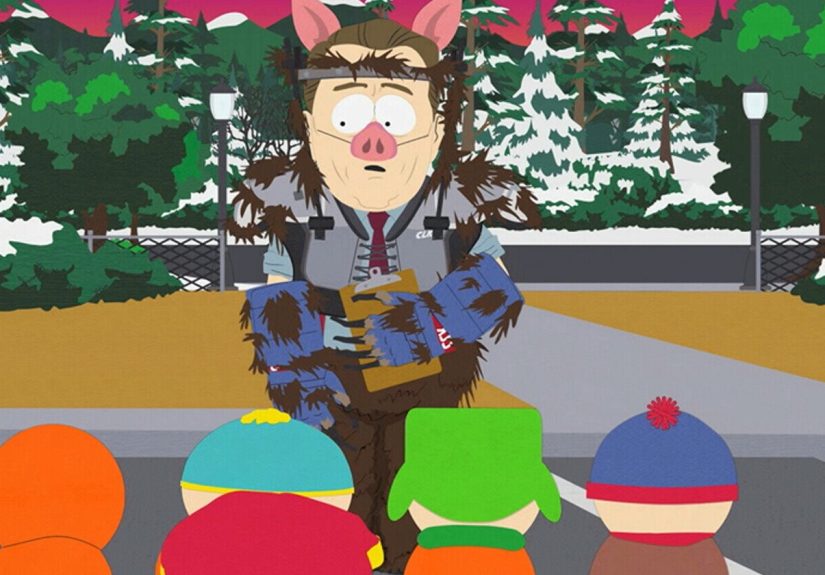
Most TV shows apologize by issuing a statement. South Park apologizes by bringing back a demon made of man, bear, and pig, letting him murder people, and forcing the characters to say, “Okay, maybe Al Gore had a point.” Subtle? No. Effective? Weirdly, yes.
For a show that thrives on equal-opportunity mockery, an admission of error usually comes in three forms. First, there is the direct reversal, where a previous joke is revisited and the show says, through story, “Actually, that old take was off.” Second, there is the retcon, where the writers alter the past and dare the audience to complain. Third, there is the meta-confession, where the show acknowledges a creative problemlike a character becoming too one-noteand makes that awareness part of the plot.
The examples below show South Park doing all three. Some are sincere. Some are half-sincere. Some are sincere while wearing a fake mustache and kicking the audience in the shin. That is the house style.
1. ManBearPig: The Big Climate Change Course Correction
The most famous example is the show’s reversal on ManBearPig, the monster introduced in the 2006 episode “ManBearPig.” In that earlier story, Al Gore arrives in South Park warning everyone about a terrifying creature that is “half man, half bear, half pig.” The joke was obvious: ManBearPig stood in for global warming, and Gore was portrayed as an attention-hungry scold desperately trying to make children take him seriously.
At the time, the episode fit the show’s classic anti-seriousness posture. Anyone who cared too much was suspicious. Anyone warning about a major social problem could be mocked as self-important. The problem, of course, is that climate change did not remain a vague political talking point. The science became harder to hand-wave away, the effects became more visible, and the original joke began to look less like brave skepticism and more like a dodgeball thrown directly into the face of reality.
How the Show Reversed It
In 2018, South Park brought ManBearPig back in “Time to Get Cereal” and “Nobody Got Cereal?” This time, the monster is real. Not “maybe real.” Not “symbolically real.” Real enough to attack people while adults look for any excuse not to deal with it. The boys are forced to seek help from Al Gore, who has the deeply irritating pleasure of being right all along.
The genius of the correction is that the show does not make Gore magically cool. He is still smug, still dramatic, still very Gore-ish in the South Park universe. But the essential point changes: being annoying does not make someone wrong. That is a surprisingly mature lesson from a series that once built entire plots around explosive diarrhea.
By making ManBearPig a genuine threat, the show effectively says its old climate change stance was wrong. It also expands the metaphor. The town does not simply deny the creature; people make bargains with it, profit from it, avoid responsibility, and leave the consequences to children. That is a sharper, more adult view of climate change than the original joke ever offered.
2. The Al Gore Apology That Still Made Fun of Al Gore
The ManBearPig reversal is also a rare apology to a real public figure. Al Gore had been mocked as a desperate alarmist in the original episode, but the later storyline gives him vindication. The boys apologize to him, and the show allows him to be the person who understood the danger before everyone else.
Of course, because this is South Park, the apology is not served with warm cookies. Gore still enjoys being right a little too much. He still acts like a man who has been waiting twelve years to say “I told you so” and has laminated the phrase for durability. The episode’s humor comes from the tension between “Gore was right” and “Gore is still kind of ridiculous.”
Why This Admission Worked
That balance is why the apology landed. If the show had suddenly turned Gore into a flawless prophet, it would have felt fake. Instead, South Park admitted the central mistake without abandoning its comic voice. It separated personality from accuracy. Someone can be pompous and still correct. Someone can be uncool and still see the emergency first. In internet terms, the messenger can be cringe and the message can still be true.
That is one reason this remains the clearest example of South Park admitting it got things wrong. The show did not merely soften an old joke; it rebuilt the joke in the opposite direction.
3. Token Becomes Tolkien: A Retcon With a Raised Eyebrow
Another major example came in the 2022 episode “The Big Fix,” when the show revealed that Token Black, long understood as the town’s “token Black kid,” was actually named Tolkien Black after author J.R.R. Tolkien. Stan is horrified to realize he has been saying and understanding the name wrong for years. The joke is not just on Stan; it is on the audience.
This was not a quiet continuity update. It was a full comic ambush. Viewers who had spent decades knowing the character as Token were suddenly told, with a straight face, that perhaps they were the problem for assuming such an obviously loaded name. It was a classic South Park move: fix a dated joke by blaming everyone for noticing the dated joke.
The Joke Behind the Fix
The original name “Token” worked as a blunt gag in the early years, when many characters were more like walking punchlines than developed people. But as the show continued, Tolkien became more than background commentary. He had a family, friendships, opinions, and actual storylines. The old name started to feel less like satire of tokenism and more like the show was stuck carrying around a joke from 1997 in a backpack with one broken strap.
“The Big Fix” let the series have it both ways. It acknowledged that the name was uncomfortable while turning the correction into a joke about performative allyship, white guilt, and audience memory. Stan’s panic over whether he is racist becomes the emotional engine of the episode, while Randy’s attempt to profit from Black representation becomes the broader satire.
Was it a clean apology? Not exactly. Was it an admission that the original naming gag had become a problem? Absolutely. The retcon works because it does not pretend the awkwardness was accidental. It walks directly into the awkwardness, sets up a lemonade stand, and sells “I Thought It Was Token” T-shirts to the crowd.
4. Randy Marsh and the “We Missed You” Character Reset
For many long-time fans, Randy Marsh’s evolution has been both hilarious and exhausting. Early Randy was a mostly ordinary dad with a job as a geologist, a fragile ego, and a talent for turning small problems into municipal disasters. Later Randy became a weed farmer, a chaos goblin, and sometimes the gravitational center of the entire show.
To be fair, Randy’s transformation produced some very funny moments. But over time, the Tegridy Farms era began to feel like a joke that had moved into the guest room and refused to leave. The show that once revolved around Stan, Kyle, Cartman, and Kenny increasingly became “The Randy Marsh Makes Bad Choices Hour,” now with cannabis branding.
How The Streaming Wars Part 2 Acknowledged the Problem
In South Park: The Streaming Wars Part 2, Randy briefly returns to his roots as a geologist. The special even gives him a musical reset with “We Miss You Randy,” a song that functions almost like the audience speaking through the show. It is a funny moment, but it is also a surprisingly direct acknowledgment that Randy had drifted far from the character many fans remembered.
Randy attempts to solve a drought crisis with an actual scientific plan involving desalination. For a moment, the old competent Randy reappears. Then, because South Park cannot resist chaos, the story still pulls him back toward his more obnoxious persona. But the point has already been made: the writers know what happened to Randy. They know fans noticed. They know the character had become oversized.
This is not the same kind of moral correction as ManBearPig. It is a creative correction. The show looks at one of its own running jokes and says, in effect, “Yes, we may have overdone this.” That self-awareness matters. A long-running comedy can survive almost anything except not knowing when its favorite joke has become the weird uncle at Thanksgiving.
5. President Garrison and the Limits of “Both Sides” Satire
South Park has always loved mocking political certainty. Its famous “Giant Douche vs. Turd Sandwich” framing became a shorthand for the show’s suspicion of partisan enthusiasm. But the Trump era challenged that formula. Mr. Garrison’s presidential storyline began as absurd satire, only for real politics to become so strange that the show’s parody often seemed to be chasing a speeding clown car downhill.
After the 2016 election, Parker and Stone publicly discussed backing away from Trump jokes because reality had become difficult to out-satirize. That was not exactly an apology, but it was an admission that the show’s usual method had hit a wall. When real headlines already sounded like rejected South Park premises, simply exaggerating them was no longer enough.
What the Show Learned
The later handling of President Garrison and characters like the Whites suggested a shift. Instead of pretending every political conflict was equally silly, the show became more willing to satirize grievance, entitlement, and fans who had mistaken Cartman’s bigotry for a lifestyle brand. That is a delicate pivot for a series that built its reputation on mocking moral seriousness.
The admission here is more subtle: not every issue fits neatly into “everyone is equally dumb.” Sometimes one side of an argument really is more dangerous, more dishonest, or more detached from reality. South Park did not fully abandon its cynicism, but it began showing cracks in the old formula. In a way, the show admitted that its own brand of detachment could become a trap.
6. When the Show Admitted Apologies Themselves Can Be Empty
One of the smartest examples of South Park thinking about being wrong came earlier, in “With Apologies to Jesse Jackson.” The episode is not an apology for a specific past South Park mistake, but it is an episode about the failure of shallow apologies. Randy says a racial slur on national television, then tries to fix everything through public gestures that make him feel better without addressing the actual harm.
The key lesson arrives through Stan, who keeps trying to understand why Tolkien is upset. Eventually, Stan realizes that he does not fully understand and never will in the same way because he has not lived Tolkien’s experience. That is a rare emotional landing for the show: the correct answer is not a clever speech, a public ritual, or a magic forgiveness coupon. It is humility.
Viewed alongside “The Big Fix,” this episode becomes part of a longer conversation the show has had with itself about race, intent, and impact. South Park is often accused of using offensiveness as a shield, but at its best, it has also examined why “I did not mean it that way” does not automatically repair the damage.
Why These Admissions Matter
The reason these moments stand out is that South Park is not naturally built for repentance. Its default posture is suspicion toward anyone asking for sensitivity, accountability, or reform. That is part of what made the show influentialand part of what has made some older episodes age like milk left in a sauna.
Yet the show’s best corrections reveal something important about satire. Good satire should be fearless, but it should not be frozen. A joke that worked in one cultural moment may become lazy in another. A target that once looked powerful may later look misunderstood. A “both sides” framework may fail when the facts are not balanced. And a character who once stole scenes may eventually steal the entire show, the furniture, and possibly Randy’s pants.
When South Park admits it got things wrong, it does not become less funny. In some cases, it becomes funnier because the admission adds complexity. ManBearPig returning as a real threat is funnier because it makes the old joke part of the new joke. Tolkien’s name retcon is funnier because it weaponizes the audience’s memory. Randy’s reset is funnier because fans know exactly what the show is confessing.
Experiences and Reflections: Watching South Park Grow Up Without Acting Grown-Up
Watching South Park admit mistakes is a strange experience because the show never behaves like a reformed troublemaker. It is more like watching the class clown accidentally make a thoughtful point while drawing something obscene on the whiteboard. You may want to be annoyed, but then the point lands, and suddenly everyone in the room has to admit the clown understood the assignment.
For long-time viewers, the ManBearPig reversal is especially memorable because it mirrors a broader cultural experience. Many people who were teenagers or young adults in the 2000s remember climate change being treated as distant, exaggerated, or politically annoying. Then years passed. Wildfires, heat waves, extreme weather, drought, and climate policy debates became harder to ignore. Rewatching the original “ManBearPig” after the 2018 follow-up feels like opening an old yearbook and finding a haircut that should have been illegal. You understand the era, but you are also grateful someone eventually said, “Maybe this was not our finest look.”
The Tolkien retcon creates a different kind of viewer experience. It is not just about the show changing a character’s name; it is about the audience being forced to participate in the joke. Many fans laughed because they knew they had assumed the same thing Stan assumed. Others rolled their eyes because the retcon was obviously ridiculous. But that tension is exactly why it worked. The episode did not simply erase an old joke. It made the act of correction messy, funny, defensive, and uncomfortablejust like real cultural corrections often are.
Randy’s “We Miss You” moment hits yet another nerve. Anyone who has watched a long-running sitcom knows the pain of character drift. A supporting character becomes popular, then louder, then stranger, then suddenly the entire show bends around them. Randy’s Tegridy era had fans divided: some loved the absurdity, while others missed the old dad who could be foolish without becoming a walking franchise. Seeing the show acknowledge that fatigue felt like a wink across the room. It said, “Yes, we hear you. Also, we are still going to be annoying about it.”
That may be the most honest thing about South Park. Growth does not always look graceful. Sometimes it looks like a half-apology wrapped in sarcasm. Sometimes it looks like a retcon that gaslights the audience for sport. Sometimes it looks like admitting a joke got stale while immediately telling another version of the same joke. But growth is still growth, even when it arrives wearing a Cartman costume and yelling in the hallway.
For writers, critics, and fans, these moments offer a useful lesson: being wrong does not have to end the conversation. In comedy, the better question is what the artist does next. Do they double down because pride is easier? Do they pretend the old joke never happened? Or do they find a way to turn the correction into new material? South Park, at its best, chooses the third option.
Conclusion: The Funniest Apology Is Sometimes a Better Joke
South Park will probably never become a gentle show. It will not trade Cartman for a conflict-resolution worksheet. It will not replace satire with group hugs. And honestly, nobody should expect that from a series that once turned a Christmas character into a talking piece of poop.
But the show’s history proves that even the most stubborn comedy can evolve. The ManBearPig episodes admitted the series underestimated climate change. “The Big Fix” confronted an old racial naming gag through a wild retcon. The Streaming Wars Part 2 acknowledged Randy Marsh had become too much of a goodor at least loudthing. The Trump-era shifts showed the limits of treating every political conflict as equally ridiculous. And “With Apologies to Jesse Jackson” explored why apologies without understanding are mostly theater.
That is why the times South Park admitted it got things wrong are worth revisiting. They show that satire does not have to be perfect to stay relevant. It has to stay alive, alert, and willing to turn the camera back on itself. In true South Park fashion, the show’s best apologies are not soft. They are messy, funny, defensive, rude, and occasionally brilliant. In other words: super cereal.