Table of Contents >> Show >> Hide
- Who Was Georgia O’Connor? A Rising Talent With Real Momentum
- The Two-Week Timeline That Stunned Everyone
- Her Health Journey: Ulcerative Colitis, PSC, and Why Risk Matters
- “I Knew Something Was Wrong”: Her Claims of Being Dismissed
- A Boxing Career That Was Just Getting Started
- Tributes, Grief, and the Boxing Community’s Response
- What Georgia O’Connor’s Story Can Teach Us (Without Turning Her Into a Slogan)
- How to Support Someone Facing a Serious Diagnosis
- Conclusion: Remembering Georgia O’Connor Beyond the Headline
- Experiences Related to This Story (A 500-Word Reflection)
- SEO Tags
In boxing, timing is everything. A half-second late on a counterpunch and you eat leather. A half-second early and you miss the opening entirely.
But outside the ring, timing can be cruel in ways no highlight reel can explain.
Georgia O’Connor—a 25-year-old professional boxer with an unbeaten record and a reputation for grit—died in May 2025, just two weeks after
marrying her longtime partner, Adriano Cardinali. Her death sparked an outpouring of grief across the boxing world, but also a sharper, more urgent
conversation: what happens when a young person says something is seriously wrong—and the system doesn’t listen?
This article looks at who Georgia O’Connor was, what we know about her final months, why her story resonated far beyond sports, and the broader
lessons it raises about chronic illness, cancer risk, and patient advocacy—especially for women and young adults who too often have their symptoms
minimized.
Who Was Georgia O’Connor? A Rising Talent With Real Momentum
Georgia O’Connor was a British boxer from Durham, England, who turned professional in 2021 and went 3-0 in her pro career. She competed in the
light-middleweight/super-welterweight range and fought on notable cards, including the Claressa Shields vs. Savannah Marshall event in London in 2022,
a major showcase moment for women’s boxing.
Before she ever wrapped her hands for the paid ranks, O’Connor built a strong amateur résumé. Reports described her as a standout in youth
international competition, including a gold medal at the 2017 Commonwealth Youth Games, along with other podium finishes in elite youth tournaments.
The pro record only shows three fights. The bigger story is what those around her believed: she wasn’t just filling out undercards—she was
developing into a genuine prospect. Promoters, journalists, and fellow fighters described her as talented, determined, and relentlessly hardworking.
The Two-Week Timeline That Stunned Everyone
The headline detail that traveled fastest was also the hardest to read: Georgia O’Connor married Adriano Cardinali on May 9, 2025. She died on
May 22, 2025.
In the days after the news broke, multiple outlets cited posts and statements indicating that marriage was a deeply meaningful milestone for her—a
bright point in a period that was otherwise dominated by illness and medical uncertainty.
A simple timeline (as publicly reported)
- Late 2024 to early 2025: O’Connor publicly discusses serious health concerns and later shares a cancer diagnosis.
- January 2025: She posts that she has been diagnosed with cancer (public announcement widely reported).
- February 2025: She shares that she suffered a miscarriage (reported by entertainment/news outlets summarizing her posts).
- May 9, 2025: She marries Adriano Cardinali.
- May 22, 2025: Her death is announced by her boxing promoter, Boxxer, and widely reported across sports and news media.
The “two weeks after the wedding” detail doesn’t matter because it makes for a dramatic headline. It matters because it shows the shape
of a life that was still actively being lived. She wasn’t a distant tragedy. She was making plans, choosing joy where she could, and trying to hold
on to the parts of life that made her feel like herself.
Her Health Journey: Ulcerative Colitis, PSC, and Why Risk Matters
Georgia O’Connor had spoken publicly about living with ulcerative colitis, a form of inflammatory bowel disease (IBD). Ulcerative colitis is a
chronic condition that can involve long periods of inflammation in the colon. It can be exhausting, painful, and disruptive even when someone looks
“fine” on the outside.
She also referenced primary sclerosing cholangitis (PSC), a chronic liver disease that affects bile ducts and is often associated with IBD, especially
ulcerative colitis. PSC is rare, complicated, and—importantly for this story—associated with increased cancer risk. It’s not a
“fun fact” diagnosis. It can change how clinicians think about symptoms, screening, and urgency.
Why doctors take UC and PSC seriously (and patients should, too)
In general medical guidance, long-standing ulcerative colitis is associated with a higher risk of colorectal cancer, and people with IBD may need earlier
or more frequent screening than average-risk adults. PSC is also associated in medical literature with increased risk of certain cancers, including bile
duct cancer, as well as colorectal cancer risk—especially when PSC and ulcerative colitis occur together.
None of that means a person with UC or PSC is “destined” for cancer. But it does mean that persistent, severe, unexplained symptoms deserve
careful attention, appropriate testing, and timely follow-up.
For athletes, this can be extra complicated. Fighters are conditioned to tolerate discomfort, to push through pain, and to treat weakness like a personal
failure. But chronic disease doesn’t care how tough your training camp is.
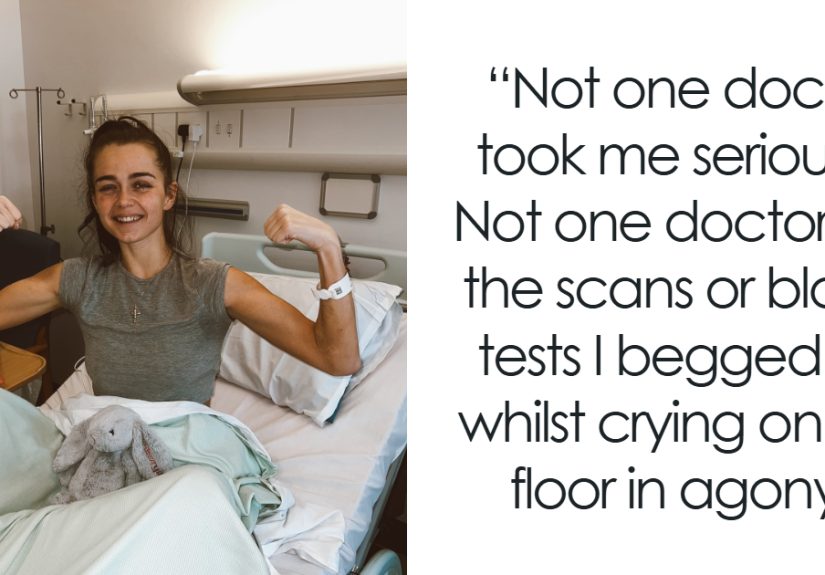
“I Knew Something Was Wrong”: Her Claims of Being Dismissed
Much of the public conversation around O’Connor’s death centered on her own statements about her medical care. In posts summarized by multiple
outlets, she alleged that her symptoms were minimized and that she was not taken seriously for months, despite telling clinicians she believed something
severe was happening.
It’s important to be precise: the public only has one side of the clinical story, and medical professionals are often limited in what they can say
due to privacy laws. But her words resonated because her experience felt familiar to many people—especially women—who have had to fight for
referrals, imaging, lab work, or even the basic dignity of being believed.
What her story highlights (without pretending to know her full chart)
- Symptoms can be real even when initial tests are normal. Early results don’t always capture early disease.
- Chronic illness can mask new emergencies. When someone is known to have a condition like UC, new pain can be wrongly assumed to be
“just another flare.” - Risk factors matter. UC and PSC are not trivial background details; they change the clinical stakes.
- Dismissal has consequences. Whether the issue is delayed diagnosis, delayed treatment, or loss of trust, the cost is real.
If there’s a single takeaway, it’s this: advocating for yourself isn’t being dramatic. It’s being alive to your own body.
A Boxing Career That Was Just Getting Started
On paper, a 3-0 record can look like a footnote. In reality, it often represents the messy beginning of a pro career: learning pacing, getting rounds in,
adjusting to bigger lights, and proving you belong.
O’Connor won all three of her professional bouts on points. Her last recorded pro fight was in October 2022, when she defeated Belgium’s
Joyce Van Ee on a major London card. The win mattered not just because it kept her unbeaten, but because it placed her on a platform where the women’s
side of the sport was receiving unprecedented attention.
Women’s boxing has grown rapidly in visibility over the last decade, driven by high-level rivalries, improved promotion, and fighters who refuse to
be treated like a novelty act. By all accounts, Georgia O’Connor was part of that wave—and her death was felt as a loss of future possibilities,
not only past accomplishments.
Tributes, Grief, and the Boxing Community’s Response
When news of O’Connor’s death spread, tributes followed quickly. Her promoter Boxxer called her a “true warrior” and emphasized
how loved and respected she was. Major sports outlets, boxing publications, and fellow fighters echoed the same themes: toughness, warmth, talent, and
a personality that stuck with people.
This is one of the quieter truths about fight sports: yes, it’s a business, but it’s also a community. Gyms are families. Sparring partners
know your habits and your fears. Trainers see you on your best days and your worst. When someone dies young, the grief isn’t abstract. It shows up
at the heavy bag. It shows up when someone wraps their hands and suddenly remembers a joke from a teammate who should still be there.
And then there’s the wider audience—the fans who might never have met her but felt like they knew her because she shared her hopes, her humor,
and her struggle publicly. Social media can be chaotic, but it can also be a record of personhood: not just what someone achieved, but what they loved.
What Georgia O’Connor’s Story Can Teach Us (Without Turning Her Into a Slogan)
It’s tempting to turn every tragedy into a neat lesson. But real life is rarely neat. Still, her story does point to several practical ideas that
matter for athletes and non-athletes alike:
1) Take persistent symptoms seriously
If something is changing fast, getting worse, or feels fundamentally different from your normal baseline, that matters. Chronic illness does not cancel
out new illness. It can increase risk and complexity.
2) Ask for clarity—and document what you’re told
It’s not rude to ask: “What diagnoses are you considering? What tests would rule them out? What symptoms would require urgent follow-up?”
Writing down answers helps you remember, especially when you’re stressed or in pain.
3) Second opinions aren’t betrayal; they’re a tool
People sometimes avoid second opinions because it feels confrontational. But medicine is complex. A fresh set of eyes can change outcomes, and good
clinicians understand that.
4) Don’t underestimate the mental load of serious illness
Illness isn’t only physical. It drains focus, sleep, confidence, and identity. For athletes, it can feel like losing the one thing they could always
control: their body. Support should include mental health care, not as an afterthought, but as part of the plan.
How to Support Someone Facing a Serious Diagnosis
Not everyone reading this is a boxer. But many people will, at some point, love someone who becomes seriously ill. If you’ve never been in that
situation, here are a few ways people often describe meaningful support:
- Be specific. Instead of “Let me know if you need anything,” try: “I can drive you to appointments on Tuesdays,”
or “I’ll handle groceries this week.” - Offer “no-words” companionship. Sometimes the best support is sitting in the same room, not trying to fix the unfixable.
- Help them keep a piece of normal life. A favorite show, a short walk, a playlist, a silly meme—small normal moments matter.
- Respect fatigue and boundaries. Being ill can mean constant decisions. Ask permission before sharing updates or posting online.
- Support the caregiver, too. Partners and family members often burn out quietly. Check in with them in real ways.
Georgia O’Connor’s final weeks included love, commitment, and community grief—but also, according to her own statements, frustration
with being dismissed. Both realities can exist at once.
Conclusion: Remembering Georgia O’Connor Beyond the Headline
Georgia O’Connor should have had more time—more fights, more milestones, more ordinary days that don’t make news.
She was a young pro boxer, a decorated amateur athlete, and a person who publicly insisted on being heard about her own body.
If her story leaves you with anything, let it be this: listen closely when someone says they don’t feel right. Take chronic illness seriously.
Treat women’s pain like it matters. And remember that strength isn’t only what happens under bright lights on fight night.
Sometimes strength is saying, again and again, “Something is wrong”—and refusing to be silenced.
Experiences Related to This Story (A 500-Word Reflection)
Stories like Georgia O’Connor’s tend to land in the chest first and the brain second. Even if you don’t follow boxing, you can recognize
the emotional whiplash: a wedding photo still warm from congratulations, followed almost immediately by an obituary tone. That abrupt turn is part of why
people react so strongly. It violates the timeline we expect life to follow.
Many fans describe a specific kind of grief when a young athlete dies: it feels like losing a future you were already watching unfold. In boxing,
especially, prospects aren’t just athletes—they’re long stories told in rounds. You see the early chapters: the awkward pacing, the
learning curve, the first time a fighter stays calm under pressure. You imagine the middle: belts, rivalries, the signature win that becomes a career
anchor. And then the ending arrives before the story even finds its shape.
There’s also a familiar experience that has nothing to do with sports: the fight to be taken seriously in a medical setting. People who have lived
with chronic conditions often talk about “baseline fatigue”—not just physical tiredness, but the exhaustion of explaining their health
over and over. They learn a new vocabulary: flares, labs, referrals, imaging, specialists, insurance approvals. Over time, some become experts in their
own charts because they have to be. That kind of self-education is brave, but it shouldn’t be required for safe care.
Women, in particular, frequently describe the experience of being told their symptoms are anxiety, stress, or “just hormones.” The emotional
impact can be long-lasting. Even after a correct diagnosis is finally made, the memory of dismissal lingers. It changes how people seek help in the
future. It can make them doubt their own instincts—the very instincts that often push someone to insist on further testing or a second opinion.
Another common experience is how illness reorganizes relationships. Partners become schedulers. Parents become advocates. Friends become logistics teams.
Love turns practical: rides to appointments, keeping track of medications, finding the one food that doesn’t make nausea worse. That kind of care is
quiet and constant, and it’s rarely visible from the outside. When reports say Georgia married her longtime partner shortly before her death, many
people read that as a kind of fierce choice: to claim joy and commitment even while living inside uncertainty.
Finally, there is the experience of community response—how people come together around a loss. In boxing gyms, grief can show up as silence, as
extra rounds on the bag, as a hug that lasts a few seconds longer than normal. Online, it shows up as tributes and shared clips and comments like
“gone too soon.” It can be imperfect, but it’s also human: a collective attempt to say, you mattered.
Georgia O’Connor’s story sits at the intersection of love, ambition, illness, and advocacy. If you’ve ever watched someone fight for
their health, fought for your own, or simply tried to make meaning out of unfair timing, you understand why this headline won’t be forgotten.