Table of Contents >> Show >> Hide
- So, who attends SaaStr Annual?
- What the early company signals say this year
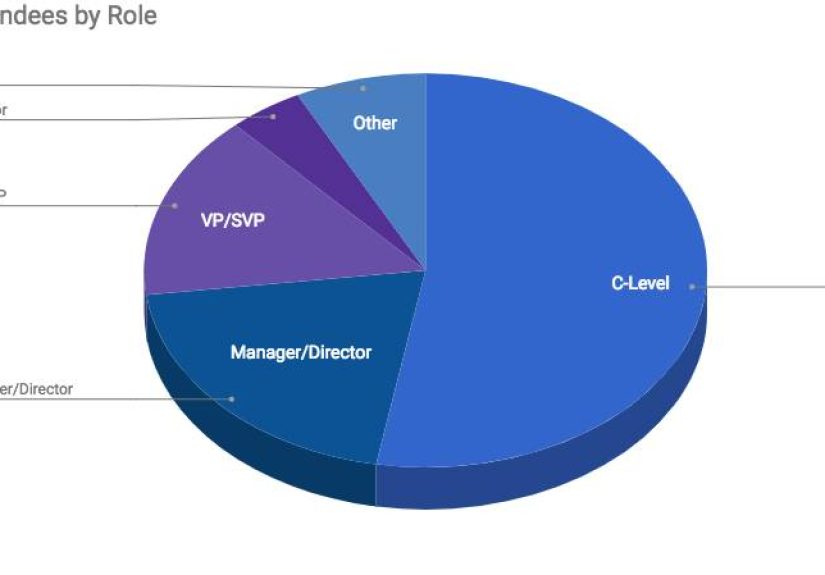
- What kinds of people from those companies tend to attend?
- Why do these companies attend in the first place?
- What an early attendee company list really tells you
- How to use the attendee company list before the event
- One important reality check
- Final take
- What the SaaStr Annual experience feels like once you are there
If you have ever wondered who actually shows up at SaaStr Annual, the answer is delightfully simple: not just “tech people,” and definitely not just folks collecting tote bags like they are rare Pokémon. SaaStr Annual attracts a very specific crowd of founders, C-suite leaders, revenue operators, product builders, investors, and software teams who want practical advice, better connections, and a sharper view of where B2B SaaS and AI are heading next.
That matters because attendee quality is the whole game. A conference can have a giant headcount and still feel like a networking salad with too much lettuce and not enough protein. SaaStr tends to market itself around decision-makers, and the early signals for the current edition support that positioning. Official event pages describe a crowd of 10,000+ founders, executives, and VCs, with thousands of networking sessions, hundreds of speakers, and dedicated meetups for functions like marketing, customer success, finance, and sales leadership. In plain English: this is not a random walk through badge-land. It is a place where the people with budgets, teams, hiring plans, and software problems tend to cluster.
So, who attends SaaStr Annual?
The attendee company list usually reveals a mix of familiar enterprise brands, fast-growing cloud vendors, AI-heavy startups, and revenue-tech players. That blend has been visible for years. Earlier public attendee previews included names like Atlassian, Box, Dropbox, HubSpot, Mailchimp, PagerDuty, Procore, Salesforce, Sprout Social, Udemy, VMware, Xero, Zendesk, and Zuora. That historical snapshot is useful because it shows the long-running SaaStr pattern: companies do not attend just to listen politely and then vanish into the mist. They send teams.
And that “teams” part is important. Public SaaStr posts have emphasized that many companies send more than one person, often several, and frequently from leadership. That changes the value of the event. You are not just meeting a lone marketer manning a booth while texting their airport shuttle. You are more likely to run into founders, CROs, CMOs, customer success leaders, finance executives, product leaders, and investors in the same orbit.
What the early company signals say this year
If you want an early peek at the attendee company list, the smartest move is to read the room through official sponsor pages, summit pages, speaker pages, and partner event announcements. Those clues usually tell you more than a giant spreadsheet ever could. For the current cycle, the companies showing up around SaaStr strongly suggest a B2B + AI crowd with real buying power.
1. Big platform and infrastructure names
Official event materials and related pages point to companies such as Google Cloud, Salesforce, Databricks, Snowflake, IBM, GitHub, and Atlassian as part of the broader SaaStr conversation. That tells you enterprise-scale infrastructure, AI platforms, data, workflow, and cloud operations remain central to the audience. These are the kinds of brands that attract serious operators, not just curious tourists with lanyards.
2. Fast-growing AI and product-led companies
Names appearing around the 2026 event ecosystem include Replit, Lovable, Artisan, Monaco, Vercel, Pylon, and Gamma. This is a strong clue that SaaStr is leaning hard into the current AI-native and developer-tool wave. In other words, the crowd is not just asking, “How do I grow my SaaS company?” It is also asking, “How do I grow without getting steamrolled by the AI shift?” That is a very different hallway conversation, and a much more urgent one.
3. Revenue, customer voice, and go-to-market operators
Companies like G2, People.ai, Qualified, Rippling, and other GTM-focused brands also show up in public-facing SaaStr materials and related event pages. That suggests another truth about the attendee base: it is packed with people responsible for pipeline, expansion, retention, RevOps, and efficiency. This is not just a founder therapy session with better coffee. It is a room full of teams trying to turn strategy into revenue.
4. Data, cloud, and backend builders
Firebolt, Flatfile, Vercel, and similar companies appearing in sponsor or event pages point to a healthy layer of technical attendees. That means the conference is not purely a top-of-funnel marketing carnival. There is real gravity around data architecture, deployment, automation, integrations, AI workflows, and enterprise-grade infrastructure.
What kinds of people from those companies tend to attend?
Here is where SaaStr becomes more interesting than a generic tech expo. The event is designed for role-based interaction. Public pages describe dedicated gatherings or networking tracks for CMOs, CROs, CEOs, CFOs, CCOs, and investors. That structure matters because it shapes the attendee mix. The likely crowd includes:
- Founders and CEOs looking for tactical growth advice, investor access, partnerships, and benchmarks.
- CROs, VPs of Sales, and RevOps leaders hunting for pipeline ideas, AI-assisted selling strategies, and better conversion playbooks.
- CMOs and growth leaders comparing demand gen efficiency, brand strategy, content performance, and AI-assisted GTM models.
- Customer success and support leaders learning how to scale service without letting churn eat the furniture.
- Product, engineering, and AI builders trying to separate useful automation from expensive sci-fi.
- VCs and investors looking for breakout companies, warm intros, and signals on where software budgets are moving.
That mix is part of the appeal. A marketer can walk into a session, leave with three tactical ideas, and then end up talking to a founder, an investor, and a data platform executive before lunch. It is equal parts education and collision course.
Why do these companies attend in the first place?
The early attendee company list is useful, but the why behind it is even more useful. Companies attend SaaStr Annual for a few predictable reasons.
They want to learn what is working now
SaaStr positions itself around tactical content rather than airy keynote theater. That promise attracts operators who want concrete playbooks on pricing, churn, AI deployment, hiring, expansion, enterprise sales, and product execution. If you are responsible for a number on a dashboard, this is catnip.
They want access to buyers and peers
Sponsors return because decision-makers are there. Public sponsor-facing materials from SaaStr and related company pages lean heavily on ROI, pipeline, and qualified meetings. Translation: attendees are not only there to clap. They are there to compare vendors, evaluate partners, and pressure-test software categories with other operators.
They want investor density
SaaStr has also spotlighted large VC attendance in public posts, and current event pages continue to advertise strong investor access. That makes the attendee list more than a customer map. It is also a fundraising and relationship map.
They want to understand where AI is changing the stack
The current event positioning makes one thing obvious: AI is no longer a side dish. It is the entrée, the dessert, and possibly the thing trying to replace the waiter. Companies attending now are signaling interest in agentic workflows, AI-enabled GTM, data infrastructure, and how to adapt software organizations to a market that is changing fast.
What an early attendee company list really tells you
An early attendee company list is not just a brag sheet. It is a market signal.
If the list is heavy on Google Cloud, Salesforce, Databricks, Snowflake, Atlassian, Replit, Rippling, G2, People.ai, Firebolt, Flatfile, and Vercel-style companies, here is what that suggests:
- The audience is commercially serious. These companies do not show up because someone liked the font on the invitation.
- The event skews toward operators and decision-makers. The roles being promoted around the event are leadership-heavy and execution-heavy.
- AI is reshaping the conversation. The 2026 ecosystem especially points to B2B software teams trying to modernize fast.
- Networking is part of the product. With structured summits, meetings, investor matchmaking, and role-based gatherings, the attendee list is not passive scenery. It is one of the main reasons to attend.
How to use the attendee company list before the event
If you are going to SaaStr Annual, do not just glance at the attendee company list and whisper, “Neat.” Use it like a strategy tool.
Build a target-meeting list
Choose 20 to 30 companies you want to meet. Split them into buckets: customers, partners, investors, hiring targets, and “I really need to understand how they are doing that” companies.
Study by role, not just by logo
Meeting “someone from Salesforce” is vague. Meeting a RevOps leader, product marketer, or AI workflow operator from a major platform company is useful. Logos get attention; roles create outcomes.
Plan your hallway narrative
You do not need a full pitch deck in your back pocket, but you do need a crisp explanation of who you help, what you do, and why now is the right time to talk. Conference networking rewards clarity more than charisma. Although a little charisma never hurt anyone.
Use the list to spot trends
If more AI-native, data-heavy, and revenue-ops companies appear early, that tells you where attention and budget are moving. Sometimes the attendee mix is a more honest market report than a polished analyst deck.
One important reality check
An early attendee company list is a preview, not the full census of software civilization. Public lists are usually selective. Some companies send several team members. Others register later. Some appear through speakers, sponsors, side events, or partner content rather than in a tidy public roster. So the smartest way to read the list is not as a complete directory, but as a high-signal sample of the kinds of companies and roles already orbiting the event.
Final take
Who attends SaaStr Annual? The short version is: the people building, buying, selling, funding, and rethinking modern B2B software. The longer version is even better. You get a mix of major cloud brands, scaling SaaS operators, AI-native startups, revenue-tech teams, data and infrastructure companies, and a thick layer of founders and investors who are not there for theory alone. They are there for traction.
So yes, the attendee company list is worth peeking at early. It tells you which logos are in the room, but more importantly, it hints at the conversations happening inside it. And at a conference like SaaStr Annual, those conversations are the real headline.
What the SaaStr Annual experience feels like once you are there
Now for the part that does not always show up in a company list: the actual experience. SaaStr Annual tends to feel less like a stiff corporate conference and more like a giant, outdoor-indoor software camp for ambitious adults who speak fluent ARR. You might start the day with a tactical session on AI workflows, wander into a conversation about pricing strategy, grab coffee near a sponsor activation, and somehow end up discussing customer retention with someone from a company you had only seen on LinkedIn the night before.
That experience matters because it changes the value of the attendee list. On paper, a list of companies is just data. On-site, it becomes momentum. When you know the room includes cloud platforms, AI startups, revenue teams, investors, and operators from recognizable brands, every casual introduction feels more useful. The person next to you in line is not just “another attendee.” They might be testing a new GTM model, hiring their first senior leader, evaluating infrastructure vendors, or exploring their next round of funding.
There is also a certain emotional rhythm to events like this. The first few hours can feel like drinking from a fire hose that somehow learned business acronyms. By midday, though, the pattern starts to click. Sessions give you language for problems you have been wrestling with. Networking gives you proof that other smart teams are wrestling with the same problems. That combination is weirdly energizing. You stop feeling like your company is the only one trying to figure out pricing, scale support, ship AI features, or fix a leaky funnel before finance starts sending concerned calendar invites.
The best part is that the value compounds. One useful session gives you an idea. One sharp conversation gives you context. Three or four strong meetings can change your quarter. That is why experienced attendees do not treat SaaStr like a passive learning event. They treat it like a live operating system for B2B networking. They arrive with target companies in mind, but they also leave room for surprise encounters, because the surprise encounters are often where the best insights hide.
And yes, there is a social side to all of this. Happy hours, side gatherings, small meetups, and role-specific events make the conference feel much more human than a giant expo hall where everyone looks one coffee away from a system reboot. The atmosphere encourages quick pattern recognition: who is building, who is buying, who is experimenting, who is scaling, and who just discovered that AI can either reduce headcount pressure or create seven new workflows nobody asked for.
That is why an early peek at the attendee company list is more than curiosity fuel. It is a preview of the energy you are stepping into. It tells you whether the room is likely to challenge you, teach you, connect you, or maybe all three before lunch. And when the list is full of serious software brands, high-growth startups, investors, and functional leaders, that is usually a very good sign. At that point, the event stops looking like a conference and starts looking like a compressed market in motion. Which, frankly, is a lot more fun.