Table of Contents >> Show >> Hide
- Why Six Customer Calls a Week Is the Minimum
- The Real Value of Talking to Customers
- Zoom Makes Customer Learning Easier Than Ever
- Who Should You Talk To?
- How to Structure a Great Customer Zoom Call
- What to Do After Each Customer Call
- Why Customer Calls Improve Sales
- Why Customer Calls Improve Product Decisions
- Why Customer Calls Reduce Churn
- How to Make 6 to 10 Weekly Calls Actually Happen
- Common Mistakes to Avoid
- A Practical Weekly Customer Call Plan
- Experiences From Teams That Talk to Customers Every Week
- Conclusion
There is a quiet little habit that separates sharp founders, useful product teams, and customer-obsessed companies from everyone else: they talk to customers constantly. Not once a quarter. Not when churn becomes a five-alarm fire. Not after the sales team starts saying things like, “The market is weird right now.” They get on Zoom with real customers every single week.
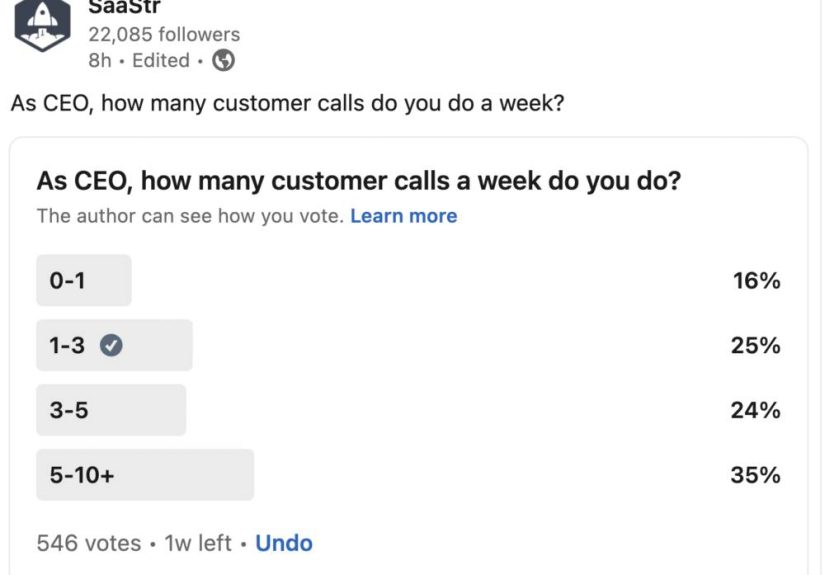
The rule is simple: you need to Zoom with at least 6 customers a week. Ideally 10. That may sound like a lot, especially if your calendar already looks like a game of Tetris played by a caffeinated raccoon. But customer conversations are not “extra work.” They are the work. They are where product strategy, retention, sales messaging, pricing clarity, roadmap decisions, and market reality all stop wearing costumes.
For SaaS companies, startups, agencies, consultants, and B2B teams, weekly customer calls are one of the highest-return activities available. They help you understand what customers actually need, why they buy, why they hesitate, what frustrates them, what they love, and what they would quietly replace tomorrow if a better option appeared. A dashboard can tell you what happened. A customer call can tell you why.
Why Six Customer Calls a Week Is the Minimum
Six customer conversations a week creates a steady rhythm of learning. One or two calls can be interesting, but they are easy to dismiss as random opinions. Six calls begin to reveal patterns. Ten calls accelerate those patterns into strategic clarity. By the end of a month, six weekly calls give you roughly 24 direct customer conversations. Ten weekly calls give you about 40. That is not “anecdotal noise.” That is a living signal system.
Customer discovery has always been built on one uncomfortable truth: your assumptions are probably wearing fake glasses and pretending to be facts. Founders think they know why customers buy. Product teams think they know which feature matters most. Sales teams think they know what is blocking deals. Customer success teams think they know why users churn. Sometimes they are right. Often, they are only partly right, which is the dangerous kind of wrong.
Weekly Zoom calls force your team to stay close to reality. Instead of building based on internal debate, executive opinion, or the loudest Slack thread, you hear the customer’s actual words. You learn their workflow. You notice the hesitation before they answer a pricing question. You hear the phrase they use to describe the problem, which is often far better than anything your marketing team wrote after three coffees and a branding workshop.
The Real Value of Talking to Customers
Talking to customers is not just about being friendly. Friendliness is nice. Send the calendar invite, smile, maybe do not open with “So, why haven’t you upgraded yet?” But the real value is deeper. Customer conversations help you reduce risk.
Every company is making bets. You bet that a feature will improve activation. You bet that a new package will increase expansion revenue. You bet that your website explains the product clearly. You bet that customers understand your value proposition. Customer calls test those bets before you spend months and thousands of dollars marching confidently into a wall.
A good customer conversation can reveal:
- Why prospects choose you instead of a competitor
- Which features customers use every day and which ones are decorative furniture
- Where onboarding feels confusing or slow
- What customers expected before buying versus what they experienced after buying
- Why accounts expand, downgrade, or churn
- Which words customers use when explaining your product internally
- What hidden objections delay deals
That information is gold. Not shiny motivational-poster gold. Actual strategic gold. It can improve your product roadmap, sales scripts, landing pages, onboarding flows, customer success playbooks, and pricing strategy.
Zoom Makes Customer Learning Easier Than Ever
Years ago, “talking to customers” often meant flights, hotel rooms, trade shows, handshakes, and wearing shoes that looked professional but secretly hated your feet. Today, Zoom removes most of that friction. You can speak with a founder in Austin at 9 a.m., a customer success leader in Chicago at noon, and an operations manager in Seattle before dinner.
Video calls are especially powerful because they provide more context than email surveys. You can see facial expressions. You can ask follow-up questions. You can screen-share and watch where users click, pause, or get confused. You can hear whether a feature is “nice” in the polite way people say nice when they mean “I will forget this exists by Tuesday,” or genuinely valuable.
Surveys still matter. Analytics still matter. Support tickets still matter. But live customer conversations add texture. They turn data points into stories. And stories are often what move teams to act.
Who Should You Talk To?
The short answer: not only your happiest customers. Happy customers are lovely, but if you only talk to people who already love you, your research becomes a standing ovation in an empty theater.
A healthy weekly customer call program should include different groups:
1. New Customers
New customers remember the buying process. They can tell you what nearly stopped them, what convinced them, and whether your onboarding experience matches your sales promise. Their memory is fresh, which makes their feedback especially useful.
2. Power Users
Power users know where the value lives. They can show you workflows, shortcuts, and use cases your team may not even realize exist. They often reveal expansion opportunities and product strengths that should appear in your marketing.
3. Quiet Customers
Quiet customers are dangerous because silence can mean satisfaction, confusion, indifference, or a competitor quietly sliding into the account like a raccoon through a dog door. Talk to them before the renewal date becomes a suspense movie.
4. Churned Customers
Churned customers may be the most honest people in your market. They no longer need to be polite to preserve the relationship. Ask what changed, what disappointed them, and what would have needed to happen for them to stay.
5. Lost Deals
Prospects who chose another solution can teach you about positioning, pricing, trust, urgency, and competitive gaps. These calls can sting a little, but so can stepping on a Lego. Both are educational.
How to Structure a Great Customer Zoom Call
A customer call does not need to be stiff or complicated. In fact, the more it feels like a courtroom deposition, the worse it usually gets. Your goal is to create a conversation where the customer feels comfortable telling the truth.
Start With Context
Open by explaining the purpose of the call. Say something simple: “We are trying to understand how customers use the product, where it helps, and where it gets in the way.” This lowers the pressure and makes it clear you are not trying to sell them something during the call.
Ask About the Past, Not Imaginary Futures
One of the biggest mistakes in customer research is asking people to predict future behavior. Questions like “Would you use this feature?” or “Would you pay for this?” often produce unreliable answers. People are optimistic in interviews. They also want to be nice. Ask about what they already did instead.
Better questions include:
- “What was happening in your business when you started looking for a solution?”
- “What tools or workarounds were you using before?”
- “Can you walk me through the last time you used this feature?”
- “What almost stopped you from buying?”
- “What would make this product easier to recommend internally?”
Listen for Emotion
Customers do not always announce the important part with a trumpet. Listen for frustration, excitement, hesitation, confusion, relief, and urgency. If a customer says, “That part is annoying,” do not sprint to the next question. Ask, “What makes it annoying?” That is where the treasure is buried.
Do Not Defend the Product
This is hard. When someone criticizes your product, every founder cell in your body may want to explain why they are wrong, confused, or failing to appreciate the elegant brilliance of your settings menu. Resist. The goal is not to win the conversation. The goal is to learn from it.
What to Do After Each Customer Call
A customer conversation is only useful if the learning gets captured and shared. Otherwise, it becomes one more nice meeting floating into the fog.
After each call, write a short summary while the details are fresh. Include the customer segment, their role, their main use case, the problem they were trying to solve, key quotes, objections, feature requests, emotional signals, and any follow-up action. Keep it short enough that people will actually read it. Nobody wants a 12-page call summary unless they are being punished by a committee.
Then tag the themes. For example:
- Onboarding friction
- Pricing confusion
- Feature discovery
- Integration needs
- Reporting gaps
- Internal approval challenges
- Expansion opportunity
Over time, these tags reveal patterns. If six customers mention reporting gaps in two weeks, that is not a random complaint. If five lost deals say they could not explain the ROI internally, your product may not have a product problem; it may have a positioning and enablement problem.
Why Customer Calls Improve Sales
Sales teams benefit enormously from customer conversations because customers write better sales copy than marketers do. That is not an insult to marketers. Marketers are wonderful. Some of them even own plants. But customers describe problems in the language of lived experience.
For example, your website might say, “Streamline cross-functional operational workflows.” A customer might say, “Before this, I had five people updating three spreadsheets and nobody trusted the numbers.” Guess which one is more likely to make a buyer nod?
Customer calls reveal the phrases buyers use when describing pain. They expose the objections that slow deals. They show which proof points matter. They help sales teams understand the difference between a casual evaluator and a buyer with urgency. They also uncover internal buying dynamics, such as who needs to approve the purchase, what risks they fear, and what business outcome justifies the budget.
Why Customer Calls Improve Product Decisions
Product teams are often buried under feature requests. Everyone wants something. Sales wants competitive parity. Customer success wants fewer support tickets. Executives want strategic differentiation. Customers want the button moved, the dashboard faster, the integration deeper, and possibly a small miracle by Friday.
Weekly customer calls help product leaders separate symptoms from root causes. A customer may ask for a new dashboard, but the real need might be easier executive reporting. Another customer may ask for an integration, but the real pain might be duplicate data entry. When you understand the job behind the request, you can design a better solution.
This is where customer discovery becomes more powerful than feature collection. You are not simply asking, “What should we build?” You are asking, “What are customers trying to accomplish, what blocks them, and what outcome would make them successful?”
Why Customer Calls Reduce Churn
Churn rarely appears out of nowhere. It usually sends little warning signals first: lower usage, fewer logins, delayed responses, unresolved tickets, confused stakeholders, missing champions, or vague comments like “We are reviewing tools.” That last phrase should make every customer success manager sit up like a meerkat.
Regular Zoom calls help you catch problems early. Customers may not file a support ticket for strategic frustration. They may not complain loudly when adoption stalls. But in conversation, they might admit, “The team never really got comfortable with it,” or “We still do this part manually,” or “Leadership does not see the value yet.” Those are rescue signals.
By talking to customers before renewal pressure arrives, you can fix onboarding gaps, provide training, strengthen executive alignment, and identify expansion opportunities. Retention improves when customers feel heard, understood, and supported.
How to Make 6 to 10 Weekly Calls Actually Happen
The biggest obstacle is not technology. It is habit. Most teams agree customer calls are important, then allow internal meetings to eat the calendar like a very organized termite.
To make the habit stick, treat customer conversations as a company operating rhythm.
Block Time Every Week
Reserve recurring blocks for customer calls. Protect them like board meetings. If customer learning is always scheduled “when things calm down,” congratulations, you have scheduled it for the year 2047.
Create a Recruiting Pipeline
Ask customer success, sales, support, and product to nominate customers. Add call invitations to onboarding emails, renewal check-ins, community posts, and support follow-ups. Make it easy for customers to say yes.
Share the Load
The founder or CEO should join many calls, especially in the early stages. But product, marketing, sales, support, and customer success should also participate. Customer understanding should not live in one person’s head. That is not a strategy; that is a single point of failure wearing headphones.
Use a Simple Scorecard
Track the number of calls completed each week. Track customer type, segment, key themes, and follow-up actions. The metric is not there to create busywork. It is there to make customer learning visible.
Common Mistakes to Avoid
Even well-meaning teams can ruin customer conversations. The first mistake is talking too much. If your “customer interview” is 35 minutes of you explaining the roadmap and five minutes of the customer nodding politely, you did not run an interview. You performed a webinar for one trapped person.
The second mistake is asking leading questions. “Would this amazing new feature help your team save time?” is not a question. It is a tiny sales pitch wearing a fake mustache. Ask neutral questions instead.
The third mistake is overreacting to one loud customer. One strong opinion is useful, but it should not automatically hijack the roadmap. Look for repeated patterns across customer types.
The fourth mistake is failing to close the loop. If customers give feedback and never hear what happened, they may stop participating. Even a short follow-up saying, “Your input helped us improve this workflow,” builds trust.
A Practical Weekly Customer Call Plan
Here is a simple weekly rhythm for teams that want to reach 6 to 10 customer Zoom calls without turning the company into a calendar bonfire.
- Monday: Review last week’s themes and confirm this week’s call schedule.
- Tuesday: Conduct two customer calls focused on onboarding and activation.
- Wednesday: Conduct two calls with power users or expanding accounts.
- Thursday: Conduct two calls with quiet customers, churn risks, or lost deals.
- Friday: Summarize insights, tag themes, assign follow-ups, and share highlights with the team.
If you are aiming for 10 calls, add two more on Tuesday and two more on Thursday. Keep calls to 25 or 30 minutes when possible. A focused half-hour conversation is often better than a rambling hour that somehow ends with everyone discussing conference snacks.
Experiences From Teams That Talk to Customers Every Week
One of the clearest patterns from customer-focused companies is that the best insights rarely arrive in perfectly formatted feedback forms. They show up in conversation. A founder hears a customer describe the product in an unexpected way and realizes the homepage is selling the wrong benefit. A product manager watches a user share their screen and notices they are using three workarounds to complete one task. A customer success manager hears a quiet account say, “We like it, but our team still does not really understand when to use it,” and suddenly the churn risk becomes visible.
In one common startup scenario, the team believes its biggest problem is missing features. Sales keeps reporting that prospects are asking for more integrations, more dashboards, and more customization. The roadmap starts swelling like bread dough in July. Then the team begins holding 8 customer Zoom calls a week. After 30 conversations, a different pattern appears. Customers are not really rejecting the product because it lacks features. They are struggling to explain the value internally. The champion understands it, but the CFO does not. The department head likes it, but the frontline team sees it as “one more tool.” The real fix is not five new features. It is better onboarding, clearer ROI messaging, a champion enablement deck, and a simpler first-use experience.
Another frequent lesson comes from watching customers use the product live. Teams often assume that if a feature exists, users know about it. This is adorable, like assuming everyone reads the instruction manual. During Zoom calls, customers may reveal that they have never clicked the tab your team proudly launched three months ago. They may use an old workflow because nobody explained the new one. They may manually export data because they do not know automation exists. These moments are humbling, but they are also profitable. Improving feature discovery can sometimes create more value than building something new.
Customer calls also help teams avoid the “executive imagination trap.” This happens when smart people in a conference room create a beautiful theory about what customers want. The theory has charts. The chart has gradients. Everyone feels strategic. Then a customer call casually destroys the entire thing in twelve minutes. Painful? Yes. Useful? Extremely. It is cheaper to lose an argument to a customer on Zoom than to lose six months of engineering time to a fantasy.
For agencies and service businesses, weekly customer conversations can uncover hidden expansion opportunities. A client may mention, almost as a side note, that another department is struggling with the same problem. A founder may learn that the client values speed more than customization. A consultant may discover that the monthly report nobody reads can be replaced by a short executive summary everyone loves. The lesson is simple: customers often tell you how to grow the account if you stop pitching long enough to listen.
The teams that benefit most from customer calls develop a listening muscle. At first, the calls may feel awkward. People ask questions from a script. Someone forgets to hit record. A customer gives a vague answer and nobody follows up. That is normal. Over time, the team gets better. They learn to ask, “Can you give me an example?” They learn to pause after a short answer instead of rushing in. They learn that complaints are not attacks; they are clues wearing work boots.
After several months, the company culture changes. Roadmap debates include customer quotes. Marketing copy starts sounding more human. Sales calls address real objections earlier. Customer success becomes more proactive. Leadership makes fewer decisions based on vibes, which is good because vibes are not a business model, even if they have excellent branding.
The most important experience is this: customers usually appreciate being asked. Many are glad to share what is working and what is not, especially when they believe their feedback may improve the product. A thoughtful Zoom call can strengthen the relationship even before anything changes. It tells the customer, “You are not just an account in our CRM. You are a person whose experience matters.” In a market full of automation, dashboards, and AI-generated everything, that human signal stands out.
Conclusion
If you want better product decisions, stronger retention, sharper sales messaging, and a clearer understanding of your market, Zoom with at least 6 customers a week. Ideally, make it 10. This habit is not glamorous. It will not trend on social media. It does not require a new framework with a dramatic acronym. It simply requires discipline, curiosity, and the humility to let customers surprise you.
The companies that win are not always the ones with the loudest launch, the biggest roadmap, or the most elaborate strategy deck. They are often the ones that keep listening, week after week, until they understand the customer better than competitors do. Talk to customers when things are going well. Talk to them when things are confusing. Talk to them before you build, after you launch, before renewal, after churn, and whenever your team starts saying, “We think customers want…”
Because the best answer to “What do customers really want?” is rarely found in a meeting room. It is usually waiting on the other side of a Zoom link.