Table of Contents >> Show >> Hide
- Why Standing All Day Makes Your Feet Hurt
- 1. Wear Supportive Shoes That Actually Fit
- 2. Add Inserts, Heel Cups, or Orthotics
- 3. Stretch Your Calves, Arches, and Toes
- 4. Stop Standing Like a Statue
- 5. Wear Compression Socks if Swelling or Fatigue Builds Up
- 6. Ice and Elevate After Long Shifts
- 7. Massage the Bottom of Your Foot
- 8. Make Hard Floors Less Brutal
- 9. Use Over-the-Counter Pain Relief Carefully
- 10. Know When It Is Time to See a Professional
- Daily Habits That Help Prevent Foot Pain From Coming Back
- What Foot Pain From Standing Really Feels Like: Real-Life Experiences
If your feet throb after a long day on the job, you are not being lazy, dramatic, or “just getting older.” Your feet are carrying your entire body for hours at a time, often on hard floors, in shoes that looked fine in the store and betrayed you by lunch. Whether you are a nurse, teacher, cashier, server, warehouse worker, hairstylist, or anyone else whose job description includes standing forever and smiling anyway, foot pain from standing is a real problem.
The good news is that most standing-related foot pain can improve with smart, simple changes. The better news is that relief does not always require a major lifestyle overhaul, a drawer full of expensive gadgets, or a dramatic breakup with all cute shoes. In many cases, the right combination of support, stretching, recovery, and better daily habits can make a noticeable difference.
Standing for long hours can aggravate common problems like plantar fasciitis, heel pain, metatarsalgia, tendon irritation, swelling, arthritis, or nerve-related discomfort. That is why the best approach is not just to “push through it,” but to figure out what helps your feet recover and what keeps them from getting angry in the first place. Below are 10 practical ways to relieve foot pain from standing, plus signs that it may be time to see a medical professional.
Why Standing All Day Makes Your Feet Hurt
Your feet are a complicated engineering project with bones, joints, ligaments, tendons, muscles, and nerves all working together. When you stand for hours, especially on concrete or other hard surfaces, the tissues in your feet absorb repeated pressure. Over time, that can strain the plantar fascia, fatigue the calf muscles, irritate the ball of the foot, worsen swelling, and make underlying problems more noticeable.
Sometimes the pain feels sharp in the heel. Sometimes it shows up as aching arches, burning in the forefoot, soreness in the toes, or a tired, heavy feeling that makes you want to peel your shoes off in the parking lot. The location matters. Heel pain often points to plantar fasciitis or irritation around the heel. Pain in the ball of the foot may suggest metatarsalgia. Burning, tingling, or numbness can hint at a nerve issue. In other words, not all foot pain from standing is the same, so relief works best when it matches the problem.
1. Wear Supportive Shoes That Actually Fit
This is the big one. If your shoes are flimsy, worn out, too tight, too loose, or flatter than a pancake, your feet are doing extra work all day. Supportive shoes can reduce pressure and improve alignment, especially when they have cushioning, arch support, a secure heel, and enough room in the toe box.
Look for shoes that feel stable rather than squishy in a suspicious way. A well-cushioned walking or running shoe often works better for long shifts than trendy slip-ons or thin-soled flats. If you stand on hard floors, the shoe should also provide shock absorption. For some people, a wide toe box is a game changer because cramped toes can increase pain in the forefoot and aggravate bunions or neuromas.
If your favorite work shoes are more decorative than functional, it may be time for a respectful retirement ceremony.
2. Add Inserts, Heel Cups, or Orthotics
Sometimes a decent shoe needs backup. Over-the-counter inserts can add cushioning and arch support, while heel cups may help reduce pressure on sore heels. Custom orthotics may be useful when pain keeps coming back or when you have a structural issue, such as flat feet, high arches, or chronic plantar fasciitis.
The goal is not to turn your shoe into a science experiment. It is to improve how force moves through your foot. Inserts can help distribute pressure more evenly and reduce stress on tender areas. If your pain is mostly in the heel or arch, supportive inserts may offer more relief than you expect. If your pain is in the ball of the foot, metatarsal pads may be worth discussing with a podiatrist.
If one random drugstore insert feels amazing, great. If every insert feels wrong, do not keep forcing it. That is when professional guidance becomes useful.
3. Stretch Your Calves, Arches, and Toes
Tight calves and tight tissues along the bottom of the foot can make standing pain worse, especially if plantar fasciitis is part of the picture. Gentle stretching can relieve tension and improve how your foot moves during the day.
Simple stretches that often help
Calf stretch at the wall: Put one foot behind the other, keep the back heel down, and lean forward until you feel a stretch in the calf. Hold for 20 to 30 seconds and repeat a few times per side.
Plantar fascia stretch: Sit down, cross one ankle over the opposite knee, and gently pull your toes back until you feel a stretch along the sole of the foot.
Towel stretch: Loop a towel around the ball of your foot and gently pull it toward you while keeping the knee straight.
These are especially helpful before a shift, after work, and first thing in the morning if your first few steps feel like your foot is stepping on betrayal.
4. Stop Standing Like a Statue
Standing still can sometimes feel worse than moving. When you freeze in one position for a long time, muscles fatigue, circulation becomes less efficient, and pressure builds in the same areas of the foot. Small movements throughout the day can help more than one heroic stretch session after your shift.
Try these mini-break habits
Shift your weight from one foot to the other every few minutes. Walk for 30 to 60 seconds when you can. Do a few calf raises while waiting. Put one foot on a small footrest or low ledge and switch sides. If your workplace allows it, alternate standing tasks with brief seated tasks.
Think of it this way: your feet like variety. They do not want to be trapped in the same position like office furniture.
5. Wear Compression Socks if Swelling or Fatigue Builds Up
If your feet and ankles feel heavy, puffy, or tired by the end of the day, compression socks may help. They can improve circulation support and reduce that end-of-shift “my legs are filing for divorce” feeling. They are especially popular among people in healthcare, hospitality, retail, travel, and other jobs that involve standing for long hours.
Compression socks are not magic, and they are not the right answer for every cause of foot pain. But if swelling and fatigue are part of the problem, they can be a practical addition to your routine. Choose a comfortable pair designed for all-day wear, and make sure they fit properly without digging in.
6. Ice and Elevate After Long Shifts
When the pain is flaring, basic recovery still works. Ice can calm down sore tissues and reduce inflammation, especially if the pain is focused in the heel, arch, or Achilles area. Elevating your feet after work may also help if swelling shows up after hours of standing.
How to do it
Use an ice pack or a frozen water bottle wrapped in a cloth for about 10 to 20 minutes. You can also roll your foot over a frozen water bottle for a two-in-one combo of cold therapy and gentle massage. Afterward, prop your feet up on a pillow or ottoman for a while and let gravity do something useful for once.
Do not apply ice directly to bare skin, and if you have circulation or nerve problems, check with a healthcare professional about what is safest.
7. Massage the Bottom of Your Foot
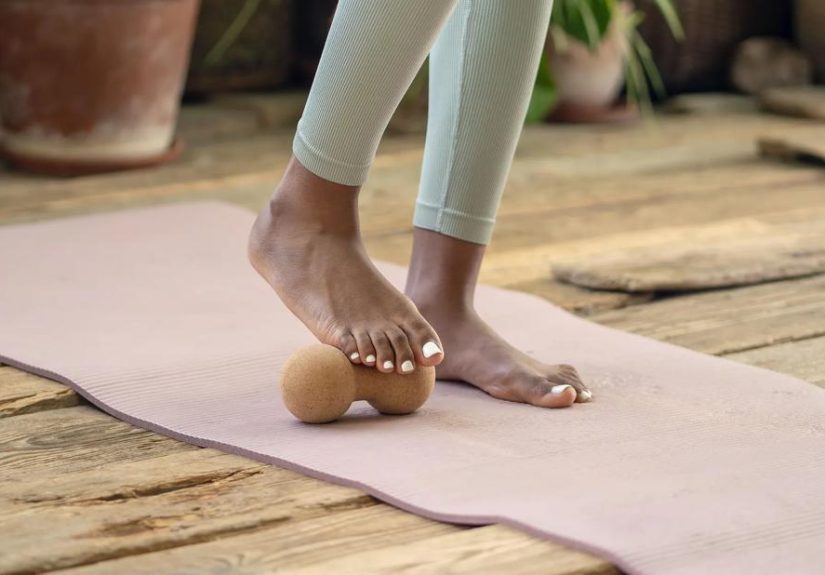
A little massage can go a long way when the sole of your foot feels tight and cranky. Rolling the foot over a tennis ball, lacrosse ball, massage ball, or even a chilled water bottle can help loosen tight tissue and provide temporary pain relief.
Keep the pressure gentle to moderate, not aggressive. This is not a competition. If the tissue is badly irritated, going too hard may make it feel worse. A few minutes in the morning and a few minutes after work can be enough to help many people.
If the arch feels tender and stiff, self-massage often pairs well with stretching. Together, they can improve comfort and make standing a little less punishing.
8. Make Hard Floors Less Brutal
Concrete, tile, and other hard surfaces are not exactly known for their kindness. If you stand in one area for most of your shift, an anti-fatigue mat can reduce discomfort and improve comfort compared with standing directly on a hard floor.
This matters in places like kitchens, salons, checkout counters, workshops, pharmacies, and hospital stations. The mat will not fix every foot problem, but it can reduce some of the constant force traveling from the floor into your feet, ankles, knees, and back. That is a pretty good return for one rectangle of foam.
If a mat is not possible, even rotating positions, changing surfaces when you can, or using more cushioned shoes for that specific work environment may help.
9. Use Over-the-Counter Pain Relief Carefully
If the pain is bothersome, over-the-counter options such as acetaminophen or nonsteroidal anti-inflammatory drugs may help some people, depending on the cause of the pain and their overall health. Topical pain relievers may also be an option for localized soreness.
That said, pain medicine should support a plan, not become the plan. If you keep needing medication just to get through routine standing, something else probably needs attention, whether that is better shoes, better recovery, or a medical evaluation.
Also, these medications are not right for everyone. If you have kidney disease, stomach ulcers, heart issues, blood thinner use, pregnancy, or other medical concerns, check with a clinician or pharmacist before using them regularly.
10. Know When It Is Time to See a Professional
Sometimes foot pain from standing is simple overuse. Sometimes it is your body’s way of saying, “Hello, I would like actual help now.” If the pain keeps coming back, gets worse, or is accompanied by unusual symptoms, a podiatrist, orthopedist, sports medicine doctor, or primary care clinician can help figure out the cause.
Make an appointment sooner if you have:
Severe heel pain that does not improve, swelling that keeps returning, redness or warmth, pain that makes it hard to bear weight, numbness, tingling, burning, visible deformity, or an open sore. People with diabetes, neuropathy, poor circulation, or inflammatory arthritis should be extra cautious about ongoing foot symptoms.
Persistent pain can point to problems like plantar fasciitis, arthritis, tendon injuries, nerve compression, stress fractures, or circulation-related issues. In those cases, the best relief usually comes from treating the cause, not just surviving the shift.
Daily Habits That Help Prevent Foot Pain From Coming Back
Relief is great. Prevention is even better. Replace worn-out shoes before they become unsupportive pancakes. Stretch regularly even when you feel fine. Rotate shoes if possible so the same pair is not taking a daily beating. Maintain a healthy body weight if that is a goal you are working on, since extra load increases stress on weight-bearing joints. And pay attention to patterns. If your heel hurts most in the morning, that is a clue. If your forefoot burns in narrow shoes, that is also a clue.
The more you notice what triggers your pain, the easier it becomes to make changes that actually work.
What Foot Pain From Standing Really Feels Like: Real-Life Experiences
For many people, foot pain from standing does not arrive all at once. It sneaks in. A teacher might start the school year feeling fine, then notice by October that the walk from the classroom to the parking lot feels longer than a cross-country expedition. A restaurant server may breeze through the lunch rush, only to peel off their shoes after dinner and discover their arches are throbbing like tiny angry drums. A warehouse worker may not feel much during the shift, but the second they sit down, the stiffness rolls in and their feet feel like they belong to someone 40 years older.
One of the most frustrating parts is that the pain is easy for other people to underestimate. Foot pain sounds small until you live with it. But when every step at the grocery store feels annoying, when morning steps feel sharp, or when your feet burn after standing at work all day, it affects your mood, energy, exercise habits, and sleep. It also changes how you move. People start walking differently to avoid pain, and that can lead to discomfort in the knees, hips, or lower back. Suddenly, the problem is no longer “just feet.”
Many people describe standing-related foot pain in very specific ways. Some say it feels like stepping on a thumbtack under the heel. Others say it feels like the ball of the foot is bruised, the arch is too tight, or the toes go numb halfway through the day. Some people feel better once they start moving, then worse again by evening. Others feel okay during the shift but miserable the next morning. These details matter because they often help point toward the likely cause.
There is also an emotional side to it. People who are on their feet for work often feel like they have no choice but to keep going. They tell themselves it is normal, or that everyone hurts, or that they should tough it out. But many also say they wish they had addressed it sooner. Something as simple as switching shoes, adding insoles, stretching their calves, or using compression socks often makes more difference than expected. In that sense, relief can be surprisingly unglamorous. Not dramatic. Not trendy. Just effective.
Another common experience is trial and error. Someone buys highly rated shoes that their friend swears by, only to realize those shoes feel terrible on their own feet. Another person tries inserts that make a huge difference. Someone else discovers that the real villain is not the shoe at all, but the hard concrete floor at work. That is why personalized problem-solving matters. Foot pain from standing is common, but it is not one-size-fits-all.
The encouraging part is that many people do improve once they stop ignoring the signals. Better support, better recovery, and earlier treatment can turn “I dread standing all day” into “I can manage this again.” Your feet may never write you a thank-you card, but they usually make their appreciation known by hurting a lot less.
Note: This article is for informational purposes only and is not a substitute for medical advice, diagnosis, or treatment.