Table of Contents >> Show >> Hide
- Before You Hit Send: A 30-Second Online Safety Check
- 1) Start With Context (Not “Hey”)
- 2) Personalize Like a Human Who Has Eyes
- 3) Lead With a Small, Specific Compliment (Then Move On)
- 4) Ask an Easy-to-Answer Question
- 5) Offer Value First (Yes, Even in a DM)
- 6) Keep the First Message Short (Your Goal Is a Reply, Not a Memoir)
- 7) Match the Platform Vibe
- 8) Make Your Tone Hard to Misread
- 9) Give Them an Easy “Out”
- 10) Follow Up Once (Politely), Then Stop
- 11) Build Trust With Tiny Steps (And Keep Yourself Safe)
- Conclusion: The Low-Cringe Formula That Works
- Field Notes: Experience-Based Scenarios (About )
Messaging a stranger online can feel like walking into a party where you don’t know anyoneexcept the party is infinite, nobody is holding a red Solo cup, and your first sentence lives forever in someone’s screenshot folder. The good news: starting a conversation online is a learnable skill. The even better news: you don’t need “game,” you need clarity, kindness, and a tiny bit of strategy.
This guide breaks down 11 simple ways to talk to someone you don’t know onlinewithout sounding salesy, creepy, or like a bot trying to sell them “passive income opportunities.” You’ll get practical tips, quick examples you can steal (legally), and a few safety guardrails so your new connection doesn’t turn into a new life lesson.
Before You Hit Send: A 30-Second Online Safety Check
Let’s do the boring-but-important part quickly (like ripping off a Band-Aid, but with fewer screams). When you’re chatting with strangers online:
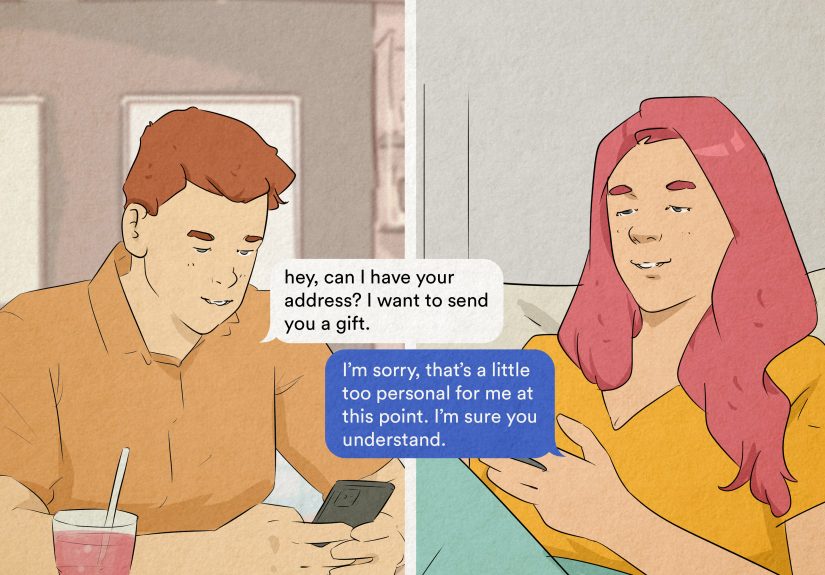
- Protect your privacy: avoid sharing your address, workplace details, travel plans, or anything you’d hate to see on a billboard.
- Watch for “fast trust”: if someone is intensely flattering, pushing to move off-platform, or pressuring youslow down.
- Money talk = red flag: requests for money, gift cards, “investments,” or “fees” are the internet’s version of a stranger asking to borrow your car.
- Use platform tools: block, mute, report. No medals are given for enduring nonsense.
Now that your digital seatbelt is on, let’s talk conversation.
1) Start With Context (Not “Hey”)
“Hey” is not a conversation starter. It’s a doorbell. If you ring someone’s doorbell and say nothing else, they’re going to assume you’re either lost or selling solar panels.
What to do instead
Open with why you’re messagingin one sentence. Context lowers anxiety and increases replies.
“Hi Mayasaw your comment about remote onboarding in the ProductOps group and it was spot-on.”
2) Personalize Like a Human Who Has Eyes
People can smell copy-paste from three Wi-Fi networks away. If you’re reaching out to someone you don’t know online, add one specific detail that proves you’re talking to them, not “Dear Internet Person #47.”
Easy personalization sources
- A recent post or comment
- A project, portfolio item, or talk
- A shared community (alumni, hobby group, professional association)
“Your thread on switching careers into UX made the whole process feel less like a maze and more like… a maze with signs.”
3) Lead With a Small, Specific Compliment (Then Move On)
Compliments work when they’re specific and low-pressure. Keep it about effort, insight, or tastenot their body, their aura, or how you “feel like you’ve known them forever.” (That last one is how horror movies begin.)
Compliments that don’t make people squint
- “Your explanation was super clear.”
- “That resource list is gold.”
- “Your camera angle is the only one that doesn’t look like a security footage reenactment.”
“Loved how you broke down the budgeting stepsespecially the ‘what I’d do differently’ part. Quick question if you have a minute…”
4) Ask an Easy-to-Answer Question
If your first question requires a TED Talk response, you’re asking for homework. The secret is to ask something that can be answered in one to three sentences. Think “speed bump,” not “mountain pass.”
Question prompts that get replies
- “Which tool did you like best for X?”
- “If you were starting over, what would you learn first?”
- “Do you recommend any beginner-friendly communities for X?”
“If you had to pick one resource for learning data storytelling, what would it be?”
5) Offer Value First (Yes, Even in a DM)
“Value” doesn’t have to mean a free course, a gift basket, or your firstborn child. It can be: a useful link, a thoughtful insight, a quick intro, or even a clear, respectful message that saves them time.
Simple ways to give value
- Share a relevant article or tool (briefly explain why it matters)
- Summarize what you learned from their work
- Make a micro-offer: “Happy to share my notes if helpful”
“I tried the workflow you described and wrote a 5-bullet checklist from it. Want me to paste it here?”
6) Keep the First Message Short (Your Goal Is a Reply, Not a Memoir)
Long first messages often die in the “I’ll respond later” graveyard. The sweet spot is usually 3–6 lines on a phone screen.
A simple structure that works almost everywhere
- Line 1: Context
- Line 2–3: Specific detail + why you’re reaching out
- Line 4: One easy question or micro-ask
“Hi Jordanloved your post on beginner running plans. I’m building consistency and your ‘two easy days’ rule clicked for me. Any shoe model you’d recommend for flat feet?”
7) Match the Platform Vibe
Online chat etiquette changes by platform. A message that feels friendly on Discord might feel unprofessional on LinkedIn. A message that’s normal on Reddit might feel overly intense in an Instagram DM. Your job is to read the room before you decorate it.
Quick vibe guide
- LinkedIn: concise, relevant, respectful
- Forums/Reddit: topic-first, helpful, less personal
- Instagram/TikTok: shorter, warmer, more casual
- Gaming/Discord: community norms matterlurk a bit first
8) Make Your Tone Hard to Misread
Online, people can’t see your friendly face, hear your voice, or witness your genuinely non-threatening hand gestures. So tone gets guessedsometimes incorrectly.
How to sound clear (and not accidentally spicy)
- Use complete sentences (you don’t need to be formaljust readable).
- Avoid sarcasm with strangers unless you enjoy being misunderstood as a hobby.
- Use emojis lightly and only when you’re confident they fit the context.
- If you’re asking something sensitive, say it gently: “No worries if not!”
“Totally fine if you’re busyquick question: would you recommend a beginner meetup in Chicago?”
9) Give Them an Easy “Out”
People respond more when they don’t feel trapped. An easy out signals confidence and respecttwo traits that look great on everyone.
Try these “pressure-release valves”
- “No worries if not.”
- “If this isn’t your area, totally understand.”
- “Reply whenever convenient.”
“If you’re not the right person to ask, no problem at alljust figured I’d try.”
10) Follow Up Once (Politely), Then Stop
A single follow-up is normal. Five follow-ups is a lifestyle choiceand not the flattering kind. People miss messages, get busy, or forget. Your job is to be courteous, not persistent like an unskippable ad.
A good follow-up formula
- Acknowledge time
- Repeat the question in fewer words
- Give an out
“Heyjust bubbling this up in case it got buried. Quick question: any resources you’d recommend for learning Tableau basics? No worries if you’re swamped.”
11) Build Trust With Tiny Steps (And Keep Yourself Safe)
Trust online is built like a staircase: one small step at a time. If someone tries to take the elevator straight to your personal life, pause. A healthy conversation respects boundaries and grows naturally.
Trust-building behaviors that work
- Keep early conversations on-topic
- Use low-stakes asks (questions, feedback, a recommendation)
- Verify before you overshare (especially in dating, marketplaces, or “investment” chats)
- Be skeptical of urgency, secrecy, or money requests
“Happy to chat here firstif it makes sense later, we can move to email.”
Conclusion: The Low-Cringe Formula That Works
If you remember nothing else, remember this: context + personalization + an easy question beats “hey” every time. Start small, stay respectful, match the platform, and keep your tone clear. Most people aren’t ignoring youthey’re just busy, overwhelmed, or trying to remember if they left the stove on. (They did. It’s always the stove.)
When you focus on being helpful and human, talking to someone you don’t know online stops feeling like a high-stakes performance and starts feeling like what it is: two people swapping ideas through tiny glowing rectangles.
Field Notes: Experience-Based Scenarios (About )
In real online communities, the difference between “great message” and “why did I send that” usually comes down to timing, tone, and expectations. Here are a few common scenarios people run into when they try to start a conversation onlineand what tends to work best.
Scenario 1: The “I Admire Your Work” DM That Gets a Reply
The messages that get answered most often are the ones that feel easy. Instead of writing a paragraph about how someone inspired your entire life path, keep it simple: mention one thing you appreciated and ask one question. People are much more likely to respond when they can answer quickly. A short message also signals you respect their time, which is basically the love language of the internet.
Scenario 2: Networking Without Sounding Like Networking
The best “networking” messages don’t announce themselves as networking messages. They sound like curiosity. When you lead with “I’d love to pick your brain,” many readers translate that as “I’d love you to donate 45 minutes to my personal development.” Try a micro-ask instead: “Could you point me to one resource?” If the conversation goes well, the relationship can deepen naturally. Think of it as a handshake, not a marriage proposal.
Scenario 3: When Humor Helps (And When It Backfires)
Humor is great… when you already share context. With strangers, humor is riskier because tone is hard to read. Light, non-sarcastic humor usually lands best: a gentle self-joke, a playful metaphor, something that doesn’t require the other person to guess your intent. The moment humor becomes edgy, teasing, or ambiguous, the reader’s brain starts running a threat assessment. Keep the jokes warm, not sharp.
Scenario 4: The Follow-Up That Doesn’t Feel Pushy
A single follow-up works when it sounds like an invitation, not a demand. People respond well to “just checking in” plus a shorter restatement. The trick is to accept silence as an answer. When you do, you come across as confident and respectfulwhich sometimes brings a reply weeks later when the person finally resurfaces from their inbox avalanche.
Scenario 5: The Safety Moment Most People Learn the Hard Way
Many online conversations start friendly and stay friendly. But the warning signs tend to look similar across platforms: rushed intimacy, pressure to move off-platform immediately, secrecy, or anything involving money. Experience shows that your best move is usually the calm one: slow down, verify, keep boundaries, and use the platform’s safety tools. You don’t owe anyone continued access to you. Politeness is optional; safety is not.