Table of Contents >> Show >> Hide
- First, a quick “why is my dog doing this?” checkpoint
- 1) Use a slow-feeder bowl (or a slow-feeder insert)
- 2) Try the “bowl-in-bowl” DIY maze (no special gear required)
- 3) Spread food out on a cookie sheet (aka “kibble geography class”)
- 4) Use a muffin tin or Bundt pan to create “mini portions”
- 5) Make dinner a puzzle (treat-dispensing toys and food puzzles)
- 6) Go “sniff-first” with a snuffle mat or snuffle toys
- 7) Scatter-feed (or set up a “kibble treasure hunt”)
- 8) Turn meals into licking (lick mats and “spreadable” feeding)
- 9) Freeze the meal (yes, dinner can be a popsicle)
- 10) Split the daily ration into smaller meals (or “mini courses”)
- 11) Build a calmer feeding routine (and reduce “competition speed”)
- What not to do (because dogs are creative in the worst way)
- How to choose the best method for your dog
- Bonus: 500+ words of real-world experiences owners often report
- Conclusion
Some dogs eat like they’re auditioning for a vacuum cleaner commercial. One second there’s kibble in the bowl, the next second your dog is looking at you like, “Cool. Dinner. What’s for second dinner?” If your pup is a speed-eater, you’re not aloneand you’re not doomed to a lifetime of dramatic gulping noises.
Eating too fast can lead to gagging, regurgitation, extra swallowed air (hello, burps), and an upset stomach. In some dogsespecially large, deep-chested breedsmealtime habits and other factors may also be associated with a serious emergency called gastric dilatation-volvulus (GDV), commonly called bloat. The goal here isn’t to turn your dog into a slow-motion foodie. It’s to make meals safer, calmer, and easier on their digestive system.
Below are 11 practical, dog-tested strategies to slow down fast eatingplus a real-world “what people notice” section at the end. Mix and match. The best plan is the one your dog can’t outsmart in 48 hours.
First, a quick “why is my dog doing this?” checkpoint
Some fast eating is pure enthusiasm. But if your dog suddenly starts eating faster than usual, seems ravenously hungry all the time, loses weight, has ongoing vomiting/regurgitation, or acts uncomfortable after meals, it’s worth checking in with a veterinarian. Medical issues (including intestinal parasites, hormone-related conditions, and medication side effects) can drive increased appetite or messy mealtimes. Also, make sure you’re feeding the right amount for your dog’s size, age, and activity levelbecause a dog who isn’t getting enough calories will eat like they’re trying to beat a world record.
Safety note: If your dog repeatedly retches, has a swollen-looking belly, seems very distressed, or can’t get comfortable after eating, treat it as urgent and contact a veterinarian or emergency clinic right away. These can be warning signs of GDV in at-risk dogs.
1) Use a slow-feeder bowl (or a slow-feeder insert)
Slow-feeder bowls are the classic fix for a reason: they force your dog to navigate ridges, grooves, or maze-like patterns to reach food. That usually increases chewing and reduces the “one giant mouthful” problem.
How to make it work
- Match the bowl to your dog’s face: Flat-faced breeds (like Bulldogs) often do better with shallower patterns.
- Start easy: If the maze is too hard, some dogs get frustrated and flip the bowl. Choose a beginner pattern first.
- Check materials: Durable, easy-to-clean options matterbecause old food stuck in grooves is not a vibe.
Pro tip: If your dog already has a favorite bowl, a slow-feeder insert can be an easier swap than changing the whole setup.
2) Try the “bowl-in-bowl” DIY maze (no special gear required)
Want a slow feeder right now, without waiting for shipping? Use two bowls. Place a smaller bowl upside down inside a larger bowl, then pour the kibble into the ring-shaped gap around it. Your dog has to work around the obstacle, which slows down scooping.
Best for
- Dogs who inhale food but aren’t super determined to flip bowls
- People who enjoy a good, low-effort kitchen hack
If your dog tries to bulldoze the setup across the floor, put a rubber mat under it or switch to a heavier bowl.
3) Spread food out on a cookie sheet (aka “kibble geography class”)
Instead of a pile, make the meal a wide, thin layer. A cookie sheet turns “gulping” into “foraging,” because the kibble is harder to scoop in big bites. This works especially well for dogs who eat dry food like it’s a competitive sport.
Make it even better
- Use a rimmed baking sheet to keep runaway kibble from rolling under the fridge.
- For tiny dogs, use a large plate or platter.
- For determined vacuum-dogs, use a textured silicone baking mat on top of the tray for extra challenge.
4) Use a muffin tin or Bundt pan to create “mini portions”
A muffin tin turns one meal into multiple little stations. Put a small amount of kibble in each cup so your dog has to move from cup to cup. A Bundt pan can do something similar with tighter spaces.
Why it helps
- It breaks up the meal into smaller bites.
- It naturally slows pace without needing training skills.
- It’s easy to washbecause you’re already washing dishes forever anyway.
5) Make dinner a puzzle (treat-dispensing toys and food puzzles)
Puzzle feeders and treat-dispensing toys turn eating into a problem-solving game. Your dog has to nudge, roll, slide, or paw to release food, which can dramatically slow down intake and provide mental enrichment.
Best practices
- Start simple: Choose a beginner puzzle so your dog doesn’t rage-quit.
- Measure the meal: Use the toy as the bowl, not as “extra snacks,” unless you’re intentionally adjusting calories.
- Supervise chewers: If your dog tries to destroy the puzzle, switch to a tougher design or a different method.
6) Go “sniff-first” with a snuffle mat or snuffle toys
Dogs are built to sniff. Snuffle mats hide kibble in fabric folds so your dog has to hunt piece-by-piece. That often turns a 30-second meal into several minutes of slower, calmer eating.
Tips for success
- Choose a mat sized for your dog so they aren’t frustrated by tiny hiding spaces.
- Shake out crumbs after use and wash as directed to prevent old food buildup.
- If your dog tries to chew the fabric, supervise closely or pick a sturdier enrichment option.
7) Scatter-feed (or set up a “kibble treasure hunt”)
Scatter-feeding is exactly what it sounds like: you spread kibble across a safe, clean surface so your dog has to move around and pick up pieces one at a time. A variation is the indoor “treasure hunt,” where you hide small piles or single kibbles around one room and send your dog to find them.
Where this works best
- Easy-clean floors: tile, washable rugs, or a designated feeding mat
- Backyards: if it’s safe, fenced, and you’re okay with your dog doing a sniffy scavenger mission
If you have multiple dogs, do this separately so nobody turns it into a competitive food sprint.
8) Turn meals into licking (lick mats and “spreadable” feeding)
Licking is naturally slower than crunching. If your dog eats wet food (or you can safely moisten kibble), a lick mat lets you spread the food thinly across textured grooves. The result: slower eating, longer engagement, and a dog who looks extremely busy doing important work.
How to use this safely
- Spread a thin, even layer (thicker globs get licked off too quickly).
- Supervise dogs who might chew the mat instead of licking it.
- Clean thoroughlyfood left in grooves can spoil or attract bacteria.
9) Freeze the meal (yes, dinner can be a popsicle)
Freezing slows everything down. For wet food, you can freeze it in a stuffable toy. For kibble, you can add a little water (or dog-safe broth), let it soak briefly, then freeze portions in a feeder designed for it. The dog has to work gradually, which reduces gulping and adds enrichment.
Good uses
- Hot weather
- High-energy dogs who need an activity with dinner
- Dogs who inhale food and then immediately regret it
If your dog has dental pain or very sensitive teeth, freezing may not be comfortableuse a gentler method like a lick mat instead.
10) Split the daily ration into smaller meals (or “mini courses”)
Big meals disappear fast. Smaller meals take pressure off the stomach and give you more opportunities to slow things down. Many dogs do better with two meals a day (or even three) rather than one large servingespecially if they’re prone to gulping.
Make it practical
- Measure the full day’s food once, then divide it.
- Use part of the ration as training rewards during the day.
- If your schedule is wild, consider an automatic feeder to portion meals consistently.
11) Build a calmer feeding routine (and reduce “competition speed”)
Sometimes the bowl isn’t the main issuethe environment is. Dogs eat faster when they feel pressured, excited, stressed, or in competition with other pets. A calmer setup can slow eating more than any fancy gadget.
Try this routine
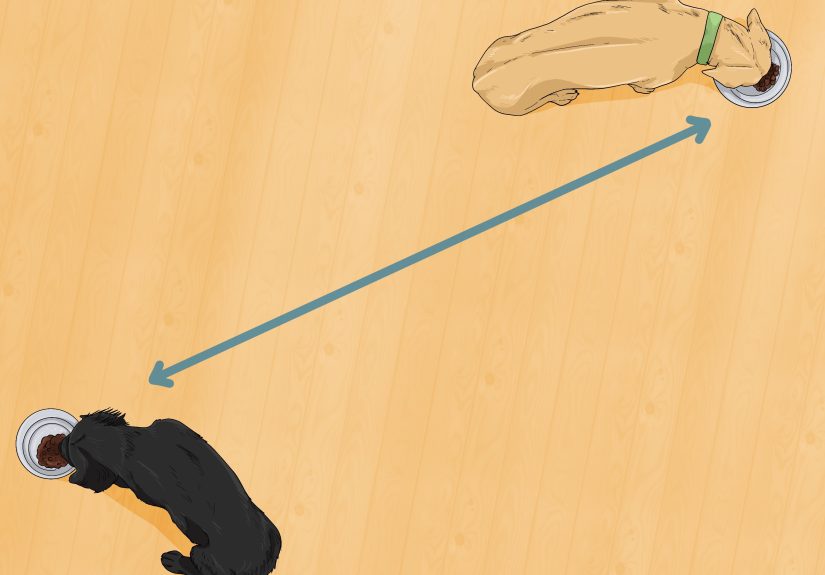
- Separate pets during meals: Different rooms, crates, or gated areas can reduce “eat fast before someone steals it” anxiety.
- Add a pre-meal pause: Ask for a simple behavior (“sit” or “down”), then place the bowl and release with “okay.”
- Reward calm: If your dog slows down for a second, quietly drop a piece of kibble into the bowl. (Yes, you’re tipping your dog.)
- Keep post-meal time chill: Especially for large, deep-chested dogs, avoid intense exercise right after eating.
About raised bowls: Some dogs need elevated feeding for specific medical reasons (your vet will tell you). But for many large, deep-chested breeds, raised bowls have been associated with higher GDV risk in some guidance. If you’re feeding a high-risk breed, ask your vet before elevating bowls “just because.”
What not to do (because dogs are creative in the worst way)
- Don’t add random objects to the bowl (like small rocks, balls, or anything your dog might chew or swallow). If you want an insert/obstacle, use something purpose-built for feeding and sized appropriately.
- Don’t punish fast eating. Scolding can increase anxiety and make “eat faster” more likely, not less.
- Don’t ignore new symptoms. Repeated regurgitation, choking-like episodes, or sudden appetite changes deserve a vet check.
How to choose the best method for your dog
If you’re not sure where to start, match the strategy to the “type” of speed eater:
- The Vacuum: Slow-feeder bowl + split meals + calm routine.
- The Competitive Sibling: Separate feeding + puzzle feeder + snuffle mat (solo).
- The Dramatic Gagger: Cookie sheet feeding + smaller meals + vet check if it persists.
- The Brainy Escapist: Food puzzles + scatter feeding + treasure hunts.
- The Wet-Food Rocket: Lick mat + freezing + spreadable feeding.
Reality check: The goal isn’t perfection. If you can stretch a meal from 20 seconds to 3–7 minutes consistently, that’s a big win for comfort and safety.
Bonus: 500+ words of real-world experiences owners often report
When people start trying to slow down a fast eater, they usually learn two things quickly: (1) dogs are extremely motivated engineers when food is involved, and (2) what works for one dog may do absolutely nothing for another. Here are common experiences that show up again and againso you can steal the good ideas and skip the frustrating detours.
Experience #1: “The slow feeder worked… for three days.” Many owners describe an early honeymoon period where the slow-feeder bowl triples mealtime lengthuntil the dog figures out the pattern. This is especially common with smart, food-driven breeds (looking at you, Labs and Border Collies). The fix is usually not “buy an even more complicated bowl immediately.” Instead, rotating methods helps: slow feeder on Monday, snuffle mat Tuesday, puzzle toy Wednesday, cookie sheet Thursday. Variety keeps the dog from mastering one setup and turning dinner back into a speedrun.
Experience #2: “My dog eats fast because the other dog exists.” In multi-dog households, fast eating is often less about hunger and more about competition. Even if the other dog is across the room minding their business, some dogs still act like they’re in a reality show called Survivor: Kibble Edition. People who separate dogs during feedingdifferent rooms, crates, or baby gatesfrequently notice an almost immediate drop in frantic gulping. The bonus is fewer tense moments around bowls, because nobody feels like they have to defend dinner.
Experience #3: “Scatter feeding calmed my dog down more than I expected.” Owners are often surprised that scatter feeding isn’t just slowerit can also be emotionally soothing. Sniffing is self-regulating for many dogs. Turning meals into a sniff-and-search mission can reduce the arousal that drives gulping. People commonly report that dogs who scarf from a bowl will take their time when the same kibble is spread out or hidden in easy “find it” spots. It feels less like a race and more like a job the dog is proud of.
Experience #4: “Wet food was the problemuntil licking became the plan.” Dogs can inhale wet food in a way that defies physics. Lick mats change that. A lot of owners find that spreading wet food thinly over a textured mat turns a 30-second slurp into 5–10 minutes of steady licking. Freezing the mat (or freezing a stuffed toy) often extends it furtherespecially helpful for dogs who need calming activities, like young dogs who get overstimulated at mealtime or rescues still learning that food will show up reliably.
Experience #5: “Training didn’t slow the eating at firstthen it suddenly did.” The “sit, wait, okay” routine can feel pointless on day one. But over time, many owners notice it reduces the frantic energy that comes before the bowl even hits the floor. The trick is keeping it low pressure: short waits, calm praise, and no power struggles. For some dogs, that little pause becomes a mental speed bump that carries into the meal. It doesn’t replace slow-feeding tools, but it amplifies them.
If you take one takeaway from all these experiences, make it this: stack strategies. Pair a physical slow-down (like a slow feeder or cookie sheet) with a behavioral slow-down (like a calmer routine), and you’ll usually get better results than relying on one gadget to solve everything.
Conclusion
You don’t need to wage war on your dog’s appetiteyou just need to redesign the dining experience. Start with the simplest change (slow-feeder bowl, cookie sheet, or muffin tin), then add enrichment (puzzles, snuffle mats, treasure hunts) and a calmer routine. If the fast eating is new, extreme, or paired with other symptoms, bring your veterinarian into the plan. With a few tweaks, you can turn “inhale and regret” into “eat and chill.”