Table of Contents >> Show >> Hide
- Before You Start: The Budget Wall Art Game Plan
- 15 DIY Wall Art Projects That Look High-End (Without High-End Prices)
- 1) Oversized Drop-Cloth Abstract Canvas
- 2) Foliage Silhouette Spray Canvas (Nature’s Free Stencil)
- 3) Botanical Plaster Relief Art (Texture That Looks Museum-Cool)
- 4) Large-Scale Stenciled “Textile” Art (Shibori-Style, No Sewing Required)
- 5) DIY Copper Tape Starburst (Tiny Roll, Big Impact)
- 6) Washi Tape Geometric Panels (Color Without Paint Fumes)
- 7) No-Sew Framed Fabric Art (Instant Texture Upgrade)
- 8) Wallpaper-Wrapped Frame or Mat (Designer Pattern, Tiny Amount)
- 9) Pressed Flower Floating Frames (Sentimental, Not Sappy)
- 10) Ombre Rope Wall Hanging (Fiber Art Without the “I Knit Now” Commitment)
- 11) Faux Screenprinted Pop Art (Bold, Graphic, and Weirdly Satisfying)
- 12) Paint Swatch “Color Story” Grid (The Prettiest Free Samples You’ll Ever Frame)
- 13) Reclaimed Wood Slat Art (Texture + Warmth for Cheap)
- 14) Memory Collage in a Frame (Postcards, Ticket Stubs, MatchbooksAll the Good Stuff)
- 15) Thrifted Plate Wall (Instant Charm, Zero Painting Skills Required)
- How to Hang DIY Wall Art Like a Pro (Even If You’re Not One)
- Wrap-Up: Stylish DIY Wall Art Is Mostly Planning (And a Little Chaos)
- Real-World DIY Wall Art Experiences (The Part Everyone Learns the Hard Way)
Blank walls have a special talent: they make even a perfectly clean room look like you just moved in… three years ago.
The good news? You don’t need a gallery-sized budget to get that “designer did this on purpose” vibe.
With a few low-cost supplies, thrift-store finds, and a pinch of bravery, you can create DIY wall art that looks custom, current, and completely you.
This guide gives you 15 DIY wall art projects that work for apartments, houses, dorms, rentals, and “I’m not sure what my style is yet” phases.
You’ll also get practical tips for choosing the right size, keeping a cohesive color palette, and hanging your pieces without turning your wall into Swiss cheese.
Before You Start: The Budget Wall Art Game Plan
1) Pick a color story first (so your wall doesn’t look like a craft store sneezed)
Choose 3–5 colors you’ll repeat across the wall. That’s the secret sauce that makes “cheap DIY wall decor” look expensive.
A simple formula: one neutral (white, cream, greige), two main colors (navy + sage), and one accent (brass, black, terracotta).
2) Go bigger than you think
Small art floating on a big wall can feel like a postage stamp on a refrigerator. If you can’t buy large art, make large art.
Oversized DIY canvas projects (drop cloth, paper panels, mural blocks) give you the biggest “wow” per dollar.
3) Spend money where it shows: frames and finish
The art can be simple. The frame and finish make it look intentional. Thrift frames, paint them the same color, and suddenly your wall says,
“Yes, I have opinions about interior design,” instead of “I had coupons.”
15 DIY Wall Art Projects That Look High-End (Without High-End Prices)
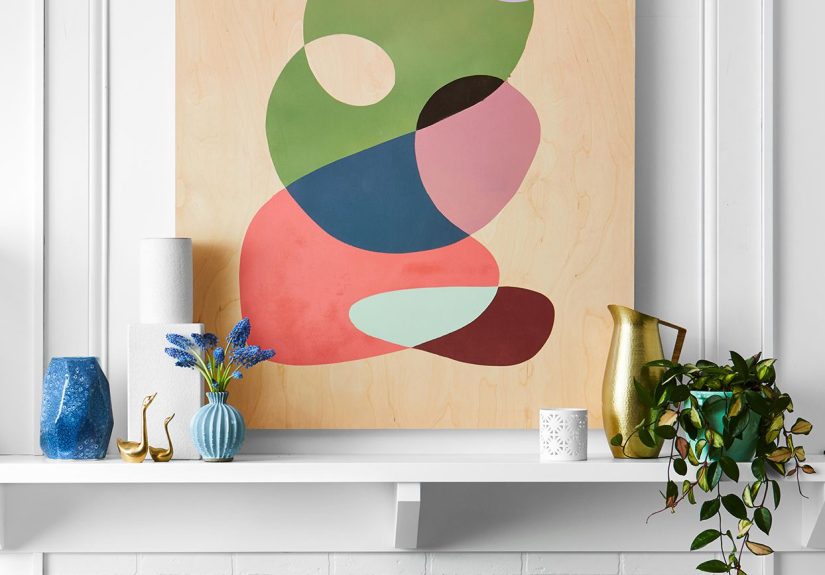
1) Oversized Drop-Cloth Abstract Canvas
Best for: living rooms, above a sofa/bed, big blank walls that need a focal point.
What you’ll need
- Painter’s drop cloth (or sturdy canvas fabric)
- Wood strips (to build a simple frame) or an old large canvas to wrap
- Acrylic paint + a wide brush/roller
- Staple gun (or heavy-duty adhesive if you’re careful)
How to make it
- Build a lightweight wooden frame (or reuse an old one).
- Stretch the drop cloth tight and staple on the back.
- Paint bold shapes, soft swirls, color blocks, or layered brush strokes.
- Let it dry fully, then hang with proper anchors.
Budget + style tip: Use two paint colors plus one “surprise” detail (a thin stripe, a half-moon, a few intentional drips). Minimal effort, maximum drama.
2) Foliage Silhouette Spray Canvas (Nature’s Free Stencil)
Best for: modern, coastal, or minimalist spacesand anyone with access to a yard, park, or very generous neighbor.
What you’ll need
- Blank canvas or thick art paper
- Leaves/fern fronds/interesting branches
- Spray paint (or a sponge + acrylic paint)
How to make it
- Lay the canvas flat and arrange foliage like you’re styling a tiny botanical photoshoot.
- Spray lightly from different angles for crisp edges.
- Remove foliage carefully. Let dry, then frame or hang.
Budget + style tip: Do a matching set of three (same paint color, different leaf shapes). Triptychs feel fancy. It’s basically math.
3) Botanical Plaster Relief Art (Texture That Looks Museum-Cool)
Best for: neutral, Scandinavian, organic-modern, and “I saw this in a boutique hotel” energy.
What you’ll need
- Plaster of Paris (or joint compound for a slower, easier pace)
- Air-dry clay or modeling clay (to press impressions)
- Leaves, twigs, shells, or textured items
- A shallow frame or simple wood border
How to make it
- Flatten clay inside a shallow frame area.
- Press botanical pieces into the clay to make impressions.
- Pour plaster over the surface and let set.
- Remove clay, let dry, sand edges lightly if needed, then hang.
Budget + style tip: Paint it one matte color (warm white, sand, soft gray). Monochrome makes texture look expensive.
4) Large-Scale Stenciled “Textile” Art (Shibori-Style, No Sewing Required)
Best for: boho, modern farmhouse, and anyone who wants pattern without wallpaper commitment.
What you’ll need
- Large paper, canvas, or primed board
- Stencil (geometric or organic)
- 2–3 shades of one color (think: light/medium/dark blue)
- Foam roller or stencil brush
How to make it
- Paint a soft base color and let dry.
- Place stencil and apply paint with light pressure (less paint = fewer smudges).
- Repeat in a loose grid so it feels handmade, not factory-perfect.
Budget + style tip: Imperfections are the point. If it’s too perfect, it can look like wrapping paper got framed.
5) DIY Copper Tape Starburst (Tiny Roll, Big Impact)
Best for: mid-century modern, glam accents, and renters who want “wow” without power tools.
What you’ll need
- Copper tape (craft aisle MVP)
- Dark cardstock or painted board
- Frame
How to make it
- Sketch a simple starburst or geometric lines with pencil.
- Lay copper tape along the lines, pressing firmly.
- Trim edges neatly and frame it.
Budget + style tip: Make two smaller pieces instead of one big onesymmetry reads “designer,” even when you made it in pajamas.
6) Washi Tape Geometric Panels (Color Without Paint Fumes)
Best for: dorms, kids’ rooms, offices, and people who fear committing to a brushstroke.
What you’ll need
- Washi tape (mix widths and patterns)
- Thick paper or poster board
- Frame(s)
How to make it
- Create triangles, stripes, checker patterns, or a bold border.
- Burnish tape edges with a card so it sticks cleanly.
- Frame and hang as a set.
Budget + style tip: Repeat one tape color across all pieces to keep it cohesive.
7) No-Sew Framed Fabric Art (Instant Texture Upgrade)
Best for: cozy spaces, nurseries, and anyone who wants “soft” on the walls.
What you’ll need
- Fabric remnant, scarf, or thrifted textile
- Foam board or mat board
- Frame
- Stapler or strong double-sided tape
How to make it
- Iron fabric (wrinkles scream “last-minute”).
- Wrap it around foam board tightly and secure on the back.
- Pop into a frame.
Budget + style tip: Use linen-look fabric for a high-end feel, or bold vintage prints for personality.
8) Wallpaper-Wrapped Frame or Mat (Designer Pattern, Tiny Amount)
Best for: anyone with leftover wallpaperor access to sample books.
What you’ll need
- Wallpaper scrap or peel-and-stick sample
- Old frame + mat
- Craft knife + glue stick or spray adhesive
How to make it
- Cover the mat with wallpaper first for a clean, layered look.
- Trim neatly and wrap edges to the back.
- Optional: add a simple center piece (a postcard, a line drawing, a pressed leaf).
Budget + style tip: One dramatic wallpaper pattern inside a simple black or wood frame looks like boutique art.
9) Pressed Flower Floating Frames (Sentimental, Not Sappy)
Best for: kitchens, bathrooms, hallways, and gift-worthy wall decor.
What you’ll need
- Flowers/leaves (fresh or already dried)
- Parchment paper + heavy books (or a flower press)
- Floating frame
How to make it
- Press flowers flat for several days.
- Arrange inside a floating frame (tweezers help).
- Seal the frame and hang away from direct sunlight if possible.
Budget + style tip: Keep the background airy. Space the blooms like a minimal museum specimen display.
10) Ombre Rope Wall Hanging (Fiber Art Without the “I Knit Now” Commitment)
Best for: boho, coastal, and modern eclectic rooms.
What you’ll need
- Cotton rope (hardware store or craft store)
- Dye (or diluted acrylic paint for a softer look)
- Wood dowel or driftwood branch
How to make it
- Cut rope lengths and knot them onto a dowel.
- Dye the ends for an ombre effect (dip deeper for darker color).
- Let dry fully before hanging.
Budget + style tip: Trim the bottom edge into a shallow “V” or curve for a more intentional silhouette.
11) Faux Screenprinted Pop Art (Bold, Graphic, and Weirdly Satisfying)
Best for: game rooms, offices, teen rooms, and anyone who loves a punchy statement piece.
What you’ll need
- Large canvas
- Two bold paint colors
- Embroidery hoop
- Sheer fabric (like organza) to act as a “screen”
How to make it
- Stretch sheer fabric in the embroidery hoop.
- Paint simple graphic shapes through the “screen” (circles, blobs, lightning bolts).
- Repeat to build a layered pop-art look.
Budget + style tip: Limit yourself to two colors plus white. Pop art loves restraint (which is ironic, because pop art is not shy).
12) Paint Swatch “Color Story” Grid (The Prettiest Free Samples You’ll Ever Frame)
Best for: entryways, laundry rooms, and small walls that need a cheerful moment.
What you’ll need
- Paint swatches
- Scissors + ruler
- Mat + frame
How to make it
- Pick a gradient (cream → tan → clay) or a theme (ocean blues, desert sunsets).
- Trim swatches into equal rectangles or squares.
- Mount in a tidy grid and frame.
Budget + style tip: Keep spacing consistent. This project wins because it looks organized, not because it’s complicated.
13) Reclaimed Wood Slat Art (Texture + Warmth for Cheap)
Best for: modern farmhouse, rustic, industrial, and “I like my decor to look like it can survive a storm.”
What you’ll need
- Scrap wood slats (pallet wood, fence pickets, or leftover trim)
- Wood glue + small nails (optional)
- Backing board (thin plywood)
- Stain or paint (optional)
How to make it
- Plan a pattern: chevron, stripes, or offset blocks.
- Cut slats to size and attach to backing board.
- Sand lightly and finish with matte stain or paint wash.
Budget + style tip: A subtle white paint wash lets wood grain show and softens the look for modern spaces.
14) Memory Collage in a Frame (Postcards, Ticket Stubs, MatchbooksAll the Good Stuff)
Best for: gallery walls, hallways, and anyone who saves tiny paper memories “for a reason.”
What you’ll need
- Flat keepsakes (postcards, menus, tickets, maps, handwritten notes)
- Mat board or cardstock
- Frame (shadowbox if items are chunky)
- Photo corners or removable adhesive
How to make it
- Choose a theme: one trip, one year, one color palette.
- Lay everything out before sticking it down.
- Secure items with photo corners so you can swap pieces later.
Budget + style tip: A unified frame color makes a mixed collage look curated instead of chaotic.
15) Thrifted Plate Wall (Instant Charm, Zero Painting Skills Required)
Best for: dining rooms, kitchens, and walls that want a little “collected over time” personality.
What you’ll need
- Thrifted plates (mix sizes, keep a theme)
- Plate hangers or adhesive plate hooks
- Painter’s tape + paper templates (for layout)
How to make it
- Pick a theme: all white, blue-and-white, botanicals, or a playful mix.
- Trace plates on paper and tape templates on the wall to test spacing.
- Hang plates starting with the center piece, then build outward.
Budget + style tip: The magic is repetition. Repeat one pattern or one color in multiple plates so the wall feels intentional.
How to Hang DIY Wall Art Like a Pro (Even If You’re Not One)
Use the “eye-level rule”
A classic guideline: the center of your arrangement should land around eye level.
This keeps gallery walls from creeping too high (a common mistake that makes rooms feel off-balance).
Align centers, not tops
When frames vary in size, aligning the centers often looks more cohesive than forcing all top edges to line up.
Think of your wall as one big composition, not a row of rectangles arguing with each other.
Test the layout with paper or painter’s tape
Trace frames onto paper or use painter’s tape to outline where each piece will go. Step back.
Adjust. Repeat. This is the DIY version of “measure twice, hang once.”
Renters: go damage-light
Removable hanging strips and hooks can work welljust match the product rating to the weight of your frame,
clean the wall first, and follow cure times so you don’t hear the dreaded midnight crash.
Wrap-Up: Stylish DIY Wall Art Is Mostly Planning (And a Little Chaos)
The best DIY wall art projects don’t look expensive because they cost a lotthey look expensive because they’re cohesive.
Pick a color story, repeat a few shapes or materials, and commit to scale.
Whether you’re making textured plaster art, framing fabric scraps, or building a plate wall from thrift finds,
you’re creating budget wall decor that tells a story: your story.
Start with one project you can finish this weekend. Then let your wall evolve.
Great walls aren’t built in a day… mostly because we all have laundry.
Real-World DIY Wall Art Experiences (The Part Everyone Learns the Hard Way)
If you’ve never made DIY wall art before, here’s what tends to happen in real homes: you start confident, you make one weird mistake,
you briefly consider giving up and buying something overpriced, and thensuddenlyyou’re standing back thinking,
“Wait… I made that. That actually looks good.” That emotional rollercoaster is practically a required supply.
One of the most common experiences is realizing that scale matters more than detail.
Beginners often pour energy into tiny, intricate designs on a small canvas, only to hang it up and discover it reads like a decorative coaster.
Meanwhile, a large drop-cloth canvas with simple shapes looks intentional from across the room.
The lesson: if your wall is big, your art should be big (or grouped), even if the design is minimal.
Another “everybody does this once” moment: color looks different on the wall.
Paint that seemed like a calm, warm beige in the store can turn into “surprise banana milk” under your living room lighting.
DIYers often learn to test paint on scrap firstand to repeat the same few colors across multiple pieces so the wall feels curated.
When in doubt, stick to one main color family and vary the shades.
Texture is where DIY wall art quietly becomes high-endbut it comes with a learning curve.
First-timers using joint compound or plaster often apply it too thick, rush the drying, or overwork the surface.
The best-looking pieces usually come from a slower approach: build texture in layers, let it set, then lightly sand or leave it raw and organic.
Imperfections can be a feature, as long as they look consistent (random blobs are chaos; repeated texture is style).
Thrifted frames are a budget superpower, but DIYers often notice two frame-related truths:
(1) mismatched frames look great only when there’s a unifying element (same paint color, same mat color, or repeated art palette),
and (2) cheap plastic frames can look surprisingly expensive after a coat of matte paint and new hardware.
People who take 20 minutes to make frames match usually end up with a wall that looks planned instead of pieced together.
Hanging is its own emotional chapter. Many DIYers discover that the wall isn’t the problemthe layout is.
Using painter’s tape or paper templates feels tedious until you realize it prevents extra holes.
A common win is aligning the center line of the whole arrangement at eye level, then building outward.
That single move can make a gallery wall look instantly more professional, even if the art is playful and imperfect.
Finally, the best experience people report is how DIY wall decor becomes more personal over time.
A pressed flower from a meaningful day, a framed postcard from a trip, a fabric scrap from a loved one’s sewing stash
these pieces don’t just fill space. They create a home that feels lived-in in the best way.
And once you’ve made one piece you love, you stop seeing blank walls as a problem.
You start seeing them as potentiallike a free gallery that just happens to be attached to your house.