Table of Contents >> Show >> Hide
- Why a Portable Bike Rack Is a Big Deal in Small Spaces
- What “Portable” Means in Bike Storage (and Why It Doesn’t Have to Be Ugly)
- How to Choose a Portable Bike Rack Without Regret
- Design-Forward Ideas for Urban Aesthetes
- Security Still Matters, Even Indoors
- Examples of Portable Bike Rack Setups That Balance Style and Function
- Mistakes Urban Riders Make (So You Don’t Have To)
- Experience Notes: From Real Urban Living With a Portable Bike Rack
- Conclusion
If you live in a city apartment, you already know the plot twist: your bike feels feather-light on the street and mysteriously turns into a grand piano the second you bring it indoors. It blocks the hallway. It bumps the wall. It leaves a mysterious stripe of grime on your baseboard like a tiny protest mural. And yet, you still love it.
That is exactly why a portable bike rack mattersespecially for urban riders who care about both function and style. The best setup doesn’t just “store” a bike. It protects your ride, keeps your home organized, and blends into your space like it was invited there. In other words: less bike chaos, more apartment calm.
This guide breaks down how to choose a stylish, renter-friendly, easy-to-move bike rack for city living. We’ll cover the practical stuff (size, stability, tire fit, wall protection, security) and the aesthetic stuff (materials, finishes, visual clutter, layout), plus real-world experience tips at the end to help you avoid the classic mistakes.
Why a Portable Bike Rack Is a Big Deal in Small Spaces
Urban homes demand double-duty furniture and smarter layouts. A bike rack is no exception. A good apartment bike storage solution should do three things at once:
- Save space without turning your living room into a bike shop.
- Protect the bike and your home from scratches, dents, dirt, and accidental tip-overs.
- Look intentional so your storage feels like part of the decor, not a temporary compromise.
That last point matters more than people admit. When your bike storage looks good, you’re more likely to keep the system organized. When it looks like a pile of metal in the corner, everything else starts to pile up around it too (gym bag, helmet, mystery cable, one glove, emotional damage).
A portable rack also gives you flexibility. Maybe you work from home and want your bike near the entry on weekdays, but tucked away for guests on weekends. Maybe you’re renting and can’t drill. Maybe you’re moving next month and don’t want to patch six holes in a concrete wall. Portability keeps your options open.
What “Portable” Means in Bike Storage (and Why It Doesn’t Have to Be Ugly)
When people hear “portable,” they often picture flimsy. But in modern bike storage, portable usually means freestanding, modular, or no-drillnot cheap. A portable rack can still be sturdy, well-finished, and apartment-friendly.
1) Freestanding Floor Stands
This is the easiest entry point for most city riders. A freestanding bike stand usually supports the bike by one wheel and requires little to no setup. It’s ideal if you want something renter-friendly, easy to move, and simple to use every day.
Why urban aesthetes like them:
- Minimal visual footprint
- No drilling or wall anchors
- Easy to reposition for guests, cleaning, or seasonal changes
- Often safe for carbon or painted frames because the stand contacts the tire, not the frame
These are great in studios, home offices, and corners near an entryway. They’re especially handy if your bike is part commuter, part decor statement, and part “I’m definitely riding tomorrow if it doesn’t rain.”
2) Gravity Stands (The Renter’s Secret Weapon)
A gravity bike rack leans against the wall and uses weight and angle for stability. It’s a favorite for renters because it gives you vertical storage without permanent installation. Some hold one bike, many hold two, and the better ones include wall/floor protection touches that keep your paint and flooring happier.
Why they work in city apartments:
- They use vertical space efficiently
- They look cleaner than random hooks
- They’re easier to remove when you move
- They help turn bikes into a deliberate visual feature
If your apartment has decent wall height and you want a polished look without construction, this category is hard to beat.
3) Wall-Mounted Racks (Stylish but Less Portable)
Wall-mounted storage can be gorgeous. Some options look like shelves, some like sculpture, and some make your bike read as functional art. They are usually the best for floor clearance and visual drama.
But they’re not always the best fit for renters. If drilling is off the table, a wall mount is out. If drilling is allowed, you still need to think about wall quality, bike weight, and how often you want to patch/paint later.
That said, if you own your spaceor have a very chill landlordwall-mounted bike storage can be the most seamless aesthetic choice, especially when paired with a mat, storage bench, or narrow console below.
4) Ceiling Systems (High Efficiency, Lower Convenience)
Ceiling racks and pulley systems can free up serious floor space. They’re fantastic in garages and some lofts, and they can work in apartments with high ceilings.
The tradeoff is daily convenience. If you ride every day, you may not love hoisting and lowering your bike all the time. Ceiling systems are often better for seasonal bikes, second bikes, or homes where maximizing floor space matters more than grab-and-go access.
How to Choose a Portable Bike Rack Without Regret
There are plenty of “best bike rack” lists online. The better question is: Best for what room, what bike, and what lifestyle? Here’s the checklist that actually matters.
Measure the Space First (Yes, Before Shopping)
Start with a tape measure, not your credit card. Check:
- Wall width and ceiling height
- Handlebar clearance
- Door swing paths
- Walking path width (especially in narrow hallways)
In tight homes, vertical and corner-friendly storage usually wins. If you’re working with a slim entryway, a low-profile freestanding rack or a gravity stand can preserve flow without making every trip to the kitchen feel like an obstacle course.
Match the Rack to Your Bike Type
Not all racks fit all bikes equally well. Commuter bikes, gravel bikes, road bikes, mountain bikes, and e-bikes all have different tire widths, weights, and frame shapes. That matters.
For example, if you want a freestanding wheel-hold stand, check tire width and diameter compatibility. Some models are much more flexible than others. If you ride an e-bike or a heavier commuter, weight capacity should be one of your first filtersnot an afterthought.
Think Like a Renter (Even If You Aren’t One)
Portable racks are great because they reduce commitment. Even homeowners benefit from a setup that can move with furniture rearrangements or future renovations. Look for:
- No-drill assembly or quick assembly
- Rubber feet / bumpers for wall and floor protection
- Compact or foldable forms when not in use
- Tool-free adjustments for different bike sizes
Bonus points if the rack can be repurposed in a garage later. Today’s living room storage can become tomorrow’s mudroom storage with the right design.
Don’t Ignore Material and Finish
If the rack is going in your living room, it’s furniture now. Treat it like furniture.
Look for finishes that complement your space:
- Powder-coated steel for modern/industrial interiors
- Wood accents for warmer, Scandinavian, or mid-century spaces
- Matte black or neutral tones for minimalist apartments
- Slim silhouettes if your room already has bold decor
The goal is to make the rack disappear visuallyor to let it read as a design object on purpose. Both are valid. Random chrome chaos is not.
Protect Your Walls and Floors From Bike Life
Urban riding means dirt, moisture, and occasional road grit. If your bike lives indoors, your storage should account for that. A good rack setup helps keep tires off painted walls and greasy components away from anything you own and enjoy.
Simple additions make a big difference:
- A washable mat under the rack
- A microfiber cloth by the door for quick wipe-downs
- A tray or basket for lights, lock, and gloves
- A wall guard panel if your handlebars swing close to paint
This is where style and function actually become the same thing: a cleaner setup always looks better.
Design-Forward Ideas for Urban Aesthetes
Let’s talk vibe. If your bike is part of your lifestyle, your storage can reflect that. Here are a few design approaches that work especially well in city homes.
The Gallery Wall Bike
Use a wall or gravity rack in a visible location and style the surrounding area intentionally: a framed print, a narrow bench, a plant, and a hook rail for helmet/bag. This makes the bike look integrated, not dumped.
Best for: minimalist and loft-style interiors.
The Entryway Commuter Station
Place a portable floor stand near the entry with a small catch-all tray or floating shelf above it. Now your bike, keys, lock, and lights all live in one zone. This reduces visual clutter and morning scrambling.
Best for: daily commuters and small apartments with limited closet space.
The “Bike as Furniture” Look
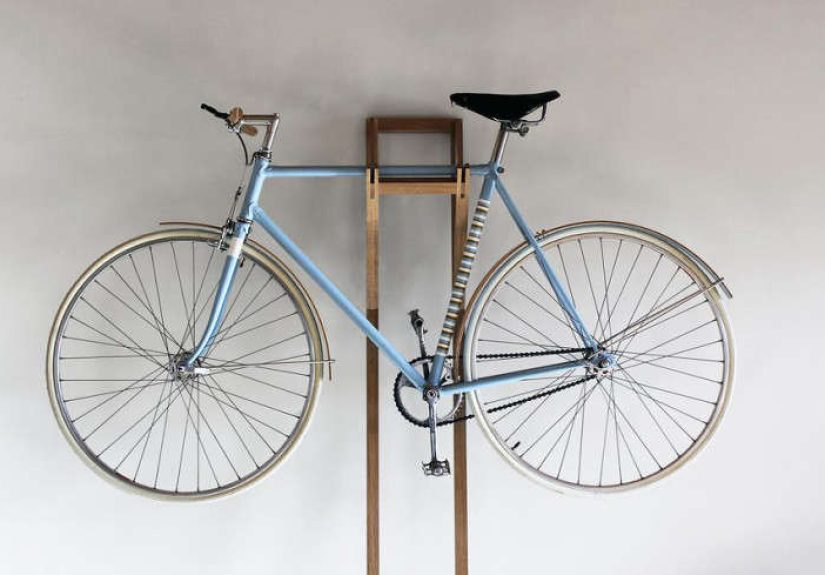
Some racks are intentionally designed to blend into the room, with cleaner lines or wood finishes. If your bike has a beautiful frame color, let it become part of the decor. (Yes, this is a real design strategy. No, you do not have to apologize for it.)
Best for: style-conscious riders who actually clean their drivetrain on schedule.
The Vertical Corner Save
Use a corner-friendly vertical or leaning rack to reclaim floor area in tight rooms. Corners are often underused, and a bike rack there can feel surprisingly tidy if the proportions are right.
Best for: studios, shared apartments, and “I swear this is a one-bedroom” layouts.
Security Still Matters, Even Indoors
Quick reality check: indoor storage is usually safer than leaving a bike outside, but “indoors” does not automatically mean “secure.” Shared garages, apartment bike rooms, and building hallways can still be theft targets.
Use these habits:
- Lock your bike to something immovable if it’s in a shared or semi-public space.
- Use a serious lock at home if the bike is stored outside your actual unit.
- Avoid racks hidden behind buildings or in isolated corners when using building/community parking.
- For public street racks, think short-term convenience, not long-term storage.
If your building offers a bike room, look for good visibility, clear access, and solid rack design. If you’re setting one up for a property or shared workspace, the “pretty” part mattersbut visibility and security matter even more. A stylish rack nobody can find (or a hidden rack thieves can work on quietly) is not a win.
Examples of Portable Bike Rack Setups That Balance Style and Function
Here are three common urban scenarios and what tends to work well in each:
Scenario 1: Small Rental Apartment, One Daily Commuter
Best fit: Freestanding wheel-hold stand.
Why: No drilling, easy to move, quick parking after a ride, low visual clutter. Add a slim mat and a tray for your lock and lights.
Scenario 2: Couple in a Condo, Two Bikes, Limited Floor Space
Best fit: Gravity stand (2-bike).
Why: Uses vertical space, keeps both bikes organized, and can still look neat in a living area or office. Choose one with wall/floor protection details and adjustable arms.
Scenario 3: Design-Led Home Office, Bike Is Part of the Aesthetic
Best fit: A design-forward rack with a polished finish (including wood-accented options).
Why: It blends with decor and makes the bike feel intentional rather than temporary. The rack becomes part of the room language.
Mistakes Urban Riders Make (So You Don’t Have To)
- Buying based on looks only: Beautiful is good. Beautiful and wrong-size is a headache.
- Skipping compatibility checks: Tire width, wheel size, and bike weight are non-negotiable specs.
- Ignoring daily use: If it’s annoying to park, you’ll stop using it and revert to “leaning it somewhere.”
- Forgetting wall/floor protection: One rainy commute can ruin a clean white wall situation fast.
- Treating indoor storage as fully secure: Shared spaces still require locks and common sense.
Experience Notes: From Real Urban Living With a Portable Bike Rack
The biggest surprise about owning a portable bike rack in a city apartment isn’t the space you saveit’s the amount of mental friction you remove. Before I had a proper setup, my bike was always “temporarily” leaning against something. The hallway wall got scuffed. The handlebars clipped a door frame. I’d move the bike to vacuum, then move it again to open a closet, then move it a third time because friends were coming over. It wasn’t storage. It was a low-grade daily argument.
Once the bike had a dedicated home, the apartment felt bigger almost overnight. Not physically bigger, obviouslyI still live in a city, not a wizard towerbut visually calmer. A portable freestanding stand worked well because I could park the bike in a corner during the week and slide it closer to the entry when I knew I’d be riding every morning. That flexibility is underrated. Permanent wall systems look great, but portability wins when your life changes week to week.
Another thing I learned: aesthetics matter because routines matter. When the rack looked clean and matched the room, I used it every time. That sounds shallow until you realize design is often what makes systems stick. A cluttered, awkward rack feels like a chore. A simple, well-placed stand feels like part of the apartment. I added a small tray for keys, lights, and my mini pump, plus a washable mat underneath. Suddenly my “bike corner” became a tiny commuter station instead of a metal tangle.
If you share space with a partner or roommate, a portable rack can also prevent domestic diplomacy incidents. People are generally more supportive of a bike setup when they can still walk through the room without doing a side shuffle. A two-bike gravity stand was a game changer in one apartment I visited: it looked tidy, used vertical space, and kept both bikes off the floor. No one had to pretend the living room was also a storage closet.
There are practical lessons, too. First, measure handlebar width. The rack itself may fit the corner, but your bars may still stick out into traffic. Second, think about your post-ride habit. If you come home in wet weather, keep a rag nearby and wipe the tires before parking. That 20-second habit saves your floors and keeps the whole setup looking intentional. Third, if your bike is stored in a shared garage or building room, lock it anyway. “Indoors” can create false confidence.
My favorite part of a good portable bike rack is that it adapts with you. Move apartments? Take it with you. Rearranging furniture? Shift it. Buy a new bike? Many racks can still work if you chose one with flexible tire and wheel compatibility. It’s one of those rare purchases that improves function, appearance, and daily convenience all at once. In a city home, that’s basically the triple crown.
Conclusion
A portable bike rack for urban aesthetes isn’t just a storage accessoryit’s a small design decision that solves a big city-living problem. The right rack protects your bike, respects your floor plan, and keeps your apartment looking like a home instead of a bike repair checkpoint.
If you’re renting, lean toward no-drill freestanding stands or gravity racks. If you’re optimizing for visual polish, prioritize materials and silhouette as much as capacity. And if you’re using shared building storage, remember that security habits still matter. The sweet spot is simple: a rack you’ll actually use every day, in a place that makes sense, with a look you don’t hate.
Choose for your room, your bike, and your routinenot just the product photo. Your future self (and your walls) will be grateful.