Table of Contents >> Show >> Hide
- Why a Thoughtful Guest Bedroom Matters
- 16 Guest Bedroom Ideas for a Welcoming, Restful Space
- 1. Start With the Best Bed You Can Manage
- 2. Layer the Bedding Like a Thoughtful Host
- 3. Offer Pillow Options
- 4. Choose a Calm, Flexible Color Palette
- 5. Add Blackout Curtains or Layered Window Treatments
- 6. Create Bedside Landing Zones
- 7. Make Charging Easy
- 8. Provide Storage That Does Not Require a Treasure Map
- 9. Add a Comfortable Chair or Small Bench
- 10. Use Lighting for Mood and Function
- 11. Bring in Soft Texture
- 12. Add Thoughtful Bathroom Essentials
- 13. Include a Water Station and Simple Snacks
- 14. Style the Room With Personality, Not Clutter
- 15. Make Multi-Purpose Rooms Guest-Friendly
- 16. Finish With a Pre-Arrival Reset
- Small Guest Bedroom Ideas That Still Feel Luxurious
- Hotel-Inspired Guest Bedroom Touches
- Common Guest Bedroom Mistakes to Avoid
- Real Hosting Experience: What Actually Makes Guests Feel at Home
- Conclusion
- SEO Tags
A guest bedroom is more than a place to toss a pillow and whisper, “Good luck.” It is a small promise: you are welcome here, the Wi-Fi password is not a state secret, and no one expects you to sleep beside a laundry basket named “Eventually.” Whether your spare room is a full suite, a tiny nook, or a home office that moonlights as a sleepover zone, the right guest bedroom ideas can turn it into a restful, practical, and surprisingly memorable space.
The best guest rooms balance comfort, privacy, storage, lighting, and thoughtful little details. You do not need a designer budget or hotel-sized square footage. You need a comfortable bed, layered bedding, a place to set things down, a few useful amenities, and a room that feels calm instead of chaotic. Below are 16 guest bedroom ideas for creating a welcoming, restful space your visitors will actually enjoyand maybe politely refuse to leave.
Why a Thoughtful Guest Bedroom Matters
A guest room should help visitors settle in quickly. When people travel, they are often tired, slightly disoriented, and pretending they packed toothpaste when they absolutely did not. A welcoming guest bedroom gives them comfort without making them ask for every tiny thing. It reduces awkwardness, improves sleep, and makes your home feel generous without being fussy.
Think of the room in layers: sleep, storage, lighting, temperature, privacy, and personal touches. When all six work together, even a simple bedroom can feel like a boutique retreat. When they do not, even a beautiful room can feel like a showroom with nowhere to charge a phone.
16 Guest Bedroom Ideas for a Welcoming, Restful Space
1. Start With the Best Bed You Can Manage
The bed is the headline act. Everything else is supporting cast. If you have room for a queen bed, it is usually the most flexible option for couples, solo guests, and anyone who sleeps like a starfish. For smaller spaces, a daybed, sleeper sofa, Murphy bed, trundle, or two twin beds can be more practical.
Whatever bed you choose, prioritize support. A decent mattress or mattress topper can rescue an older bed and prevent guests from waking up shaped like a question mark. If your guest room doubles as an office, choose a bed solution that folds, rolls, or tucks away without turning every visit into a furniture wrestling match.
2. Layer the Bedding Like a Thoughtful Host
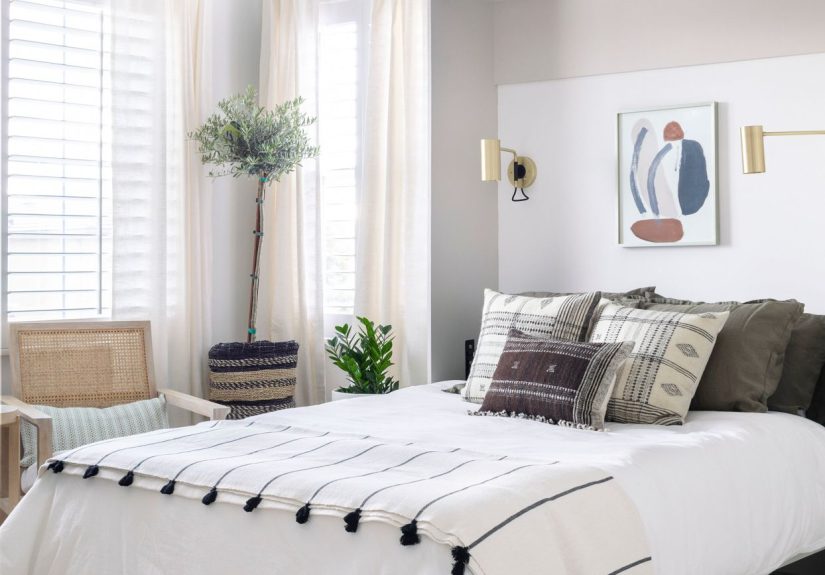
Great guest bedroom design begins with bedding that feels clean, soft, and flexible. Use breathable sheets, a cozy blanket, and a duvet or comforter that can handle different sleep preferences. Some guests run cold. Some sleep like a furnace in pajamas. Layered bedding lets everyone adjust without needing to knock on your door at midnight.
White sheets are classic because they look crisp and are easy to bleach or refresh, but warm neutrals, soft stripes, or muted patterns can feel just as inviting. Add a folded throw at the foot of the bed for texture and comfort. It says, “Make yourself at home,” not “This blanket is purely decorative and may have security clearance.”
3. Offer Pillow Options
Pillows are personal. One guest wants firm neck support; another wants something that feels like sleeping on a marshmallow with ambition. Offer at least two pillow types if possible: one firmer and one softer. Store extras in a closet, basket, or bench so guests can choose without digging through your linen closet like an archaeologist.
This simple touch makes a guest bedroom feel more hotel-like. It also shows that the room was designed for real people, not just for a photo taken at the perfect angle.
4. Choose a Calm, Flexible Color Palette
Guest rooms work best when the color palette is soothing and easy to live with. Soft whites, warm beige, greige, pale blue, sage green, dusty rose, muted clay, and charcoal accents all create a restful mood. If you love deeper colors, try navy, forest green, warm brown, or soft black on one wall or throughout the room with lighter bedding for balance.
A good rule: choose colors that help people exhale. Bright red walls may be exciting, but your guest probably did not come over to sleep inside a sports car. Calm colors create a peaceful backdrop and make it easier to mix furniture, art, rugs, and seasonal bedding.
5. Add Blackout Curtains or Layered Window Treatments
Light control is one of the most underrated guest bedroom ideas. Your guest may be on a different sleep schedule, recovering from travel, or simply not interested in being personally awakened by the sunrise. Blackout curtains, room-darkening shades, or layered curtains help the room feel restful at night and private during the day.
If you prefer a lighter look, pair woven shades or blinds with soft drapery panels. The combination adds texture while giving guests control over brightness and privacy. Bonus: curtains also soften sound and make a room feel more finished.
6. Create Bedside Landing Zones
Every guest needs a place for a phone, glasses, jewelry, water, a book, or the mysterious receipt they insist on keeping. A nightstand on each side of the bed is ideal, but small rooms can use wall shelves, stools, compact tables, floating ledges, or even a narrow console.
Keep the surface mostly clear. A lamp, small dish, coaster, and charging cable are useful. A large sculpture, seven candles, and a bowl of decorative moss may be stylish, but guests need somewhere to put their real-life stuff.
7. Make Charging Easy
A welcoming guest bedroom should include easy access to outlets. Add a power strip, charging station, or bedside lamp with built-in USB ports. Place it where guests can see it. No one wants to crawl behind a bed frame while pretending they are “just checking something.”
For extra hospitality points, leave a universal charging cable or a small card with the Wi-Fi network and password. This tiny detail instantly makes the room feel organized and guest-ready.
8. Provide Storage That Does Not Require a Treasure Map
Even short-stay guests appreciate somewhere to unpack. Clear a drawer, leave a few empty hangers, add wall hooks, or place a luggage rack near the closet. If the room is small, use under-bed storage, a storage bench, or a slim wardrobe.
The key is visible, obvious storage. Guests should not wonder whether they are allowed to use the closet. Leave space intentionally open. A guest bedroom that is secretly a museum of old coats, wrapping paper, and abandoned electronics will never feel restful.
9. Add a Comfortable Chair or Small Bench
A chair gives guests a place to sit, read, put on shoes, or drop a bag. It also keeps the bed from becoming the only surface in the room. In a small guest bedroom, use a compact accent chair, stool, storage ottoman, or bench at the foot of the bed.
If the space is truly tiny, even a folding luggage rack can serve as a practical substitute. The goal is to make the room function beyond sleeping. A guest room should feel like a small private retreat, not just a mattress with walls.
10. Use Lighting for Mood and Function
Overhead lighting alone can make a bedroom feel harsh, especially at night. Layer your lighting with bedside lamps, sconces, a floor lamp, or a small reading light. Warm bulbs create a softer, more restful glow than cool, bright lighting.
If possible, place lamps within arm’s reach of the bed. Guests should not have to cross a dark room after switching off the light. That journey is how toes meet furniture and furniture wins.
11. Bring in Soft Texture
Texture makes a guest bedroom feel cozy without adding clutter. Try a soft rug, quilted bedding, woven baskets, linen curtains, velvet pillows, a chunky knit throw, or a fabric headboard. These elements absorb sound, add warmth, and make the room feel layered.
A rug is especially helpful in rooms with hardwood, tile, or laminate floors. It gives guests a soft landing in the morning and visually anchors the bed. Choose a size that extends beyond the sides of the bed if possible, or use runners in narrow rooms.
12. Add Thoughtful Bathroom Essentials
If the guest bathroom is not attached, place towels in the room so visitors do not have to ask where everything is. A small basket with travel-size toiletries is also useful: toothpaste, toothbrushes, shampoo, conditioner, body wash, lotion, cotton swabs, tissues, and pain reliever if appropriate.
This does not need to look like a luxury spa. A simple basket on a dresser or shelf works beautifully. The message is clear: “We thought of you before you arrived.” That is the heart of good hosting.
13. Include a Water Station and Simple Snacks
A water carafe, reusable bottle, or a few sealed bottles of water can make guests feel cared for. Add a small snack basket if you often host overnight visitors. Granola bars, crackers, nuts, tea bags, mints, or dark chocolate are easy options.
This is especially helpful for guests who arrive late, wake up early, or feel awkward rummaging through your kitchen. It also prevents the classic midnight debate: “Am I hungry enough to open cabinets in someone else’s house?”
14. Style the Room With Personality, Not Clutter
A guest bedroom should feel welcoming, but not overly personal. Family photos, fragile collectibles, and stacks of paperwork can make visitors feel like they are sleeping in someone else’s storage unit. Instead, use artwork, books, plants, mirrors, and simple decor that create warmth without overwhelming the space.
Local touches are a great idea. A framed map, regional artwork, a book about your city, or a small vase of fresh flowers can make the room feel special. Keep surfaces edited so the room still feels restful and easy to use.
15. Make Multi-Purpose Rooms Guest-Friendly
Many guest bedrooms are also home offices, craft rooms, workout spaces, or “we’ll deal with that later” rooms. That is perfectly normal. The trick is to make the guest function feel intentional. Use closed storage for office supplies, add a sleeper sofa or daybed, and keep a clear path around the sleeping area.
If guests may work during their stay, leave a small desk, comfortable chair, lamp, and accessible outlet. A lap desk can also help if space is tight. The best multi-purpose guest rooms do not hide their double life; they organize it politely.
16. Finish With a Pre-Arrival Reset
Before guests arrive, do a quick reset. Dust surfaces, vacuum or sweep, wash the bedding, empty the trash, check light bulbs, refill toiletries, and make sure the room smells fresh. Open a window if weather allows. Avoid heavy fragrance, which can bother sensitive guests.
Then do the most useful test: stand in the doorway and imagine arriving with a suitcase. Is there somewhere to put it? Can you see the outlets? Is the bed inviting? Is there a towel? Can you close the curtains? If the answer is yes, congratulationsyou have built a guest bedroom that works in real life.
Small Guest Bedroom Ideas That Still Feel Luxurious
Small guest rooms can be wonderfully cozy when every piece has a purpose. Choose furniture with slim profiles, such as a wall-mounted sconce instead of a bulky table lamp or a floating shelf instead of a full nightstand. Mirrors can bounce light around the room and make the space feel more open. A bed with drawers or space underneath can store extra linens, blankets, or seasonal decor.
Do not be afraid of bold design in a small room. Wallpaper, a dramatic headboard, or a rich paint color can make a compact guest bedroom feel intentional rather than cramped. Just balance statement elements with simple bedding and uncluttered surfaces.
Hotel-Inspired Guest Bedroom Touches
If you want your guest bedroom to feel extra polished, borrow ideas from hotels. Use crisp bedding, matching towels, bedside lighting, a luggage rack, a small tray, and a water glass. Add a robe if you have one, or a cozy throw for cool evenings. Keep the room clean, calm, and easy to navigate.
The secret is not expensive decor. It is predictability. Hotels feel comfortable because guests know where to put things, how to control the lights, and what is available to them. Bring that same clarity into your home, and your guest room will feel instantly more restful.
Common Guest Bedroom Mistakes to Avoid
The biggest mistake is treating the guest room as leftover space. If the room is filled with storage bins, old furniture, and mismatched bedding, guests may feel like an inconvenience. Another mistake is overdecorating. Too many pillows, candles, knickknacks, or personal items leave no room for your guest’s belongings.
Also avoid poor lighting, scratchy sheets, missing window coverings, and mystery closets packed to the ceiling. Guests do not need perfection, but they do need comfort, privacy, and a few practical basics. A simple, clean room with good bedding beats a crowded room with expensive decor every time.
Real Hosting Experience: What Actually Makes Guests Feel at Home
After hosting friends and family in different kinds of spacesfrom proper guest rooms to makeshift sleeping cornersthe biggest lesson is that people remember comfort more than style. They may compliment the wallpaper, but they will privately bless your name if the mattress is supportive, the room is dark at night, and there is a visible phone charger beside the bed.
One of the most useful hosting habits is to sleep in your own guest room for one night. It sounds a little silly until you do it. Suddenly, you notice everything. The lamp switch is hard to reach. The curtains let in a spotlight of morning sun. The room gets colder than the rest of the house. The outlet is technically available, but only if you have the flexibility of a circus performer. This simple test reveals what guests might be too polite to mention.
Another experience-based tip: do not underestimate empty space. Hosts often want to make a room look finished, so they fill every corner. But guests arrive with bags, jackets, shoes, toiletries, books, and devices. A clear dresser top or an empty chair can feel more luxurious than another decorative object. Space is hospitality. It says, “You belong here too.”
Small gestures also matter more than expected. A bottle of water by the bed prevents a late-night kitchen search. A handwritten welcome note feels personal without being over the top. A spare blanket helps guests adjust the temperature without asking. A few hangers make a weekend visit easier. These details do not cost much, but they remove tiny moments of discomfort.
For families, flexibility is everything. Two twin beds may work better than one large bed if siblings, cousins, or friends visit often. A trundle can save space while offering another sleeping option. If your guests include older relatives, consider bed height, floor rugs that do not slip, and lighting that is easy to reach. A beautiful room is only truly welcoming if people can use it comfortably.
For long-stay guests, storage becomes even more important. A drawer, a closet section, and a laundry basket can make a weeklong visit feel organized. If the room doubles as an office, clear the desk and leave a little workspace. No guest wants to move your tax papers before opening a laptop.
Finally, the best guest bedrooms have a sense of calm. They are clean, softly lit, lightly decorated, and easy to understand. Guests should not need instructions for everything. They should walk in, set down their bag, smile a little, and think, “This is nice.” That reaction is the real design goal. Not perfection. Not magazine-level styling. Just a room that helps people rest well and feel genuinely welcome.
Conclusion
A welcoming guest bedroom does not require a massive renovation or a suitcase full of money. Start with the essentials: a comfortable bed, soft bedding, good lighting, privacy, storage, and easy access to everyday items. Then add personality through color, texture, artwork, plants, and thoughtful amenities. The result is a restful space that feels warm, useful, and ready for real guests.
The best guest bedroom ideas are practical first and pretty secondbut when done well, they are both. Give your visitors a room where they can sleep deeply, unpack easily, charge their phone without crawling under furniture, and feel at home without needing to ask for every little thing. That is hospitality at its finest, and yes, it may earn you repeat visitors. Consider yourself warned.