Table of Contents >> Show >> Hide
- What Is Three Card Poker?
- Three Card Poker Hand Rankings
- How to Play Three Card Poker: 13 Steps
- Step 1: Choose a Table and Check the Limits
- Step 2: Understand the Three Main Betting Spots
- Step 3: Place Your Ante Bet
- Step 4: Decide Whether to Add Pair Plus
- Step 5: Receive Three Cards Face Down
- Step 6: Evaluate Your Hand
- Step 7: Use the Q-6-4 Strategy
- Step 8: Fold Weak Hands
- Step 9: Place the Play Bet When Continuing
- Step 10: Wait for the Dealer to Reveal Their Cards
- Step 11: Compare Hands If the Dealer Qualifies
- Step 12: Collect Bonus Payouts When Eligible
- Step 13: Repeat with Discipline
- Example Round of Three Card Poker
- Best Beginner Strategy for Three Card Poker
- Common Mistakes to Avoid
- Bankroll Tips for Three Card Poker
- Experiences and Practical Advice for Playing Three Card Poker
- Conclusion
Three Card Poker is what happens when traditional poker puts on running shoes, grabs a cup of coffee, and decides to become a fast casino table game. Instead of waiting through long betting rounds, community cards, bluffing wars, and dramatic river-card heartbreak, you get three cards, one main decision, and a quick result. That is the charm. The game is simple enough for beginners, but it still has enough strategy to keep your brain from wandering off to the buffet.
If you are searching for how to play Three Card Poker, this guide breaks the game into 13 clear steps. You will learn the rules, hand rankings, bets, dealer qualification, basic strategy, and common mistakes to avoid. Whether you are practicing before a casino trip or simply trying to understand what is happening at that lively table near the blackjack pit, this guide will help you sit down with confidence instead of wearing the facial expression of someone reading ancient tax law.
What Is Three Card Poker?
Three Card Poker is a casino table game played with a standard 52-card deck. The player receives three cards, and the dealer receives three cards. Depending on the bets placed, you can either play against the dealer, bet on the strength of your own hand, or do both. Unlike Texas Hold’em or other player-versus-player poker games, Three Card Poker is not about bluffing other players. You are mainly making one decision: fold or continue after seeing your hand.
The most common betting areas on the table are Ante, Play, and Pair Plus. Some casinos may also offer bonus wagers such as a 6 Card Bonus, but those are optional side bets and can vary by casino. The core game remains easy: place your bet, receive three cards, decide whether to play, and compare your hand with the dealer’s if needed.
Three Card Poker Hand Rankings
Before you place a chip on the felt, you need to know which hands are strong. Three Card Poker rankings are slightly different from traditional five-card poker because you only receive three cards. Most importantly, in Three Card Poker, a straight beats a flush. This surprises many beginners, but mathematically, a three-card flush is more common than a three-card straight.
Hands from Highest to Lowest
- Straight flush: Three cards in sequence and the same suit, such as 7-8-9 of hearts.
- Three of a kind: Three cards of the same rank, such as three queens.
- Straight: Three cards in sequence, mixed suits allowed, such as 4-5-6.
- Flush: Three cards of the same suit, not in sequence.
- Pair: Two cards of the same rank.
- High card: No pair, straight, or flush; the highest card decides the hand strength.
Remember this order because it controls almost everything in the game. A hand like 5-6-7 beats three random hearts because the straight ranks higher than the flush. Yes, poker tradition may raise an eyebrow, but Three Card Poker has its own house rules, and it is not taking suggestions from your home game.
How to Play Three Card Poker: 13 Steps
Step 1: Choose a Table and Check the Limits
Before playing, look at the table minimum and maximum. A table might require a $5, $10, $15, or higher minimum bet depending on the casino. Your Ante and Pair Plus wagers usually need to meet the table minimum. Choose a table that fits your budget, not your ego. Your future self will send a thank-you card.
Step 2: Understand the Three Main Betting Spots
Most Three Card Poker layouts include three important betting circles. The Ante is used when you want to play against the dealer. The Play bet is placed later if you decide to continue. The Pair Plus bet is optional and pays based only on your three-card hand, usually if you have a pair or better.
Step 3: Place Your Ante Bet
To compete against the dealer, place a chip on the Ante spot before the cards are dealt. This is the main bet in Three Card Poker. Once the dealer announces that betting is closed, you cannot add or remove your Ante wager. In casino language, “no more bets” means “hands off the chips, friend.”
Step 4: Decide Whether to Add Pair Plus
The Pair Plus bet is optional. It does not care whether the dealer qualifies or beats you. It only looks at your hand. If you have at least a pair, you win according to the posted paytable. If your hand is lower than a pair, the Pair Plus bet loses. Many players like Pair Plus because it can pay more on strong hands, but side bets usually carry more risk than the main game.
Step 5: Receive Three Cards Face Down
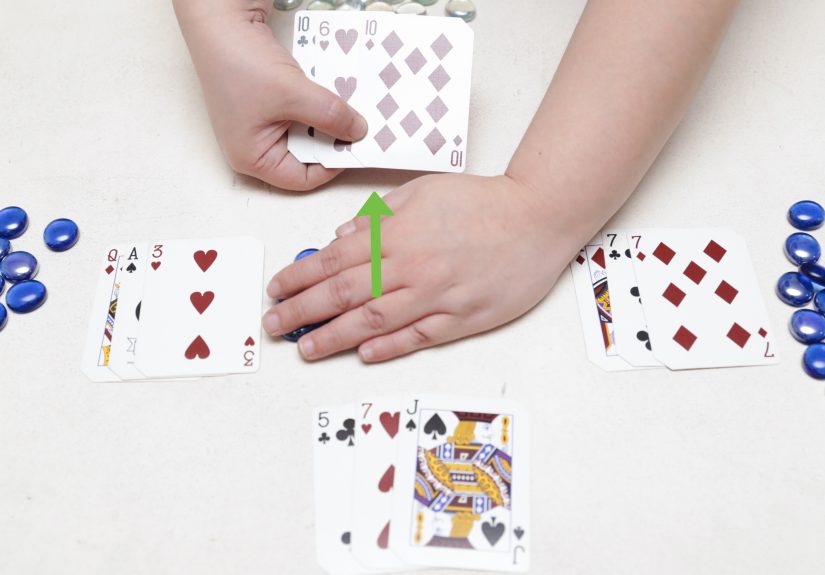
After bets are placed, the dealer gives each player three cards and also takes three cards for the dealer hand. Your cards are dealt face down. Pick them up carefully, keep them over the table, and avoid showing them to other players. Casinos take card handling seriously, so this is not the time to practice magic tricks.
Step 6: Evaluate Your Hand
Now you look at your three cards and compare them with the hand rankings. A pair or better is easy to identify. High-card hands require more thought. For example, K-9-3 is a king-high hand. Q-6-4 is a queen-high hand with a six and four kicker. That specific hand matters because it is the well-known basic strategy cutoff in Three Card Poker.
Step 7: Use the Q-6-4 Strategy
The most commonly recommended basic strategy is simple: make the Play bet with Q-6-4 or better, and fold anything lower. This means any pair, flush, straight, three of a kind, or straight flush is an automatic play. Any ace-high or king-high hand is also strong enough to play. If your best card is a queen, then your second card should be at least a six, and if the second card is exactly six, your third card should be at least four.
For example, Q-7-2 should usually be played because it is better than Q-6-4. Q-6-3 should usually be folded because it is just below the cutoff. J-10-8 may look neat, but if it is not a straight, flush, or pair, it is only jack-high and should usually be folded. The cards may look handsome, but handsome cards do not pay the rent.
Step 8: Fold Weak Hands
If your hand is weaker than Q-6-4, you can fold. Folding means you give up your Ante bet, and the hand ends for you. If you placed a Pair Plus bet, that wager is still resolved separately based on your hand. Folding is not glamorous, but it is part of smart Three Card Poker strategy. Sometimes the bravest move at a casino table is quietly refusing to donate more chips.
Step 9: Place the Play Bet When Continuing
If you decide to continue, place a Play bet equal to your Ante. For example, if your Ante bet is $10, your Play bet is also $10. You cannot raise more than the Ante in the standard game. Three Card Poker keeps the decision clean: fold or match the Ante with a Play wager.
Step 10: Wait for the Dealer to Reveal Their Cards
After all players have acted, the dealer reveals the dealer hand. The dealer needs at least queen-high to qualify. If the dealer does not qualify, the Ante bet usually pays even money, and the Play bet pushes, meaning it is returned to you. If the dealer qualifies, your hand is compared with the dealer’s hand.
Step 11: Compare Hands If the Dealer Qualifies
When the dealer has queen-high or better, the higher three-card poker hand wins. If your hand beats the dealer’s hand, both your Ante and Play bets usually pay even money. If the dealer’s hand beats yours, you lose both wagers. If the hands tie exactly, the bets usually push. Ties are not common, but when they happen, enjoy the tiny emotional roller coaster.
Step 12: Collect Bonus Payouts When Eligible
Many tables include an Ante Bonus for strong hands when you make the Ante and Play wagers. Common qualifying hands include a straight, three of a kind, or straight flush. This bonus may pay even if the dealer does not qualify or even if the dealer beats your hand, depending on the casino’s rules. Pair Plus payouts are also resolved according to the table’s pay schedule.
Step 13: Repeat with Discipline
Once the hand is complete, the cards are collected and a new round begins. This is where discipline matters. Three Card Poker moves quickly, and fast games can make money disappear faster than snacks at a Super Bowl party. Set a session budget, choose bet sizes that let you play comfortably, and avoid increasing bets just because you are frustrated.
Example Round of Three Card Poker
Imagine you sit at a $10 minimum table and place $10 on Ante plus $10 on Pair Plus. You receive Q-8-5. This is queen-high and stronger than Q-6-4, so you place $10 on Play. The dealer reveals J-10-3. The dealer does not qualify because the hand is only jack-high. Your Ante pays $10, your Play bet is returned, and your Pair Plus loses because you do not have a pair or better.
Now imagine another hand. You place $10 on Ante and receive 9-10-J mixed suits. That is a straight, which is a strong Three Card Poker hand. You make the $10 Play bet. The dealer reveals K-7-2 and qualifies with king-high, but your straight beats the dealer’s high-card hand. Your Ante and Play bets win, and you may also receive an Ante Bonus depending on the posted paytable.
Best Beginner Strategy for Three Card Poker
The best beginner strategy is refreshingly simple: play Q-6-4 or better. You do not need to memorize 400 charts, count cards, or stare at the dealer like you are solving a murder mystery. The game gives you one key decision, and the Q-6-4 rule handles most of it.
That said, strategy does not remove the house edge. Three Card Poker is still a casino game, and the casino has a mathematical advantage over time. Good strategy helps you avoid unnecessary mistakes, but it does not turn the game into a guaranteed income stream. If someone promises a “secret system” that always wins at Three Card Poker, guard your wallet and possibly your lunch.
Common Mistakes to Avoid
Playing Every Hand
The biggest beginner mistake is playing too many weak hands. It can feel painful to fold after already placing an Ante, but adding a Play bet with a weak hand can make the problem worse. Hands below Q-6-4 should usually be folded.
Misreading Straights and Flushes
In Three Card Poker, straights beat flushes. This is different from five-card poker. If you come from Texas Hold’em, remember to adjust your mental ranking chart before you accidentally undervalue a straight.
Overusing Side Bets
Pair Plus and other side bets can be fun, especially because they offer bigger payouts. However, they can also increase volatility. If you use side bets, treat them as entertainment, not as the foundation of your strategy.
Ignoring the Paytable
Paytables vary by casino. A small change in payouts can affect the overall value of a bet. Before playing, read the table layout or ask the dealer to explain the payouts. Dealers are used to questions from beginners, and asking is much better than guessing with real money.
Bankroll Tips for Three Card Poker
Because Three Card Poker is fast, your bankroll plan matters. Decide how much you are willing to spend before you begin. Divide that amount into smaller units so one unlucky streak does not end your session immediately. For example, if you bring $100 to a $10 table, remember that one full Ante and Play round can involve $20 before side bets. Add Pair Plus, and your total exposure may be $30 or more per hand.
A simple approach is to keep your base bet small enough that you can survive normal swings. Avoid chasing losses by suddenly doubling or tripling your bets. Chasing losses is how a casual casino visit turns into a financial horror movie with bad lighting.
Experiences and Practical Advice for Playing Three Card Poker
The first experience many beginners have with Three Card Poker is surprise. The game looks like poker, but it feels much faster than poker. You are not watching five community cards arrive one dramatic street at a time. You are not reading opponents, calculating pot odds, or deciding whether the person in sunglasses indoors is bluffing. Instead, the game gives you three cards and asks one clear question: do you want to play this hand or fold?
That simplicity is the reason Three Card Poker is popular with casual casino players. You can learn the basics in minutes. However, the speed can also be dangerous for your bankroll. A table that feels relaxed can move through many hands quickly. One helpful habit is to pause mentally before each hand and remind yourself of your plan. Decide your Ante size, decide whether you are using Pair Plus, and stick with the Q-6-4 rule. Do not let the rhythm of the table push you into lazy calls.
Another useful experience-based tip is to watch a few hands before sitting down. Stand near the table, without crowding players, and observe the flow. Notice when people place Ante bets, when they add Play bets, and how the dealer resolves Pair Plus and bonuses. This short observation period can make the first hand feel much less intimidating. It is like watching someone use a coffee machine before you press buttons and accidentally order steamed confusion.
When you do sit down, keep your chips organized. Many beginners mix their bankroll, winnings, and current betting money into one messy pile. A cleaner system helps you stay aware. Keep your session bankroll in one stack and your profit, if any, in another. If you double your planned amount or hit a strong bonus, consider pocketing some winnings. Casinos are designed to keep the action going, but you are allowed to leave while smiling.
It is also smart to be polite to the dealer and other players. Three Card Poker is not a team game, but table atmosphere matters. A friendly table makes learning easier. If you are unsure about a rule, ask the dealer before the cards are dealt. Avoid touching your bet after betting closes, and keep your cards visible above the table. These small etiquette habits help the game run smoothly and prevent awkward corrections.
Emotion control is another major part of the experience. Three Card Poker can deliver strange streaks. You might fold several hands in a row, then finally play a decent queen-high hand only to lose to the dealer’s pair. You might skip Pair Plus and suddenly receive three of a kind. That does not mean the universe is personally teasing you, although it may feel suspiciously well-timed. Variance is part of the game. Good players do not try to “get revenge” on the next hand. They keep making the correct decision and accept that short-term results can be messy.
Finally, remember that Three Card Poker should be entertainment. The goal is to enjoy the game, understand the rules, and make informed decisions. If you treat every hand like a life-changing financial event, the game becomes stressful. If you treat it as paid entertainment with a clear budget, it becomes much easier to enjoy the quick decisions, bonus possibilities, and occasional thrill of seeing a straight flush appear in your hand like a tiny cardboard miracle.
Conclusion
Learning how to play Three Card Poker is easier than learning most casino table games. You place an Ante, optionally add Pair Plus, receive three cards, then decide whether to fold or make a Play bet. The dealer needs queen-high or better to qualify, and if the dealer qualifies, the better three-card hand wins. The biggest strategy lesson is also the easiest to remember: play Q-6-4 or better and fold weaker hands.
Three Card Poker is fast, beginner-friendly, and entertaining, but it still rewards discipline. Know the hand rankings, understand the bets, read the paytable, and manage your bankroll before the cards start flying. Play for fun, stay within your limits, and let the game be what it is: a quick, exciting casino poker variation with simple rules and just enough strategy to keep things interesting.
Responsible gaming note: Three Card Poker is a gambling game intended for adults of legal gambling age. Play only where legal, set a budget before you begin, and never gamble with money needed for bills, savings, or essentials.