Table of Contents >> Show >> Hide
- Before You Start: The “3-Layer” Formula for a Room That Lasts
- 1) Choose a “Neutral-Plus” Color Scheme (Not a Boring One)
- 2) Make One Wall the “Wow” Wall (Removable = Your Best Friend)
- 3) Display Collections Like a Mini Museum
- 4) Build a Reading Nook That’s Not a Punishment Corner
- 5) Add a Homework/Creation Station That Doesn’t Feel Like an Office
- 6) Try a Loft Bed to Free Up Floor Space
- 7) Turn Bunk Beds into “Mini Bedrooms”
- 8) Go Vertical With Storage (Walls = Untapped Real Estate)
- 9) Use Cube Storage for the “Toy Rotation” Strategy
- 10) Put Under-Bed Storage to Work (The Space That Pays Rent)
- 11) Add a Pegboard or Rail System for Gear and Creativity
- 12) Make a Chalkboard/Whiteboard Zone for Big Ideas
- 13) Create a “Hobby Corner” That Celebrates What They Love
- 14) Upgrade Lighting: One Overhead Light Is Not a Plan
- 15) Choose Durable, Washable Materials (Because Life Happens)
- 16) Personalize With “Name-Level” Details (Without Overdoing It)
- 17) Make Space for Friends (Even in a Small Room)
- 18) Build a Room That Can Evolve in One Afternoon
- Quick Safety Notes (Because We Want Great Rooms and Fewer Heart Attacks)
- Conclusion: A Fun Room Now, A Flexible Room Later
- Real-Life Room Makeover Lessons (Experience Notes)
Designing a boys’ bedroom is basically interior design meets improv comedy: one day it’s “space explorer,” the next day it’s
“professional goalkeeper,” and by Friday it’s “I only like gray now.” The goal isn’t to predict every phaseit’s to build a
room that can flex, survive, and still look like a place a real human sleeps (and occasionally picks up socks).
Below are 18 creative boys’ bedroom ideas that balance personality with practicalityplus smart storage, cozy zones, and
kid-friendly choices that grow with them. Whether you’re styling a toddler’s first “big kid” room or upgrading a teen boy
bedroom into a hangout-worthy space, you’ll find ideas you can actually use (not just admire on the internet).
Before You Start: The “3-Layer” Formula for a Room That Lasts
The easiest way to avoid redecorating every six months is to design in layers:
- Layer 1 (the base): walls, flooring, major furniturekeep it classic and durable.
- Layer 2 (the function): storage, lighting, desk/study zonemake daily life easier.
- Layer 3 (the personality): art, bedding, posters, decals, display shelvesthis is where interests can change without chaos.
1) Choose a “Neutral-Plus” Color Scheme (Not a Boring One)
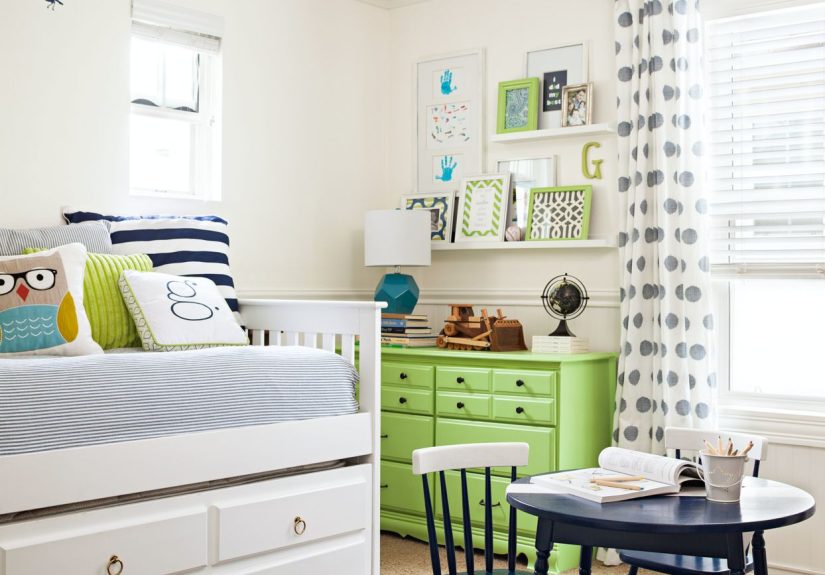
A timeless base doesn’t mean beige forever. Try a neutral backbone (warm white, soft gray, tan, or greige) and add a bold
supporting color like navy, forest green, or deep teal. It keeps the room feeling current and makes it easier to swap decor
as hobbies evolve.
Try this
Paint three walls neutral and make one accent wall in a richer shade. Then echo that accent color in bedding or a rug for a
pulled-together look.
2) Make One Wall the “Wow” Wall (Removable = Your Best Friend)
Wall murals, peel-and-stick wallpaper, and oversized decals deliver maximum personality with minimum long-term commitment.
That’s perfect for kids who change passions faster than you can find the Allen key.
Try this
Choose a theme that can mature: mountains, maps, geometric shapes, subtle stripes, or space constellations instead of
character-specific graphics that may age out quickly.
3) Display Collections Like a Mini Museum
Kids collect things with Olympic-level dedication: LEGO builds, rocks, Pokémon cards, model cars, baseballs, you name it.
Give those treasures a home so they don’t live on the floor (where they become ankle traps).
Try this
Install picture ledges or shallow shelves at eye level. Add small labeled bins for “in-progress” projects so they can pause
without everything exploding across the room.
4) Build a Reading Nook That’s Not a Punishment Corner
A cozy reading nook encourages quiet time without announcing, “This is where we send you to read.” Make it inviting:
a comfy seat, a soft light, and a place to stash books.
Try this
Use a beanbag or low lounge chair, a small side table, and a wall-mounted sconce (or sturdy table lamp) so the lighting is
warm and focused.
5) Add a Homework/Creation Station That Doesn’t Feel Like an Office
A study space can be fun if it’s designed for how kids actually work (which includes doodling, building, and dramatic
pencil-related conversations).
Try this
Pick an adjustable-height desk or a simple table paired with good task lighting. Add easy-access organizers: cups for pens,
trays for papers, and a “turn-it-in” spot for school items.
6) Try a Loft Bed to Free Up Floor Space
Loft beds are a cheat code for small rooms: you get a sleeping zone up top and an entire bonus zone underneathdesk,
reading corner, storage, or even a mini lounge.
Try this
Put a desk under the loft and add a corkboard or pegboard above it. It creates a focused “work cave” without taking over
the whole room.
7) Turn Bunk Beds into “Mini Bedrooms”
If two kids share a roomor one kid hosts frequent sleepoversbunk beds can do more than stack mattresses. The best bunk
setups add privacy and personalization so each kid feels like they have their own space.
Try this
Add individual reading lights, small shelves for each bunk, and a curtain panel (optional) for a fort-like vibe.
8) Go Vertical With Storage (Walls = Untapped Real Estate)
When floor space is limited, vertical storage is your secret weapon. Wall shelves, tall bookcases, and hanging organizers
keep the room functional without crowding it.
Try this
Use a tall dresser plus wall-mounted shelves for books and display items. Keep frequently used items at kid height; store
“special occasion” stuff up higher.
9) Use Cube Storage for the “Toy Rotation” Strategy
Toy rotation sounds fancy, but it’s just “not everything has to be out at once.” Cube storage makes it easy: a few bins
accessible now, others stored elsewhere and swapped in.
Try this
Choose bins in two categories: open bins for everyday toys, lidded bins for sets with small parts. Label them with words or
simple icons for quick cleanup.
10) Put Under-Bed Storage to Work (The Space That Pays Rent)
Under the bed is prime real estate for extra linens, seasonal clothes, sports gear, or LEGO you swear is “temporarily”
stored there. Use low-profile bins or soft-sided bags.
Try this
Pick clear-top containers or labeled bins so kids can find what they need without pulling everything out and starting a
living-room yard sale.
11) Add a Pegboard or Rail System for Gear and Creativity
Pegboards aren’t just for garages. They’re amazing for kids: headphones, art supplies, small baskets, cords, hats, or even
lightweight sports accessories can hang neatly and look intentionally “cool.”
Try this
Paint the pegboard the same color as the wall for a streamlined lookor paint it the accent color for a pop.
12) Make a Chalkboard/Whiteboard Zone for Big Ideas
Give kids a place to draw, plan, and scribble without sacrificing every wall. A dedicated writable area becomes a creative
outletand a surprisingly effective “I’m bored” solution.
Try this
Use a framed whiteboard above the desk, or paint a lower section of wall with chalkboard paint (especially great for
younger kids).
13) Create a “Hobby Corner” That Celebrates What They Love
The best boys’ bedroom decor reflects real interestswithout turning the room into a theme park gift shop.
Try this
For a sports fan: a small wall-mounted rack for medals, a shelf for trophies, and framed photos. For a gamer: a clean
console shelf, cable management, and comfortable seating. For a builder: a small worktable with parts organizers.
14) Upgrade Lighting: One Overhead Light Is Not a Plan
Bedrooms work better with layers of light: overhead for general brightness, task lighting for homework, and a softer option
for winding down.
Try this
Add a bedside lamp or sconce plus a desk lamp. If possible, use dimmable bulbs so the room can shift from “study mode” to
“sleep mode.”
15) Choose Durable, Washable Materials (Because Life Happens)
Kids’ rooms take a beating. The trick is to choose finishes that bounce back: washable paint, wipeable surfaces, and rugs
that can handle real living.
Try this
Choose a paint sheen that’s easier to clean (often eggshell or satin) and add a washable rug or low-pile rug that’s easier
to vacuum and spot clean.
16) Personalize With “Name-Level” Details (Without Overdoing It)
Personalization doesn’t have to be a giant name decal that screams “THIS ROOM BELONGS TO A HUMAN NAMED KYLE.” Subtle,
flexible details feel more modern and grow better.
Try this
Use a monogram pillow, a custom framed print with their favorite quote, or an LED sign in a shape they like (bolt, planet,
skateboard, etc.).
17) Make Space for Friends (Even in a Small Room)
For older kids and teens, a bedroom is part hangout spot. You don’t need a full living roomjust a place to sit that isn’t
“the bed only.”
Try this
Add a small loveseat, a floor cushion setup, or a beanbag pair with a sturdy side table. A soft rug helps define the “hangout zone.”
18) Build a Room That Can Evolve in One Afternoon
The ultimate win is a room you can refresh quickly: swap bedding, switch posters, rotate shelf decor, and suddenly the room
matches the new obsessionwithout repainting everything.
Try this
Keep the big pieces classic (bed, dresser, desk), then use removable, affordable updates: pillow covers, bedding, art prints,
peel-and-stick elements, and storage labels.
Quick Safety Notes (Because We Want Great Rooms and Fewer Heart Attacks)
- Anchor tall furniture (dressers/bookcases) to the wall to reduce tip-over risk.
- If you have younger kids, choose cordless window coverings or keep cords out of reach.
- Keep heavy frames/shelves out of “fall zone” areas above the bed.
- For bunk/loft beds, use guardrails and follow the manufacturer’s age recommendations.
Conclusion: A Fun Room Now, A Flexible Room Later
The best boys’ bedroom ideas aren’t about picking the “perfect theme.” They’re about creating a space that supports how
your kid lives: sleeping, playing, learning, building, collecting, and occasionally launching socks across the room like a
low-budget rocket test.
Start with a durable base, add smart function, then layer personality in the easiest-to-change places. That way, the room can
grow alongside your childwithout forcing you into a redecorating marathon every time a new interest appears.
Real-Life Room Makeover Lessons (Experience Notes)
In real homes, boys’ bedroom makeovers tend to follow a predictable storyline: the room starts out with big dreams and a
small budget, then reality shows up carrying laundry and a pile of mysterious cords. The good news? The most successful
rooms aren’t the ones that look “finished” on day onethey’re the ones that work on day 300.
One consistent lesson is that kids care less about “matching” and more about “meaning.” A framed ticket stub from a first
baseball game, a shelf holding a favorite series, or a corner dedicated to building models can matter more than perfectly
coordinated bedding. When families lean into that, the room instantly feels personallike it belongs to the kid, not a catalog.
The best approach is to pick a calm foundation and then let the meaningful stuff shine as the decor.
Another lesson: storage has to match behavior. If a child naturally drops everything in one spot, fight the instinct to add
five tiny organizers that require careful sorting. Instead, give them one “landing zone” that’s easy to use: a bin for sports
gear, hooks for backpacks, and a shelf for the daily essentials. Once the room is easy to maintain, kids are more likely to
keep it under controlmostly. (We’re aiming for “manageable,” not “museum.”)
Families also discover that furniture placement matters more than fancy decor. A desk shoved into a dark corner becomes a
“why am I even here” zone. Move it near natural light, add a task lamp, and suddenly it’s a place where homework actually
happens. Likewise, a reading nook doesn’t need expensive piecesjust comfort, a warm light, and easy access to books. When
kids have a spot designed for a specific activity, they use it more. That’s true whether it’s reading, drawing, gaming, or
building LEGO masterpieces with the intensity of a NASA engineer.
The biggest makeover win is designing for change. Interests shift, and rooms should be able to shift with them. Parents who
use removable wall decor, simple shelving, and swappable textiles (pillows, bedding, posters) feel less pressure to “get it
perfect” the first time. They can refresh the room in a weekend without repainting the universe. If you’re choosing between
a permanent themed wall and a flexible accent wall with changeable art, flexibility usually winsbecause kids grow, and your
design should be allowed to grow too.