Table of Contents >> Show >> Hide
- How to Choose the Right Wall Trellis for Flowering Vines
- 18 Wall Trellis Ideas That Make Flowering Vines Shine
- 1. Frame the Front Door with Matching Trellises
- 2. Use a Large Grid Trellis as Outdoor Wall Art
- 3. Try an Arched Trellis for a Softer Look
- 4. Mount a Trellis Above a Garden Bench
- 5. Use Narrow Vertical Panels Between Windows
- 6. Add a Fan-Shaped Trellis for Cottage Style
- 7. Install a Horizontal Cable System for a Modern Wall
- 8. Turn a Shed Wall into a Blooming Accent
- 9. Repurpose Vintage Finds as Trellises
- 10. Create a Trellis Mural with Multiple Panels
- 11. Highlight a Corner with an L-Shaped Wall Trellis
- 12. Build a Trellis Around an Outdoor Faucet or Utility Box
- 13. Combine a Wall Trellis with a Planter Box
- 14. Use a Painted Wooden Lattice for Classic Appeal
- 15. Choose a Cattle Panel or Heavy Metal Mesh for Strong Growers
- 16. Layer Trellises with Other Plants at the Base
- 17. Create a Night Garden Feature
- 18. Design a Seasonal Rotation Trellis
- Best Flowering Vines for Wall Trellises
- Common Mistakes to Avoid
- Conclusion
- Real-Life Experience: What Growing Flowering Vines on a Wall Trellis Actually Taught Me
- SEO Tags
A bare exterior wall has a special talent: it can make even a lovely garden look like it forgot its earrings. The fix is simpler than a major landscape overhaul. A wall trellis adds height, texture, structure, and just enough drama to make flowering vines look like they planned the whole performance themselves.
The best wall trellis ideas do more than hold up plants. They create focal points, soften hard surfaces, improve curb appeal, and turn vertical space into a bloom-filled backdrop. Whether you love classic cottage charm, sleek modern lines, or a little salvage-yard magic, the right trellis can make climbing roses, clematis, jasmine, mandevilla, honeysuckle, and other flowering vines look absolutely at home.
Before you grab the first lattice panel you see, it helps to match the trellis to the way your vine climbs. Some vines twine around narrow supports, some grab with tendrils, and some cling so enthusiastically they behave like they pay the mortgage. In many cases, a mounted trellis set slightly away from the wall is the smartest move because it improves airflow and helps protect the wall surface while giving the plant room to grow.
Here are 18 wall trellis ideas that blend beauty and practicality, plus tips for choosing the right flowering vines for each look.
How to Choose the Right Wall Trellis for Flowering Vines
Start with three questions: How heavy will the mature vine get? How does it climb? And how much maintenance are you honestly willing to do once summer hits and everything starts growing like it just discovered espresso?
Lighter vines such as clematis, black-eyed Susan vine, and annual morning glory do well on slimmer structures, wire grids, or decorative panels. Twining vines like star jasmine, mandevilla, and Carolina jessamine prefer narrow supports they can wrap around. Heavier or woodier choices, including climbing roses, wisteria, and mature climbing hydrangea, need sturdy anchoring and stronger materials.
Placement matters too. If the trellis is mounted against a house, garage, or garden wall, leave a little breathing room between the structure and the surface. That gap helps air circulate, keeps moisture from lingering, and gives stems space to move and flower. In other words, it helps the wall and the vine stay on speaking terms.
18 Wall Trellis Ideas That Make Flowering Vines Shine
1. Frame the Front Door with Matching Trellises
Install a slim trellis panel on each side of the front door and plant a flowering vine at the base of each one. The symmetry feels polished, and the blooms create a soft welcome without blocking walkways. Clematis and mandevilla are especially good here because they offer color without becoming hulking garden bodyguards.
2. Use a Large Grid Trellis as Outdoor Wall Art
A bold square or rectangular metal grid can act like living sculpture on a blank wall. Even before the vine fills in, the structure adds shape and shadow. Once covered in blooms, it becomes the kind of feature guests politely admire while secretly rethinking their own backyard choices.
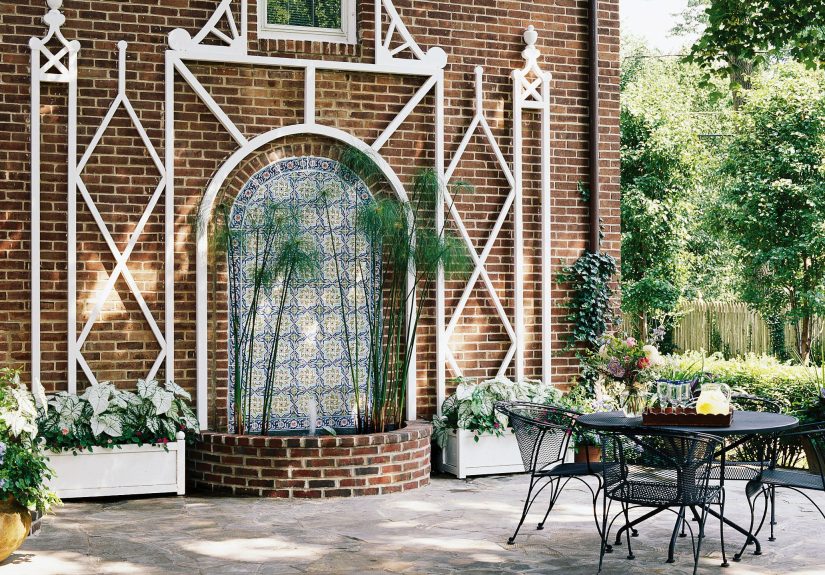
3. Try an Arched Trellis for a Softer Look
If your wall feels too boxy, an arched wall trellis instantly softens it. This works beautifully with romantic flowering vines such as climbing roses, clematis, or cup-and-saucer vine. The curve draws the eye upward and makes a flat wall feel more graceful.
4. Mount a Trellis Above a Garden Bench
Place a wall trellis behind a bench to create a destination spot instead of just another planted corner. Add a fragrant climber like star jasmine or honeysuckle and you have the kind of seating area that makes people linger longer than they intended. That is either charming or dangerous, depending on how much iced tea you made.
5. Use Narrow Vertical Panels Between Windows
Sometimes the prettiest wall trellis idea is the simplest one. Slim vertical panels between windows or architectural breaks add rhythm to the wall and turn awkward gaps into planting opportunities. This works especially well with clematis, which likes support and rewards good placement with a serious flower show.
6. Add a Fan-Shaped Trellis for Cottage Style
Fan trellises have old-school charm and look especially good on brick, painted wood, or stucco walls. They pair beautifully with climbing roses, sweet peas, or smaller clematis varieties. If your garden style leans “storybook with a pruning schedule,” this is your move.
7. Install a Horizontal Cable System for a Modern Wall
For contemporary homes, stainless cables or taut horizontal wires can look cleaner than a traditional lattice panel. They give twining and tendril-bearing vines something to latch onto while keeping the overall look minimal. The result is crisp, architectural, and a little smug in the best way.
8. Turn a Shed Wall into a Blooming Accent
A garden shed is prime real estate for a wall-mounted trellis. It is visible, useful, and often begging for a little visual help. A flowering vine can transform a plain utility wall into a charming backdrop, especially if you repeat the trellis material elsewhere in the yard.
9. Repurpose Vintage Finds as Trellises
Old iron gates, headboards, window frames, and decorative panels can all become creative wall trellises. This approach adds personality and keeps the display from looking like it came straight from aisle seven of a big-box store. Pair these pieces with informal bloomers like black-eyed Susan vine or climbing nasturtiums for extra character.
10. Create a Trellis Mural with Multiple Panels
Instead of one large trellis, use several smaller panels arranged in a pattern across the wall. Think of it as a gallery wall, but with more petals and fewer arguments about abstract art. Plant one vine per panel or let a single variety spread across the whole arrangement for a unified display.
11. Highlight a Corner with an L-Shaped Wall Trellis
Corners are often overlooked, but they are great for wrapping a vine around two surfaces at once. An L-shaped trellis turns a hard corner into a lush vertical feature. This setup is especially effective for vigorous bloomers that need a bit more room to roam without taking over the neighborhood.
12. Build a Trellis Around an Outdoor Faucet or Utility Box
Not every pretty garden begins with a pretty wall. A wall trellis can camouflage less glamorous features such as utility boxes, spigots, or conduits while still allowing access. Choose a design that opens easily or leaves maintenance space, because nobody wants to wrestle blooming vines just to turn off the water.
13. Combine a Wall Trellis with a Planter Box
A built-in or freestanding planter under the trellis makes the whole setup look intentional and tidy. This is an especially good option for patios, small courtyards, and rentals where garden space is limited. It also makes soil control easier if your native ground is less “rich loam” and more “construction memory.”
14. Use a Painted Wooden Lattice for Classic Appeal
You cannot go wrong with a painted lattice panel when you want timeless garden style. White feels traditional, black looks dramatic, and soft green disappears behind foliage. This type of trellis suits many flowering vines and is easy to match with fences, trim, or shutters.
15. Choose a Cattle Panel or Heavy Metal Mesh for Strong Growers
If you love heavier vines or expect serious seasonal growth, choose a more robust wall trellis. Heavy-gauge metal mesh or cattle panel sections can be mounted for a clean industrial-garden look. They are practical, durable, and not remotely intimidated by enthusiastic plants.
16. Layer Trellises with Other Plants at the Base
A wall trellis looks even better when the base planting is part of the design. Add mounding perennials, low shrubs, or ornamental grasses in front of the vine’s root zone. This softens the transition from ground to wall and can help keep roots cool for plants like clematis, which appreciate shaded roots and sun on the top growth.
17. Create a Night Garden Feature
Mount a trellis where evening light catches it, then grow fragrant or pale-blooming vines nearby. White-flowering moonflower, evening-scented climbers, or pale clematis varieties can turn a patio wall into a nighttime focal point. Add a small uplight and suddenly your wall is doing theater.
18. Design a Seasonal Rotation Trellis
Not every wall trellis has to hold the same vine forever. Use one strong structure and rotate annual climbers, tender tropical vines in containers, or seasonal combinations year by year. One summer can be all about black-eyed Susan vine and cardinal climber, while the next leans into mandevilla or sweet peas. This approach keeps the display fresh and lets you experiment without tearing out the hardware.
Best Flowering Vines for Wall Trellises
The prettiest trellis in the world still needs the right plant partner. Clematis is a star because it comes in a huge range of colors and bloom times, and many varieties stay manageable on wall supports. Climbing roses bring classic romance and pair beautifully with fan or arch designs. Star jasmine offers fragrance and glossy foliage, while Carolina jessamine delivers cheerful yellow flowers and a more restrained habit than some rampant climbers.
For hot climates or container displays, mandevilla is a reliable show-off with glossy leaves and trumpet-shaped blooms. Black-eyed Susan vine brings fast annual color and works especially well on lighter structures. Climbing hydrangea is stunning on strong supports, though it may take time to settle in before it really gets going. Morning glory, moonflower, and passionflower can also make striking trellis displays, but they are best chosen with your local growing conditions and maintenance tolerance in mind.
One more tip: avoid planting aggressive vines too close to gutters, roofs, shutters, or small trees unless you are ready for regular pruning. A flowering vine should enhance the wall, not annex it.
Common Mistakes to Avoid
The first mistake is choosing a trellis based only on looks. Pretty is great, but pretty plus sturdy is better. Match the structure to the mature vine, not the cute little nursery pot version making innocent promises.
The second mistake is planting too close to the wall with no airflow. Vines need room, and walls do too. A little spacing can prevent moisture buildup and make training easier.
The third mistake is forgetting how the plant climbs. Twining vines like narrow supports. Tendril climbers often need something thin to grab. Self-clinging vines may attach directly to surfaces, but many gardeners prefer a separate trellis to reduce the chance of damage and keep maintenance under control.
Conclusion
The best wall trellis ideas are the ones that make your space feel more alive without making your maintenance list feel like a second job. A simple panel beside a door, a metal grid on a blank wall, or a vintage salvage piece dressed in flowers can all transform an ordinary surface into a true garden feature. Pair the structure with the right flowering vine, allow room for airflow, and think about the plant’s mature habit from the start. Do that, and your wall will go from flat and forgettable to layered, colorful, and gloriously vine-covered.
In other words, the wall stops being “that side of the house” and becomes the part people remember.
Real-Life Experience: What Growing Flowering Vines on a Wall Trellis Actually Taught Me
The first thing I learned about wall trellis gardening is that the idea always looks smaller on paper. You think, “I’ll just add one trellis and one vine.” Then two weeks later you are standing in the garden center comparing clematis colors like you are selecting paint for a royal wedding. Wall trellises have that effect. They start as a practical solution and quickly become a full-blown design obsession.
One of the most useful lessons was realizing that the trellis matters just as much as the plant. I once tried to grow a twining vine on a support with bars that were simply too wide. The plant kept reaching, missing, flopping, and generally behaving like it had been given bad directions. Once I switched to a structure with narrower supports, everything changed. The vine climbed naturally, the coverage was more even, and the wall looked intentionally designed instead of mildly confused.
I also learned that patience is not optional. Some flowering vines take off in a hurry, but others spend a season establishing roots before they really perform. That can be frustrating when you want instant cottage-garden magic. Still, the slower growers often end up being the most satisfying because the structure gradually disappears behind foliage and flowers in a way that feels earned. It is the gardening equivalent of a slow-burn story line.
Another big takeaway was the value of layering. The prettiest wall trellis displays were never just vine and wall. They included a few grounding plants at the base, maybe a container nearby, and sometimes a bench or lantern to make the whole area feel complete. Once I started thinking of the wall trellis as part of a larger composition, not just a plant support, the results looked far more polished.
Maintenance taught me a few humbling things too. Flowering vines are beautiful, but some of them are enthusiastic in a way that requires boundaries. A little training early in the season saves a lot of wrestling later. Tying in stems gently, redirecting growth, and pruning with purpose keeps the display elegant instead of chaotic. Left alone too long, a vine can go from “romantic garden feature” to “botanical coup.”
The best experience of all, though, was seeing how much a wall trellis changes the mood of a space. A blank fence or exterior wall can feel hard and static. Add climbing foliage and blooms, and suddenly the whole area feels cooler, softer, and more inviting. Pollinators show up. Shadows change. The wall becomes a backdrop instead of a barrier. That is the real magic of flowering vines: they make a garden feel lived in, layered, and a little more generous.
If I had to give one practical piece of advice from experience, it would be this: choose a structure you truly like even when the vine is dormant. There will be seasons when the blooms are resting, the stems are bare, or the growth is just beginning. A beautiful trellis carries the design through every stage. Then, when the flowering vine kicks into gear, it feels less like a random garden success and more like the final act of a very good plan.