Table of Contents >> Show >> Hide
- The Handwritten Letter That Cut Through the Noise
- Why a Handwritten Cover Letter Worked Better Than a Perfect Résumé
- The Comment Avalanche: What People Really Wanted to Say
- The Bigger Context: Autism and the Employment Gap
- What Neurodiversity-Friendly Hiring Looks Like (In Real Life)
- Lessons for Job Seekers: Turning Honesty Into Strategy
- What Employers Should Do When a Candidate Goes Viral
- Conclusion: A Simple Letter, A Complicated System
- Experiences People Share After Stories Like This Go Viral (And What They Teach Us)
If you spend enough time on LinkedIn, you start to think the platform runs on two fuels: buzzwords and bullet points.
Then a handwritten cover letter shows upactual pen-on-paperand the internet collectively goes, “Wait… we still have hands?”
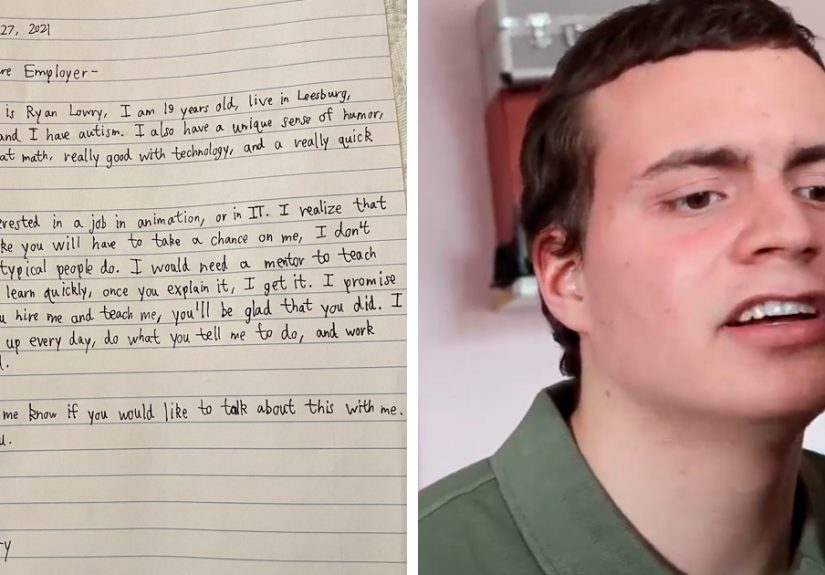
That’s essentially what happened when Ryan Lowry, a young man from Leesburg, Virginia, shared a candid note addressed to his “future employer.”
In it, he explained that he has autism, described what he’s good at, and asked someone to “take a chance” on him. The post traveled fastmillions of views,
thousands of comments, and a wave of job leads and support followed.
This story is heartwarming for obvious reasons. But it’s also a sharp little case study in modern hiring: what grabs attention, what employers miss,
and why “inclusive recruiting” can’t just be a line in your careers page footer.
The Handwritten Letter That Cut Through the Noise
Ryan’s letter wasn’t trying to be “viral content.” It wasn’t polished marketing copy, and it definitely wasn’t written by a committee.
It was straightforward: he shared who he is, what he wants to do, and what kind of support helps him succeed.
He highlighted strengths (including a strong interest in animation and technology), and he didn’t hide the reality that he may learn differently.
Instead, he framed it as practical information: teach him, mentor him, and he’ll work hard, show up, and learn quickly.
That mixhonesty + clarity + efforthit people right in the soft spot. The comment section filled up with encouragement, advice, networking offers,
and employers asking how to connect. And in one of the more tangible outcomes, he was connected to opportunities like training designed to help
neurodivergent talent build animation skills and job readiness.
Why the “wholesome” part mattered
The internet loves drama. But every so often, it loves sincerity even moreespecially when sincerity shows up in a place famous for performative hustle.
Ryan wasn’t trying to impress; he was trying to be understood. That’s rare, and it’s powerful.
Why a Handwritten Cover Letter Worked Better Than a Perfect Résumé
Hiring usually rewards polish: the “right” format, the “right” phrases, the “right” interview cadence. But polish can hide people.
Handwriting does the oppositeit reveals a human.
1) Pattern interruption (a.k.a. “Wait, is that… paper?”)
Scroll-based platforms reward whatever makes you stop scrolling. A handwritten letter is visual friction. It interrupts the feed’s usual rhythm of
headshots, corporate announcements, and motivational quotes that sound like they were assembled by a spreadsheet.
2) Low-production authenticity
A “perfect” post can feel like a pitch. A handwritten one feels like a person taking a risk. Viewers often respond to risk with empathyespecially when
the ask is simple: a chance to work.
3) A clearer signal than a keyword-stuffed application
Applicant tracking systems (ATS) love keywords; humans love clarity. Ryan’s note communicated the essentials in plain language:
here’s what I want, here’s what I’m good at, here’s how to help me thrive.
The Comment Avalanche: What People Really Wanted to Say
When a post like this catches fire, it becomes a mirror. People weren’t just responding to Ryanthey were responding to what they wish hiring looked like.
Support… and a lot of quiet guilt
Many commenters offered encouragement and shared resources. Others admitted they’d never thought much about how hiring filters can screen out
neurodivergent candidatesespecially processes that depend heavily on social signaling: rapid small talk, eye contact expectations,
or “tell me about a time you showed leadership” storytelling on demand.
Recruiters and hiring managers offered something valuable: specificity
The most useful replies weren’t just “You’ve got this!” (though that’s nice). They were: “Here’s a person to contact,” “Here’s a program,”
“Here’s a role that matches your strengths,” “Here’s a way to build an animation portfolio,” and “Here’s what to do next week.”
A reminder that networks are powerfuland unevenly distributed
If you’ve ever landed an interview because someone vouched for you, you already understand the plot twist here:
the viral moment temporarily gave Ryan what many candidates don’t haveinstant network reach.
That’s not an argument against networking. It’s an argument for making sure hiring doesn’t require it to begin with.
The Bigger Context: Autism and the Employment Gap
Ryan’s story is uplifting, but it also points to a stubborn reality: autistic people are often eager to work and able to contribute,
yet employment outcomes lag behind other groups.
National reporting and research summaries have repeatedly shown that many autistic young adults either struggle to find paid work after high school
or end up in part-time, low-wage roles that don’t match their skills. Some reports summarize that large shares of autistic young adults
do not work for pay at all during the transition to adulthood.
Meanwhile, the number of people identified with autism has continued to rise in U.S. monitoring datameaning the stakes of getting employment right
aren’t shrinking. This isn’t a niche issue; it’s a workforce issue.
What’s actually getting in the way?
- Interview design: Many interviews reward social performance over job performance.
- Unclear job descriptions: Vague “must be a people person” language can discourage great candidates.
- Fear of accommodation: Some employers overestimate the cost or complexity of basic supports.
- Pipeline myths: Talent exists, but recruiting doesn’t always reach it.
None of this is solved by a viral moment. But viral moments can expose where the system is brittleand where it can be redesigned.
What Neurodiversity-Friendly Hiring Looks Like (In Real Life)
“We welcome everyone” is a lovely sentence. It is also meaningless unless your hiring process behaves like it.
Neurodiversity-friendly hiring is less about inspirational posters and more about better mechanics.
Start with skills-based screening
Instead of filtering people out because they didn’t perform well in a traditional interview, use job-relevant tasks:
short work samples, paid trials, portfolio reviews, or structured problem-solving exercises that mirror the actual work.
Offer alternative interview formats (without making it weird)
Options can include: sharing questions in advance, allowing written responses for part of the interview,
using practical demonstrations, or extending the interview process into multiple shorter conversations.
Some major employers have publicly described neurodiversity-focused hiring pathways that include extended interview experiences.
Design onboarding like you mean it
A strong start helps any new hire. For autistic employees, clarity often matters even more:
written expectations, a predictable schedule, a single point of contact for questions, and direct feedback that isn’t wrapped in riddles.
(Hint: “Let’s circle back” is not feedback. It’s a threat in business casual.)
Lessons for Job Seekers: Turning Honesty Into Strategy
Not everyone wants to disclose a diagnosis publiclyand nobody should feel pressured to do so.
Ryan’s approach worked for him, in his context, at that moment. The deeper lesson isn’t “go viral.”
It’s “communicate clearly and make it easy for the right people to help.”
Practical moves you can borrow (with or without disclosure)
- Lead with strengths: Name specific skills and interests (software tools, math, animation basics, IT troubleshooting).
- Ask for what helps: “I work best with written instructions” is actionable; “I’m a hard worker” is too vague.
- Bring proof: A small portfolio, sample projects, or screenshots can beat a thousand adjectives.
- Target environments: Look for teams that already practice structured workflows and documentation.
- Use allies: Coaches, mentors, teachers, and job developers can open doors without turning you into a “charity case.”
A note about “inspiration”
If you feel inspired by this story, great. Now do the grown-up version of inspiration:
advocate for fair hiring processes, recommend someone for a real role, or adjust your interview format so talent doesn’t have to write a viral letter
to be seen.
What Employers Should Do When a Candidate Goes Viral
Viral hiring stories can go sideways. Sometimes companies rush in for positive PR and then disappear when the camera moves on.
If you’re an employer reaching out to someone like Ryanor any candidate suddenly in the spotlightdo it ethically.
Do this
- Offer a real conversation: A structured informational interview is respectful and useful.
- Be specific: Share the role, the pay range, and what success looks like.
- Provide support: If you can’t hire, connect them to training, apprenticeships, or credible pathways.
- Follow through: Don’t ghost. Ever. Especially not after you publicly commented “DM me!”
Not this
- Don’t treat them like content: A person is not your brand campaign.
- Don’t overpromise: “We’ll find you something!” is a feel-good sentence that can become a letdown fast.
- Don’t make it a spectacle: Dignity matters more than applause.
Conclusion: A Simple Letter, A Complicated System
Ryan Lowry’s handwritten cover letter worked because it was brave, direct, and human.
The outpouring of support proved that many people want inclusive hiringand that employers are hungry for practical ways to do it better.
But the real win isn’t a viral post. The real win is when talent doesn’t need a viral post.
When job descriptions are clear, interviews are job-relevant, onboarding is structured, and support is normalnot exceptional.
If there’s a challenge tucked inside this wholesome story, it’s this: the hiring world should be built so “take a chance on me”
isn’t a gamble. It’s just good business.
500+ words of experience-related content (added at the end, per request)
Experiences People Share After Stories Like This Go Viral (And What They Teach Us)
Whenever a heartfelt job-search story breaks through the usual online noise, you start seeing a second story emerge in the comments:
thousands of smaller experiences that rarely make headlines. They tend to sound different on the surface, but they rhyme in the same way.
Someone describes being “great at the work” but exhausted by the process of getting the work. Someone else shares that their best employee
struggled in interviews but flourished once expectations were written down. A parent mentions the strange mix of pride and anxiety that comes with
watching a young adult apply for jobsbecause rejection feels personal when the world already misunderstands you.
One common theme is the moment a candidate realizes they’ve been judged on presentation instead of performance. People talk about interviews where
the questions were vague (“Tell me about yourself”), the room was noisy, the pace was fast, and the feedback afterward was basically a magic trick:
“We went with someone who was a better fit.” Better fit for whattalking about work, or doing it? In contrast, when an employer swaps in a simple
work samplefix this spreadsheet, troubleshoot this device, storyboard this short scenethe entire dynamic changes. The candidate stops guessing what
the interviewer wants and starts showing what they can do. That’s not a special favor; it’s a better measurement tool.
Another experience people mention is how small supports create big results. A hiring manager shares that sending interview questions ahead of time
didn’t “ruin the evaluation”it improved it. The candidate arrived calmer, gave clearer answers, and the conversation felt more job-relevant.
A teammate describes how written checklists reduced misunderstandings for everyone, not just one person. Someone who works in IT mentions that their
strongest troubleshooting days are the ones with fewer surprise meetings and more predictable blocks of focus time. The pattern is consistent:
structure is not the enemy of creativity. Structure is the runway that lets creativity take off.
You also see a lot of bittersweet honesty from job seekers who tried to be open and got punished for it. Some people say they disclosed autism early
and watched the recruiter’s tone change. Others say they never disclose, because they’ve learned to “mask” in interviewsonly to burn out later.
These aren’t just personal stories; they’re warnings about misaligned incentives. If hiring rewards masking, employers end up selecting for the best
performers of the interview ritualnot necessarily the best performers of the job. Over time, that’s costly: higher turnover, mismatched roles,
and missed talent that could have been a perfect fit with minor adjustments.
Finally, there’s the experience of hope that shows up when a community responds well. People describe the relief of seeing strangers offer real help:
portfolio feedback, introductions, internship leads, training programs, and encouragement that doesn’t feel condescending. For many families,
that’s the emotional core of this kind of story: not pity, but possibility. The healthiest takeaway isn’t “Wow, the internet was nice today.”
It’s “We can design hiring so that kindness isn’t required for someone to get in the door.” When inclusion is built into the process,
it stops being a miracle and starts being the standard.
SEO tags at the end in JSON format (per request)