Table of Contents >> Show >> Hide
- 21 Fab Facts About The Beatles Every Music Fan Should Know
- 1. The Beatles Began Before They Were “The Beatles”
- 2. Ringo Starr Was Not the Original Drummer
- 3. Hamburg Turned Them Into a Real Band
- 4. Brian Epstein Helped Polish Their Image
- 5. George Martin Helped Build the Beatles Sound
- 6. Their First U.S. Explosion Was Televised
- 7. They Once Owned the Entire Billboard Top Five
- 8. “I Want to Hold Your Hand” Helped Crack America
- 9. The Beatles Wrote Much of Their Own Material
- 10. “Yesterday” Was Mostly a Paul McCartney Solo Moment
- 11. Ringo Gave the World “A Hard Day’s Night”
- 12. Their First Movie Helped Redefine the Pop Film
- 13. George Harrison Brought the Sitar Into Beatles Music
- 14. They Stopped Touring Before Their Biggest Studio Breakthroughs
- 15. “Sgt. Pepper” Changed What an Album Could Be
- 16. The “White Album” Showed Four Personalities Pulling in Different Directions
- 17. “Abbey Road” Was Their Last Recorded Album
- 18. The Abbey Road Cover Took Only Minutes to Shoot
- 19. Shea Stadium Helped Invent the Stadium Rock Era
- 20. Their Sales and Awards Are Still Astonishing
- 21. The Beatles Released a “Last Song” Decades Later
- Why The Beatles Still Feel Fresh
- Experiences Related to “21 Fab Facts About The Beatles”
- Conclusion
The Beatles were not just a band. They were a haircut, a scream, a cultural weather event, a songwriting revolution, and possibly the only four people in history who could make crossing a street look like a sacred ritual. John Lennon, Paul McCartney, George Harrison, and Ringo Starr changed popular music so completely that modern pop, rock, stadium concerts, music videos, fan culture, and even album art still carry their fingerprints.
What makes The Beatles fascinating is not only the music, although that would be plenty. It is the speed of their rise, the strange details behind their songs, the way they survived chaos with jokes, and how they evolved from leather-clad club performers into studio innovators whose records still sound fresh. Whether you are a lifelong Beatlemaniac or someone who only knows “Hey Jude” from weddings, commercials, and that one uncle who gets emotional near a jukebox, these 21 fab facts about The Beatles offer a deeper look at why the band still matters.
21 Fab Facts About The Beatles Every Music Fan Should Know
1. The Beatles Began Before They Were “The Beatles”
Before the world knew The Beatles, John Lennon led a skiffle group called The Quarrymen in Liverpool. Paul McCartney joined after meeting Lennon in 1957, and George Harrison came aboard soon after, bringing serious guitar skills despite being younger than the others. The band went through several names before becoming The Beatles in 1960. That name, with its pun on “beat” music, sounded playful and modernexactly like the group would soon become.
2. Ringo Starr Was Not the Original Drummer
Ringo Starr feels so essential to The Beatles that imagining the band without him is like imagining a drum kit without a snare. But the original drummer during their early rise was Pete Best. Ringo officially joined in 1962, replacing Best just before the group’s recording career took off. His steady backbeat, comic timing, and famously calm personality helped complete the classic lineup. In other words, the band did not simply gain a drummer; it gained its final personality piece.
3. Hamburg Turned Them Into a Real Band
The Beatles sharpened their sound in Hamburg, Germany, where they played long, exhausting sets in clubs. These performances were not glamorous. They were loud, sweaty, late-night marathons that forced the band to build stamina, stage presence, and a huge repertoire. Hamburg was their musical boot camp. By the time they returned to Liverpool, they were tighter, tougher, funnier, and ready to make local audiences lose their minds in a very organized British way.
4. Brian Epstein Helped Polish Their Image
Manager Brian Epstein saw more than a noisy club band. He saw stars. Epstein encouraged The Beatles to clean up their stage act, trade leather jackets for sharp suits, bow after performances, and present themselves professionally. This did not remove their personality; it framed it. The Beatles still had wit, edge, and mischief, but Epstein helped package that energy for television, radio, record companies, and eventually the entire world.
5. George Martin Helped Build the Beatles Sound
Producer George Martin is often called the “Fifth Beatle,” and the nickname makes sense. He helped translate the band’s wild ideas into workable recordings. Martin brought classical knowledge, studio discipline, arrangement skills, and a willingness to experiment. From string quartets to tape tricks to unusual orchestration, he helped The Beatles move from energetic pop singles to albums that felt like cinematic worlds.
6. Their First U.S. Explosion Was Televised
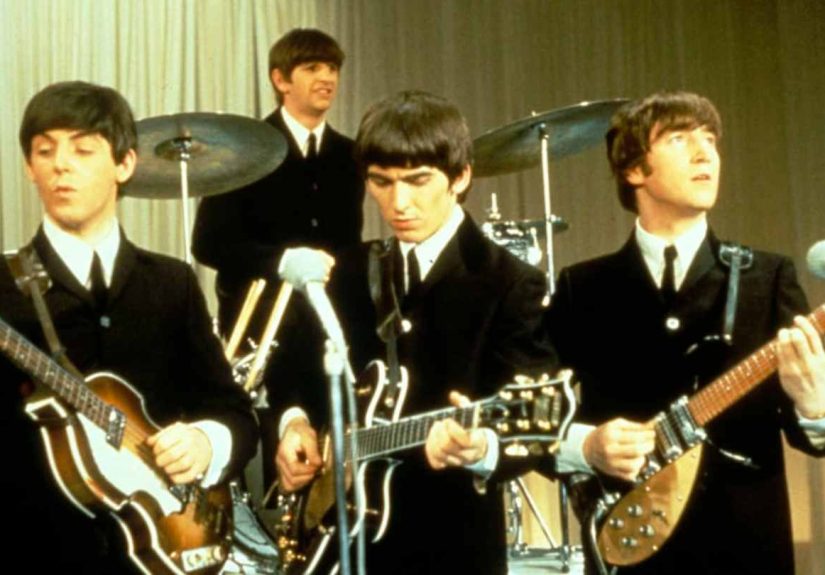
On February 9, 1964, The Beatles appeared on The Ed Sullivan Show, and an estimated 73 million Americans watched. That performance became one of the defining pop culture moments of the 20th century. The screaming was so intense that viewers could barely hear the music, which somehow made the moment even more powerful. America did not simply meet The Beatles that night; it collectively inhaled and forgot how to behave.
7. They Once Owned the Entire Billboard Top Five
In April 1964, The Beatles held the top five positions on the Billboard Hot 100 at the same time. That kind of chart domination is nearly impossible to imagine today, even in the age of streaming armies and viral dances. The achievement showed how completely Beatlemania had taken over the American market. Radio, record stores, teenagers, parents, and probably a few confused pets were all living in a Beatles-shaped world.
8. “I Want to Hold Your Hand” Helped Crack America
“I Want to Hold Your Hand” was the song that helped The Beatles break through in the United States. It had everything: handclaps, harmonies, romantic innocence, and a chorus built like a rocket launch. The song’s appeal was simple but not simplistic. It was direct enough for teenagers, catchy enough for radio, and energetic enough to make adults worry that civilization might be changing forever. They were right, but in a good way.
9. The Beatles Wrote Much of Their Own Material
One reason The Beatles changed music was that they wrote many of their own songs. In the early 1960s, pop performers often depended heavily on professional songwriters. Lennon and McCartney’s partnership changed expectations. Their success helped establish the modern idea of the band as a self-contained creative unit: performers, personalities, and authors of their own mythology. George Harrison later emerged as a major songwriter too, proving there was even more creative horsepower under the hood.
10. “Yesterday” Was Mostly a Paul McCartney Solo Moment
“Yesterday” is credited to Lennon-McCartney, but Paul McCartney wrote it, and he was the only Beatle on the recording. Accompanied by acoustic guitar and a string quartet, the song sounded very different from the band’s earlier rock-and-roll energy. That difference was the point. “Yesterday” showed that a Beatles song could be intimate, orchestral, and emotionally grown-up without losing its pop appeal. It also became one of the most covered songs in recording history.
11. Ringo Gave the World “A Hard Day’s Night”
The phrase “a hard day’s night” is widely associated with Ringo Starr’s gift for accidental poetry. The title became a hit song, an album, and the band’s first feature film. It sounds like nonsense until you have had a day so long that even nighttime feels employed. That was Ringo’s charm: he could say something odd, funny, and strangely perfect, and the rest of the world would eventually put it on a movie poster.
12. Their First Movie Helped Redefine the Pop Film
A Hard Day’s Night, released in 1964, captured The Beatles at the height of Beatlemania. Instead of presenting them as polished actors, the film leaned into their humor, speed, sarcasm, and public chaos. Its documentary-style energy influenced future music films and music videos. The movie helped prove that pop stars could be cinematic without pretending to be traditional movie stars. The Beatles were funniest when playing versions of themselves trapped inside their own fame.
13. George Harrison Brought the Sitar Into Beatles Music
George Harrison’s use of sitar on “Norwegian Wood (This Bird Has Flown)” opened many Western listeners to Indian musical textures. His interest later deepened through his connection with Ravi Shankar and Indian classical music. This was not just a decorative sound effect. Harrison’s curiosity helped expand the band’s palette and encouraged rock musicians to look beyond familiar instruments, scales, and studio habits. The Beatles made experimentation feel not only acceptable but fashionable.
14. They Stopped Touring Before Their Biggest Studio Breakthroughs
By 1966, touring had become exhausting and musically frustrating. The screaming crowds were so loud that the band could barely hear itself play. After their final commercial concert at San Francisco’s Candlestick Park in August 1966, The Beatles focused more fully on studio work. This decision helped lead to their most adventurous recordings. Once they no longer had to reproduce songs live, the studio became their playground, laboratory, and occasionally their spaceship.
15. “Sgt. Pepper” Changed What an Album Could Be
Sgt. Pepper’s Lonely Hearts Club Band was more than a collection of songs. Released in 1967, it helped popularize the idea of the rock album as a complete artistic statement. Its colorful concept, studio experimentation, unusual sounds, and famous cover art turned the album into an event. Listeners did not just put it on; they explored it. The record helped push popular music toward bigger ambitions, richer production, and more imaginative presentation.
16. The “White Album” Showed Four Personalities Pulling in Different Directions
Officially titled The Beatles, the 1968 double album is better known as the “White Album” because of its stark cover. The music inside is anything but blank. It contains rock, folk, blues, satire, lullabies, sound collage, and songs that feel like each Beatle temporarily grabbed the steering wheel. The album can sound messy, but that is part of its fascination. It captures a genius band becoming four strong individuals in real time.
17. “Abbey Road” Was Their Last Recorded Album
Abbey Road was released before Let It Be, but it was the final album The Beatles recorded together. Its second-side medley remains one of the most beloved sequences in rock history. The album also includes George Harrison’s “Something” and “Here Comes the Sun,” two songs that proved his songwriting had fully blossomed. As a farewell from the studio, Abbey Road is unusually gracefullike the band knew how to exit while still leaving everyone humming.
18. The Abbey Road Cover Took Only Minutes to Shoot
One of the most famous album covers ever was photographed outside EMI Studios on Abbey Road in London. Photographer Iain Macmillan took a small series of shots while the band crossed the street. There were no elaborate sets, no exploding lights, and no need for the band’s name on the cover. The image was simple: four men walking across a zebra crossing. Somehow, it became a pilgrimage site, a meme before memes, and a masterclass in visual confidence.
19. Shea Stadium Helped Invent the Stadium Rock Era
The Beatles’ 1965 concert at Shea Stadium in New York is often remembered as a milestone in live music history. Playing to a massive baseball stadium crowd showed that rock bands could move beyond theaters and arenas into sports venues. The sound system was primitive by modern standards, and the screams were volcanic, but the idea was revolutionary. Every giant stadium tour owes at least a small thank-you note to that night.
20. Their Sales and Awards Are Still Astonishing
The Beatles remain one of the most commercially successful acts in music history. Their RIAA album certifications, Grammy recognition, chart records, and continuing reissues show that their catalog has never stopped working. They are not merely a nostalgia act preserved in black-and-white footage. New listeners continue to discover them through streaming, film, family record collections, school music courses, and the mysterious algorithmic power of “Here Comes the Sun.”
21. The Beatles Released a “Last Song” Decades Later
In 2023, “Now And Then” was released as the last Beatles song, built from a John Lennon demo and completed with contributions connected to Paul McCartney, George Harrison, and Ringo Starr. Modern audio technology helped separate Lennon’s voice from the original recording, allowing Paul and Ringo to finish the track. In 2025, the song won a Grammy for Best Rock Performance. It was a remarkable full-circle moment: a band born in the analog age found one final chapter in the digital one.
Why The Beatles Still Feel Fresh
The Beatles endure because their story is not frozen in one style. Many legendary artists have a signature sound; The Beatles had several. Early songs like “Please Please Me” and “She Loves You” burst with youthful urgency. Mid-period albums like Rubber Soul and Revolver show the band becoming more thoughtful, experimental, and lyrically complex. Late works like Abbey Road and Let It Be reveal musicians trying to hold together years of friendship, pressure, rivalry, and invention.
That evolution is a major reason Beatles facts are so much fun. Every detail points to a larger transformation. Hamburg explains their toughness. Ed Sullivan explains their cultural explosion. “Yesterday” explains their emotional reach. “Sgt. Pepper” explains their studio ambition. Abbey Road explains their sense of final style. Even their disagreements tell us something useful: great creativity is not always tidy. Sometimes it comes from four people pulling in different directions while still somehow producing harmony.
Experiences Related to “21 Fab Facts About The Beatles”
One of the best ways to experience The Beatles today is not to treat them like homework. Yes, they are historically important. Yes, they influenced generations of musicians. Yes, people with impressive vinyl collections may lean forward and explain mono mixes with the seriousness of a courtroom witness. But The Beatles are most enjoyable when you start with curiosity rather than obligation. Pick one album, one era, or even one weird fact, and let it lead you somewhere.
A great beginner experience is to listen chronologically. Start with the early singles and notice the speed, charm, and clean vocal harmonies. Then move into Rubber Soul and Revolver, where the songwriting becomes more introspective and the production gets stranger. By the time you reach Sgt. Pepper, you can hear the band treating the studio like an instrument. Finish with Abbey Road, and the emotional effect is surprisingly strong. You are not just hearing songs; you are hearing young men grow up at impossible speed.
Another rewarding experience is to listen by songwriter. Spend an afternoon with John-heavy songs and you may notice sharp edges, wordplay, vulnerability, and a restless search for truth. Switch to Paul-centered songs and you hear melody, structure, optimism, and a remarkable instinct for emotional clarity. Follow George and you hear a songwriter moving from quiet contributions to spiritual, melodic confidence. Listen closely to Ringo and you understand why feel matters. His drumming rarely screams for attention, but it almost always serves the song.
Fans can also make the experience visual. Watch A Hard Day’s Night to see the band’s comic chemistry. Look at photos from the Ed Sullivan era and notice how young they were when global fame arrived. Study the Abbey Road cover and consider how a plain street crossing became one of the most copied images in music. The Beatles understood sound, but they also understood presentation. Their suits, album covers, films, and press conferences all became part of the story.
For writers, creators, and music lovers, The Beatles offer a useful lesson in reinvention. They did not remain trapped by the version of themselves that first became successful. They kept changing, even when change was risky. A band that could have repeated “I Want to Hold Your Hand” forever instead made “Tomorrow Never Knows,” “A Day in the Life,” “While My Guitar Gently Weeps,” and “Come Together.” That creative courage is one reason they still feel modern.
The most personal Beatles experience, though, often happens unexpectedly. A song appears in a kitchen, a car, a movie, or an old family playlist, and suddenly the distance between the 1960s and today shrinks. The melodies are friendly, but the emotions are durable: love, loneliness, humor, hope, confusion, goodbye. That is the real magic behind these 21 fab facts about The Beatles. The trivia is entertaining, but the songs are the reason people keep coming back. Facts open the door; the music invites itself in, makes tea, and stays for decades.
Conclusion
The Beatles were more than four musicians from Liverpool. They were a creative force that changed songwriting, recording, performing, fashion, film, and fan culture. From Hamburg clubs to American television, from “Yesterday” to “Now And Then,” their career moved with astonishing speed and left behind a catalog that still feels alive. These 21 fab facts about The Beatles show how a band can become both a historical landmark and a personal soundtrack. Their story is funny, dramatic, innovative, and deeply humanwhich is probably why the world still has not stopped pressing play.