Table of Contents >> Show >> Hide
- Quick Budding Basics (So the Rest Makes Sense)
- Tools and Prep (Your Success Starts Here)
- Way #1: T-Budding (Shield Budding)
- Way #2: Chip Budding (The “Bark Won’t Slip? Fine.” Method)
- Way #3: Patch Budding (The Thick-Bark Specialist)
- Aftercare: The Part That Turns “Bud Inserted” into “New Plant”
- Troubleshooting: Why Buds Fail (and How to Fix It Next Time)
- FAQs (Fast Answers You’ll Actually Use)
- Real-World Experiences: What Usually Happens When You Start Budding (Extra )
- Conclusion
Budding is like plant cloning with a tiny “copy-paste” button: instead of grafting a whole twig, you graft one single bud onto a rootstock. It’s efficient, economical, andonce you get the hang of itoddly satisfying. (Warning: you may start looking at every branch like it’s made of spare parts.)
In this guide, you’ll learn three classic budding methods used by nurseries and home gardeners alike:
- T-budding (shield budding) the go-to when bark “slips” easily.
- Chip budding the flexible option when bark won’t cooperate.
- Patch budding the thick-bark specialist (hello, pecans).
We’ll also cover timing, tools, aftercare, and the real-life “why didn’t it take?” troubleshooting that nobody warns you about until you’ve wrapped your 27th bud like a tiny burrito.
Quick Budding Basics (So the Rest Makes Sense)
Key terms
- Scion: the variety you want to copy (the bud comes from here).
- Rootstock (stock): the plant providing roots and trunk.
- Cambium: the thin, living layer where the magic happens. If cambium from scion and stock touch well, you get callus formation and a successful union.
- Budstick: a piece of scion shoot with multiple buds that you harvest and keep cool/moist until use.
Why use budding instead of other grafts?
- Efficient use of material: one bud = one new plant. Great when scion wood is scarce.
- High success rates: especially with practice and correct timing.
- Strong unions and clean trunks: widely used for fruit trees, roses, and many ornamentals.
- Variety control: you get a true clone of the parent variety.
Tools and Prep (Your Success Starts Here)
What you’ll need
- Sharp budding/grafting knife (a dull blade turns “precise cut” into “plant confetti”).
- Grafting tape, budding rubber, or stretchable film (parafilm-style). You want snug pressure without strangling the stem.
- Pruners for collecting budwood and later “forcing” the bud.
- Isopropyl alcohol wipes or spray for quick tool sanitation between plants.
- Labels (because “mystery peach” is fun until it isn’t).
Choose the right day
- Warm, not scorching (extreme heat dries cuts quickly).
- Calm weather if possible (wind + tiny cuts = stress).
- Work fast and keep budwood shaded. Buds dry out faster than you think.
Rootstock readiness checklist
- Healthy, actively growing, well-watered (but not waterlogged).
- Smooth bark area for the cut (avoid knots, spines, scars).
- Compatible pairing (usually same species, sometimes closely related).
Budwood (scion) selection tips
- Pick current-season shoots that are firm and mature enough to have well-formed buds.
- Remove leaves, but consider leaving a short petiole stub as a convenient “handle” for the bud piece.
- Keep budwood cool and slightly moist (wrap in damp paper towel inside a bag; don’t soak it).
Way #1: T-Budding (Shield Budding)
T-budding is the classic. It’s fast, widely taught, and extremely popular for roses, citrus, and many fruit trees. The catch: it works best when the rootstock bark is “slipping,” meaning it separates from the wood easilyoften in late summer (and sometimes spring, depending on species and region).
Best use cases
- When bark lifts easily from the stock.
- Rootstock stems roughly pencil thickness to about 1 inch (species dependent).
- High-volume propagation (nursery-style work).
Step-by-step: How to T-bud
- Pick the spot on the rootstock: smooth bark, typically a few inches above soil level for young stock (species and training system may vary).
- Make the “T” cut:
- Cut a vertical slit about 1–1.5 inches long.
- Make a short horizontal cut at the top to form a “T.”
- Gently lift the bark flaps with the knife tip or bark lifter, creating a pocket.
- Cut the bud shield from the budstick:
- Start about 1 inch below the bud and slice upward under the bud.
- Exit about 1/2 inch above the bud to create a “shield” of bark (often with a thin sliver of wood attached, depending on technique and species).
- Insert the bud by sliding the shield down into the pocket. The bud should sit snugly with the top of the shield near the horizontal cut.
- Trim excess shield if needed so everything fits neatly.
- Wrap firmly with budding rubber or grafting tape, leaving the bud exposed. Cover cut edges to reduce drying.
- Wait and watch: the union forms as tissues callus and connect.
Pro tips (that save heartbreak)
- Speed matters: make clean cuts and insert quickly so surfaces don’t dry.
- Pressure matters: wrap snugly to keep cambium contact. Loose wraps are a top cause of failure.
- Don’t cover the bud with non-breathable tape unless it’s designed for it. You want protection, not a tiny swamp.
Way #2: Chip Budding (The “Bark Won’t Slip? Fine.” Method)
Chip budding is the problem-solver. Unlike T-budding, it can be done when bark isn’t slipping well, because you’re removing a small chip of bark and wood from the stock and replacing it with a matching chip containing the bud.
Best use cases
- When bark does not lift easily.
- When you want flexibility in timing (often summer; sometimes other windows depending on species and local conditions).
- Ornamentals and fruit trees; also common in certain crop systems (e.g., grapevine work in some settings).
Step-by-step: How to chip bud
- Choose a smooth spot on the rootstock.
- Make the first cut downward at about a 45–60° angle, going slightly into the wood.
- Make the second cut starting a bit above the first, slicing downward to meet the first cut, removing a small chip.
- Cut a matching chip from the budstick that contains a healthy bud. Aim to match size and shape as closely as possible.
- Insert the bud chip into the stock cutout.
- If diameters differ, align one side carefully so cambium lines up on at least one edge.
- Wrap tightly so the chip cannot shift. Seal edges to prevent drying. Many growers leave the bud itself exposed or use stretch film that allows bud emergence.
- Monitor for take over the next few weeks.
Chip budding advantages (and one honest drawback)
- Advantage: Works even when bark is stubborn.
- Advantage: Often produces a straight, clean trunk line (nice for nursery production).
- Advantage: Great for small-diameter material and precise work.
- Drawback: Cutting matching chips is a skill. The first time you try, your “matching” may look like two puzzle pieces from different boxes. That’s normalkeep going.
Way #3: Patch Budding (The Thick-Bark Specialist)
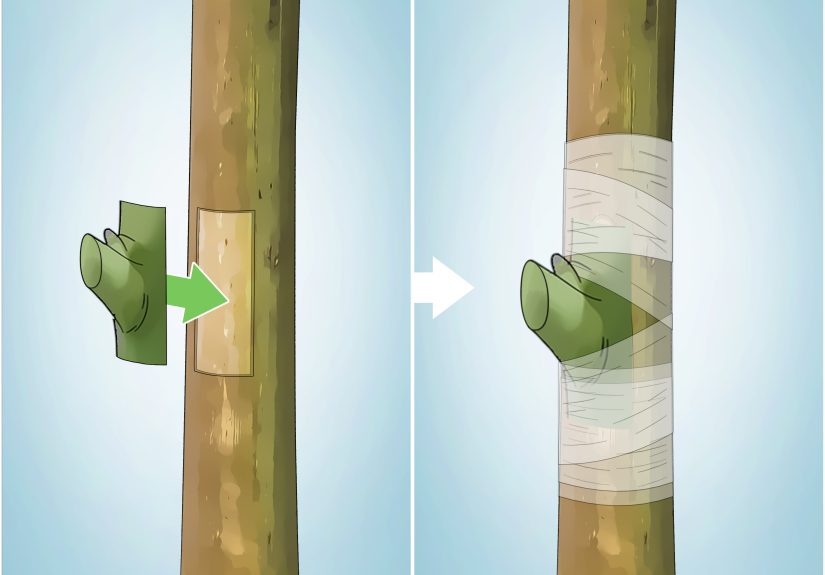
Patch budding is commonly used on species with thicker bark where T- and chip budding can be difficultpecans are the famous example. Instead of a shield or chip, you transfer a rectangular patch of bark that contains a bud and place it into a matching window cut in the rootstock.
Best use cases
- Thick-barked species (often pecan and some other nut/woody plants).
- When bark is slipping well (patch budding typically needs bark that lifts cleanly).
- Topworking situations where you’re adding a new variety to established stock or vigorous sprouts.
Step-by-step: How to patch bud
- Select the patch area on the rootstock: smooth bark, convenient height, and easy to wrap.
- Cut a rectangular window on the stock:
- Two horizontal cuts and two vertical cuts to define a rectangle.
- Carefully lift off the bark patch (like removing a tiny “door panel”).
- Cut a matching patch from the budstick that includes one bud. Match size as closely as possible.
- Place the bud patch into the stock window, ensuring good contact and correct orientation (bud pointing upward).
- Wrap firmly, sealing the edges while leaving the bud exposed. The goal is moisture retention and steady contact.
- Protect from drying: patch buds can fail if edges desiccatewrap coverage matters here.
Patch budding success notes
- Fit matters: gaps along edges reduce cambium contact and invite drying.
- Timing matters: do it when bark lifts cleanly.
- Vigor matters: patch budding onto vigorous, actively growing shoots or sprouts often improves take.
Aftercare: The Part That Turns “Bud Inserted” into “New Plant”
Budding isn’t finished when you wrap the tape. The union needs time to heal, and then you need to force the bud (encourage it to grow) at the right time.
Watering and stress control
- Keep the rootstock evenly watered. Drought stress dramatically lowers success.
- Avoid heavy nitrogen blasts right around buddingsteady growth is good; wild, soft growth can be problematic.
- Protect the bud site from mechanical bumps and curious pets/kids. (Dogs do not respect horticultural dreams.)
When to remove or loosen the wrap
- If you used a material that doesn’t degrade, check within a few weeks and remove or cut it once the bud has taken to avoid girdling.
- Stretch films may be left longer if designed to break down, but still inspect regularly.
Forcing the bud
- Fall budding: buds often stay dormant through winter; you typically force in spring by cutting back the stock above the bud.
- Spring/early summer budding: in some cases you can force sooner, but timing depends on species and local conditions.
- When cutting back, make a clean cut above the bud, often slightly slanted away so water sheds away from the bud union.
- Some growers leave a short stub temporarily above the bud to reduce breakage risk, then remove it later once the new shoot is stronger.
Training the new shoot
- As the bud grows, support it if needed and remove competing shoots from the rootstock.
- Label the variety immediately. Your future self will thank you loudly.
Troubleshooting: Why Buds Fail (and How to Fix It Next Time)
Problem: The bud dried out
Common causes: slow work pace, poor wrap seal, hot/dry conditions, budwood not kept moist/cool.
Fix: prep materials ahead, work in shade, wrap promptly, and keep budwood protected.
Problem: The bud looks okay, but never grows
Common causes: bud was immature or damaged, not forced properly, or rootstock outcompeted the bud.
Fix: use mature buds, force correctly at the right time, and remove competing shoots.
Problem: Tape girdled the stock
Common causes: wrap left on too long, especially with non-stretch or non-degrading tape.
Fix: schedule a check, cut the wrap on the opposite side of the bud, and remove carefully once healed.
Problem: Low take rate across many attempts
Common causes: poor cambium alignment, dull knife, incompatible scion/rootstock pairing, wrong season/timing, stressed plants.
Fix: sharpen blade, slow down for precision (yes, ironic), align at least one cambium edge, and improve timing and plant health.
FAQs (Fast Answers You’ll Actually Use)
Which method is “best”?
It depends on timing and species. If bark slips well, T-budding is fast and popular. If bark isn’t slipping, chip budding is often the better bet. For thick-barked species, patch budding can be the most practical option.
How long until I know it took?
Often within a few weeks you’ll see signs of healing/callus and the bud staying plump rather than shriveling. But “take” and “sprout” aren’t always immediateespecially with fall budding, where the bud may wait until spring.
Can I bud any plant?
Budding works best on many woody plants (fruit trees, roses, some ornamentals). Compatibility matters: usually within the same species, sometimes within closely related groups. Herbaceous plants typically use different propagation methods.
Real-World Experiences: What Usually Happens When You Start Budding (Extra )
Let’s talk about the part no one puts on the label: the learning curve. Budding looks simple on paperone bud, a few cuts, some tapeyet beginners often describe the first attempts as “surprisingly humbling.” That’s not failure; it’s just horticulture doing what horticulture does: making you earn it.
Experience #1: Your first buds are either too loose or too tight. Most people wrap with the emotional intensity of someone securing a mattress to a car roof. If you wrap too loosely, the bud chip can shift and cambium contact breaksno union, no take. If you wrap too tightly (especially with non-stretch tape), you can choke the stem as it grows. The practical sweet spot is “snug enough that nothing moves” plus a reminder in your calendar to check and remove or cut the wrap before girdling becomes a thing.
Experience #2: Budwood dries out faster than you expect. Gardeners often report that the difference between success and failure is measured in minutes, not hoursespecially on warm, breezy days. A common habit that improves results is setting up a small “budding station”: scion sticks wrapped and shaded, tape pre-cut, alcohol wipes handy, and rootstocks watered ahead of time. The less you wander around searching for supplies mid-cut, the less time your exposed tissues spend drying.
Experience #3: Chip budding feels awkward until suddenly it doesn’t. The matching-cuts part can be frustrating. Early on, your scion chip and rootstock notch may look like they were made by two different people… because they were: “Past You” and “Present You,” and neither has had enough practice yet. What experienced grafters often recommend is practicing the cuts on extra twigs firstno tape, no pressurejust repeat the motion until your knife angle becomes consistent. It’s like learning to slice a bagel evenly: the first few are wild, then your hands learn the geometry.
Experience #4: The bud takes… and then something snaps it off. This one hurts. New shoots can be tender and easy to break from wind, birds landing on them, or an accidental bump during weeding. Many growers learn to leave a short stub above the bud (temporarily) or add a gentle support stake once the bud pushes growth. This isn’t “being extra.” It’s protecting your investmentbecause after you successfully graft a bud, you become emotionally attached to it in a way that is not entirely rational.
Experience #5: Labeling becomes your best friend. In the moment, you think you’ll remember which bud is ‘Gala’ and which is ‘Fuji.’ Two months later, everything looks like “tree.” A simple habitlabel immediately, and write it like it needs to survive a small floodsaves a lot of confusion. Many gardeners also keep a quick note on timing (date and method), because it helps you refine what works in your microclimate.
The overall takeaway: budding success is less about perfect hands and more about a repeatable process: sharp knife, fresh budwood, correct timing, tight cambium contact, good sealing, and thoughtful aftercare. If your first round isn’t perfect, you’re not bad at buddingyou’re just in the part where your hands are learning what your eyes already understand.
Conclusion
Budding is a small-skill-with-big-payoff technique. Once you understand the “why” (cambium contact + moisture control + timing), the “how” gets easier fast. Use T-budding when bark slips nicely, lean on chip budding when it doesn’t, and pull out patch budding for thick-barked species that laugh at your T-cuts. Add solid aftercarewatering, wrap checks, and proper forcingand you’ll be turning single buds into whole new plants like it’s the most normal magic trick in the garden.