Table of Contents >> Show >> Hide
- Introduction: The Tiny Stitch Trick That Makes Crochet Grow Up
- What Does “Increase” Mean in Crochet?
- Way 1: Increase by Working Two Stitches Into One Stitch
- Way 2: Increase at the Beginning or End of a Row
- Way 3: Increase in the Round
- How to Read Crochet Increase Instructions
- Common Crochet Increase Mistakes and How to Fix Them
- Practice Pattern: A Simple Crochet Increase Swatch
- Best Projects for Practicing Crochet Increases
- Experience Section: Real-Life Lessons From Learning to Increase in Crochet
- Conclusion: Crochet Increases Are Small Moves With Big Results
Note: This publish-ready article is written in original American English and synthesizes practical crochet-increase guidance from reputable crochet education resources, including yarn brands, craft councils, and experienced crochet instructors.
Introduction: The Tiny Stitch Trick That Makes Crochet Grow Up
Learning how to increase in crochet is one of those skills that sounds suspiciously official, like something requiring a clipboard, a calculator, and maybe a stern yarn inspector. Thankfully, it is much friendlier than that. In crochet, an increase simply means adding stitches so your fabric becomes wider, rounder, fuller, or more shaped. That is it. No secret handshake required.
Once you understand crochet increases, you can do much more than make a rectangle. You can shape hats, amigurumi animals, sleeves, shawls, circles, ovals, granny squares, baskets, bags, sweaters, and those mysterious “quick weekend projects” that somehow still take three weekends and a snack break. Increasing is the reason a flat circle stays flat, a triangle shawl grows from a tiny point, and a stuffed bear has a head instead of a sad little yarn potato.
The main keyword here is simple: how to increase in crochet. But the real goal is even simpler: you will learn three practical ways to add stitches, where to place them, how to count them, and how to avoid the common mistakes that make crochet projects wave, ruffle, cup, lean, bulge, or generally behave like they have strong opinions.
This guide covers three beginner-friendly crochet increase methods: basic stitch increases, edge and row increases, and increases in the round. Each method works with common stitches such as single crochet, half double crochet, double crochet, and treble crochet. Grab yarn, a hook, and your willingness to pull out two rows without taking it personally. Let’s grow some fabric.
What Does “Increase” Mean in Crochet?
In crochet, to increase means to add one or more stitches to a row, round, corner, or specific part of a pattern. Most often, you increase by working two stitches into the same stitch. For example, if a pattern says “2 sc in next st,” you make two single crochet stitches into one stitch from the previous row or round. One stitch goes in, two stitches come out. Crochet math: surprisingly satisfying.
Patterns may abbreviate increase as inc. You may also see stitch-specific instructions like sc inc, hdc inc, or dc inc. These usually mean “work two of that stitch into the same stitch.” Some patterns spell it out more clearly, such as “2 dc in next stitch” or “work 3 stitches in corner space.”
Why Crochet Increases Matter
Crochet increases are used for shaping. Without them, many projects would be straight tubes, flat strips, or stubborn rectangles. Increases help you create:
- Flat circles for coasters, rugs, hats, and mandalas
- Rounded amigurumi heads and bodies
- Triangle shawls and bandanas
- Wider sleeves, garment shaping, and bust or hip shaping
- Granny square corners and motif expansion
- Chevron peaks, ripple patterns, and decorative stitch designs
The trick is not just adding stitches. The trick is adding them in the right place, at the right rate, with the right tension. Too many increases create ruffles. Too few create cupping. Random increases create what I lovingly call “abstract yarn weather.”
Way 1: Increase by Working Two Stitches Into One Stitch
The most common way to increase in crochet is to work two stitches into the same stitch. This method is the foundation for almost every crochet increase technique. It is easy, reliable, and works across the basic crochet stitches.
How to Make a Single Crochet Increase
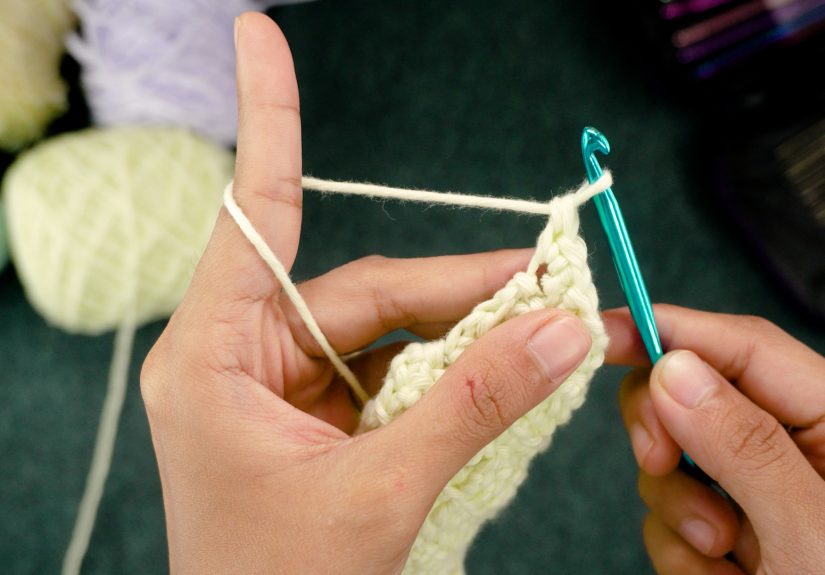
A single crochet increase, often written as sc inc, means you make two single crochet stitches in the same stitch.
- Insert your hook into the next stitch.
- Yarn over and pull up a loop.
- Yarn over and pull through both loops on the hook. That is your first single crochet.
- Insert your hook into the same stitch again.
- Yarn over and pull up a loop.
- Yarn over and pull through both loops on the hook. That is your second single crochet.
You started with one available stitch and ended with two new stitches. Your stitch count has increased by one. If your row had 10 stitches and you worked one single crochet increase, the new row will have 11 stitches, assuming everything else was worked evenly.
How to Increase Half Double Crochet, Double Crochet, and Treble Crochet
The same idea applies to taller stitches. To make a half double crochet increase, work two half double crochet stitches into the same stitch. To make a double crochet increase, work two double crochet stitches into the same stitch. To make a treble crochet increase, work two treble crochet stitches into the same stitch.
For example, a double crochet increase looks like this:
- Yarn over.
- Insert the hook into the indicated stitch.
- Yarn over and pull up a loop.
- Yarn over and pull through two loops.
- Yarn over and pull through the remaining two loops.
- Work another double crochet into that same stitch.
That is it. The stitch may be taller, but the increase logic does not change. Crochet likes consistency. It just sometimes hides it under abbreviations.
When to Use the Basic Increase
Use this basic increase when a pattern tells you to add stitches in a row or round. It is common in hats, toys, garment shaping, circles, baskets, shawls, and textured patterns. This is also the increase you will use most often when designing simple projects yourself.
Here is a simple example in single crochet:
In Row 2, the “2 sc in next st” creates the increase. Your project widens by one stitch. It may not look dramatic at first, but repeat increases over several rows and you can create slanted sides, curves, sleeves, triangles, and custom shaping.
Pro Tip: Use Stitch Markers Before Your Brain Wanders Away
If a pattern asks you to increase in certain spots, mark those stitches before you begin the row or round. A stitch marker is basically a tiny parking cone for your yarn. It tells you, “Do the important thing here.” This is especially helpful when working dark yarn, fuzzy yarn, or late-night crochet sessions when your counting skills have left the building.
Way 2: Increase at the Beginning or End of a Row
The second way to increase in crochet is by adding stitches at the edges of your work. Edge increases are used when you want a piece to widen gradually from one or both sides. This method is common in shawls, sleeves, cardigans, shaped panels, triangles, and decorative edges.
Increasing at the End of a Row
The easiest edge increase is at the end of a row. Simply work two stitches into the final stitch instead of one.
This creates a gentle widening on one side. If you do this every row, the edge will slant outward. If you do it every other row, the shaping will be more gradual. If you do it whenever you feel emotionally moved, your project may become modern art. Respectable, but possibly not the sweater you planned.
Increasing at the Beginning of a Row
Increasing at the beginning of a row can be done by working two stitches into the first stitch. For single crochet, this is straightforward:
For taller stitches, pay attention to the turning chain. In some patterns, the turning chain counts as a stitch. In others, it does not. This small detail can make a big difference. If your turning chain counts as the first stitch, working into the very first stitch may accidentally add an extra increase. If the turning chain does not count, then working into the first stitch is usually correct.
When in doubt, check the pattern notes. If there are no notes, count your stitches after the row and look at the edge. A tidy edge tells the truth. A mysterious bump usually has receipts.
Increasing on Both Edges
To widen a piece evenly, increase at both the beginning and end of the row. This adds two stitches total.
This method is useful for triangle shapes, sleeves, garment panels, and any project that needs symmetrical growth. You can use it with single crochet, half double crochet, double crochet, and many stitch patterns, as long as you keep the stitch count under control.
Adding Chains for Larger Edge Increases
Sometimes you need to add more than one stitch at the edge, such as when shaping an armhole, creating a sleeve, or adding a block in corner-to-corner crochet. In those cases, patterns may ask you to chain extra stitches at the beginning or end of a row and then work into those chains on the next pass.
For example, if you need to add three stitches at the beginning of a single crochet row, you might chain three plus one turning chain, then work back into those chains. This creates new foundation stitches rather than forcing several stitches into one edge stitch.
This technique is powerful, but it takes practice. Keep your chains even, not too tight, and not so loose that they look like they are trying to escape. A consistent foundation chain makes the next row much easier.
Way 3: Increase in the Round
The third way to increase in crochet is increasing in the round. This is essential for circles, hats, amigurumi, bags, baskets, motifs, and anything that grows outward from a center point. Increasing in the round is where stitch placement matters most.
The Basic Formula for a Flat Crochet Circle
A flat crochet circle grows by adding a set number of stitches each round. The number depends on the height of your stitch and your tension, but the general idea is simple: increase evenly around the circle.
For a basic single crochet circle, you might begin with 6 single crochet stitches in a magic ring. Then you increase by 6 stitches each round:
Notice the pattern. Each round adds one more regular stitch between increases. This spreads the increases evenly and helps the circle stay flat.
Why Circles Ruffle or Cup
If your circle ruffles like a potato chip, you probably have too many increases or your stitches are too loose. If your circle cups like a tiny bowl, you may have too few increases or your tension may be too tight. Crochet circles are wonderfully honest. They show your math and your mood.
To fix ruffling, try fewer increases in the next round or use a slightly smaller hook. To fix cupping, add more increases or use a slightly larger hook. Also, smooth the circle gently with your hands as you work. Sometimes the fabric just needs a little encouragement, not a full courtroom trial.
Staggering Increases for a Rounder Circle
If you place increases directly above each other every round, your circle may develop corners or a subtle hexagon shape. This is common, especially in single crochet. To make the circle look rounder, stagger the increase placement.
For example, instead of always working:
You might offset the next round like this:
This moves the increases away from the same vertical lines. The result is smoother and more circular, which is especially useful for coasters, bag bottoms, rugs, and amigurumi.
Invisible Increases for Amigurumi
For amigurumi, visible increase holes can be annoying. They are tiny, but once you notice them, they wave at you forever. An invisible single crochet increase can reduce those little gaps.
One common invisible increase method is:
- Work one single crochet into the front loop only of the indicated stitch.
- Work a second single crochet into both loops of the same stitch.
This places the two stitches slightly differently, helping them sit closer together. The increase is still there, but it looks smoother. Invisible increases are especially helpful for stuffed animals, dolls, ornaments, and small sculptural crochet projects where every stitch is visible.
How to Read Crochet Increase Instructions
Crochet patterns often use shorthand. Once you understand the language, increase instructions become much less intimidating. Here are common phrases you may see:
- inc: Increase, usually by making two stitches in one stitch.
- sc inc: Make two single crochet stitches in the same stitch.
- 2 dc in next st: Make two double crochet stitches in the next stitch.
- 3 dc in corner sp: Make three double crochet stitches in the corner space.
- [sc, inc] around: Repeat one single crochet, then one increase, all the way around.
- Increase evenly: Add the required number of stitches spaced as evenly as possible across the row or round.
The phrase “increase evenly” deserves a special mention because it sounds calm while quietly asking you to do math. If you need to add 5 stitches across 50 stitches, divide 50 by 5. That gives you 10, so you would work an increase about every 10 stitches. It does not have to be perfect down to the molecule, but it should be balanced enough that the fabric does not bunch in one area.
Common Crochet Increase Mistakes and How to Fix Them
Mistake 1: Forgetting to Count Stitches
Counting stitches is not glamorous, but neither is discovering your blanket has become a trapezoid. Count at the end of every row or round when practicing increases. Once you are more confident, count at regular checkpoints.
Mistake 2: Increasing in the Wrong Stitch
It is easy to place an increase one stitch early or late. This can shift shaping and make seams spiral, corners lean, or motifs look uneven. Use stitch markers for important increase points, especially in rounds.
Mistake 3: Confusing Turning Chains
Turning chains can count as stitches or not, depending on the pattern. If your edges look bulky, holey, or uneven, review whether you are supposed to work into the base of the turning chain. This is one of the sneakiest causes of accidental increases.
Mistake 4: Using Too Much Tension
An increase places multiple stitches into one spot, so it can feel crowded. If you pull too tightly, the fabric may pucker. Keep your tension relaxed and give the stitches room to sit beside each other.
Mistake 5: Ignoring Gauge
Gauge matters when increases are part of garment shaping. A few extra-tight rows can affect sleeve width, bust shaping, or hat size. Make a gauge swatch if fit matters. Yes, swatching feels like homework. It is also cheaper than making an adult sweater that fits a houseplant.
Practice Pattern: A Simple Crochet Increase Swatch
This quick swatch helps you practice increasing at the beginning, middle, and end of a row.
After completing the swatch, look at the shape. The increases at the edges widen the sides. The middle increase adds fullness inside the fabric. This small sample teaches the same shaping principles used in larger projects.
Best Projects for Practicing Crochet Increases
Once you know how to increase in crochet, practice on small projects before jumping into a fitted cardigan with 14 pages of instructions and emotional consequences. Good beginner projects include:
- Coasters: Practice flat circle increases.
- Triangle scarves: Practice edge increases.
- Simple hats: Practice round increases before working even.
- Amigurumi balls: Practice invisible increases and stitch markers.
- Granny squares: Practice corner increases using chain spaces.
- Washcloths: Practice controlled shaping in rows.
Small projects give quick feedback. If something goes wrong, you can fix it without unraveling enough yarn to make a dramatic scarf for your chair.
Experience Section: Real-Life Lessons From Learning to Increase in Crochet
The first time many crocheters learn increases, they assume the instruction “make two stitches in one stitch” is too simple to be important. Then they try to make a hat, and suddenly the top looks like either a tortilla, a teacup, or a soft yarn mushroom. That is when the truth becomes clear: increasing is simple, but controlled increasing is a skill.
One of the most useful experiences is practicing increases with smooth, light-colored yarn. Dark yarn may look elegant, but when you are learning where to insert the hook, black yarn can feel like crocheting into a tiny midnight forest. A medium-weight yarn in a light color makes the V-shaped stitch tops easier to see. Pair it with a hook size recommended on the yarn label, and your hands will thank you.
Another lesson is that stitch markers are not optional decorations. They are tiny heroes. When working in the round, especially for amigurumi, place a marker in the first or last stitch of each round. If the pattern repeats increases every few stitches, move markers into those increase points until the rhythm becomes obvious. This prevents the classic problem of finishing a round and thinking, “Why do I have three extra stitches and a sense of dread?”
Counting is also more important than speed. Many beginners want to crochet faster, but speed without counting can create chaos with excellent momentum. A better habit is to count at the end of every row or round while learning. Say the numbers out loud if needed. Crochet is already a hobby involving a hook and string; talking to it is not where things become weird.
Tension is another experience-based teacher. If your increases look tight and pinched, loosen your grip slightly. If they look floppy or holey, tighten your tension a little or try a smaller hook. Increases naturally place extra yarn into one spot, so the surrounding stitches need to remain even. A calm hand usually creates a cleaner increase than a hand gripping the hook like it owes money.
It also helps to understand the purpose of each increase. In a flat circle, increases are distributed evenly so the fabric expands without ruffling. In a triangle shawl, increases may happen at the edges or center spine to create a graceful shape. In amigurumi, increases build volume and curves. In garments, increases create fit. Once you know why the increase is there, the pattern becomes easier to follow.
Finally, do not fear unraveling. Frogging, or ripping back stitches, is part of crochet. Every experienced crocheter has pulled out rows, rounds, and entire “almost finished” projects while staring into the distance. It is not failure. It is editing. A crochet increase teaches you how fabric grows, and every correction improves your eye. With practice, you will begin to spot where an increase belongs, how the fabric should behave, and when your project is politely asking for a stitch count before things get dramatic.
Conclusion: Crochet Increases Are Small Moves With Big Results
Learning the three main ways to increase in crochet gives you control over shape, size, and structure. The basic increase, made by working two stitches into one stitch, is the foundation. Edge and row increases help you widen flat pieces, shape garments, and build triangles. Increases in the round help you create circles, hats, baskets, toys, and motifs that grow evenly from the center.
The best way to master crochet increases is to practice them in small, low-pressure projects. Count your stitches, use markers, watch your turning chains, and pay attention to how the fabric responds. If it ruffles, cups, leans, or bulges, the yarn is giving you useful information. Listen to it, adjust, and keep stitching.
Once increases make sense, crochet patterns become much less mysterious. You are no longer just following instructions. You are shaping fabric on purpose. That is the moment crochet starts feeling less like a puzzle and more like a creative superpower, only softer and with better blankets.