Table of Contents >> Show >> Hide
- What “Gentle” Really Means (and Why It Matters)
- Method 1: The Nano Airline “Micro-Vac” (Perfect for Shrimp & Fry)
- Method 2: The Gentle Gravel Vacuum With a Prefilter Sponge (Shrimp-Safe Classic)
- Method 3: The “No-Panic” Siphon With a Primer Bulb (Gentle, Easy Starts Every Time)
- Pro-Level Gentle Techniques (Work With Any DIY Siphon)
- Troubleshooting: When Your Siphon Misbehaves
- Wrap-Up: Pick Your Gentle Weapon
- Extra: 10 Real-World “Gentle Siphon” Lessons Aquarists Learn the Hard Way (So You Don’t Have To)
- 1) Your first siphon will be too powerful (and that’s normal)
- 2) Shrimp treat vacuum time like a meet-and-greet
- 3) The airline micro-vac feels slowuntil you realize that’s the point
- 4) Planted tanks don’t want deep vacuuming
- 5) “Pinch the hose” is the most underrated skill in fishkeeping
- 6) Your bucket setup matters more than you think
- 7) The cleanest tanks aren’t always the most aggressively vacuumed
- 8) “Gentle” is also about your hands
- 9) Once you use a primer bulb, you rarely go back
- 10) Gentle siphoning is basically “tank reading”
If you’ve ever tried to “clean the gravel” and accidentally launched a shrimp into low Earth orbit (or uprooted your favorite plant like you’re auditioning for
Extreme Aquascaping: The Reckoning), you already know this truth: not every aquarium vacuum is built for delicate tanks.
The good news: you don’t need fancy gadgets to do gentle maintenance. With a little tubing and a couple of smart tweaks, you can build a siphon that
removes mulm (that fluffy “tank dust”), leftover food, and fish wastewithout turning your tank into a whirlpool of regret.
What “Gentle” Really Means (and Why It Matters)
A siphon is basically gravity doing you a favor. Water flows from the tank down to a lower container, and that moving water carries debris along for the ride.
Most gravel vacuums work because debris is lighter than gravelso the gunk keeps moving while heavier substrate drops back down.
A gentle aquarium siphon does three things well:
- Controls flow so you can vacuum slowly (crucial for shrimp, fry, bettas, and nano tanks).
- Protects livestock with a barrier (sponge, mesh, or “filter sock” hack) so nothing gets sucked up unexpectedly.
- Targets debris without over-stirring the substrateespecially in planted tanks and sand beds.
Quick safety note (because we like you)
Some older guides mention starting a siphon by mouth. Skip that. Aquarium water isn’t sterile, and nobody wants “Eau de Fish Bucket” as a beverage.
Use a primer bulb, a syringe, or the fill-and-cap method instead. Also: dedicate a bucket to aquarium use (no soap residue, no surprise chemicals).
Method 1: The Nano Airline “Micro-Vac” (Perfect for Shrimp & Fry)
If your tank is smallor your residents are tiny and easily offendedthis micro-vac is your best friend. It uses airline tubing to keep the flow naturally low,
so you can do careful spot-cleaning around plants, hardscape, and baby critters.
Best for
- Nano tanks (1–10 gallons)
- Shrimp tanks, fry grow-outs, breeder boxes
- Spot-cleaning bare-bottom tanks or thin sand
Materials
- 6–10 feet of standard aquarium airline tubing
- One rigid airline tube (the straight hard plastic piece) or a plastic pipette tip
- A small syringe (10–20 mL) or a turkey baster (for priming)
- Optional: a tiny airline valve or clamp for even finer flow control
- Bucket or container placed lower than the tank
How to build it
- Push the rigid airline tube into one end of the airline tubing. This becomes your “wand.”
- If you have an airline valve, install it mid-line so you can dial the flow down even more.
- Keep the wand end short and maneuverablethink “paintbrush,” not “vacuum hose from a car wash.”
How to start the siphon (no mouth required)
- Submerge the airline tubing completely in the aquarium to fill it with water as much as possible.
- Pinch the bucket end shut with your fingers.
- Move the pinched end into your bucket and release.
- If it’s stubborn, use a syringe/baster at the bucket end to pull a little water through and “wake up” gravity.
How to vacuum gently
- Hover the tip just above the substrate and “paint” the debris toward the opening.
- For gravel, lightly dip into the top layerdon’t jab like you’re aerating a lawn.
- If a shrimp investigates the tip (they will), pause flow with the valve or pinch the tubing. Problem solved.
Why this works
Airline tubing has a narrow diameter, which naturally limits flow rate. That means you can remove waste without draining half the tank in 30 secondsor
creating a surprise amusement-park ride for your livestock.
Method 2: The Gentle Gravel Vacuum With a Prefilter Sponge (Shrimp-Safe Classic)
This is the “traditional” gravel vac conceptclear tubing plus a rigid tubemade safer and calmer with two upgrades:
a prefilter sponge and flow control. It’s the method that scales well from medium tanks to bigger community setups,
while still protecting small fish and inverts.
Best for
- Community tanks with gravel
- Beginner-to-intermediate setups that need routine debris removal
- Anyone who wants “store-bought behavior” with DIY flexibility
Materials
- 6–8 feet of clear vinyl tubing (choose a smaller inner diameter for gentler flow)
- 1 piece of rigid clear tube (acrylic tube, rigid siphon tube, or smooth PVC) 8–12 inches long
- 1 prefilter sponge (intake sponge) sized to fit over the rigid tube end
- Optional: hose clamp, spring clamp, or inline ball valve
- Bucket lower than tank
How to build it
- Attach the vinyl tubing to the rigid tube. If it’s snug, warm the tubing end in hot tap water first so it slides on easier.
- Fit the prefilter sponge over the intake end (the end that goes in the tank).
- If you want precision control, add a valve mid-line, or plan to pinch the hose while you work.
How to use it without chaos
- Prime the siphon (see Method 1 priming techniques, or use a primer bulb if you have one).
- Lower the tube into the gravel until debris lifts. Then slightly lift and swirl the tube so the gunk rises and the gravel falls back down.
- To make it gentler mid-clean, pinch the hose briefly. Gravel drops back; lighter debris continues moving out when you release.
Gentle mode tips for different substrates
- Gravel: short dips, small sections. You’re “lifting debris,” not excavating fossils.
- Sand: hover and skim the surface. Deep plunges can pull sand and cloud the tank.
- Planted tanks: focus on open areas and visible waste. Avoid yanking near rootsplants dislike surprise dentistry.
Why the sponge matters
The prefilter sponge acts like a bouncer at a very exclusive club. Debris gets in. Shrimp, fry, and curious fish do not.
It also reduces the “slam” of suction at the tube opening, which is what usually makes a gravel vac feel too aggressive.
Method 3: The “No-Panic” Siphon With a Primer Bulb (Gentle, Easy Starts Every Time)
The biggest frustration with siphons is starting them. The second biggest is starting them too well and draining water like you opened a portal to the basement.
A primer-bulb siphon fixes both problems: easy starts and smoother, more controllable flow.
Best for
- Anyone who hates fighting air bubbles to start a siphon
- Medium to large tanks where you want consistency
- Gentle water changes with less splashing and less drama
Materials
- 6–10 feet of clear vinyl tubing
- A primer bulb (aquarium priming bulb or compatible hand primer bulb)
- Rigid intake tube (optional but helpful)
- Optional: prefilter sponge or mesh cover
- Optional: inline valve/clamp for precise flow control
How to assemble it
- Cut the tubing and insert the primer bulb inline (follow the arrow on the bulb for flow direction).
- Attach the intake end to your rigid tube (or keep it as flexible tubing for tight spaces).
- Add a sponge/mesh cover if you’re working with shrimp, fry, or tiny fish.
How to use it gently
- Place your bucket lower than the tank.
- Put the intake end in the tank, bucket end in the bucket.
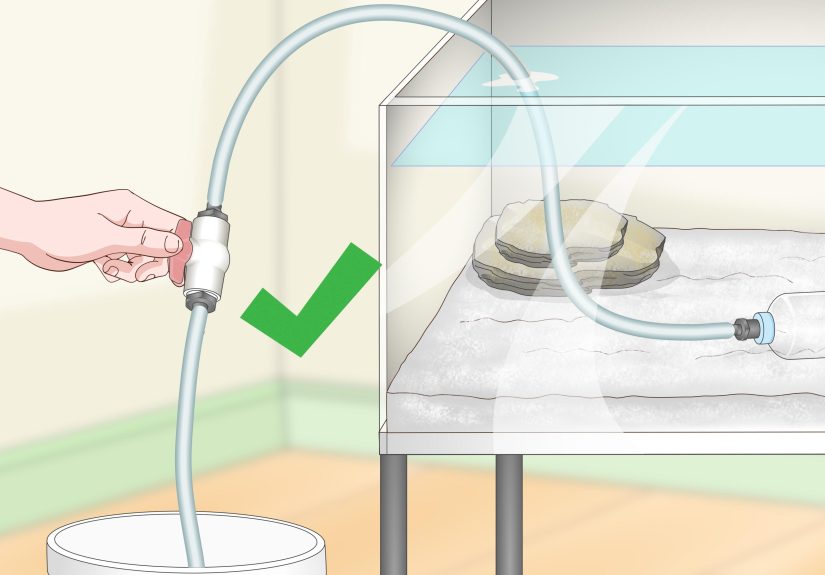
- Squeeze the primer bulb a few times until water starts flowing.
- Adjust gentleness by:
- Using a smaller tubing diameter
- Partially closing an inline valve
- Raising the bucket closer to tank level (less height difference = less flow)
This method is especially nice for routine maintenance: less fussing, fewer false starts, and no “why isn’t physics working today?” moments.
Pro-Level Gentle Techniques (Work With Any DIY Siphon)
1) Clean in sections, not all at once
Vacuuming the entire substrate in one go can be overkill for many tanks. A calmer routine is to rotate sectionslike mowing your lawn in thirdsso you remove
waste without over-disturbing the aquarium’s balance.
2) Use the “pinch-and-release” rhythm
If your vacuum starts grabbing gravel (or shrimp), pinch the tube to stop flow, let heavy material fall back, then release to continue pulling debris.
It’s basically manual cruise control.
3) Add a barrier when you’re protecting tiny lives
Prefilter sponges are ideal, but you can also use fine mesh as a temporary guard on the intake for extra safety during water changes in shrimp-heavy tanks.
Troubleshooting: When Your Siphon Misbehaves
Problem: “It won’t start.”
- Make sure the bucket is lower than the tank (gravity needs a downhill).
- Remove air from the line by filling the tubing underwater first.
- Use a primer bulb or syringe to pull the first bit of water through.
Problem: “It’s too strong.”
- Switch to smaller diameter tubing.
- Add an inline valve or pinch clamp.
- Reduce the height difference between tank and bucket.
Problem: “I’m sucking up sand/plants/shrimp.”
- Hover above sand rather than plunging.
- Use a sponge prefilter or mesh guard.
- Go slower and stop flow when curious critters approach.
Wrap-Up: Pick Your Gentle Weapon
If you want ultra-control for a nano tank, build the airline micro-vac.
If you want an all-around DIY workhorse, go with the rigid-tube gravel vac plus sponge prefilter.
And if you want effortless starts with smooth flow, the primer bulb siphon is a life upgrade you’ll wonder how you lived without.
The best part? Each of these can be built with inexpensive parts, customized to your tank, and adjusted over time as your aquarium changes.
Your fish won’t write you a thank-you card, but they will appreciate not being caught in a surprise whirlpool during cleaning day.
Extra: 10 Real-World “Gentle Siphon” Lessons Aquarists Learn the Hard Way (So You Don’t Have To)
Aquarists love sharing tips, and a lot of those tips sound like they were earned through minor chaos. Here are the most common “experience-based” lessons
people repeat when the topic is gentle siphoningand they’re worth stealing.
1) Your first siphon will be too powerful (and that’s normal)
Many people start with wide tubing because it “seems faster.” It is fasterright up until you realize you just removed 30% of the tank while trying to
clean one corner. The gentle fix is usually boring but effective: smaller tubing, a valve, or simply raising the bucket so gravity doesn’t go full superhero.
2) Shrimp treat vacuum time like a meet-and-greet
If you keep shrimp, they will march up to the intake like it’s the newest ride at the theme park. Hobbyists often say their biggest “aha” moment was adding a sponge
prefilter or a temporary mesh guard. Suddenly, water changes stop feeling like you’re defusing a tiny, wiggly bomb.
3) The airline micro-vac feels slowuntil you realize that’s the point
People who switch to airline tubing often describe it as “finally being able to clean without panic.” You’re not racing the siphon anymore. You’re guiding it.
That slower flow makes it easier to spot-clean around plants, driftwood, and feeding areas where debris piles up.
4) Planted tanks don’t want deep vacuuming
A common story: someone plunges a gravel vac into a heavily planted area, and the tank responds by releasing a cloud of debris and one very offended plant.
Over time, many aquascapers settle into a gentler routine: skim the surface, focus on visible waste, and rely on plant roots and beneficial microbes to do their part.
5) “Pinch the hose” is the most underrated skill in fishkeeping
It’s funny how often the simplest technique wins. People routinely mention that pinching the hose for a second lets gravel drop back down and stops accidental suction
of fish or shrimp. It’s the aquarium equivalent of tapping the brakes instead of slamming them.
6) Your bucket setup matters more than you think
Lots of gentle-siphon success comes down to logistics: a stable bucket, a clip to keep the hose from popping out, and a height difference you can control.
Some hobbyists even put the bucket on a low stool for a calmer flowless drain speed, less chance of “oops, that was half the tank.”
7) The cleanest tanks aren’t always the most aggressively vacuumed
Beginners sometimes feel they must vacuum every inch, every time. With experience, many shift toward consistency instead of intensity:
smaller, regular cleanups; rotating substrate sections; and avoiding over-stirring. The tank stays stable, and maintenance stops feeling like a monthly battle.
8) “Gentle” is also about your hands
Slow movements keep fish calmer and reduce debris clouds. People often notice that when they stop “chasing dirt,” the dirt is easier to remove.
A careful hover, a light swirl, and a steady pace usually outperform frantic vacuuming.
9) Once you use a primer bulb, you rarely go back
The most common reaction to a primer-bulb siphon is: “Why didn’t I do this sooner?” Starting a siphon becomes predictable instead of a comedy sketch,
and that predictability helps you keep flow gentle from the very first second.
10) Gentle siphoning is basically “tank reading”
Experienced keepers tend to watch where waste collects (behind hardscape, under feeding spots, in low-flow corners) and clean those areas first.
Over time, your siphon becomes less of a “vacuum everything” tool and more of a precision instrument for the spots that actually need it.
If there’s a moral to all these shared experiences, it’s this: you don’t need more forceyou need more control. Build for control, practice the pinch-and-release,
protect the intake, and your aquarium maintenance will feel less like wrestling a hose… and more like a calm, repeatable routine.