Table of Contents >> Show >> Hide
- Why Proper Turkey Storage Matters
- 1. Store a Fresh Uncooked Turkey in the Refrigerator
- 2. Store a Frozen Uncooked Turkey in the Freezer
- 3. Store an Uncooked Turkey in a Properly Iced Cooler for Short-Term Backup
- How Safe Thawing Fits Into Turkey Storage
- Common Mistakes People Make When Storing Raw Turkey
- Quick Cheat Sheet: How to Store an Uncooked Turkey
- Final Thoughts
- Experience Section: What Real-Life Turkey Storage Usually Looks Like
- SEO Metadata
Buying a turkey feels wonderfully responsible right up until you get it home and realize it is now the largest, coldest roommate in the house. It takes up half a shelf, threatens your leftovers, and somehow turns your refrigerator into a game of edible Tetris. But if you want a holiday bird that is safe, fresh, and ready for the oven, knowing how to store an uncooked turkey matters just as much as seasoning it.
This guide breaks down three safe ways to store an uncooked turkey: in the refrigerator, in the freezer, and in a properly packed cooler when refrigerator space is tight. Along the way, you’ll also get practical tips on raw turkey storage, safe thawing, how long turkey lasts in the fridge, and the mistakes that make food safety experts sigh into the void.
Why Proper Turkey Storage Matters
Raw turkey is perishable poultry, which means it needs cold temperatures and careful handling from the moment you bring it home. When turkey is stored correctly, you reduce the risk of bacterial growth, protect the quality of the meat, and avoid cross-contamination with the cheesecake, cranberry sauce, or that innocent container of cut fruit minding its own business on the next shelf.
Proper storage also helps with meal planning. A fresh turkey has a short refrigerator life. A frozen turkey gives you much more flexibility. And if you’re dealing with a packed holiday kitchen, a cooler can serve as a short-term backup plan, but only if it is truly cold enough. In other words, turkey storage is not glamorous, but it is the reason dinner happens without drama.
1. Store a Fresh Uncooked Turkey in the Refrigerator
If you bought a fresh turkey, the refrigerator is its home base. This is the best method for short-term storage when you plan to cook the bird within a day or two.
When Refrigerator Storage Makes Sense
Refrigerator storage is ideal if you bought your turkey close to cooking day and want to skip the thawing process. It is also the simplest option if you found a fresh bird on sale and have enough room to keep it cold without cramming it beside five pie boxes and a mystery casserole.
How to Store a Fresh Turkey Safely
Keep the turkey in its original packaging until you are ready to prep it. Set it on a rimmed tray, roasting pan, or large container to catch any juices. Then place it on the bottom shelf of the refrigerator so drips do not land on produce, leftovers, or ready-to-eat foods. This one step can save you from turning your refrigerator into a cross-contamination carnival.
Your refrigerator should stay at 40°F or below. If you do not know the actual temperature, this is the moment to stop trusting vague dial settings that say things like “colder” and “coldest.” Use an appliance thermometer. Turkey is not the food to freestyle.
How Long Can Raw Turkey Stay in the Fridge?
A whole fresh raw turkey should generally be cooked within 1 to 2 days. That timeline is shorter than many people expect, which is why buying a turkey too early can backfire. If your schedule changes, freeze it within that window rather than hoping it magically becomes more durable through positive thinking.
Best Refrigerator Storage Tips
- Store the turkey on the bottom shelf.
- Keep it wrapped until prep time.
- Use a tray or pan to catch leaks.
- Do not place it next to foods you will eat raw.
- Cook or freeze it within 1 to 2 days.
Example: If you buy a fresh turkey on Tuesday afternoon for a Thursday dinner, refrigerator storage is perfect. If you buy it on Saturday for a Thursday dinner, you should freeze it or choose a frozen bird from the start.
2. Store a Frozen Uncooked Turkey in the Freezer
If your holiday meal is still days or weeks away, the freezer is the smartest and safest place to store an uncooked turkey. Frozen storage gives you breathing room, which is especially useful if you enjoy shopping early, panic-shopping late, or simply like having a backup bird available.
Why the Freezer Works So Well
A turkey stored at 0°F or below stays safe for a long time. For best quality, a whole raw turkey is commonly used within about 1 year. That does not mean you should treat your freezer like an archaeological site, but it does mean you can buy ahead without fear.
How to Freeze a Turkey the Right Way
If the turkey is already sold frozen, leave it frozen until you are ready to thaw it. Keep it in its original wrapper and place it in the coldest, most stable part of the freezer. Try not to wedge it in the door or near spots that warm up every time someone opens the freezer looking for ice cream.
If you bought a fresh turkey but are not cooking it within 1 to 2 days, freeze it promptly. The sooner it goes into the freezer, the better the quality will be later.
Freezer Storage Tips That Actually Help
- Label the turkey with the purchase date if it did not come frozen.
- Keep it in the original packaging for short-term freezing.
- If storing long-term, add an extra freezer-safe wrap or bag to help prevent freezer burn.
- Leave enough room around it for cold air circulation.
- Do not thaw and refreeze repeatedly just because your menu keeps changing its mind.
How Long Does It Take to Thaw Later?
Freezer storage is convenient, but thawing a turkey is not a last-minute hobby. In the refrigerator, plan on roughly 24 hours for every 4 to 5 pounds. That means a 16-pound turkey may need about 4 days to thaw safely in the fridge. A giant holiday bird can take up nearly a workweek of refrigerator space, which feels rude, but the math is the math.
Once a turkey is thawed in the refrigerator, it can usually stay there for 1 to 2 more days before cooking. That extra cushion is one of the big benefits of refrigerator thawing.
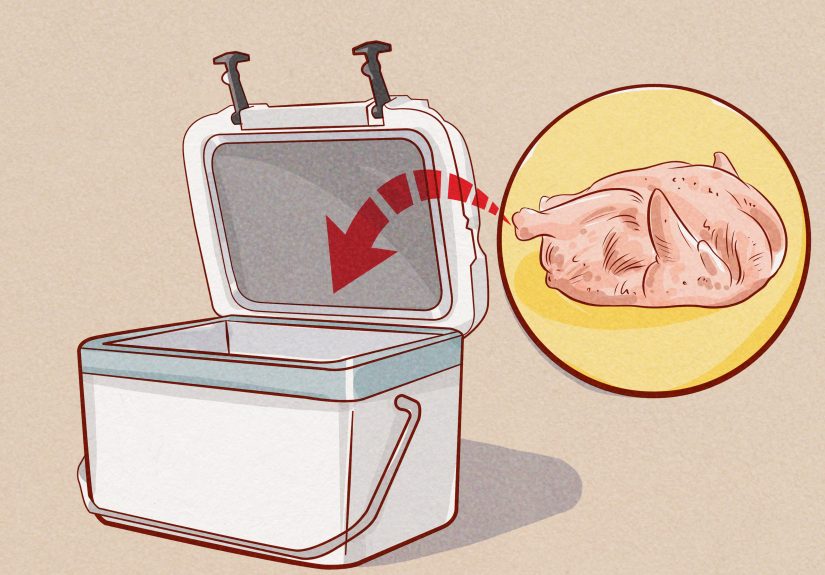
3. Store an Uncooked Turkey in a Properly Iced Cooler for Short-Term Backup
This third method is the practical wildcard: a well-insulated cooler packed with ice or frozen gel packs. Let’s be clear: a cooler is not the ideal permanent home for raw turkey. But it can work as a short-term storage solution if your refrigerator is full, you are transporting the bird, or you need a temporary overflow zone.
When a Cooler Is Useful
A cooler makes sense when you are bringing a turkey home from the store, traveling to another kitchen, or dealing with holiday refrigerator gridlock. It can also help if you are keeping a bird cold for a short window before moving it into the fridge or freezer.
The Rule That Matters Most
The cooler must hold the turkey at 40°F or below. If you cannot confirm that with a thermometer, the cooler is just a plastic optimism box and should not be trusted with poultry.
How to Set Up a Cooler Safely
- Start with a clean cooler.
- Use plenty of ice or frozen gel packs.
- Keep the turkey in its original wrapper or in leakproof packaging.
- Set the turkey in a tray, pan, or sealed bag to prevent drips.
- Keep ready-to-eat foods separate.
- Check the cooler temperature with a thermometer.
- Move the turkey to a refrigerator or freezer as soon as possible.
What Not to Do
Do not assume that cold outdoor weather makes your porch, garage, or car trunk a safe storage zone. Outdoor temperatures swing. Sun hits surfaces. Night gets cold, day gets warm, and suddenly your turkey is participating in a science experiment you never meant to run. A cooler only works if you actively maintain safe temperatures.
Think of cooler storage as a short-term bridge, not a lazy substitute for refrigeration.
How Safe Thawing Fits Into Turkey Storage
Technically, thawing and storage are different topics. In real kitchens, though, they are basically cousins who always show up together. If you are storing a frozen turkey, you also need to know how to thaw it safely without turning your dinner into a microbial block party.
Best Method: Thaw in the Refrigerator
The safest method is refrigerator thawing. Keep the turkey in its original wrapper, place it in a pan or container, and let it thaw gradually in the refrigerator. Plan on about 24 hours for every 4 to 5 pounds. This method keeps the turkey at a safe temperature the entire time and gives you that extra 1 to 2 day holding window before cooking.
Faster Method: Cold Water Thawing
If time got away from you and the turkey is still frozen while your guests are texting “What time should we come over?”, cold water thawing is the faster option. Keep the bird in a leakproof wrapper or bag, submerge it in cold water, and change the water every 30 minutes. Estimate about 30 minutes per pound. The catch is important: once thawed by this method, the turkey should be cooked immediately.
What Never Counts as Safe Thawing
Do not thaw turkey on the counter. Not for an hour. Not “just while I clean the kitchen.” Not “because my grandma did it.” Room-temperature thawing lets the outer layers warm up too much while the center stays frozen. That is exactly the kind of chaos food safety guidance tells you to avoid.
Common Mistakes People Make When Storing Raw Turkey
Turkey storage is straightforward, but the holiday rush makes people creative in all the wrong ways. Here are the mistakes that cause the most trouble:
Buying a Fresh Turkey Too Early
Fresh birds are not marathoners. If you buy one too soon, you may run out of safe refrigerator time before cooking day.
Skipping the Tray Under the Turkey
Raw poultry juices do not belong loose in the fridge. Use a tray, pan, or container and save yourself a cleanup session that requires both soap and regret.
Overstuffing the Refrigerator
If the fridge is packed so tightly that cold air cannot circulate, temperatures can rise. The turkey may be on the shelf, but it is no longer properly chilled.
Trusting Labels More Than Temperatures
“Fresh,” “all natural,” and “premium” are nice words. None of them replace the need for a refrigerator at 40°F or below and a freezer at 0°F or below.
Using a Cooler Without Monitoring It
A cooler is safe only when it stays cold enough. Add a thermometer or do not use it for raw poultry storage.
Quick Cheat Sheet: How to Store an Uncooked Turkey
- Fresh turkey in the refrigerator: Best if cooking within 1 to 2 days.
- Frozen turkey in the freezer: Best for long-term storage; use within about 1 year for best quality.
- Turkey in a cooler: Only for short-term holding or transport, and only if the temperature stays at 40°F or below.
- Refrigerator thawing: About 24 hours per 4 to 5 pounds.
- Cold water thawing: About 30 minutes per pound; cook immediately afterward.
Final Thoughts
If you remember nothing else, remember this: an uncooked turkey needs cold storage, a drip-catching setup, and a realistic timeline. Refrigerator storage works for fresh birds and thawed turkeys you plan to cook soon. Freezer storage is your long-game strategy. Cooler storage can help in a pinch, but only when the temperature stays safely cold.
In other words, turkey storage is less about culinary flair and more about disciplined logistics. Not glamorous, no. Necessary? Absolutely. Treat that bird with a little planning and a lot of cold air, and you will be one giant step closer to a safe, delicious holiday meal.
Experience Section: What Real-Life Turkey Storage Usually Looks Like
In real kitchens, storing an uncooked turkey is rarely a calm, perfectly organized event. It usually begins with someone standing in front of the refrigerator, staring at a bird the size of a toddler, and wondering whether the orange juice, salad greens, and three kinds of pie can somehow coexist with it. That is where good turkey storage habits stop being theoretical and start becoming survival skills.
One of the most common experiences people have is buying a fresh turkey because it seems easier, only to realize they bought it too early. On shopping day, it feels like a victory. By the next morning, it feels like pressure. Suddenly the calendar matters, the refrigerator temperature matters, and everyone in the house is under strict instructions not to leave the fridge door hanging open while deciding between mustard varieties. A fresh turkey is convenient, but it demands commitment. It is basically the houseguest who arrives early and expects the guest room immediately.
Then there is the freezer strategy, which is usually favored by planners, coupon lovers, and anyone who has been burned by last-minute holiday crowds before. Freezer storage offers peace of mind, but it also introduces the unforgettable experience of turkey thaw math. Nothing inspires sudden respect for time management like learning that a large bird may need several full days to thaw safely in the refrigerator. People often discover this while holding a still-frozen turkey on a Tuesday and hosting dinner on Thursday. That is when the internet searches begin, the panic texting starts, and the cold-water thaw method suddenly becomes very interesting.
The cooler method has its own real-world personality. It tends to appear when the refrigerator is packed beyond reason, when the family is traveling, or when someone volunteers their house for dinner and then realizes their kitchen was designed for snacks, not poultry logistics. A well-packed cooler can absolutely help, but only if someone treats it like actual food storage and not decorative camping equipment. The experienced move is adding a thermometer, checking the ice, and keeping the turkey sealed and separate. The inexperienced move is saying, “It’s probably fine,” which is a phrase that has never improved raw poultry.
Another real-life lesson is how often drips become the villain. Many people do not think about putting the turkey on a tray until they see what happens without one. A leaky package on a refrigerator shelf can turn into a full cleanup project involving shelves, drawers, disinfecting, and a sudden loss of appetite. After that, most people become fierce believers in rimmed pans and bottom-shelf placement.
And finally, there is the quiet satisfaction of getting it right. The turkey is cold, contained, thawed on schedule, and ready to cook. No weird smells, no frantic internet searches, no countertop gambles, no last-minute chaos. Just a well-stored bird waiting for its big moment. It may not be the most glamorous part of the meal, but it is one of the most important. Good turkey storage is the behind-the-scenes hero of holiday cooking, and honestly, it deserves a little applause.