Table of Contents >> Show >> Hide
- Why the Pythagorean Theorem Still Matters
- Way 1: Find a Missing Side in a Right Triangle
- Way 2: Find Distance Between Two Points
- Way 3: Check Whether a Triangle Is a Right Triangle
- Common Mistakes to Avoid
- Why These Three Uses Matter for Students and Professionals
- Conclusion
- Experience Notes: What Using the Pythagorean Theorem Actually Feels Like
The Pythagorean Theorem is one of those rare math ideas that somehow escaped the classroom and got a real job. It helps carpenters square a frame, students find distances on a graph, and anyone with a ladder avoid creating a very expensive physics demonstration. If you have a right triangle, you have a problem the theorem would love to solve.
At its core, the theorem says that in a right triangle, the square of the hypotenuse equals the sum of the squares of the other two sides. In plain English: if the two shorter sides are a and b, and the longest side is c, then a² + b² = c². Simple formula, huge reach. The beauty of it is not just that it works, but that it works in places people do not always expectconstruction, coordinate geometry, design, navigation, and everyday measurement.
This article breaks down three useful ways to use the Pythagorean Theorem, with real examples, practical thinking, and enough clarity to make the idea feel less like a math commandment carved in stone and more like a tool you can actually use.
Why the Pythagorean Theorem Still Matters
Many formulas are like that one kitchen gadget you buy with hope and then bury in a drawer forever. The Pythagorean Theorem is not that gadget. It keeps showing up because right triangles keep showing up. Whenever a horizontal length and a vertical length meet, a diagonal is lurking nearby, waiting for math to happen.
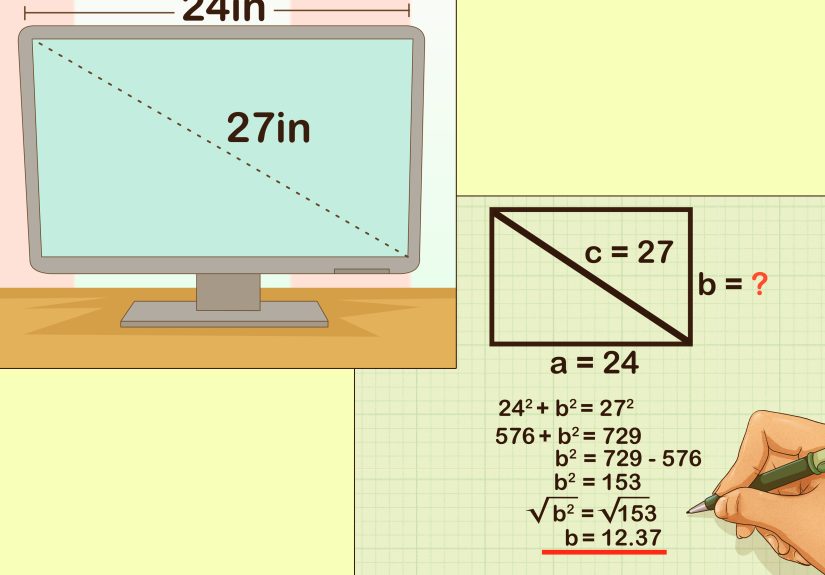
You can see that in a ladder leaning against a wall, a wheelchair ramp reaching a doorway, a TV screen measured corner to corner, a route across a park, or the distance between two points on a map. Even the distance formula in coordinate geometry is basically the Pythagorean Theorem wearing a slightly more formal outfit.
Before jumping into the three main applications, remember one rule: the theorem only applies directly to right triangles. If the triangle does not have a 90-degree angle, the formula cannot be used in its basic form. That is the math equivalent of trying to open a jar with a spoon. Admirably confident, but not correct.
Way 1: Find a Missing Side in a Right Triangle
The most common use of the Pythagorean Theorem is to find a missing side when you already know the other two. This is the version most people meet first, and for good reason. It is practical, direct, and shows up in dozens of real-life situations.
How it works
If you know the lengths of the two legs, use the formula to find the hypotenuse:
a² + b² = c²
If you know one leg and the hypotenuse, rearrange the equation to find the missing leg:
c² – a² = b²
Then take the square root to get the final answer. The square root part matters. Forgetting it is a classic mistake, right up there with mixing up “your” and “you’re” in a serious email.
Example: a ladder against a wall
Imagine a 10-foot ladder leaning against a wall. The bottom of the ladder is 6 feet away from the wall. How high does the ladder reach?
Here, the ladder is the hypotenuse, so c = 10. The distance from the wall is one leg, so a = 6. Let the height be b.
10² – 6² = b²
100 – 36 = b²
64 = b²
b = 8
The ladder reaches 8 feet up the wall.
This kind of problem matters in construction, safety planning, and home projects. It also matters if you would rather measure once than explain later why your ladder now lives in the bushes.
Example: a wheelchair ramp
Suppose a ramp is 13 feet long and rises 5 feet to a doorway. How much ground space does it cover?
13² – 5² = b²
169 – 25 = b²
144 = b²
b = 12
The ramp covers 12 feet horizontally.
This is why the theorem is so valuable in architecture and accessibility design. It helps connect a structure’s vertical rise, horizontal run, and total length in a way that is both efficient and reliable.
When this application is most useful
Use the theorem this way when you are solving problems involving ladders, ramps, roofs, support beams, rectangular diagonals, or any situation where the diagonal is connected to a clear horizontal and vertical measurement. It is one of the fastest ways to turn two known dimensions into a third, and it gives exact answers when the numbers cooperate nicely.
Way 2: Find Distance Between Two Points
The second major use of the Pythagorean Theorem is distance. This is where the theorem quietly levels up from triangle math to coordinate geometry. If you draw two points on a graph and form a right triangle between them, the horizontal and vertical changes become the legs, and the straight-line distance becomes the hypotenuse.
That idea leads to the distance formula:
d = √[(x₂ – x₁)² + (y₂ – y₁)²]
It looks new, but it is really just the Pythagorean Theorem in disguise.
Example: distance on a coordinate plane
Find the distance between the points (2, 1) and (6, 4).
The horizontal change is 6 – 2 = 4.
The vertical change is 4 – 1 = 3.
Now apply the theorem:
d = √(4² + 3²)
d = √(16 + 9)
d = √25
d = 5
The distance between the points is 5 units.
This is not just a school exercise. It is the foundation for measurements in map grids, computer graphics, robotics, engineering drawings, and game development. Whenever software needs the straight-line distance between two locations, the Pythagorean Theorem is often somewhere in the background doing the heavy lifting without demanding applause.
It also works in three dimensions
The theorem does not stop at flat diagrams. In three-dimensional space, it can be used twice to find distance between points with x, y, and z coordinates. That gives the 3D distance formula:
d = √[(x₂ – x₁)² + (y₂ – y₁)² + (z₂ – z₁)²]
That matters in physics, computer modeling, aviation, and design work involving depth. A box, a room corner, a 3D model, or a drone route can all involve distances that rely on this extended logic.
Why this use matters so much
This application is powerful because it turns geometry into location-based reasoning. Instead of asking, “What is the missing side of this triangle?” you start asking, “How far apart are these places?” That shift opens the door to algebra, data visualization, machine graphics, and spatial analysis. It is one of the clearest examples of a classroom theorem becoming a real-world tool.
Way 3: Check Whether a Triangle Is a Right Triangle
The third major use is the converse of the Pythagorean Theorem. Instead of starting with a right triangle, you use side lengths to test whether the triangle is right in the first place.
If the side lengths satisfy a² + b² = c², then the triangle is a right triangle.
This is useful in geometry, but it is even more useful in design, construction, and layout work, where you need to know whether a corner is truly square.
Example: do these sides make a right triangle?
Take the side lengths 6, 8, and 10.
6² + 8² = 10²
36 + 64 = 100
100 = 100
Yes, this is a right triangle.
Now try 6, 8, and 9.
6² + 8² = 36 + 64 = 100
9² = 81
Since 100 does not equal 81, the triangle is not a right triangle.
Real-world use: squaring corners
Builders often use known side patterns called Pythagorean triples, such as 3-4-5 or 5-12-13, to create right angles in the field. For example, if one side of a frame measures 3 feet and another measures 4 feet, the diagonal should be 5 feet if the corner is square. If the diagonal is off, the corner is off, and the whole structure may start its career with a crooked identity crisis.
This technique is common in laying foundations, framing walls, setting fence lines, marking sports fields, and checking rectangular layouts. It is practical because it avoids guesswork. Eyes are helpful. Measuring tapes are better. Math is less emotionally invested.
A smart way to think about it
This use of the theorem is about verification. The first application solves for a missing measurement. The second calculates distance. The third checks whether reality is behaving the way your blueprint, plan, or diagram says it should. That makes it especially useful in hands-on work where precision matters.
Common Mistakes to Avoid
Even a friendly theorem can be misused. The most common mistakes are surprisingly consistent. First, people apply it to triangles that are not right triangles. Second, they forget that the hypotenuse must be the longest side. Third, they square numbers correctly, solve for the missing squared value, and then forget to take the square root at the end.
Another frequent mistake appears in coordinate geometry: mixing up horizontal and vertical differences. The order does not matter after squaring, but the subtraction still needs to reflect the change in x-values and y-values. A neat setup prevents messy algebra, and messy algebra has a way of becoming someone else’s problem during group work.
Why These Three Uses Matter for Students and Professionals
Together, these three applications show why the Pythagorean Theorem is not just a formula to memorize for a quiz. It is a basic language of space. It helps answer questions about length, distance, and shape. It supports geometry, algebra, trigonometry, drafting, construction, design, and digital modeling. Once you recognize right triangles hidden inside everyday problems, the theorem becomes less of a chapter in a textbook and more of a mental shortcut.
That is also why this topic keeps appearing across grade levels. In middle school, it helps with missing side lengths. In high school, it becomes part of coordinate geometry and proof. In advanced math and science, it expands into vectors, distance in three dimensions, and larger spatial systems. Same idea, bigger stage.
Conclusion
If you remember only one thing, remember this: the Pythagorean Theorem is useful because it connects simple measurements to hidden distance. You can use it to find a missing side, calculate distance between points, and check whether a triangle or corner is truly right. Those three moves cover a surprising amount of real life.
That is the quiet power of good math. It does not always look flashy. It just keeps being useful. And in a world full of apps, devices, diagrams, tools, and projects, a theorem that helps you measure the world more accurately is not old-fashioned at all. It is timeless.
Experience Notes: What Using the Pythagorean Theorem Actually Feels Like
One reason people remember the Pythagorean Theorem long after they forget other formulas is that it tends to show up in moments that feel real. A student may first meet it in a workbook, but the theorem really sticks when it suddenly solves an everyday problem. That moment often happens when someone is trying to measure something awkward, diagonal, or just annoying enough that guessing feels risky.
A common experience is home improvement. Someone wants to hang string lights across a patio, build a raised garden bed, or check whether a bookshelf frame is square. At first, it feels like a practical project, not a math problem. Then a diagonal appears, and the theorem enters like the reliable friend who never makes a dramatic entrance but somehow still saves the day. Measuring two sides and checking the diagonal gives instant confidence that the frame is not leaning into chaos.
Another experience comes from school itself. Many students start out thinking the theorem is just another formula to memorize, but that changes when the numbers produce a clean answer. The famous 3-4-5 triangle is almost magical the first time it works. It feels less like abstract math and more like discovering a secret handshake the universe has been using the whole time. That experience matters because it turns math from something imposed into something observed.
In sports and outdoor settings, the theorem appears in quieter ways. Coaches and grounds crews can use diagonal measurements to make sure a field layout is square. Campers may estimate a shortcut across a rectangular clearing. Someone setting up a tent or tarp may realize that the diagonal support line, the ground distance, and the pole height form a right triangle. The theorem does not care whether the setting is a classroom, a backyard, or a soccer field. It just keeps working.
Technology gives people another layer of experience with the same idea. In video games, animation, and design software, movement and spacing often depend on straight-line distance. Most users never see the math directly, but the logic is there. When an object moves from one coordinate to another, or when a program calculates the shortest path across a grid, the same old right-triangle relationship is doing background work like an underappreciated stage crew member.
There is also a confidence-building side to this theorem. People often feel intimidated by math until they use it to confirm something tangible: the ladder height is correct, the ramp length makes sense, the corner really is square. That sense of verification is satisfying. The theorem becomes less about symbols and more about trust. It lets people say, “I know this measurement is right,” instead of “I hope this measurement is right,” and those are two very different emotional states when lumber, tools, or grades are involved.
In that way, the Pythagorean Theorem becomes more than a classroom topic. It becomes an experience of seeing structure in the world. It teaches that distance is not random, shape is not guesswork, and math is not separate from real life. Sometimes it is the fastest route between confusion and confidence. Not bad for a theorem with ancient roots and a very modern work ethic.