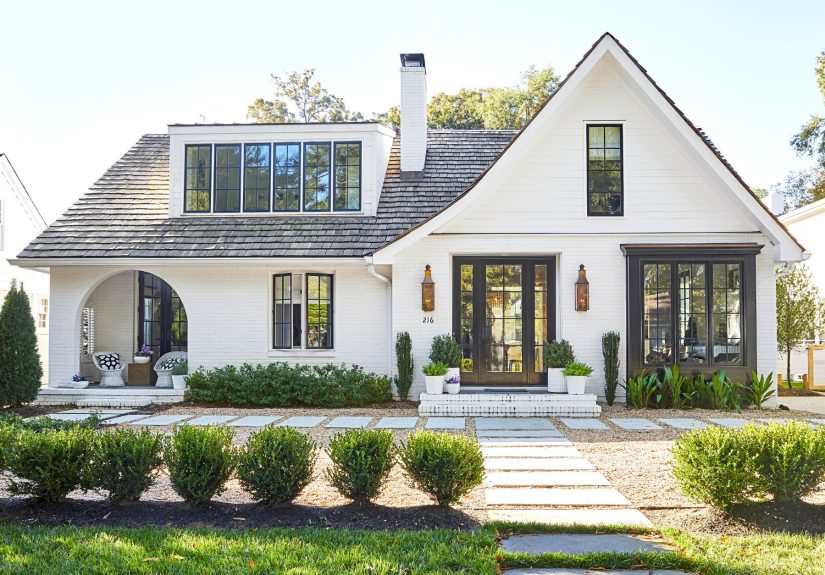
Table of Contents >> Show >> Hide
- Why House Style Matters
- 33 Popular House Styles (and How to Spot Them)
- 1. Modern Scandinavian House
- 2. Neoclassical House
- 3. Queen Anne House
- 4. Cape Cod House
- 5. Country French House
- 6. Colonial House
- 7. Victorian House
- 8. Tudor House
- 9. Craftsman House
- 10. Cottage House
- 11. Mediterranean House
- 12. Traditional Ranch House
- 13. Contemporary House
- 14. Italianate House
- 15. Colonial Revival House
- 16. Georgian House
- 17. Greek Revival House
- 18. Midcentury Modern House
- 19. Gothic Revival House
- 20. Modern Architecture House
- 21. Mediterranean Revival House
- 22. Prairie House
- 23. Rowhouse
- 24. Antebellum House
- 25. Federal House
- 26. Modern Farmhouse
- 27. Brutalist House
- 28. Saltbox House
- 29. A-Frame House
- 30. Spanish Colonial House
- 31. Barndominium
- 32. Cabin House
- 33. Shingle-Style House
- Real-Life Experiences with Different House Styles
- Bringing It Home
Scroll any real-estate app for more than 30 seconds and you’ll see it: a dizzying
mix of Colonials, ranches, Victorians, “something modern,” and at least one house
described as a barndominium (yes, that’s a real word). Knowing the most
popular house stylesand what makes each one uniquehelps you shop smarter,
plan renovations that actually match your home’s bones, and boost curb appeal
without fighting the architecture.
Below, we’ll walk through 33 popular house styles you’ll spot across the U.S.,
from traditional Colonial homes to sleek modern cabins in the woods. For each,
you’ll learn the defining characteristics, typical materials, and why buyers
fall in love with the look.
Why House Style Matters
A home’s style isn’t just about looks. Architecture affects:
- Layout and flow: Ranches favor one-level living; Colonials stack sleeping and living zones.
- Natural light: Modern, midcentury, and contemporary homes lean hard on big windows and open plans.
- Maintenance: Stucco, wood shingles, brick, and board-and-batten all weather differently.
- Resale value: Some styleslike ranch and Colonialhave very broad appeal nationwide.
Understanding your home’s architectural style makes it easier to pick paint colors,
windows, landscaping, and even furniture that complement (instead of fight) its
character.
33 Popular House Styles (and How to Spot Them)
1. Modern Scandinavian House
Modern Scandinavian homes blend minimalist architecture with a deep love of nature.
Exteriors typically feature simple geometric forms, expansive windows, and natural
materials like light wood and stone. Colors skew pale and mutedoff-whites, grays,
soft charcoalscreating a calm, cozy look sometimes described with the Danish word
“hygge.” Inside, expect open floor plans, clean-lined cabinets, and very little
visual clutter.
2. Neoclassical House
Neoclassical homes take cues from ancient Greek and Roman architecture: think grand
facades with tall columns, symmetrical layouts, and ornate entries. You’ll often see
pediments over doors and windows, formal front steps, and a strong emphasis on
balance. Many historic mansions in older American cities fall into this category,
but you’ll also find scaled-down interpretations in newer suburbs.
3. Queen Anne House
Queen Anne homes sit under the Victorian umbrella but turn the drama up to eleven.
Defining features include asymmetrical facades, towers or turrets, wraparound
porches, decorative brackets, and elaborate trimwork. Multiple exterior colors are
commonthese are the classic “painted ladies” you see on postcards. If a house looks
like it could star in a period drama, it might be Queen Anne.
4. Cape Cod House
Cape Cod homes originated in New England in the 17th century and later became a
staple of 20th-century suburbs. Traditional Capes are compact and boxy, with steep
gable roofs, central chimneys, wood clapboard or shingle siding, and multi-pane
windows. Many have dormers added to create usable second-floor space. The overall
vibe is simple, sturdy, and weather-readyperfect for snowy climates and coastal
winds.
5. Country French House
Country French (or French Provincial) homes channel rural manor houses from
the French countryside. Look for steeply pitched roofs (often hipped), narrow
windows with shutters, stucco or stone walls, and occasional half-timbering.
Entrances can be arched and romantic, with curving drives and lush landscaping.
Inside, the style leans warm and elegant rather than formal and fussy.
6. Colonial House
Classic American Colonials are the architectural equivalent of a well-tailored navy
blazer: timeless and widely loved. These homes are typically two or three stories
with brick or wood exteriors, a centered front door, and a strict sense of
symmetryequal windows flanking the entry and aligned rows above. Floor plans
usually put common spaces on the main floor and bedrooms upstairs, with fireplaces
and dormer windows adding charm.
7. Victorian House
“Victorian” describes a whole era (mid-1800s to early 1900s) rather than one specific
style, but these homes share some unmistakable traits: steep roofs, ornate trim,
asymmetrical facades, bay windows, and large porches. Interiors traditionally
featured rich colors, pattern-on-pattern, and detailed millwork. Today, many
Victorian exteriors remain ornate while interiors are updated with lighter finishes
and open kitchens.
8. Tudor House
Tudor homes look like they wandered in from an English village. Spot them by their
steeply pitched roofs, decorative half-timbering over stucco or brick, and tall,
narrow windows with multiple panes. Gables often cross and intersect, creating
dramatic rooflines. Though inspired by medieval English prototypes, most American
Tudor homes were built in the early 20th century.
9. Craftsman House
Craftsman homes and bungalows grew out of the early-1900s Arts and Crafts movement,
emphasizing handcrafted woodwork and cozy, human-scaled rooms. Typical exteriors
include low-pitched roofs with wide eaves, exposed rafters, decorative brackets, and
front porches supported by tapered columns. Inside, built-in benches, bookcases, and
window seats are common, along with natural wood finishes and stone fireplaces.
10. Cottage House
Cottage-style homes look like they were plucked from a storybook. Steep cross-gabled
roofs, arched doors, small-paned casement windows, and stone, brick, or stucco
exteriors create a cozy, whimsical feel. Many originated as small vacation or
starter homes in the 1920s and 1930s, but modern cottages may add more square
footage while keeping that intimate scale and charm.
11. Mediterranean House
Inspired by homes in Spain, Italy, and along the Mediterranean coast, this style is
easy to recognize: red tile roofs, stucco or adobe walls, arches, wrought-iron
railings, and courtyards or loggias that blur the line between indoors and out.
Floor plans often wrap around a central courtyard and emphasize airy rooms, high
ceilings, and plenty of fresh airideal for warm climates.
12. Traditional Ranch House
Ranch homes exploded in popularity after World War II and remain one of the most
common styles in America. They’re single-story, horizontal, and practical: simple
floor plans, open living areas, attached garages, and big windows or sliding doors
leading to the backyard. Their wide footprint makes them easier for aging in place,
and their simplicity gives renovators a flexible blank slate.
13. Contemporary House
“Contemporary” describes what’s current rather than a historical period, but there
are trends: open floor plans, large expanses of glass, flat or low-pitched roofs,
and a mix of contrasting materials such as metal, wood, and concrete. Ornament is
minimal; instead, the play of volume, light, and texture becomes the decoration.
14. Italianate House
Italianate homes were 19th-century America’s attempt at romantic Italian villas.
They often have low-pitched or flat roofs with wide, overhanging eaves and
decorative brackets. Tall, narrow windows with elaborate crowns, ornate porches,
and occasional square towers or cupolas add drama. The overall shape is usually a
tall rectangular box softened by all the detailing.
15. Colonial Revival House
Colonial Revival houses reinterpret earlier Colonial forms with more decorative
flourish. Expect symmetrical facades, center entries with pediments or porticos,
multi-pane windows, and often brick construction. Grander examples add columns,
fanlights, sidelights, and more elaborate trim, while smaller versions keep the
proportions but simplify the detailing.
16. Georgian House
Georgian homes are all about order and symmetry. Typically built in brick or stone,
they feature aligned rows of multi-pane windows, a hipped roof (often with dormers),
and a prominently framed front door. Inside, rooms are arranged around central halls
and staircases, reflecting the formal, balanced exteriors.
17. Greek Revival House
Greek Revival architecture swept the U.S. in the early to mid-1800s, especially in
the South. These homes often have white columned porticos resembling Greek temples,
low-pitched gable or hipped roofs, and transom or sidelighted front doors. Large,
inviting porchescomplete with rocking chairsare a common feature.
18. Midcentury Modern House
Built primarily between the mid-1940s and late 1960s, midcentury modern homes
celebrate clean lines, open layouts, and easy indoor–outdoor living. Defining
characteristics include wide, low-slung profiles, flat or low-pitched roofs,
post-and-beam construction, and huge windows or glass walls. Materials like brick,
stone, and wood combine with glass for a warm yet modern feel.
19. Gothic Revival House
Gothic Revival houses borrow details from medieval European churches and estates.
Think pointed arches over windows and doors, steeply pitched roofs, decorative
bargeboards along gables, and occasionally towers or spires. These homes often feel
dramatic and vertical, with intricate trim that makes them stand out from simpler
neighboring styles.
20. Modern Architecture House
In contrast to historical revival styles, modern architecture focuses on function and
simplicity. Homes in this category use clean, geometric forms; flat or nearly flat
roofs; very large panes of glass; and a minimal palette of materials such as
concrete, steel, and natural wood. The result is often a sculptural, gallery-like
space with strong visual lines.
21. Mediterranean Revival House
Mediterranean Revival homes simplify classic Mediterranean details into more
symmetrical, often more modest forms. You’ll still see terra-cotta tile roofs, white
or light stucco walls, and wrought-iron details, but with cleaner lines and less
ornamentation. Balconies, arched windows, and shaded porches help keep interiors
cool in hot climates.
22. Prairie House
Popularized by architect Frank Lloyd Wright and contemporaries, Prairie homes hug
the landscape rather than towering above it. Horizontal lines, low-pitched roofs
with broad eaves, grouped windows, and strong connection to the outdoors define the
style. Interiors emphasize open, flowing spaces and built-in furniture that feels
integrated with the architecture.
23. Rowhouse
Rowhouses (or townhouses) are urban problem-solvers: narrow, vertical homes built in
continuous rows to maximize limited city land. Most share side walls and are built
of brick or stone. With windows primarily at the front and back, their interiors are
long and skinny, often with stacked living spaces on multiple levels and stoops that
connect directly to the street.
24. Antebellum House
Antebellum housesmany originally plantation homeswere built in the South before
the Civil War and are known for their monumental scale and grand columns. They
typically have symmetrical facades, large wraparound porches, and sometimes a second
story veranda. While architecturally impressive, they’re also tied to a painful
history, which modern owners and historians increasingly acknowledge and interpret.
25. Federal House
Federal-style houses followed the Georgian period and refine that style with lighter
details and more delicate ornament. Exteriors are usually brick with flat or gently
curved facades, symmetrical window placement, and elliptical fanlights or decorative
crowns over doors. The overall look is elegant and restrained rather than showy.
26. Modern Farmhouse
Modern farmhouse style mixes the clean lines of contemporary design with the warmth
of classic farmhouses. Common traits include white or soft-colored siding, black or
dark window trim, metal roofs, board-and-batten or lap siding, and porches with
exposed wood beams. Interiors lean toward open layouts, shaker cabinets, and a mix
of rustic and industrial elements.
27. Brutalist House
Brutalist homes are architectural statement pieces: bold, blocky, and unapologetic
about their use of raw concrete. Expect hard-edged geometric forms, minimal
ornamentation, and large expanses of glass set against the concrete. They can feel
more like sculpture than traditional houses, appealing to homeowners who love
ultra-modern, minimalist spaces.
28. Saltbox House
The saltbox is a classic New England form named after old wooden salt containers.
These houses have a long, asymmetrical roofline that creates two stories in the
front and one in the back. Central chimneys, simple rectangular footprints, and
minimal exterior decoration reflect their roots as practical, resource-efficient
Colonial homes.
29. A-Frame House
A-frame houses look exactly like the letter they’re named after. Their extremely
steep roofs extend nearly to the ground, serving as both roof and side walls.
Interiors often have exposed rafters, lofted sleeping areas, and dramatic
floor-to-ceiling windows at the front or back. Long a favorite for cabins and
vacation homes, A-frames are increasingly adapted as full-time residences.
30. Spanish Colonial House
Spanish Colonial homes share some DNA with Mediterranean houses but are generally
simpler and more restrained. Hallmarks include red tile roofs, white or off-white
stucco walls, arched doorways, small deeply set windows, and wrought-iron grilles.
Asymmetry is common, and layouts often center on a patio or courtyard.
31. Barndominium
Barndominiums combine barn-like structuresoften metal-framed buildingswith
fully finished residential interiors. Many feature soaring open living spaces,
exposed steel or wood beams, and huge garage-style doors that open to the outdoors.
They’re especially common in rural areas where large lots and outbuildings are the
norm, and they appeal to homeowners who want flexible workshop, storage, and living
space in one package.
32. Cabin House
Cabin-style homes range from tiny off-grid hideaways to luxurious timber retreats,
but they nearly always emphasize rustic materials and a tight relationship with
nature. Expect logs or heavy timber, stone chimneys, generous porches or decks, and
sometimes metal roofs. High ceilings with exposed beams and large windows capture
forest or mountain views.
33. Shingle-Style House
Shingle-style homes evolved from Queen Anne architecture but dial back the fuss.
Wooden shingles wrap the entire exteriorroof and wallscreating a unified skin.
The houses are usually wide, asymmetrical, and porch-heavy, with multiple gables
and smaller windows scattered across the facade. The overall effect is relaxed and
coastal, even when the house is nowhere near a beach.
Real-Life Experiences with Different House Styles
If you spend time talking to homeowners, you’ll notice that people rarely describe
their house style in purely technical terms. Instead, they connect it to daily
life: how they move through the space, how easy it is to clean, or how the front
porch functions on a summer evening.
Owners of ranch-style homes, for example, often rave about
one-level living. There are no stairs to battle when you’re hauling in groceries,
chasing a crawling baby, or recovering from an injury. The same broad, open layout
that made ranches popular in the 1950s still works beautifully with today’s
open-concept kitchens and family rooms. The trade-off is lot sizebecause the home
spreads out instead of up, you need more land to get the same square footage.
In contrast, people who live in Colonial or
Colonial Revival homes tend to appreciate the separation of
spaces. Bedrooms stay upstairs and away from the main action, which is great
if you work from home or have night-shift sleepers. You do, however, get more
stairs in your daily step count, and older Colonials may have smaller kitchens
that need thoughtful remodeling to work with modern appliances.
Fans of Craftsman bungalows and cottages talk
a lot about coziness and character. Built-ins, wide front porches, and original
woodwork create instant charm that new construction often struggles to match.
On the flip side, Craftsman-era closets were not designed with today’s sneaker
collections in mind, so storage upgrades are a frequent project. Carefully adding
new cabinetry that matches the existing trim can preserve the vintage feel while
making the house more livable.
Homeowners drawn to modern, contemporary, or midcentury modern
styles usually prioritize natural light and visual simplicity. Floor-to-ceiling
windows and open layouts make even modest-sized homes feel expansive. That same
glass, however, can raise cooling costs in hot climates and demands thoughtful
window coverings for privacy. Many owners invest in high-performance windows and
shades to keep the look while improving comfort and energy efficiency.
In historic neighborhoods, Victorian, Queen Anne,
and Italianate homes deliver serious curb appeal. Residents love
the intricate details and the sense of living inside a piece of history. But owning
a century-old home usually means respecting local preservation guidelines and
budgeting for specialized repairsreplacing original wood windows or ornate trim is
rarely a quick weekend DIY. Successful owners lean into the home’s character and
choose updates that work with the architecture rather than against it.
Rural and suburban homeowners who choose farmhouses, cabins, or
barndominiums often need flexible space for hobbies, animals, or
equipment. High ceilings and large open rooms are ideal for workshop zones,
home gyms, or oversized dining tables for big gatherings. The biggest lesson from
these owners is planning ahead for storage: when your living area is essentially
one big room, built-in closets, mudrooms, and smart furniture placement keep the
space from feeling like a very stylish warehouse.
Ultimately, the “best” house style is the one that fits your climate, lifestyle,
and budgetand makes you smile when you pull into the driveway. Use these 33
styles as a cheat sheet when you scroll listings or plan renovations, and you’ll
start to see patterns in what you love (and what you can happily ignore).
Bringing It Home
From modest saltbox houses to sculptural Brutalist homes, every style on this list
reflects a different moment in architectural history and a different way of living.
When you know the defining characteristicsroof shape, window patterns, materials,
and overall massingyou can name what you see, communicate clearly with agents and
contractors, and make smarter design decisions.
Whether you’re dreaming of a Craftsman bungalow with a wide front porch, a sleek
modern box full of glass, or a classic brick Colonial, understanding popular house
styles helps you choose a home that looks good and works beautifully for
the way you live today.