Table of Contents >> Show >> Hide
- Why the pelvis and femur are such difficult places to treat
- What 3D printing actually means in bone cancer surgery
- How 3D printed pelvic implants are changing reconstruction
- What about 3D printed femur implants?
- The biggest advantages of custom 3D printed implants
- The limits, risks, and reality checks
- Who may be a candidate for a 3D printed pelvis or femur implant?
- What recovery can look like
- The future of 3D printed implants in orthopedic oncology
- Experiences related to 3D printed pelvis and femur implants for bone cancer treatment
- Conclusion
- SEO Tags
Note: This article is for educational purposes only and is not a substitute for medical advice, diagnosis, or treatment.
Bone cancer treatment has never been accused of being boring. When a tumor shows up in the pelvis or femur, surgeons are not just removing a bad actor; they are trying to preserve the framework that lets a person stand, walk, sit, climb stairs, and live something close to a normal life. That is why 3D printed pelvis and femur implants have become such a big deal in orthopedic oncology. They bring custom engineering into one of medicine’s hardest neighborhoods, where millimeters matter and “close enough” is not a phrase anyone wants to hear in the operating room.
For selected patients, these implants can help surgeons remove a tumor with safer margins and rebuild the missing bone with a device shaped for one person’s exact anatomy. That does not make 3D printing a miracle wand. It is still highly specialized cancer surgery, and it works best at experienced sarcoma centers where orthopedic oncologists, radiologists, engineers, plastic surgeons, medical oncologists, and rehabilitation teams all work together. But when it works well, it can replace older choices that were once brutally limited: amputation, a flail limb, or reconstructions that never fit quite right.
Why the pelvis and femur are such difficult places to treat
Primary bone cancers such as osteosarcoma, Ewing sarcoma, and chondrosarcoma often require surgery as a major part of treatment. The goal sounds simple: remove the cancer and preserve as much function as possible. In reality, pelvic and femoral tumors are among the toughest cases in musculoskeletal oncology.
The pelvis is crowded real estate. It sits next to major blood vessels, nerves, the bladder, bowel, and critical muscle attachments. Tumors there can grow quietly before they are found, which means surgeons may be dealing with large lesions and awkward geometry by the time treatment begins. Even after the tumor is removed, rebuilding the pelvis is technically demanding because the acetabulum, or hip socket, must transfer body weight in a stable and durable way. In plain English: if reconstruction is off, the whole lower body complains immediately.
The femur presents a different challenge. It is the largest bone in the body and handles major mechanical stress with every step. Tumors in the proximal femur threaten the hip, tumors in the shaft can leave long segment defects, and tumors near the distal femur may affect the knee. Reconstruction has to restore strength, alignment, limb length, and joint mechanics, all while respecting cancer margins. No pressure, right?
What 3D printing actually means in bone cancer surgery
When people hear “3D printed implant,” they sometimes imagine a surgeon pressing print like they are making a replacement coffee mug. Real life is much less adorable and much more sophisticated. The process usually starts with high-resolution CT and MRI scans. Those images are segmented into a digital model so the team can define the tumor, the bone that must be removed, and the bone that can be saved. Engineers and surgeons then use computer-aided design to build a patient-specific plan.
That plan may include several pieces: a physical 3D model of the pelvis or femur for planning, patient-specific cutting guides to help the surgeon make the exact osteotomy, and a custom implant designed to match the remaining bone. The implant is often made from titanium alloy using additive manufacturing. Many designs include porous or lattice-like surfaces that encourage bone ingrowth, which helps the implant integrate biologically instead of just sitting there like a very expensive paperweight.
This is where 3D printing earns its reputation. Standard implants are excellent in many settings, but bone tumors do not always behave in standard ways. A patient-specific implant can be shaped around an unusual defect, planned screw trajectories, and even soft-tissue reattachment points. In pelvic reconstruction, that kind of personalization can be the difference between “technically possible” and “we need a very different conversation.”
How 3D printed pelvic implants are changing reconstruction
Pelvic reconstruction after tumor resection has long been associated with high complication rates, difficult biomechanics, and deeply imperfect options. Custom 3D printed pelvic implants aim to improve that equation. After an internal hemipelvectomy, surgeons may use a patient-specific titanium implant to recreate part of the pelvis, the acetabulum, or both. The design can be tailored to the sacrum, the remaining hemipelvis, and the exact defect left behind after the tumor is removed.
Major sarcoma centers in the United States are already using this approach in selected cases. Cleveland Clinic has described custom pelvic reconstruction as an alternative to amputation or leaving a flail limb after sarcoma resection. Mayo Clinic has also highlighted 3D printing for complex pelvic and hip reconstruction, including a case in which removal of the hip socket and top of the femur was followed by a custom 3D printed titanium implant rather than a flail hip or cadaveric graft.
That matters because conventional pelvic reconstructions can fail for many reasons: poor fit, dislocation, infection, loosening, nonunion, or mechanical breakdown. Early studies of custom 3D printed hemipelvic implants report encouraging functional outcomes and evidence of osseointegration. That is the good news. The responsible news is that these are still big operations, often described in small patient series, and longer-term data are still needed. Anyone promising a frictionless recovery is selling fantasy, not oncology.
What about 3D printed femur implants?
Femoral reconstruction is not one-size-fits-all either, and this is where the story gets especially interesting. For some patients, surgeons still use modular tumor prostheses or even total femur replacement with conventional artificial components. Those remain important tools. But in selected cases, 3D printing offers something different: a way to preserve more native bone, match an unusual defect, or create an intercalary segment that fits the remaining femur with unusual precision.
Researchers have reported promising results with custom 3D printed intercalary femoral prostheses after tumor resection, especially when joint preservation is possible. In these designs, patient-specific osteotomy guides help the surgeon cut the bone according to the preoperative plan, while the implant’s porous interface is shaped to fit the osteotomy plane and encourage bone ingrowth. Some systems also use customized stems, screw paths, and biomechanical modeling to improve fixation in very short residual bone segments. Translation: instead of forcing the patient’s anatomy to cooperate with the implant, the implant is told to behave itself and match the anatomy.
For patients with tumors near the hip or knee, that can be clinically meaningful. A carefully designed femoral implant may preserve a joint that would otherwise be sacrificed. That does not mean every femur tumor is a 3D printing case. It means the technology expands the menu in situations where standard options may be mechanically awkward or functionally disappointing.
The biggest advantages of custom 3D printed implants
1. Better fit for complex anatomy
The obvious benefit is personalization. The implant is built around the patient’s anatomy and the exact resection plan, not the other way around. That can improve alignment, fixation, and the relationship between the implant and the remaining bone.
2. More precise tumor resection
Patient-specific cutting guides can improve osteotomy accuracy, particularly in difficult sites such as the pelvis and sacrum. Better accuracy helps surgeons pursue negative margins while preserving as much healthy bone as possible. In cancer surgery, “take enough but not too much” is a very big deal.
3. Potential for bone ingrowth
Porous titanium surfaces are designed to support osseointegration. Early reports in pelvic and femoral reconstructions have shown bone ingrowth and stable fixation in selected patients, which may improve long-term durability compared with purely mechanical fixation alone.
4. Improved surgical planning
Physical 3D models and digital simulations help teams rehearse the operation, anticipate screw trajectories, and understand the relationship between tumor and surrounding anatomy. For a surgery that already has enough surprises, reducing surprises is an excellent hobby.
5. Better patient education
Several major centers note that 3D models help patients understand what is happening inside their body. That may sound secondary, but it matters. A patient who understands the anatomy, the resection, and the reconstruction often walks into surgery less confused and better prepared for recovery.
The limits, risks, and reality checks
Now for the part that keeps the article from floating away on a cloud of titanium optimism. Custom implants are not automatically superior in every case. They are expensive, technically demanding, and dependent on accurate imaging, careful segmentation, smart design, and manufacturing quality. If the digital plan is off, the implant may be off. Computers are helpful, but they still benefit greatly from humans who know what they are doing.
Complications remain real. Pelvic limb-salvage surgery can involve infection, wound problems, dislocation, loosening, fracture, nerve injury, or the need for revision surgery. Even promising studies on 3D printed pelvic prostheses emphasize that follow-up is still limited and that long-term durability must be studied further. Some centers also note that not every patient needs a metal implant after pelvic resection; in carefully selected cases, soft-tissue reconstruction without a prosthesis may still allow ambulation and daily function.
Regulation matters too. The FDA regulates 3D printed medical devices, including orthopedic implants, and has published technical guidance covering additive manufacturing processes and device evaluation. In other words, hospitals are not supposed to run a robot forge in a back hallway and hope for the best. Patient-specific devices still require rigorous attention to safety, manufacturing quality, and clinical judgment.
Who may be a candidate for a 3D printed pelvis or femur implant?
Candidates are usually evaluated at sarcoma specialty centers where multidisciplinary review is standard. The team looks at tumor type, location, imaging, expected margins, age, anticipated response to chemotherapy when relevant, neurovascular involvement, soft-tissue coverage, infection risk, and the patient’s overall goals.
A good candidate is often someone with a complex bone defect in which limb salvage is oncologically appropriate and a custom reconstruction could meaningfully improve fit or function. A poor candidate may be someone whose tumor cannot be resected safely with functional preservation, someone with major uncontrolled infection, or someone whose reconstruction goals are better served by a different technique. Cancer surgery is not a talent show for technology. The coolest implant is not always the right implant.
What recovery can look like
Recovery is usually measured in phases, not magic moments. Patients often need significant rehabilitation, protected weight bearing, pain control, wound monitoring, and serial imaging to assess healing and implant stability. Follow-up is crucial because bone cancer can recur and implants can fail, especially after large reconstructions.
Function after surgery depends on many variables: how much bone and muscle were removed, whether nerves were preserved, whether the hip or knee was spared, how stable the reconstruction is, and how well rehab goes. The goal is not perfection. The goal is durable cancer control with the best possible quality of life. Some patients return to work, daily walking, and family routines. Others face a longer road with assistive devices or revision procedures. Both stories are part of the truth.
The future of 3D printed implants in orthopedic oncology
The field is moving toward tighter integration between imaging, surgical planning, engineering, and biologic fixation. Better segmentation, smarter guide design, lattice structures that balance stiffness and bone ingrowth, and more robust hospital-based manufacturing programs are all pushing care forward. Researchers are also exploring how to preserve joints more often, reduce surgical error, and improve long-term implant survivorship.
Still, the future is not just “more printing.” It is better evidence. The next big step is longer-term data showing which patients benefit most, which designs last, which complications can be prevented, and when custom metal truly outperforms other reconstruction options. In medicine, hype usually arrives early. Good follow-up arrives later wearing sensible shoes.
Experiences related to 3D printed pelvis and femur implants for bone cancer treatment
One of the most consistent themes in real-world reports is that patients do not experience this technology as a gadget story. They experience it as a decision story. A patient may first hear the words pelvic sarcoma or bone cancer in the femur, and then almost immediately the conversation turns to life-changing choices: chemotherapy or surgery first, limb salvage versus amputation, joint preservation versus replacement, standard reconstruction versus a custom implant. That is emotionally heavy before anyone even says the phrase “osseointegration.”
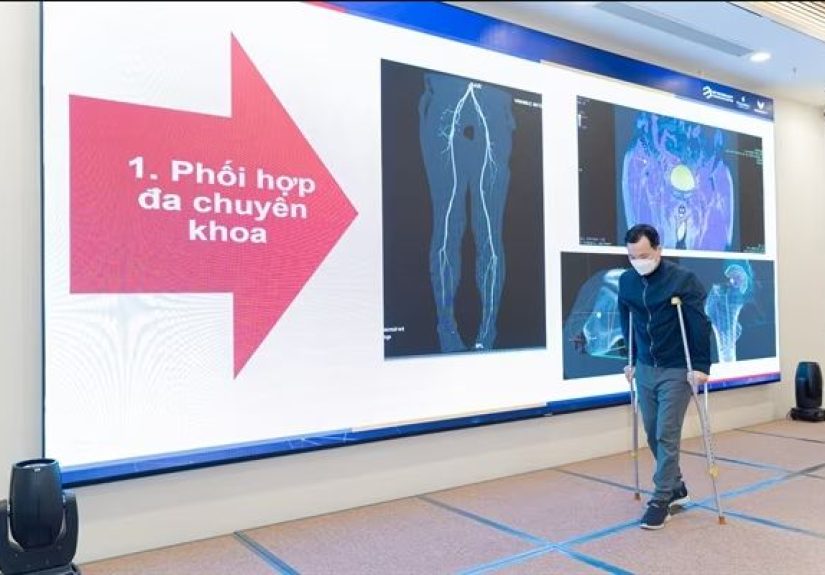
At major centers, the experience often includes a surprising amount of teamwork. Patients may meet orthopedic oncologists, medical oncologists, radiologists, plastic surgeons, rehabilitation specialists, and engineering teams. They may be shown 3D models of their own pelvis or femur so they can understand what the tumor has done and what surgery is meant to restore. For many people, that is the first time the treatment plan stops sounding abstract and starts looking real. Scary, yes. But also clarifying.
Reported patient stories from U.S. centers show another common theme: many people arrive fearing that limb loss is inevitable. In selected cases, custom 3D printed reconstruction can reopen the conversation. That does not remove the seriousness of the diagnosis, but it can replace hopelessness with a concrete plan. Patients often describe relief at hearing that the team is not just focused on removing the cancer, but also on helping them stand, walk, and return to ordinary life.
The recovery experience is rarely glamorous. It tends to involve walkers, physical therapy, restrictions on weight bearing, follow-up scans, and a new respect for chairs with armrests. People learn quickly that “successful surgery” and “easy recovery” are not synonyms. Still, regaining function after such a major reconstruction can feel profound. Small milestones matter: standing longer, getting in and out of bed with less help, climbing a few stairs, driving again, going back to work, or simply walking across a room without feeling like the skeleton has declared bankruptcy.
Families have their own version of the experience. They watch the wait for pathology margins, the stress of wound healing, and the long rhythm of follow-up appointments. They also become experts in practical things no engineering journal ever celebrates enough, such as medication schedules, shower chairs, socks, and morale. Behind every elegant implant photo is usually a support system that has mastered logistics with military precision and at least one emotionally exhausted refrigerator full of leftovers.
For surgeons, these cases are also deeply personal. Pelvic and femoral tumor reconstructions demand precision, humility, and a tolerance for complexity that borders on heroic. The technology gives them better tools, but not simpler responsibility. Every cut affects cancer control. Every fixation choice affects future function. Every reconstruction is a balance between biomechanics and biology. That is why the best centers treat 3D printing not as a party trick, but as one part of a much larger commitment to limb salvage, safety, and long-term survivorship.
So the lived experience of 3D printed pelvis and femur implants is not just about innovation. It is about giving carefully selected patients another path: one that aims to remove the cancer, preserve the limb when appropriate, and rebuild enough function for life to feel recognizably theirs again.
Conclusion
3D printed pelvis and femur implants are changing bone cancer treatment by making reconstruction more personalized, more precise, and in some cases more functional. They are especially valuable in anatomically complex tumors where standard implants may not fit the problem very well. The technology supports better planning, more accurate resection, and biologically minded reconstruction through patient-specific titanium designs and cutting guides.
But the smartest takeaway is not “3D printing solves everything.” It is that bone cancer care is improving when advanced engineering is paired with experienced oncology teams. The best results come from specialized centers that know how to choose the right patients, execute difficult surgery, manage complications, and guide recovery over time. For patients facing tumors in the pelvis or femur, that combination can turn a once-devastating reconstruction problem into a realistic, if still challenging, path toward limb preservation and quality of life.