Table of Contents >> Show >> Hide
- Before You Braid: A 2-Minute Setup That Makes Everything Easier
- 1) The Classic Three-Strand Braid (The “Starter Braid” That Still Slays)
- 2) The French Braid (The “Gathers As It Goes” Classic)
- 3) The Dutch Braid (The “Inside-Out” Braid That Pops)
- 4) The Fishtail Braid (Looks Fancy, Is Actually Just Repeating One Move)
- Braid Troubleshooting: Quick Fixes for Common Problems
- Make It Last: How to Keep Braids Looking Good Longer
- Real-Life Braiding Experiences (The Part Where Braids Get Personal)
- Conclusion: Pick One Braid, Practice It Twice, and You’ll Be Surprised
- SEO Tags
Braids are the rare hairstyle that can be both practical and dramatic. They keep hair out of your face, survive wind like a tiny wearable seatbelt, and somehow make it look like you had your life together long enough to plan ahead (even if you braided in the car while parked… legally… responsibly).
In this guide, you’ll learn how to braid hair four different ways: the classic three-strand braid, the French braid, the Dutch braid, and the fishtail braid. Each one comes with beginner-friendly steps, small “why this works” explanations, and quick fixes for the most common “why does my braid look like a sad pretzel?” moments.
Before You Braid: A 2-Minute Setup That Makes Everything Easier
Tools you’ll actually use
- A brush or wide-tooth comb (detangle first; future-you will be grateful)
- 1–2 small elastics (clear or hair-colored)
- A few bobby pins (for flyaways and “oops” sections)
- Optional: texturizing spray or dry shampoo for grip, especially on silky hair
Quick prep tips for better-looking braids
- Detangle thoroughly from ends to roots to avoid bumps and snags mid-braid.
- Choose your vibe: sleek braids like smoother hair; boho braids like texture and a little mess.
- Second-day hair is a cheat code for many braid styles because it has more grip than freshly washed “slippery dolphin” hair.
- Use a mirror strategy: one mirror in front and one behind helps for French/Dutch braids until muscle memory kicks in.
1) The Classic Three-Strand Braid (The “Starter Braid” That Still Slays)
This is the braid you build everything else on. Master it once, and you’ll understand the logic behind French and Dutch braids instantly.
Best for
- Beginners learning hand placement
- Quick everyday hair (ponytail braid, side braid, half-up braid)
- Layered hair (with a little product + patience)
Step-by-step: classic 3-strand braid
- Gather your hair where you want the braid (low, mid, side, or in a ponytail).
- Split into three equal sections: left, middle, right.
- Cross left over middle. The left section becomes the new middle.
- Cross right over middle. The right section becomes the new middle.
- Repeat (left over middle, right over middle) until you reach the ends.
- Secure with an elastic. Smooth flyaways with a tiny bit of product or a light mist of hairspray.
Why it works
A three-strand braid is basically a controlled trade: the outside pieces take turns moving into the middle. If your braid looks uneven, it’s usually because the three sections aren’t staying equal as you go.
Common mistakes (and easy fixes)
- My braid is lumpy: Detangle again and keep your hands close to the braid while you cross sections.
- It keeps loosening: Maintain steady (not painful) tension. Think “firm handshake,” not “gripping a roller coaster bar.”
- Layers are exploding: Try a side braid (more forgiving), add texturizing spray, and pin short pieces near the top.
Quick variations
- Ponytail braid: Put hair in a ponytail first, then braid the tail for an instantly cleaner look.
- Pancaked braid: After securing, gently tug the outer edges of the braid to make it look fuller and softer.
- Side braid: Sweep hair over one shoulder for a relaxed, face-framing style.
2) The French Braid (The “Gathers As It Goes” Classic)
A French braid looks polished because it’s anchored to the scalp. The trick is simple: you start with a three-strand braid, but each time you cross an outer section, you add a little more hair into that outer section first.
Best for
- Keeping hair back for workouts, errands, or windy days
- Medium to long hair (short hair can work with patience and pins)
- Anyone who wants a braid that stays put
Step-by-step: French braid
- Start at the crown. Take a section from the top front of your hair (about 2–3 inches wide).
- Split into three sections (left, middle, right), like a normal braid.
- Do the first two crosses: left over middle, then right over middle.
-
Add hair to the left section. Scoop a small piece from the left side of your head and combine it into the left strand.
Then cross left over middle. -
Add hair to the right section. Scoop a small piece from the right side and combine it into the right strand.
Then cross right over middle. - Repeat the “add + cross” pattern until you reach the nape of your neck.
- Finish with a normal three-strand braid down the remaining length and secure with an elastic.
French braid tips that save your sanity
- Take smaller add-in sections for a tighter, neater braid; larger sections for a looser, more relaxed look.
- Keep your hands close to your head while braiding to reduce bumps.
- Switch hands consistently. If you “free-style” every stitch, your braid will… also free-style.
Try this example
Want a softer, modern French braid? Make it, secure it, then gently pull at the braid edges (a little at a time) to create volume. Add a few face-framing strands and suddenly you look like you own at least one linen jumpsuit.
3) The Dutch Braid (The “Inside-Out” Braid That Pops)
If a French braid is smooth and tucked in, a Dutch braid is the 3D version that stands out. It’s often called a “reverse French braid” because the technique flips one key move: you cross sections under instead of over.
Best for
- Bold, defined braids that look fuller
- “Boxer braids” (two Dutch braids)
- Hair that needs a little visual oomph
Step-by-step: Dutch braid
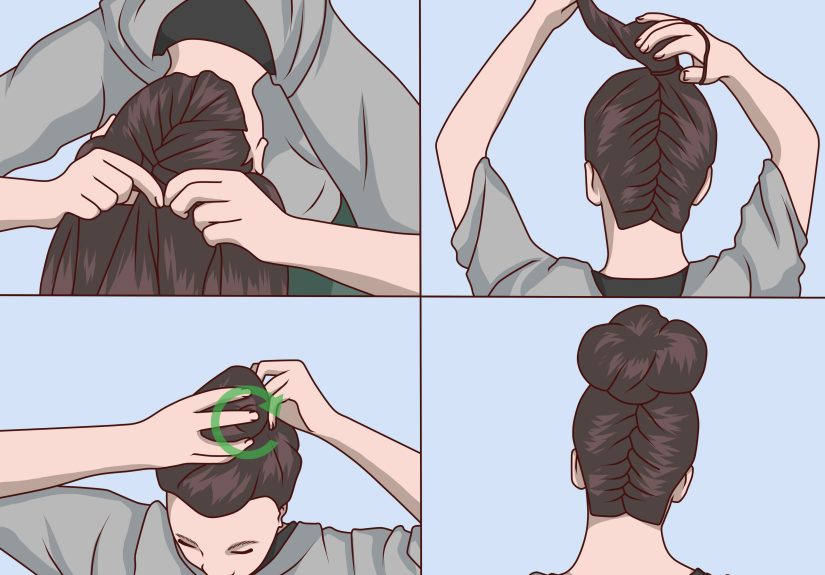
- Start at the crown with a top section of hair and split it into three strands.
- Do the first two crosses UNDER: left under middle, then right under middle.
- Add hair to the left strand (from the left side of your head), then cross left under middle.
- Add hair to the right strand, then cross right under middle.
- Repeat the “add + cross under” pattern down to the nape.
- Finish with a regular three-strand braid (still crossing under if you want to keep the look consistent), then secure.
Fast troubleshooting
- My Dutch braid looks like a French braid: You probably crossed over. Remember: Dutch = under.
- It’s too tight and hurts: Loosen your tension and take smaller sections. Scalp pain is not the goal.
- It’s messy at the top: Start with a cleaner part and a smaller, more controlled first section.
Quick style upgrade
Turn a single Dutch braid into a low ponytail (braid to the nape, then elastic everything together). It looks intentional, even if you started braiding because you ran out of time to wash your hair.
4) The Fishtail Braid (Looks Fancy, Is Actually Just Repeating One Move)
Fishtail braids have a reputation for being complicatedmostly because they look like you hired a tiny team of hairstylists to live in your bathroom. In reality, it’s a simple pattern using only two sections of hair.
Best for
- Casual “boho” styles, festivals, brunch, date nights
- Hair with some texture (or hair you can add texture to)
- When you want compliments from strangers in the grocery aisle
Step-by-step: fishtail braid
- Brush and gather hair into a side ponytail or keep it centered (side is easier for beginners).
- Split hair into two equal sections: left section and right section.
- Take a small piece from the outside of the left section and cross it over to join the right section.
- Take a small piece from the outside of the right section and cross it over to join the left section.
- Repeat (left small piece over, right small piece over) all the way down.
- Secure with an elastic. For a fuller look, gently pull the braid edges outward.
Make it look extra (with less effort)
- Go smaller with your pieces for a detailed fishtail; go bigger for a looser, chunkier one.
- “Mess it up on purpose” by tugging it wider after securingthis adds volume and hides tiny mistakes.
- Use texture spray if your hair keeps slipping out of the pattern.
Braid Troubleshooting: Quick Fixes for Common Problems
Problem: My arms are tired
Normal. Braiding is basically gentle upper-body training. Try braiding in a low ponytail first (easier hand position), or do the braid to the nape and rest for a second before finishing the tail.
Problem: The braid is crooked
Your sections are drifting. Pause every few stitches and re-center the braid by gently nudging the strands back into place. Mirror checks helpso does accepting that “imperfect” is a hairstyle category now.
Problem: Flyaways everywhere
Use a pea-sized amount of smoothing cream, pomade, or light gel on your fingertips. Smooth as you go, then finish with a light mist of hairspray. For curly hair, a curl cream can help keep texture defined without turning hair crunchy.
Problem: My layers won’t stay in
Use smaller sections when adding hair (French/Dutch), braid slightly tighter at the top, and pin short pieces discreetly. A side braid is also more forgiving because gravity does half the work.
Make It Last: How to Keep Braids Looking Good Longer
- Sleep smart: a loose braid or low bun at night reduces tangles. If you have textured hair, a satin/silk scarf or pillowcase helps reduce frizz.
- Refresh fast: smooth the hairline with a little product, re-tighten the first few stitches, and re-secure the elastic if it stretched out.
- Accessorize: braid cuffs, ribbons, or a scarf woven through a three-strand braid can make a simple style look styled-on-purpose.
Real-Life Braiding Experiences (The Part Where Braids Get Personal)
The first time I tried a French braid on myself, I genuinely believed mirrors were playing a prank on me. In the front: cute! In the back: a mystery sculpture. The thing nobody tells you is that braiding is less about talent and more about repetition. Your hands need to learn the pattern the way your feet learned to walkawkwardly, with occasional emotional damage, and then suddenly… automatically.
My “braid breakthrough” happened with the classic three-strand braid, because it’s the easiest place to notice what’s going wrong. If one section starts getting skinny, your braid turns lopsided. If you let go of tension, everything puffs up like it’s trying to become a croissant. Once I started paying attention to section size and keeping my hands close to the braid, everything got smoother. It wasn’t glamorous practice, either. I braided while watching TV, while waiting for laundry, and once during a very important “I’m just going to hop on a quick call” moment (spoiler: it was not quick).
Dutch braids were a whole different adventure. The first few tries, I accidentally made French braids because muscle memory kept crossing strands over instead of under. The fix was hilariously simple: I said “UNDER” out loud every time I crossed a strand. Did I feel silly? Yes. Did it work? Also yes. I’ve since learned that talking to your hair while braiding is completely normal and should probably be covered by health insurance.
Fishtail braids taught me the value of “pretty enough.” When you’re learning, your instinct is to make every piece perfectly evenand that’s how you end up quitting halfway through with a weird braid-tail situation. What helped was switching to a side ponytail fishtail first. Once the hair is anchored, your hands can focus on the pattern: take a tiny piece, cross it over, repeat. When it started looking messy, I stopped trying to “fix” it and instead pancaked it wider. Suddenly, the braid looked intentionally boholike I meant to do that. (The greatest styling trick of all: confidence + strategic tugging.)
The most useful real-world lesson? Braids don’t have to be perfect to be wearable. In fact, the slightly undone versions often look more modern. If a section is a little uneven, you can loosen the braid to camouflage it. If flyaways appear, you can call it “texture.” If your part isn’t razor-straight, congratulationsyou’ve achieved “effortless.”
Over time, braiding became one of those small self-care skills that actually pays off. It’s practical (hello, humid days), it’s protective (less tangling and friction), and it’s a quick confidence boost. Plus, once you know these four braid types, you can mix and match them into endless looksdouble Dutch braids, French braid pigtails, fishtail ponytails, braided bunswithout feeling like you need a professional stylist on speed dial.
Conclusion: Pick One Braid, Practice It Twice, and You’ll Be Surprised
If you’re new to braiding, start with the three-strand braid. Then level up to French (add hair + cross over), Dutch (add hair + cross under), and fishtail (two sections + tiny pieces crossed over). The secret isn’t “perfect hands”it’s learning the pattern, keeping sections organized, and giving yourself permission to be a beginner.
Choose one braid to practice this week. Do it once slowly, then do it again with a little less thinking. That second attempt is where the magic happensbecause your hands start remembering what your brain was yelling about.