Table of Contents >> Show >> Hide
- Why Family Campfire Traditions Matter
- 1. Start Every Fire With a “Campfire Kickoff” Ritual
- 2. Create a Signature Family Campfire Snack
- 3. Tell “Only-On-This-Trip” Campfire Stories
- 4. Have a Campfire Song or Skit Night
- 5. End the Evening With Stargazing and a One-Sentence Wish
- 6. Finish With a “Best Moment of the Fire” Round
- Tips for Making Your Family Campfire Traditions Actually Last
- Campfire Experiences That Turn Into Family Lore
- Conclusion
There is something suspiciously magical about a family campfire. Maybe it is the crackle of the wood. Maybe it is the heroic smell of toasted marshmallows drifting through the trees. Or maybe it is the fact that once everybody puts down their screens and gathers around a flame, even the family member who normally answers in one-word grunts suddenly has a story to tell.
That is why the best family camping trips are not built on expensive gear or Pinterest-perfect setups. They are built on traditions. Simple, repeatable, delightfully goofy traditions. The kind your kids will remember years later, long after they forget which sleeping bag zipper got stuck and which parent packed way too many granola bars.
If you want your next camping trip to feel less like random chaos in the woods and more like a memory factory, start with these six fun family campfire traditions. They are easy to personalize, friendly for beginners, and perfect for turning an ordinary night outdoors into the kind of evening people talk about on the drive home, at Thanksgiving, and possibly at your child’s wedding one day.
Why Family Campfire Traditions Matter
Before we jump into the traditions, let us address the marshmallow in the room: why bother creating rituals at all?
Because traditions give a camping trip a heartbeat. They help kids know what to expect, give grown-ups something easy to organize, and create a sense of identity for your family. A campfire tradition also turns downtime into quality time. Instead of everyone just sitting around wondering who forgot the chocolate, you have a built-in plan for laughter, conversation, and connection.
Even better, campfire traditions work beautifully because they are low-tech, low-cost, and high on charm. You do not need a giant RV or a wilderness beard. You just need a safe fire setup, a little imagination, and people willing to lean into the moment.
One quick reality check, though: always follow campground rules, local fire restrictions, and basic campfire safety before starting any tradition. Safety first, s’mores second, family legend third. That order matters.
1. Start Every Fire With a “Campfire Kickoff” Ritual
The first tradition is not flashy, but it sets the tone for everything else. Before the marshmallows come out and before Uncle Dave tells a story that somehow includes a raccoon and a fishing lure, create a short campfire kickoff ritual.
How it works
As soon as the family gathers around the fire, do the same opening routine every night. Keep it short, maybe three to five minutes. It could include:
- One person officially “opening” campfire time
- A reminder of fire safety rules for kids
- A quick check-in question like “What was the best part of today?”
- A silly family phrase such as “Let the marshmallow games begin”
This tradition is especially good for families with young kids because it creates structure before the sugar starts flying. It also helps everyone pause and appreciate the setting instead of rushing straight into snack-based chaos.
Why families love it
The campfire kickoff becomes a tiny ceremony that signals, “Now we are really camping.” It helps children feel included, gives parents a chance to reinforce safe behavior, and creates a dependable rhythm night after night. In other words, it is part safety briefing, part emotional warm-up, and part theatrical opening act.
Tips to make it better
Rotate who leads it each night. Younger kids can announce campfire time like overexcited park rangers. Older kids can share a joke, a fun fact, or a one-sentence recap of the day. Adults can pretend they are hosting the fanciest outdoor event in America. Bonus points for dramatic voices.
2. Create a Signature Family Campfire Snack
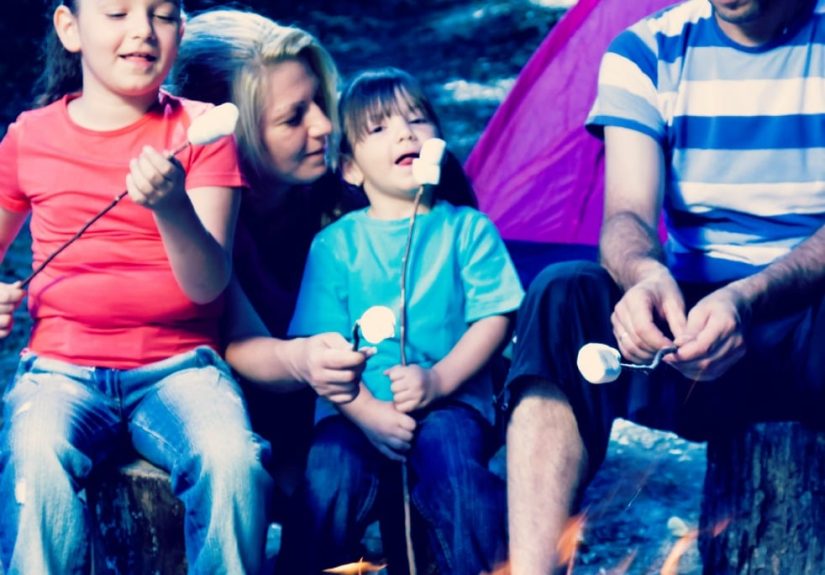
Yes, classic s’mores are wonderful. They are sticky, messy, and somehow always end with somebody wearing marshmallow on their sleeve like a badge of honor. But if you want a tradition that feels personal, create one signature family campfire snack that belongs to your crew.
Easy ideas for a signature treat
- Cinnamon sugar campfire toast
- Stuffed waffle cones with chocolate, fruit, and mini marshmallows
- Banana boats with chocolate chips and crushed cookies
- Foil-pack apple crisp
- A build-your-own gourmet s’mores bar
The point is not to become a wilderness pastry chef. The point is to have one special food that shows up every trip and makes people say, “Oh good, it’s our campfire night snack.” That familiarity is half the magic.
Why this tradition works
Food is memory glue. People may forget which campsite number you had, but they will absolutely remember the family tradition of roasting banana boats until the chocolate turned molten and somebody dropped theirs in the dirt. Tragic? Yes. Memorable? Also yes.
Pro tip
Let each person customize their snack. When kids get to choose toppings or decide how toasted they want their marshmallows, they feel ownership over the ritual. It becomes interactive instead of passive, and that makes the tradition stick.
3. Tell “Only-On-This-Trip” Campfire Stories
Every family needs a campfire storytelling tradition, but here is the trick: do not rely only on spooky stories or the same tired tale Grandpa tells every year with three extra details added for dramatic effect. Make the stories specific to the trip you are on.
The tradition
Each night, one or more people tell a story inspired by something that happened that day. Maybe you saw a fox near the trail. Maybe someone got soaked during canoeing. Maybe your toddler declared a pinecone “their forest potato.” That is your material right there.
You can make the story true, exaggerated, or completely ridiculous. The squirrel you saw at lunch becomes a campground detective. The muddy hiking trail becomes a secret dragon route. Your flat camp pillow becomes the villain of the weekend. The sillier, the better.
Why this tradition is gold
It helps kids practice creativity, listening, and confidence without making it feel like homework in disguise. It also turns the day’s little moments into part of the family mythology. Suddenly, a normal mishap becomes “the legendary night the flashlight rolled into the bushes and we all searched for it like treasure hunters.”
Ways to keep it fun
- Use a “story stick” and only the person holding it can speak
- Give everyone one required word to include
- Have one person start the story and the next person continue it
- End every story with a funny moral
This tradition works for all ages because little kids can invent nonsense, older kids can get clever, and adults finally have a healthy outlet for their unnecessary levels of campfire drama.
4. Have a Campfire Song or Skit Night
Some families hear “campfire songs” and immediately picture awkward group singing from old movies. Fair enough. But a song or skit tradition does not have to be cheesy unless you want it to be cheesy, in which case please proceed with enthusiasm.
Make it your own
Pick one song everybody knows, one silly chant, or one mini performance each evening. You can sing something simple, make up new lyrics about the trip, or perform a goofy one-minute skit based on the day’s events.
Think of it less as talent night and more as “organized family nonsense with a campfire aesthetic.”
Why this tradition works
Shared singing and performance create instant group energy. They break the ice, make shy kids more willing to participate, and give the whole evening a playful lift. Families do not remember perfect performances. They remember the laughter, the inside jokes, and the accidental lyric disasters.
Simple ideas
- A call-and-response chant before dessert
- A one-minute skit about setting up camp
- A “rewrite the lyrics” challenge about the hike you took
- A rhythm game using claps and knees instead of instruments
If your family is not into singing, do “quote night” instead, where everyone dramatically reads a funny line they made up about camping. Same energy, lower musical risk.
5. End the Evening With Stargazing and a One-Sentence Wish
Not every campfire tradition needs to be loud. Some of the best ones are quiet enough to let the night do the work. That is where stargazing comes in.
The tradition
Once the snacks are done and the fire has settled into glowing coals, have everyone lean back, look up, and spend a few minutes identifying stars, planets, or constellations. Then ask each person to share one sentence: a wish, a hope, a goal, or something they want to remember from the trip.
It can be serious, funny, or somewhere in between. One person may say, “I hope we come back here next year.” Another may say, “I hope no one snores like a chainsaw tonight.” Both are valid contributions to the family record.
Why it becomes memorable
Camping naturally invites reflection. The sky is bigger, the noise is smaller, and even the most energetic kids tend to soften for a minute when they are looking at the stars. This tradition adds a meaningful close to the evening without feeling forced or overly sentimental.
Helpful tip
Keep a small notebook and write down each person’s one-sentence wish every night. Over time, that notebook becomes a treasure. Years later, you will laugh, tear up, and wonder why one child’s greatest dream in 2026 was apparently “to see a raccoon wearing confidence.”
6. Finish With a “Best Moment of the Fire” Round
The last tradition is simple, powerful, and wonderfully easy to repeat. Before everyone heads to bed, go around the circle and ask one question: What was your favorite moment around the fire tonight?
Why this tradition matters
It helps the family end on a positive note. It reinforces gratitude without sounding like a lecture. It teaches kids to pay attention to the little things. And it gives adults a reminder that the night was successful even if someone burned a marshmallow into a carbon pebble.
One person may say their favorite part was the story about the brave squirrel. Another may say it was watching sparks float into the sky. Another may say it was finally making a perfect golden-brown marshmallow after three previous attempts that looked like tiny fire emergencies.
How to keep it fresh
You can change the question slightly each night:
- What made you laugh the most?
- What did you learn today?
- What do you want to do again tomorrow?
- Who should win tonight’s campfire MVP award?
This kind of closing ritual gives the evening a satisfying ending instead of the usual campground fade-out where people wander off searching for toothbrushes and missing socks.
Tips for Making Your Family Campfire Traditions Actually Last
Starting traditions is easy. Keeping them alive is where the real parenting wizardry happens. Here are a few ways to make sure these traditions survive beyond one very ambitious weekend.
Keep them simple
If a tradition requires 19 supplies, a printed instruction manual, and the emotional stability of a cruise director, it will not survive real camping. Choose traditions that are easy to repeat with minimal effort.
Let kids help shape them
The fastest way to make a family ritual meaningful is to let everyone influence it. Kids are much more invested when they get to name the snack, invent the chant, or create the nightly question.
Repeat the same core elements
Traditions become traditions because they come back. You can tweak them, but keep the basic structure the same from trip to trip so they feel familiar.
Prioritize safety and comfort
A great campfire experience depends on basics like checking rules, keeping the fire manageable, sitting at a safe distance, and fully putting it out before bed. Comfort matters too. Blankets, headlamps, chairs, and easy snacks can turn a nice idea into a genuinely great evening.
Campfire Experiences That Turn Into Family Lore
Here is the funny thing about family campfire traditions: at first, they seem small. You roast a snack. You tell a goofy story. You ask a question before bed. No one thinks they are building some grand emotional architecture. You are just trying to keep the children happy, the fire safe, and the marshmallows slightly less flammable than usual.
But then the years go by, and those little campfire moments start piling up into something bigger.
You remember the first trip when your youngest child was determined to poke the fire with a stick approximately four times their own height. You remember the evening it started drizzling and the whole family huddled under jackets, still finishing the story circle because nobody wanted to skip it. You remember the time your oldest, who had acted too cool for absolutely everything all day, suddenly joined the campfire song and knew every word except the ones they confidently invented.
Those are the experiences that quietly become family folklore.
Maybe your campfire kickoff starts as a joke and then becomes sacred. Maybe the signature snack changes over the years from classic s’mores to ridiculous dessert cones stuffed with too much chocolate and exactly zero regrets. Maybe your one-sentence stargazing wishes reveal more than anyone expected. Kids say wild, honest, beautiful things when they are tired, warm, and staring at the sky. Adults do too, though they usually try to hide it behind a joke about needing coffee in the morning.
One of the best parts of campfire traditions is how they grow with your family. When children are small, the traditions are loud, messy, and wonderfully chaotic. Someone is sticky. Someone is overtired. Someone is asking whether raccoons eat brownies and whether brownies can be hidden in sleeping bags for later. Then the kids get older, and the traditions shift. The stories get funnier. The jokes get sharper. The conversations get deeper. The same campfire that once hosted marshmallow competitions starts hosting real talks about school, friendships, dreams, and growing up.
That is why these traditions matter so much. They give families a repeated place to meet each other again and again. Not in the rushed blur of normal life, but in a setting where there is time to listen, laugh, and be present.
And honestly, that may be the most valuable part of all. Around a campfire, people tend to soften. Parents stop multitasking for a minute. Kids stop asking for Wi-Fi with the urgency of emergency responders. Everybody settles into the ancient magic of light, warmth, and shared attention. It is simple. It is old-fashioned. It works.
So if you are planning a camping trip, do not worry about making it perfect. You do not need a flawless itinerary or a social-media-ready campsite. You just need one safe fire, a few repeatable traditions, and a willingness to lean into the weird, funny, meaningful little moments that happen when people gather in a circle after dark.
Because years from now, your family probably will not remember the brand of lantern you packed or whether the cooler worked exactly as promised. They will remember the songs, the stories, the starry wishes, the ridiculous snacks, the laughter, and the feeling of being together while the fire popped and the night wrapped around all of you.
That is the real magic of family campfire traditions. They are not just activities. They are memory-makers in flannel.
Conclusion
If you want to make camping more meaningful, start small and stay consistent. A simple campfire kickoff, a signature snack, a story circle, a silly song, a stargazing wish, and a one-question closing round can transform an ordinary evening into a treasured family ritual. These traditions do more than fill time. They create connection, build anticipation, and give every trip a warm, familiar rhythm that kids and adults can look forward to year after year.
So gather your chairs, check the fire rules, toast something delicious, and begin. The best family campfire traditions are not the fanciest ones. They are the ones that make everybody lean in, laugh harder, and linger a little longer before saying goodnight.