Table of Contents >> Show >> Hide
- Step 1: Spot Your Pattern (Because You Can’t Fix What You Don’t See)
- Step 2: Pick One Habit to Change (Tiny Wins Beat Big Promises)
- Step 3: Engineer Your Environment (Make the Right Choice the Lazy Choice)
- Step 4: Build Meals That Satisfy (So You Don’t Rebound at 9 p.m.)
- Step 5: Practice Portion Skills (Without Turning Meals Into Math Homework)
- Step 6: Plan for Emotions and Slip-Ups (Because Life Is Not a Controlled Lab)
- Real-Life Experiences: What Changing Eating Habits Actually Feels Like (The 500-Word Truth)
- Conclusion
If “bad eating habits” were a person, they’d be that friend who shows up uninvited, raids your fridge,
and then leaves you with the cleanup. The annoying part? They’re not even trying to be mean.
Habits are just efficient. They run in the background while your brain is busy doing literally anything else
(work, kids, deadlines, existential dread, picking a Netflix show for 47 minutes).
The good news: you don’t need superhuman willpower or a personality transplant to change how you eat.
You need a system. One that makes better choices easier, “oops” moments less dramatic, and progress feel
like something you can repeat on a random Tuesdaynot just on January 1st.
Below are six practical steps to change bad eating habits in a way that’s realistic, sustainable, and
(dare I say) occasionally even enjoyable. Let’s do this.
Step 1: Spot Your Pattern (Because You Can’t Fix What You Don’t See)
Most people try to change eating habits by jumping straight to “eat better.” That’s like trying to fix a leaky
roof by buying prettier towels. Step one is awarenesswithout the self-judgment spiral.
What to do
-
Track your eating for 3 days (not forever). Include what you ate, when, where, and what was happening
right before (stressful email? bored? celebratory?). -
Mark the “usual suspects”: late-night snacking, mindless scrolling + munching, skipping lunch then
inhaling dinner, drive-thru autopilot, sugary drinks, etc. -
Identify your top 2 triggers. Common ones: fatigue, stress, “I deserve a treat,” social pressure, and
being unprepared.
A quick example
You notice a pattern: every weekday around 3:30 p.m., you wander into the kitchen “just to stretch” and
somehow end up in a committed relationship with crackers. That’s not a moral failing. That’s a cue:
you’re tired, hungry, under-fueled at lunch, or procrastinating.
Your mission isn’t to become a perfect eater. It’s to become a curious observerlike a detective, but with snacks.
Step 2: Pick One Habit to Change (Tiny Wins Beat Big Promises)
Trying to overhaul everything at once is how you end up eating plain lettuce while crying in the pantry.
Choose one high-impact habitwhat behavioral folks sometimes call a “keystone habit”that makes other
changes easier.
How to choose the right target
- Start with the habit you repeat most (daily beats occasional).
- Prefer the habit with the simplest swap (less friction = more follow-through).
- Don’t start with your hardest habit. Build confidence first.
Turn it into a “when-then” plan
Vague goals (“eat healthier”) are easy to ignore. Specific plans are harder to wiggle out of.
Try this format:
When [trigger happens], then I will [specific action].
Examples
- When I want something sweet after dinner, then I’ll make peppermint tea and wait 10 minutes.
- When I’m starving at 4 p.m., then I’ll eat a planned snack (protein + fiber), not “whatever is loudest.”
- When I’m ordering takeout, then I’ll add one vegetable side or salad before I hit checkout.
Your first goal should feel almost too easy. If you’re thinking, “That can’t possibly matter,” congratulations
you picked something sustainable.
Step 3: Engineer Your Environment (Make the Right Choice the Lazy Choice)
“Willpower” is wildly overrated. Your environment is the real CEO of your eating habits.
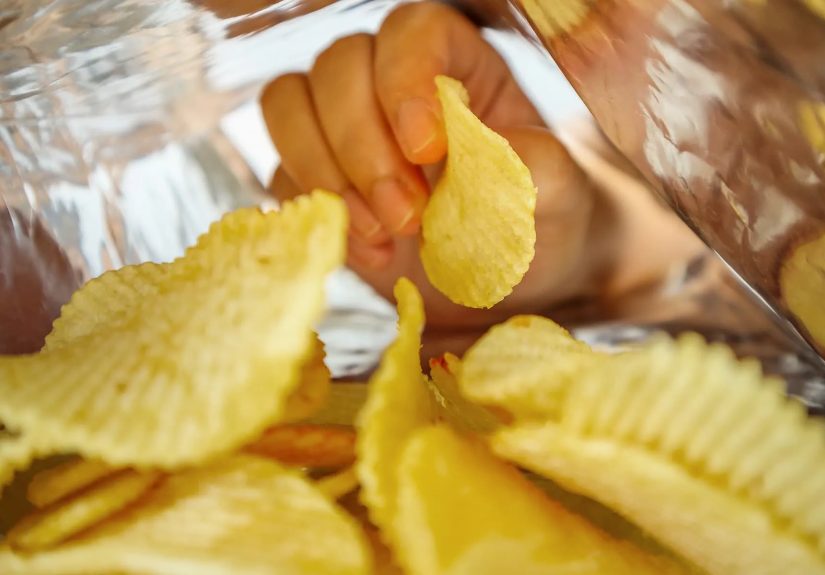
If the default path leads to chips, you will eventually end up holding a chip. That’s just physics.
Make healthy eating frictionless
- Put the helpful foods where you see them: fruit on the counter, yogurt at eye-level, pre-cut veggies front and center.
- Hide the “oops foods”: not banned, just inconvenient (top shelf, opaque container, back of the pantry).
- Pre-portion snack foods: single servings in containers or bags so you don’t “accidentally” eat a family-size portion.
- Create a “default meal” list: 5 breakfasts, 5 lunches, 5 dinners you can repeat without decision fatigue.
Set up your week in 20 minutes
- Choose 2–3 simple proteins (chicken, beans, eggs, tofu, tuna).
- Add 2 easy vegetables (bagged salad, frozen broccoli, baby carrots).
- Pick 1–2 high-fiber carbs (brown rice, whole-grain bread, oats, potatoes).
- Plan 2 snacks you’ll actually eat (not the ones you think you “should” eat).
Your goal is not gourmet. Your goal is “future you doesn’t panic-order nachos because there’s nothing edible at home.”
Step 4: Build Meals That Satisfy (So You Don’t Rebound at 9 p.m.)
A lot of “bad eating habits” are actually “under-eating earlier, then overcompensating later.”
Satisfying meals reduce cravings, stabilize energy, and make portion control feel less like punishment.
The simple plate strategy
- Half the plate: non-starchy vegetables and/or fruit (volume + fiber).
- One quarter: protein (satiety, muscle support, steady energy).
- One quarter: whole grains or starchy vegetables (lasting fuel).
- Add a little healthy fat: nuts, avocado, olive oil, seeds (flavor + fullness).
Specific, real-life examples
- Breakfast: Greek yogurt + berries + granola + chia seeds (or eggs + veggies + whole-grain toast).
- Lunch: Turkey/bean wrap + side salad + fruit (or rice bowl with veggies + protein + sauce you like).
- Dinner: Salmon/tofu + roasted veggies + sweet potato (or chili with beans + toppings like avocado).
Notice what’s missing? A rule that says you can’t enjoy food. You can keep the foods you lovejust stop letting
them be the only foods that show up.
Step 5: Practice Portion Skills (Without Turning Meals Into Math Homework)
Portion control isn’t about eating tiny amounts. It’s about eating the right amount for you,
often by aligning portions with hunger cues, mindful pacing, andyeslearning what a serving actually is.
Portion upgrades that don’t feel like dieting
- Use a smaller plate for calorie-dense meals. Your brain loves a “full plate.”
- Start with volume: vegetables, broth-based soup, salad, fruit.
- Pause halfway and do a quick check: “Still hungry, or just still tasty?”
- Restaurant hack: box half before you begin, or split an entrée.
Learn the label basics (so “healthy” doesn’t trick you)
You don’t need to memorize every nutrient. Focus on three things:
- Serving size (the number everything else is based on).
- Added sugars (watch how quickly they stack up across snacks and drinks).
- Sodium and saturated fat (easy to overdo in packaged and restaurant foods).
Think of labels as comparison toolsnot as report cards. You’re not “good” if you eat a low-sodium cracker.
You’re just a person who now knows things.
Step 6: Plan for Emotions and Slip-Ups (Because Life Is Not a Controlled Lab)
Bad eating habits often show up when you’re stressed, tired, lonely, or overwhelmed. Food works fast.
It’s comfort with a crunch. So instead of pretending you’ll never stress-eat again, build a “response plan.”
Build a non-food coping menu (so you have options)
- For stress: 5-minute walk, shower, stretching, breathing reset, quick tidy.
- For boredom: text a friend, podcast + hands-busy task, hobby “starter step” (two minutes only).
- For fatigue: protein snack + water, earlier bedtime, simpler dinner (frozen veggies count).
- For feelings: journal one paragraph, talk it out, or name it: “This is anxiety, not hunger.”
The “back on track” rule
One off-plan meal is a normal human day. Two off-plan meals are… also a normal human day.
The habit that matters most is the ability to reset quickly:
- Next meal: balanced and satisfying (protein + fiber + produce).
- Next grocery trip: restock your default meals and snacks.
- Next week: adjust the plan, not your self-respect.
If you consistently feel out of control around food, or if eating habits are tied to mood, sleep, trauma, or
medical conditions, it’s worth talking with a licensed clinician or registered dietitian. That’s not “failing.”
That’s using the right tool for the job.
Real-Life Experiences: What Changing Eating Habits Actually Feels Like (The 500-Word Truth)
Let’s talk about the part people leave out: changing bad eating habits is rarely a cinematic montage where
you meal-prep joyfully while the sun beams through your kitchen window. It’s more like a sitcom episode where
you do great Monday through Wednesday, then Thursday shows up with a surprise meeting and suddenly you’re
eating dinner out of a paper bag like it’s an Olympic sport.
Experience #1: The Late-Night Snacker. This person isn’t “undisciplined.” They’re usually under-fueled
earlier in the day, exhausted at night, and finally alone with their thoughts (and the pantry).
The breakthrough often isn’t “stop snacking”it’s “eat a real dinner” and “create a closing routine.”
Example: after dinner, they make tea, brush their teeth, and set up a low-effort activity (show, book, puzzle).
They still snack sometimes, but it becomes a choice instead of a blackout event where they wake up to crumbs.
Experience #2: The Office Grazer. You know the type. They don’t eat “meals.”
They eat meetings. Someone brings donuts, there’s candy in a bowl, and suddenly lunch is three handfuls
of whatever was free. What helps: a planned, satisfying snack and a “first bite rule.”
They keep a high-protein snack available (nuts, yogurt, cheese stick, hummus) and when treats appear, they decide:
“If I still want it after my snack and water, I’ll have one serving and enjoy it.” The result is wild:
they still get the treat, but they don’t need five of them to feel satisfied.
Experience #3: The Weekend Takeout Spiral. Monday through Friday is fine, then the weekend turns into
a blur of delivery apps and “we deserve it.” Usually this is less about food and more about planning + fatigue.
The fix is not banning takeout. It’s making weekends easier: one planned grocery run, two quick home meals,
and a takeout “upgrade.” They keep takeout, but add something: a side salad, extra veggies, grilled instead of fried,
or splitting an entrée. They also set one anchor routine, like a Saturday breakfast at home or a Sunday meal prep.
The weekend doesn’t become “perfect,” but it stops undoing the entire week.
The common theme? People succeed when they stop treating healthy eating like a personality trait and start treating it
like a design problem. You’re not trying to become a new person. You’re building a repeatable plan for the person you
already arebusy, hungry, occasionally stressed, and still very much deserving of food that tastes good.
Conclusion
Changing bad eating habits doesn’t require obsession, guilt, or a fridge full of food you hate.
It requires a few repeatable behaviors:
awareness, one small target at a time, a supportive environment, satisfying meals, portion skills, and a plan for stress.
Start with Step 1 today. Track for three days, choose one habit to improve, and make it so easy you can do it on your worst day.
That’s not lowering the barthat’s building a staircase.