Table of Contents >> Show >> Hide
- The 11-Minute Trip That Launched a Thousand Memes
- What Actually Happened on the Blue Origin NS-31 Flight
- Why People Mocked It (And Why Others Defended It)
- Space Tourism Meets Celebrity PR
- The Bigger Debate: Cost, Carbon, and the Value of Awe
- The Roast Machine: How the Internet Turns Emotion Into Content
- What Katy Perry’s Reaction Says About Celebrity, Courage, and Cringe
- Practical Takeaways (Yes, From a Ground Kiss)
- FAQ: Quick Answers People Keep Arguing About
- Extra: of “Kiss the Ground” Experiences Regular Humans Understand
- Conclusion
If you’ve ever stepped off a roller coaster, a red-eye flight, or a particularly spicy burrito situation and thought,
“I would like to press my face against the nearest stable surface,” then congratulations: you already understand the
emotional logic behind Katy Perry kissing the ground after her brief trip to space.
What surprised people wasn’t the gratitude. It was the optics. In a world where we can livestream a rocket launch,
meme it before it lands, and argue about it in 280 characters (or fewer, if sarcasm is doing cardio), a celebrity’s
sincere moment can become a digital piñata in minutes.
This article breaks down what happened on that 11-minute hop, why the internet mocked it so aggressively, what the
backlash reveals about celebrity culture and space tourism, and what we can all learn from the great “Kiss the Ground”
discoursebesides the fact that Earth has excellent PR, and it doesn’t even have to try.
The 11-Minute Trip That Launched a Thousand Memes
The flight in question was a suborbital ridethink “up, float, back down,” not “see you in six months on the
International Space Station.” These kinds of missions typically cross the Kármán line (a commonly used boundary of
space), offer a few minutes of weightlessness, and return to the same region they launched from. Total time?
Roughly the length of a microwave burrito plus one awkward pause where you wonder if it’s still frozen in the middle.
That short duration is part of why critics dismissed the trip as an expensive joyride, and why supporters pushed back:
speed doesn’t automatically cancel meaning. Plenty of life-changing moments are shortweddings, car accidents, the
exact second you realize you sent the wrong screenshot to the wrong group chat.
What Actually Happened on the Blue Origin NS-31 Flight
The mission was widely covered because it featured a high-profile, all-female crew and a big dose of pop culture
gravity. The crew included Katy Perry, broadcast journalist Gayle King, aerospace engineer and entrepreneur Aisha Bowe,
civil rights activist and bioastronautics researcher Amanda Nguyen, film producer Kerianne Flynn, and journalist/pilot
Lauren Sánchez, who helped assemble the mission.
The rocket launched from West Texas, reached the edge of space, delivered a short window of weightlessness, and landed
safely. Cameras captured the full arc: the anticipation, the floating, the touchdown, the celebratory reactions, and
the immediate post-landing adrenaline that turns normally composed adults into people who clap like toddlers seeing
bubbles for the first time.
The “Kiss the Ground” Moment
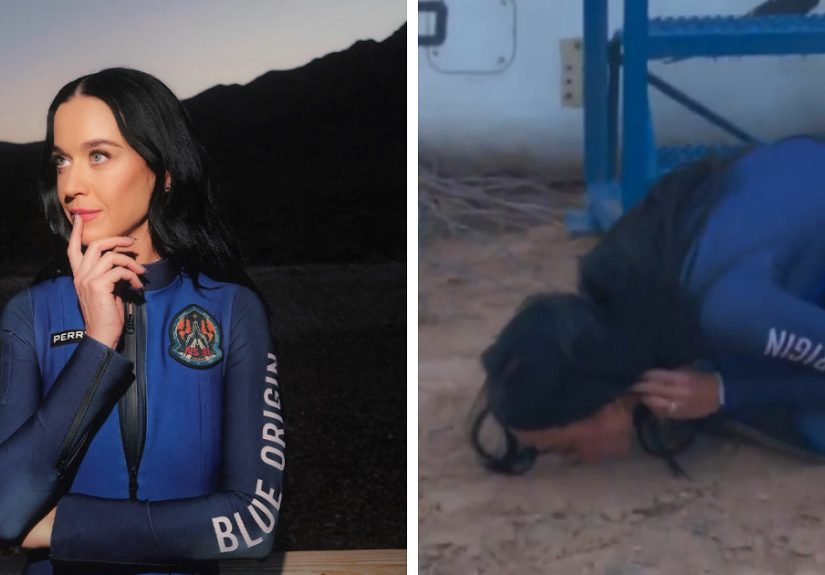
When the capsule landed and the hatch opened, Katy Perry stepped out and kissed the ground. It was dramatic. It was
theatrical. It was also, in the most human way possible, extremely on-brand: if you’re going to do something, commit.
This is the same artist who made fireworks a personality trait and turned a candy-colored beach party into a global
earworm.
The problem wasn’t that she was grateful. The problem was that the internet has a long-standing allergy to sincerity
when it arrives wearing eyeliner and a headline.
Why People Mocked It (And Why Others Defended It)
The backlash wasn’t a single argumentit was a buffet. People criticized the flight as a publicity stunt, questioned
the value of space tourism during real-world crises, and roasted the perceived “look at me” energy of the moment.
Online, the ground-kiss became shorthand for a broader complaint: “We’re struggling down here, and celebrities are
doing victory laps in the sky.”
Several celebrities and brands joined the conversation, with jokes and commentary flying almost as fast as the rocket
had. Some posts were playful. Others were sharp. Either way, it turned a human reaction into a social media sport:
dunking for dopamine.
The “It’s Just a Ride” Argument
Critics leaned on the trip’s short duration and its association with wealth. The logic went something like:
“You were gone for 11 minutes, and you’re acting like you survived months of hardship.” That framing makes the kiss
feel performativelike an award show speech for an experience most people will never afford.
There’s also the “mission vs. experience” debate. Traditional spaceflight narratives highlight science, national
programs, and long-term exploration. Space tourism narratives highlight personal transformation and spectacle.
When those two collide, the internet tends to side with: “Cool story. How much did it cost?”
The “Let People Be Emotional” Counterpoint
Supporters argued that even a short flight can be intense. Launch is loud. Acceleration is real. And while suborbital
missions are designed with safety in mind, it’s still a rocketan inherently high-energy situation where everything is
normal right up until the moment it very much isn’t.
Some defenders also pointed out the double standard: when men do high-risk, high-cost stunts, they’re framed as bold;
when women do them, they’re framed as frivolous. The critique isn’t always wrong, but the tone can reveal more than the
argument itself.
Space Tourism Meets Celebrity PR
The modern celebrity doesn’t just do thingsthey do things in public, with a camera angle that says,
“Please discuss this.” The NS-31 flight existed at the intersection of personal dream, corporate branding, and media
spectacle. That’s not automatically bad; it’s just how the attention economy works.
But it does change how people interpret authenticity. If an artist flies to space while teasing tour-related moments,
skeptics read the whole experience as marketing. Fans read it as a once-in-a-lifetime flex. The internet reads it as a
prompt: “Write your best joke now.”
When Empowerment Messaging Collides With Luxury Optics
An all-female crew can absolutely be inspiring. Representation matters, especially in industries with long histories
of exclusion. At the same time, “empowerment” messaging gets complicated when the event is tied to extreme wealth and
a commercial space tourism company.
That’s why reactions split. One group saw symbolism: women in a spaceflight spotlight. Another group saw branding:
a glossy “girl power” narrative strapped to a rocket engine.
The Bigger Debate: Cost, Carbon, and the Value of Awe
The loudest criticisms weren’t really about the kissthey were about what the kiss represented. Space tourism has
become a lightning rod for debates about inequality and environmental impact. Even if individual launches are a tiny
fraction of global emissions, critics argue the symbolism is rotten: wealthy people burning fuel for a thrill while
telling everyone else to recycle their yogurt cups.
Supporters respond with a different lens: technological progress often starts expensive, then gets cheaper. Commercial
flights, smartphones, even early computers all began as luxury or institutional tools. Space tourism proponents argue
that reusable rockets and high-frequency launches can push costs down and innovation up over time.
Both ideas can be true: space tourism can be inspiring and also visually tone-deaf. Wonder doesn’t erase optics, and
optics don’t erase wonder.
The Roast Machine: How the Internet Turns Emotion Into Content
The most fascinating part of this story might be the speed at which it transformed from “human reaction” to “public
performance evaluation.” Social media rewards punchlines, not nuance. A quick joke gets shared; a thoughtful take gets
bookmarked for “later,” which is the internet’s version of putting something in a drawer and never opening it again.
In that environment, a ground kiss is irresistible. It’s visual. It’s symbolic. It’s easy to caption. And it’s
emotionally legible even to people who didn’t watch the launch. You don’t need context to understand “I’m so relieved
I could smooch dirt.” You just need Wi-Fi and a little chaos in your heart.
What Katy Perry’s Reaction Says About Celebrity, Courage, and Cringe
Celebrity culture runs on a weird paradox: we want stars to be relatable, but we punish them when their relatability
looks messy. We love authenticity until authenticity makes us uncomfortable. Then we label it cringe, and cringe is the
internet’s favorite chew toy.
Kissing the ground is an ancient human gesture. People do it after religious pilgrimages. Athletes do it after big
wins. Travelers do it after surviving turbulence that had the whole cabin praying in languages they don’t speak.
It’s not new. It just rarely happens in 4K with a livestream chat.
Practical Takeaways (Yes, From a Ground Kiss)
1) If you’re going to be dramatic, be prepared to be meme-able
Drama is not a flaw; it’s a style choice. But the louder the gesture, the easier it is to remix.
2) Context matters, but the internet doesn’t always care
You can have sincere reasons and still get dragged. Online judgment often reflects broader frustrations that your
moment accidentally symbolizes.
3) Space is still emotionally powerfuleven in small doses
A few minutes of weightlessness and a view of Earth can mess with your brain (in a good way). Awe is real. So is the
backlash to who gets to buy it.
FAQ: Quick Answers People Keep Arguing About
Was it really “space” if it was only 11 minutes?
The flight reached the commonly referenced edge-of-space boundary used in many aerospace contexts. The short duration
is normal for suborbital missions; the key factor is how high it went, not how long it lasted.
Why did the moment get labeled “cringe”?
Because the internet often treats visible emotion from celebrities as performance, especially when the larger event
involves wealth, branding, or hot-button debates like space tourism.
Did anyone defend the flight?
Yes. Supporters emphasized the inspiration factor, the professionalism of the teams involved, and the idea that space
access is expanding beyond traditional astronaut pathways.
Extra: of “Kiss the Ground” Experiences Regular Humans Understand
You don’t have to ride a rocket to understand the impulse to make physical contact with the planet like it’s a
long-lost friend. Most of us have had at least one “I’m just happy to be alive” moment that didn’t look cool, didn’t
photograph well, and definitely wouldn’t survive a comment section.
Start with flying. Anyone who’s ever landed after turbulence that made the seatbelt sign feel like a sacred object has
experienced the post-landing glow. You step onto the jet bridge like a newborn deer. You text someone “we landed” even
though you’re a grown adult. You promise yourself you’ll never complain about traffic again, because traffic at least
doesn’t drop 8,000 feet in a minute. If you could kiss the airport carpet without getting a rash and a concerned talk
from security, you might.
Or take amusement parks. Roller coasters are basically “consensual fear” sold with a souvenir cup. You get strapped in,
you climb, you hear the click-click-click of regret, and then your soul briefly leaves your body. When it’s over, some
people laugh. Some people cry. Some people stare into the distance like they’ve seen the secrets of the universe and
it spelled out “NEVER AGAIN.” The idea that someone might dramatically kiss the ground afterward is not shocking. It’s
a perfectly normal response to your inner organs auditioning for a different arrangement.
Then there’s the “I survived my own choices” category. Like hiking. Every hiking influencer looks serene, but real
hikers know the truth: at some point you’re sweaty, thirsty, and asking why you paid money for shoes that encourage
you to climb a rock that has been minding its business for 300 million years. When you finally reach the end, you
don’t just feel proudyou feel horizontal. You want to lie down and thank gravity for keeping you from rolling
into a ravine. Kissing the ground is just gratitude with extra commitment.
Even everyday life has its version. People kiss the ground after finishing a marathon, after leaving the dentist with
all their teeth intact, after getting through a job interview that felt like an Olympic event called “Explain Your
Weaknesses While Smiling.” These moments aren’t about theatrics; they’re about relief. Relief is a powerful emotion,
and it doesn’t always express itself in a tidy, aesthetically pleasing way.
That’s why the Katy Perry ground-kiss debate hits a nerve. One side sees privilege and performance. The other sees a
human being having a human reaction. And most of us, if we’re honest, contain both reactions at once: we can roll our
eyes at the spectacle and still understand the feeling. Sometimes you can disagree with the optics and still empathize
with the emotion. Sometimes you can laugh and still admit, quietly, that you’d also be grateful to be back on Earth
even if your “space trip” was just surviving a Monday.
Conclusion
Katy Perry kissing the ground after an 11-minute trip to space wasn’t the scandal. It was the spark. The real fire was
the collision of celebrity sincerity, luxury optics, and a culture that treats everything as content. The internet
mocked the moment because it was visible, symbolic, and easy to caption. People defended it because relief is real,
awe is real, and sometimes gratitude looks a little dramaticespecially when you’ve just fallen out of the sky on
purpose.
Whether you found it inspiring, annoying, hilarious, or all three in the same 30 seconds, the story is a reminder:
space tourism isn’t just about rockets. It’s about meaning, messaging, and who gets to touch the starsand then come
back down and kiss the dirt like it’s the best thing that ever happened to them.